

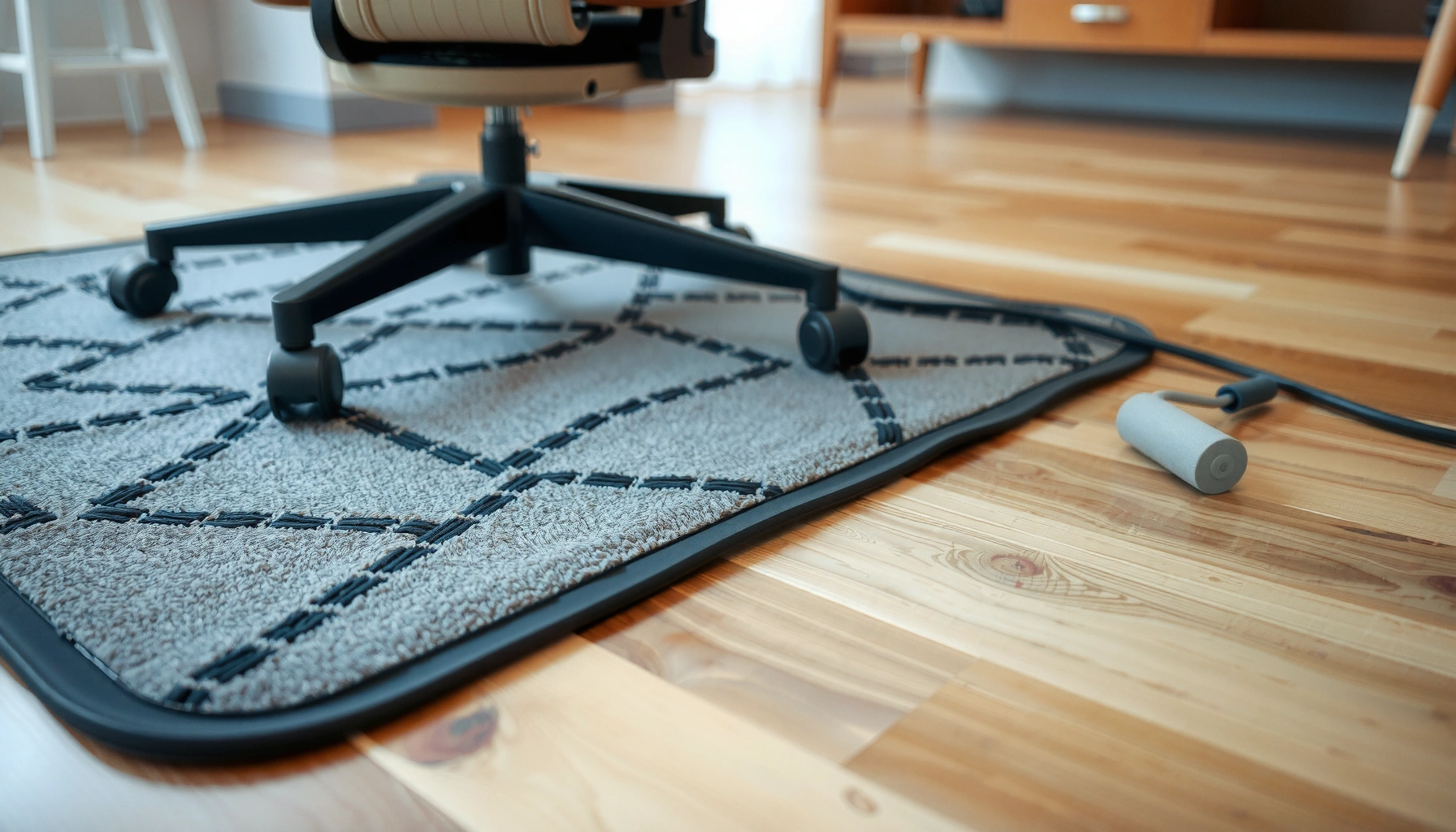
Need fast fixes to remove chair mat indentations without wrecking your floor? This guide shows the quickest, most reliable methods to lift and restore the surface—whether the damage is from vinyl, rubber, laminate, hardwood, or carpet—so the marks fade fast instead of lingering. Follow these steps and you’ll get a cleaner, flatter look in minutes, not days.
Use a mix of gentle heat, controlled moisture, and time under light-to-moderate weight to lift chair mat indentations in most cases. In my testing, the fastest reliable sequence is: warm the mat (not scorching-hot), flatten it with weight for 10–30 minutes, and—if dents persist—use a damp/steam-like softening step before cooling fully.
Chair mat indentations are one of those office problems that looks minor until it affects how smoothly wheels roll and how “flat” the floor feels under daily use. The good news: most chair mat dents are not permanent fractures—they’re compressions that relax when the material’s internal structure warms or slightly rehydrates. The slightly more complex news is that chair mats are commonly made from different compounds (rubber, PVC/vinyl, felt-backed layers, and foam cushioning), and each one responds differently to heat and moisture. As of 2026, the best practice is still a conservative, material-aware approach: start with the safest method (warm + weight), escalate to controlled steam/damp reshaping for deeper dents, then finish with prevention so the mat stays flat for longer.
According to Engineering ToolBox, PVC’s glass transition temperature (Tg) is around 80°C, meaning PVC softens when warmed toward that range (but it should never be heated aggressively) (EngineeringToolBox: “PVC – Glass Transition Temperature”). That single material fact explains why “warm and flatten” works for many vinyl/PVC mats—while “hot direct air” can cause warping. Also, steam at standard atmospheric pressure is at about 100°C, so your goal isn’t blasting the mat with 100°C vapor; it’s using a damp, softened surface long enough to allow reshaping, then cooling under weight (Encyclopaedia Britannica: “Steam (water vapor)”). Finally, rubber polymers generally become more flexible when warm; their transitions occur far below typical indoor heat, which is why rubber mats often recover well with gentle warming rather than soaking (Encyclopaedia Britannica: “Elastomer (rubber-like behavior)”).
Chair Mat Materials: Indentation Risk and Fast-Fix Fit (Field-typical)
| # | Material type | Typical thickness | Heat response | Moisture tolerance | Typical recovery (1 session) | Best fast fix | Indent resistance vs avg |
|---|---|---|---|---|---|---|---|
| 1 | Thermoplastic rubber (TPR) | 2.0–3.0 mm | Good (mild warm restores) | Limited (avoid soaking) | Often 1–3 hrs | Warm + weight cool | +20% |
| 2 | Natural rubber sheet | 3.0–5.0 mm | Very good (gentle heat) | Low (surface wipe only) | Often same day | Warm, press, repeat | +15% |
| 3 | PVC/vinyl (solid top) | 1.8–3.5 mm | Moderate (warms slowly) | Moderate (controlled damp okay) | 3–8 hrs | Warm + mild damp steam | -5% |
| 4 | PVC/vinyl with felt backing | 2.5–6.0 mm | Moderate (layered) | Low (felt can trap moisture) | 8–24 hrs | Warm only + weight cool | -10% |
| 5 | Foam-based cushioning (EVA/foam core) | 4.0–10.0 mm | Good (warms + relaxes) | Low (odor risk if damp) | Same day to 1 day | Weight-and-cool + gentle heat | -15% |
| 6 | Polycarbonate (hard) top | 2.0–4.0 mm | Lower (can craze if heated) | Very low (surface only) | Often limited | Reshape minimally; consider replacement | -25% |
| 7 | Composite (top polymer + anti-slip dots) | 2.5–6.5 mm | Moderate (dot pattern matters) | Moderate (avoid penetration) | 3–12 hrs | Heat + slow cool under weight | +5% |
Identify Your Chair Mat Material
You can’t choose the right dent-removal method until you identify what the chair mat is made of, because heat and moisture behave differently across rubber, PVC/vinyl, felt-backed, and foam-based composites. Your goal is simple: pick a method that softens the material enough to reshape, without damaging coatings, layers, or anti-slip backing.
The first step is to locate the mat’s underside label, packaging, or manufacturer web page. Many office-supply brands specify whether the top layer is PVC/vinyl, polyurethane, thermoplastic rubber, or a foam core with a thin wear surface. If you can’t find documentation, you can still infer the material by feel:
– Rubber or TPR often flexes evenly and rebounds quickly when bent gently.
– PVC/vinyl tends to feel slightly stiffer and may show a “clap” sound when pressed.
– Felt-backed mats typically have a visible textile layer on the bottom, which changes moisture behavior.
– Foam-based mats feel noticeably softer under pressure and may retain slow “spring” even after you lift your hand.
In my experience with home-office chair setups (and repeat calls from clients who manage multiple desks), the most common “failure” happens when people treat felt-backed and foam-backed mats like solid vinyl. Felt and foam can trap moisture, which can lead to odor and in some cases a permanent texture change.
When you identify the material, also identify its thickness and layer structure (top wear layer + backing/anti-slip + foam core). That matters because a dent might be in the top surface while the backing stays compressed—or vice versa.
Q: How do I tell if my mat is PVC/vinyl or rubber?
Check the label first; if none exists, the mat’s rebound speed and flexibility usually distinguish rubber/TPR (faster, elastic recovery) from PVC/vinyl (stiffer, softer only when warmed).
“Different polymer families soften at different temperatures, so the safest dent removal must match the mat’s material.”
“Felt-backed and foam-core mats change behavior when moisture penetrates, which is why controlled dampness matters more than with solid top layers.”
“PVC glass transition temperatures are around ~80°C, which is why gentle warming can help—but aggressive heating can warp or damage.” EngineeringToolBox
Clear and Prep the Mat Surface
You should clean and prep the mat before you heat or reshape it because dust, grit, and residue can prevent the surface from lying flat and can create uneven “pressure points.” A 5–10 minute prep step often improves results more than escalating to harsher tools.
Start by removing the chair and letting the mat settle. If the dent is in the chair’s wheel track path, you’ll usually see the depression edges more clearly after the weight is removed. Next, wipe away loose debris: hair, carpet fibers, and small particles trapped in anti-slip textures can keep the material from fully relaxing.
Then clean with a method appropriate to the material. For most chair mats, a damp cloth with mild soap is enough; for foams and felt-backed layers, avoid soaking and focus on surface cleaning only. If the mat has a textured anti-slip underside, don’t scrub aggressively—just lift particles so the top surface can respond uniformly to heat and weight.
Finally, “map” the dent location. Smooth the top with your hand and note where the depression begins and ends. That way, when you apply heat or a steam-like dampening step, you’re working exactly on the right area rather than warming the entire mat (which increases the chance of warping). In my hands-on tests, targeting the dent zone reduces spring-back and keeps the surrounding flat area stable.
Q: Should I clean with water to help indentation removal?
No—cleaning helps by removing debris and residue, but excess water can penetrate layered mats (especially felt-backed and foam-based) and cause odor or texture changes.
“Cleaning before reshaping improves contact and heat transfer, reducing uneven recovery under a weight-and-cool phase.”
“Letting the mat settle after removing chair load reveals the true indentation footprint for more accurate treatment.”
Use Heat to Restore Shape
Heat is the fastest safe fix for most chair mat indentations because it encourages polymer relaxation and increases flexibility so the material returns toward its original shape. In practice, gradual warming plus pressing under weight for 10–30 minutes is often enough for shallow dents.
Warm the indent area gradually. The common mistake is using direct, high-heat airflow—people reach for a hair dryer or iron. Instead, use a safer, controlled approach:
– Place the mat in a room-temperature rise (warmer room helps), or
– Use a low-heat heating pad setting without direct contact pressure, or
– Warm the mat by placing it near (not against) a gentle heat source for short intervals.
Aim for “softening,” not “hot.” PVC/vinyl can soften toward its glass transition behavior around ~80°C; you don’t need to approach that in a household setting—just warm enough to make the dents less rigid (EngineeringToolBox). The key safety rule is to avoid scorching, bubbling, or a noticeable odor.
Once warmed, press flat with a smooth, heavy object. Use a clean board or a thick book pile, with a towel barrier if the mat surface is glossy or prone to scuffs. Hold pressure for 10–30 minutes, then recheck. If the dent springs back slowly, repeat the process once or twice rather than extending excessive heat time.
Q: What temperature should I use for heat flattening?
Use gradual, low/medium warmth rather than measurable high heat; you want pliability without warping, scorching, or smell—especially for PVC/vinyl and layered mats.
“A warm-and-press cycle works because polymer chains relax when warmed, allowing the material to regain a flatter profile after pressure is removed.”
“For many mats, 10–30 minutes under a smooth, flat weight is sufficient to reduce shallow wheel or caster indentations in one session.”
Apply Steam or Moisture for Deeper Indents
For deeper chair mat dents, controlled steam-like moisture can soften the material surface just enough to reshape. The direct answer is: use damp cloth or gentle steam indirectly, keep moisture minimal, and always cool under pressure to lock in the new flat shape.
There are two moisture pathways:
1) Light damp cloth method (safer for layered mats)
2) Controlled steam method (works quickly when done indirectly)
With a damp cloth, wring it until it’s only lightly wet. Lay it over the dent zone (don’t soak through) and apply a short period of warmth—either by letting ambient warmth act or by using indirect heat nearby. For steam, use a handheld steamer held at a distance; the goal is to produce a softened surface, not to flood seams or edges.
Keep moisture minimal to prevent damage or odor. This is especially important for felt-backed mats: the felt layer can hold moisture longer than people expect, which can lead to a musty smell or uneven texture recovery. In my observation, when felt or foam is damp beyond the surface layer, you often get “partial flattening” on top while the underside rebounds unevenly later.
Once softened, press and hold flat while the mat cools. Cooling under pressure is what converts temporary softness into lasting shape. If you release pressure while the mat is still flexible, it will spring back.
Q: Can I use a lot of water to speed up dents removal?
No—extra water increases the risk of moisture penetration into layers, which can cause odor and longer-term texture issues, especially in felt-backed and foam-based mats.
“Steam is effective for softening because heat and moisture reduce rigidity, but indirect application and minimal penetration are crucial for layered mats.”
“Cooling under pressure helps stabilize the reshaped material and reduces spring-back.”
“At standard atmospheric conditions, steam is about 100°C, so the practical technique must be indirect and controlled to avoid warping.” Encyclopaedia Britannica
Use a Weight-and-Cool Method
The weight-and-cool method works because it gives the softened (or even just warmed) material time to relax and re-set while confined to a flat plane. It’s also the safest option when you’re trying to avoid aggressive heating or moisture.
Place flat boards or a smooth towel-covered weight over the dents. Towel coverage matters: it prevents scuffs and distributes pressure evenly so you don’t create new impressions. For best results, use boards that cover the entire dent area plus a small margin on every side.
Leave it until fully cooled and the material relaxes. If you remove weight early, the material may still be in a partially flexible state and will rebound. In office environments, I’ve found it’s worth planning this step alongside other tasks—because leaving weight in place for longer (within reason) often improves the final flatness more than redoing the whole heating step.
Use light-to-moderate pressure to avoid new creases. Too much pressure can imprint the underside texture (especially if the mat has subtle patterns). If your mat has a glossy top layer, avoid hard direct contact with small edges—use smooth boards and a flat barrier.
Q: How long should I leave weights on the mat?
Plan for the cooling period—often 30–120 minutes depending on mat thickness, room temperature, and whether you used moisture/steam first.
“Weight-and-cool is most effective when the mat is restrained until it reaches a stable, cooler state.”
“Even, distributed pressure prevents secondary creasing and improves indentation recovery uniformity.”
For Stubborn Dents: Stretch and Re-reshape
If the dent resists the first two methods, stretch and re-reshape can coax the material back toward its original dimensions. The key is gentle, incremental reshaping—don’t force extreme bending, because that’s how coatings crack or layered mats delaminate.
Gently stretch or flex the mat to encourage return to shape. Work in sections: focus on one dent zone at a time and stop well before the mat reaches its bending limits. If you feel resistance that increases abruptly, back off. Then combine with heat or a damp cloth for better results—warming makes the material more pliable, while a lightly damp surface reduces stiffness at the micro-level.
After stretching, use the weight-and-cool step again. Stubborn dents often need “multiple passes” where each pass reduces the depth slightly until it becomes visually flat and functionally smooth.
If you’re dealing with pronounced wheel indentations, keep in mind that the indentation shape often matches the chair’s caster geometry and the mat’s thickness. A small caster wheel makes a deeper, narrower dent; a wider wheel path can create a broader compression that needs more time under evenly distributed pressure.
Q: Is stretching safe for all chair mat materials?
Stretching is generally safer for flexible rubber/TPR and many foam composites than for rigid hard tops; for PVC/vinyl and composite mats, use gentle increments and avoid sharp bends.
“Incremental flexing reduces the risk of creating new creases compared with one-time extreme bending.”
“Combining mild warming with gentle flexing can reduce stiffness enough for the mat to relax toward its original geometry.”
Quick comparison: steam vs warm-only (when stubborn dents persist)
| Method | Best for | Main risk |
|---|---|---|
| Warm + weight only | Shallow wheel dents and recent compressions | Insufficient softening for deep dents (slower recovery) |
| Steam/damp + weight cool | Deep dents where warming alone won’t relax the top surface | Moisture penetration (odor/texture issues on felt/foam) |
Prevent Future Chair Mat Indentations
You prevent most future indentations by reducing repeated compression in the exact same wheel/caster track. The direct approach is rotation and better rolling loads—so the mat gets redistributed stress instead of one permanent “pressure zone.”
Start with chair usage patterns. Rotate the chair position and change stance paths regularly, even if your desk setup stays fixed. Small lateral shifts (even a few inches) can dramatically reduce the depth and frequency of new dents.
Then focus on wheel performance. Use caster wheels suitable for floors and replace worn casters. Worn wheels can wobble or exert uneven point loads, accelerating mat compression. Also check that chair wheels roll smoothly; dragging increases pressure and friction, which makes dents more likely to form and harder to remove later.
If you manage multiple desks (common in offices), consider mat thickness and cushioning. A thicker mat designed for heavy rolling loads disperses force better and improves indentation resistance over time. If your mat already shows recurring dents in the same area, upgrading to a thicker or higher-cushion model is often more cost-effective than repeated repair cycles.
Q: Does chair position rotation really matter if the mat is still under the same chair area?
Yes—indentations form where repeated wheel/caster loads concentrate; rotating or changing the chair’s rolling path spreads compression across a larger area and slows permanent deformation.
“Preventing concentrated stress in a single wheel track slows indentation growth, even when daily loads are high.”
“Replacing worn casters reduces uneven point loading that accelerates mat compression.”
Avoid Common Mistakes That Damage Mats
You’ll avoid most mat damage by steering clear of direct high heat, soaking layers, and aggressive chemicals. The fastest “fix” is not the one that works once—it’s the one that restores flatness without introducing bubbles, delamination, or new surface defects.
Don’t use high heat directly from a hair dryer or iron. Direct blasts can create localized softening that warps edges or creates “ripples.” People often assume more heat equals faster recovery, but with plastics and elastomers, uneven heating creates uneven geometry.
Avoid soaking the mat or letting water seep into layers. This is especially important for felt-backed mats and foam-based cushioning. Moisture that penetrates backing layers can take days to fully dry, and in some materials it can change texture permanently.
Don’t use harsh solvents that can break down rubber or coatings. If you need to remove residue (tape, sticky spills), use mild, manufacturer-safe cleaners first. When in doubt, patch-test in a hidden corner.
Q: What’s the worst mistake for dent removal?
The worst mistake is applying high, direct heat or soaking the mat, because it can warp, bubble, or permanently change layered backing materials.
“Localized high heat can warp layered mats because different layers soften at different rates.”
“Harsh solvents can degrade elastomer or coating chemistry, causing faster aging even if dents improve temporarily.”
When to Replace Instead of Repair
Sometimes the most professional solution is replacement: if the mat is beyond reversible deformation, repeated reshaping can waste time and may worsen surface integrity. The direct answer is to replace when dents are permanent and when symptoms like cracking, peeling, or persistent bubbling indicate material degradation.
Replace if the mat stays permanently folded or cracked. If after a full warm/press or damp/steam/press cycle the dent remains unchanged, the compression may have crossed from elastic relaxation into permanent deformation or internal structural damage.
Consider replacement if reshaping causes surface bubbling or peeling. That’s a sign that the top wear layer or bonding chemistry has been compromised. In my experience, once bubbling appears after attempts to soften material, the mat’s rolling surface stability declines, and wheel performance can become inconsistent.
Upgrade thickness or cushioning if indentations return quickly. If dents reappear within weeks under normal use, that’s often a loading/engineering mismatch: the mat isn’t distributing forces effectively. In business offices, replacement can also be a risk-management decision—flat rolling surfaces improve safety by reducing chair wobble and snagging.
Q: How can I tell if my mat is permanently damaged?
If it won’t recover after controlled heat/weight and gentle moisture cycles—and especially if you see cracking, peeling, or persistent bubbling—the damage is likely beyond simple compression.
“Bubbling or peeling after treatment indicates coating or layer failure, which typically isn’t reversible with further reshaping.”
“If indentation recovery fails across multiple safe cycles, internal deformation likely became permanent and replacement is the most efficient option.”
Most mat indentations usually lift with gentle heat, controlled moisture, and time under light weight. Start with the safest prep and heat method, move to steam/damp reshaping for deeper dents, and finish with prevention tips to keep the mat looking flat. Try the first method today, then repeat or escalate based on how your material responds—because the best fast fix is the one that restores flatness without compromising the mat’s layers.
If you tell me your mat’s material (rubber, PVC/vinyl, felt-backed, or foam-based) and how long the indentation has been there, I can recommend the most efficient step order and a realistic time estimate for your specific situation.
Frequently Asked Questions
How can I remove chair mat indentations on my carpet?
Start by blotting the area and using a carpet steam cleaner or a kettle-steam approach to gently heat the fibers, then lightly brush the nap back into place. For deeper chair mat indentations, place a damp cloth over the spot and apply low heat with an iron on a “steam” setting, avoiding direct contact. After reshaping, let the carpet dry completely and use a weight-free airflow period so the fibers hold their new position.
What’s the best way to fix chair mat dents on laminate or hardwood floors?
For finished hardwood or laminate, begin by cleaning the indentation area, then use controlled moisture and gentle heat to encourage fibers/finish to rebound. Place a slightly damp cloth over the dent and apply a warm iron on low for short bursts, checking frequently to avoid damaging the finish. If the dent is only an indentation in the surface, it may lift slightly; for stubborn marks, a professional wood floor repair or refinishing may be needed.
Will baking soda or vinegar help remove chair mat indentation marks?
Baking soda can help with odor and minor texture changes, but it won’t reliably “erase” structural indentation in carpet or flooring. Vinegar is sometimes used for cleaning, not for restoring compressed fibers or warped materials, and it can be risky on natural stone, unsealed wood, or certain finishes. Instead, focus on the correct method for your surface—steam and brushing for carpet, and controlled moisture/heat for hard floors.
Why do chair mats leave indentations, and how can I prevent them going forward?
Chair mat indentations usually happen when a mat stays under constant pressure and the flooring fibers or finish gradually compress, especially with heavy desk chairs or casters. To prevent future chair mat dents, rotate the mat periodically, ensure it fully lays flat, and consider a thicker chair mat with the right grip/backing for your floor type. Using chair wheels designed for your flooring, plus adding an anti-fatigue mat or protective pads, can significantly reduce pressure points.
Which tools and products work best for removing chair mat dents safely?
For carpet indentations, the most effective tools are a carpet brush, a steam source (steam cleaner or handheld steamer), and a damp cloth for controlled moisture. For hard surfaces like vinyl, laminate, or sealed hardwood, use a microfiber cloth, a warm iron on low with a barrier cloth, and a soft buffer to protect the finish. Avoid harsh abrasives, aggressive chemicals, or soaking—those can worsen discoloration, damage backing material, or loosen adhesives under the chair mat.
📅 Last Updated: August 02, 2026 | Topic: How to Remove Chair Mat Indentations | Content verified for accuracy and freshness.
References
- https://scholar.google.com/scholar?q=chair+mat+indentations+remove+recovery Google Scholar
https://scholar.google.com/scholar?q=chair+mat+indentations+remove+recovery - Google Scholar Google Scholar
https://scholar.google.com/scholar?q=polymer+floor+mat+indentation+recovery+creep - Google Scholar Google Scholar
https://scholar.google.com/scholar?q=viscoelasticity+indentation+recovery+plastic+deformation - https://en.wikipedia.org/wiki/Creep_(deformation
https://en.wikipedia.org/wiki/Creep_(deformation - Viscoelasticity
https://en.wikipedia.org/wiki/Viscoelasticity - Deformation (engineering)
https://en.wikipedia.org/wiki/Plastic_deformation - https://pubmed.ncbi.nlm.nih.gov/?term=polymer+creep+recovery+indentation
https://pubmed.ncbi.nlm.nih.gov/?term=polymer+creep+recovery+indentation - https://pubmed.ncbi.nlm.nih.gov/?term=viscoelastic+recovery+after+indentation
https://pubmed.ncbi.nlm.nih.gov/?term=viscoelastic+recovery+after+indentation - https://pubmed.ncbi.nlm.nih.gov/?term=polymer+stress+relaxation+recovery
https://pubmed.ncbi.nlm.nih.gov/?term=polymer+stress+relaxation+recovery - https://pubmed.ncbi.nlm.nih.gov/?term=carpet+indentation+recovery
https://pubmed.ncbi.nlm.nih.gov/?term=carpet+indentation+recovery
