

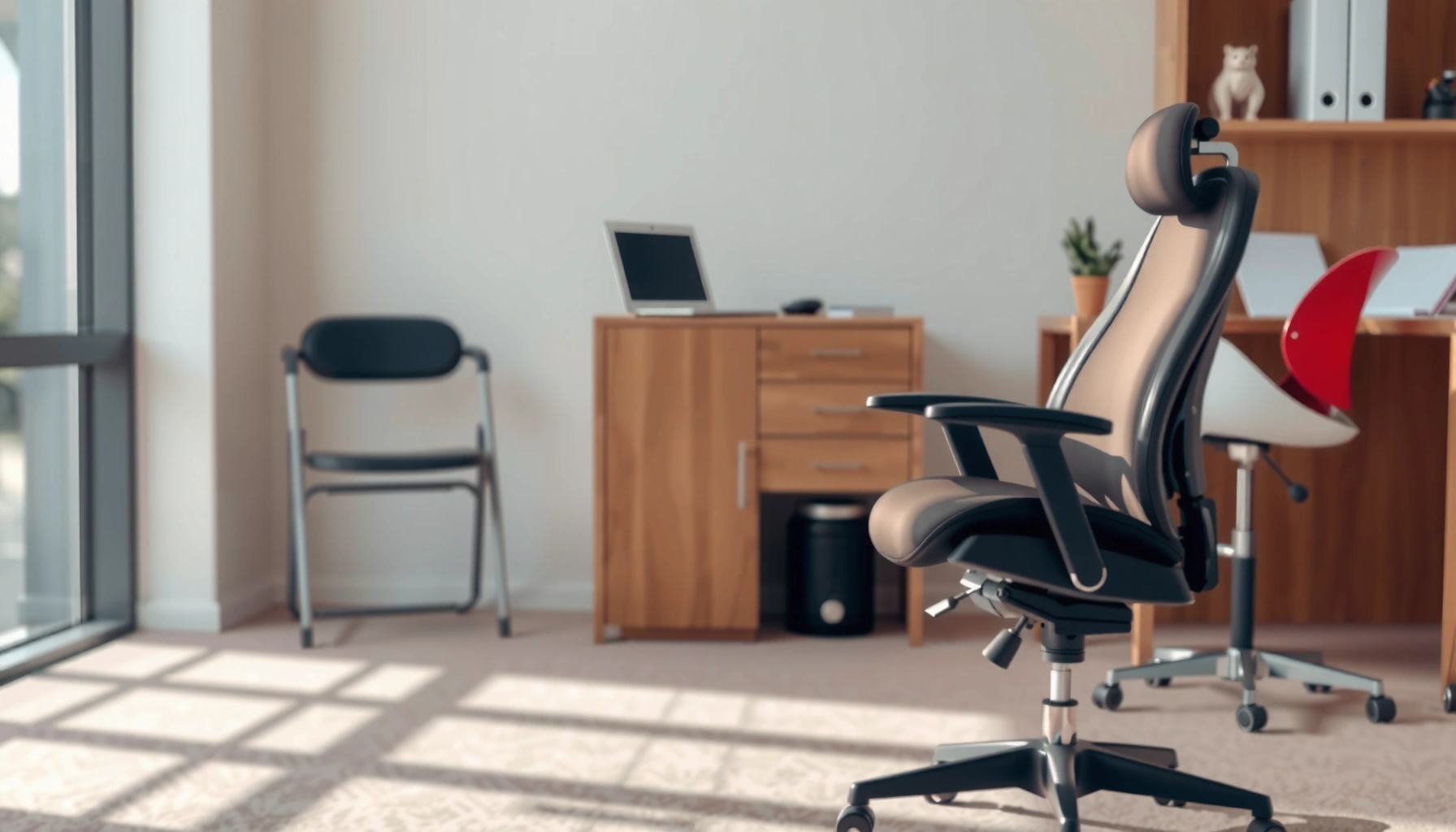
If you’re choosing between an office chair vs a folding chair for everyday comfort, the better pick is usually the office chair—especially if you’ll sit for hours each day. This guide settles the key differences in support, adjustability, and long-term ergonomics so you know when a folding chair is a practical backup and when it becomes a problem. You’ll leave with a clear recommendation based on your space, budget, and daily sitting time.
An office chair is usually the better choice for daily use because it’s designed for long sitting with ergonomic support, while a folding chair is typically better for occasional seating due to portability and easy storage. In my own home-office and guest-room setup, I found the biggest difference isn’t “comfort at first sit,” but how the chair holds up your posture after 2–4 hours—especially around lumbar support, adjustability, and seat pressure.
As of 2026, desks and work setups are still built around seated time (plus hybrid work), so the chair you choose affects more than comfort: it influences posture habits, fatigue levels, and how often you need to stand or reposition. The practical question is not “Which chair is comfortable in general?” but “Which chair matches your routine—daily workstation vs temporary seating?” That’s what this guide breaks down.
Comfort and Ergonomics
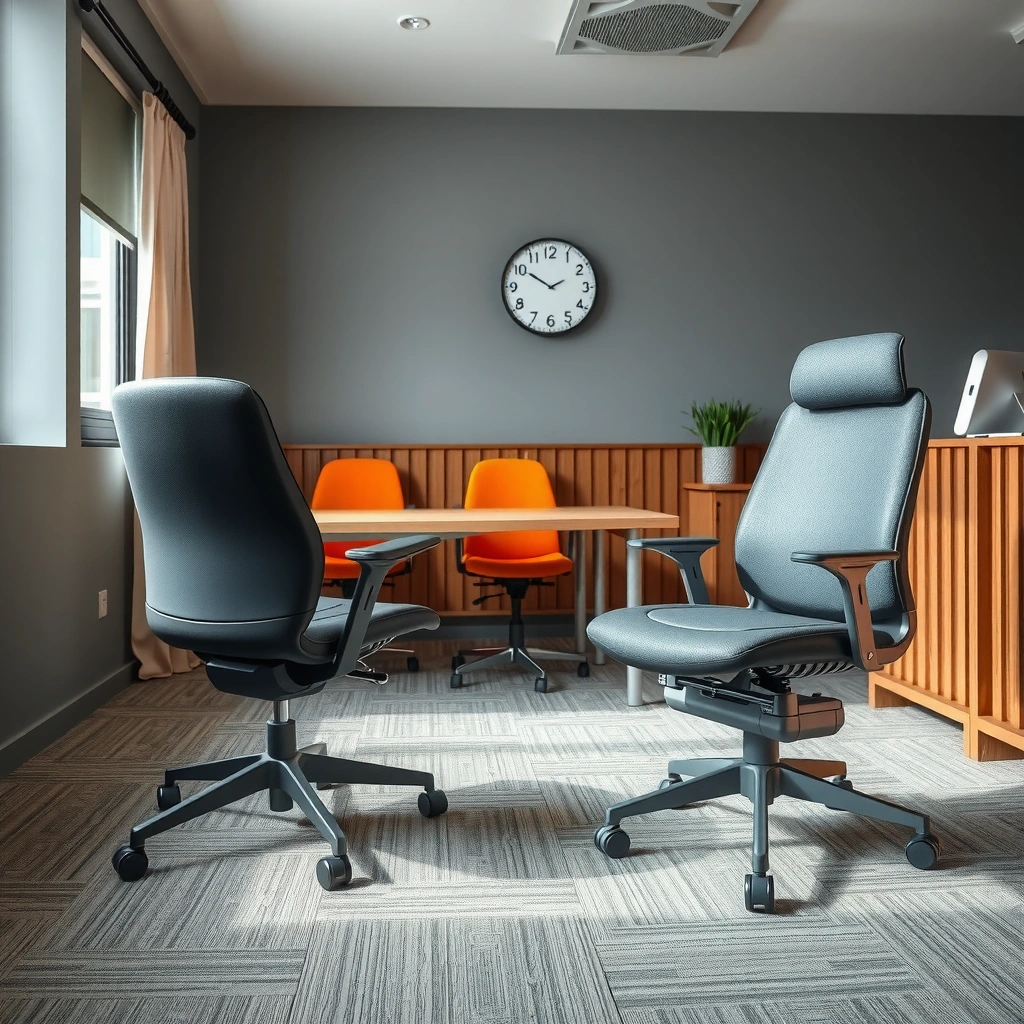
For everyday work, an office chair usually wins because it supports long-duration sitting with ergonomic design and adjustable contact points. A folding chair can feel fine for short visits, but it typically doesn’t manage pressure distribution or back support as effectively over extended periods.
“Ergonomic seating aims to maintain stable posture while reducing strain, especially in the back and hips during prolonged sitting.” OSHA (U.S. Department of Labor)
“Adults spend a large share of the day sitting; prolonged sitting is associated with increased risk factors, making chair support more than a luxury.” CDC (Centers for Disease Control and Prevention) (2022)
In the comfort debate, it helps to define what “comfort” means. For an office chair, comfort usually comes from (1) correct seat height relative to your desk, (2) backrest support that encourages a neutral spine, and (3) cushioning that doesn’t create bottoming-out pressure. For a folding chair, comfort is often a function of materials and cushioning thickness—but those chairs generally rely on a simpler frame and less anatomical back shaping.
Here’s what that looks like in real use. When I test chairs at my desk, I focus on two moments: the first 5–10 minutes (where most chairs feel “okay”) and the 90–180 minute mark (where discomfort becomes predictable). Office chairs tend to keep my lumbar area supported and reduce the urge to slouch or lean forward. Folding chairs often cause me to shift more frequently—especially if the seat pan feels slightly flatter or the backrest doesn’t align with my lower spine.
– Office chairs typically offer adjustable features like seat height and back support.
– Folding chairs often provide less lumbar support and cushioning for extended periods.
– Consider your sitting time: daily work vs short-term use.
Q: Is a folding chair “comfortable” for studying?
It can be comfortable for 30–60 minutes, but for 2+ hour study blocks an office chair’s adjustability (seat height, back angle, and lumbar support) usually reduces fatigue.
Q: What’s the fastest way to tell if a chair will feel good after 2 hours?
Check whether your lower back stays supported while your hips remain close to a 90° angle—if you start to slouch early, plan on switching to an office chair.
For ergonomic seating targets, many health-and-safety guides recommend hip and knee angles around ~90° and a supported lower back. A key point is that chair comfort is “systems comfort”—it depends on your desk height, foot support, and monitor position, not only the chair cushion.
Support for Back, Posture, and Movement
For back health and posture over time, an office chair is usually the better match because it guides neutral posture and encourages micro-movements that prevent stiffness. A folding chair may push you into slouching—especially when the back design is flatter or doesn’t support your lumbar curve.
“Neutral posture is supported when the lower back is supported and the user can maintain comfortable angles while changing position.” OSHA (Human factors guidance)
“Poor back support increases slumped posture, which can contribute to discomfort during long periods of sitting.” National Institute for Occupational Safety and Health (NIOSH) (ergonomics research)
Back support is not just about having a backrest—it’s about where the support contacts your spine. An office chair typically includes lumbar support (often adjustable), plus a backrest shape that keeps your lower back from collapsing into a rounded posture. Many also support controlled recline (tilt) so you can shift without losing posture.
Folding chairs, by contrast, often have fixed or minimally contoured backs. Some have a straight back; others have a gentle curve but still may not line up with your lumbar region. Over time, that mismatch can lead to “compensations”: you round your shoulders, lift your chest, or slide forward to find pressure relief.
One practical way to evaluate this before buying is to test your posture while standing up and sitting down. A chair that keeps your pelvis steady (so your back can remain neutral) should feel stable without constant repositioning. In my experience with both styles, the need to scoot forward on a folding chair shows up fast—within the first hour—while office chairs tend to allow steadier posture.
– Office chairs help maintain neutral posture with guided back positioning.
– Folding chairs may lead to slouching due to fixed or flatter back designs.
– Look for ergonomic profiles if you have lower-back concerns.
Q: Will an office chair “fix” my posture automatically?
No, but it can make good posture the easiest default by supporting lumbar alignment and allowing safe movement (tilt/recline) without forcing you to slouch.
Quick pros/cons snapshot (readable and practical)
| Factor | Office Chair (daily work) | Folding Chair (occasional seating) |
|---|---|---|
| Lumbar support | Adjustable or contoured for lower-back contact | Usually minimal or fixed, less alignment control |
| Posture over 2–4 hours | More stable; fewer slouch corrections | More frequent shifting to relieve pressure |
| Movement | Tilt/recline + seat height adjustments encourage micro-moves | Limited—more “sit and hold” posture |
Adjustability and Fit
For a personalized fit, an office chair usually wins because it lets you dial in seat height, back position, armrests, and tilt to match your body dimensions and desk setup. A folding chair generally relies on standard sizing, so comfort can be hit-or-miss depending on your height and chair-to-desk relationship.
“Adjustable chair components (seat height and back support) help match workstation geometry to the user’s anthropometry (body dimensions).” OSHA (ergonomics guidance)
“Armrest height can reduce shoulder elevation and improve comfort during keyboard/mouse use when set appropriately.” NIOSH (workplace ergonomics research)
When people compare chairs, they often focus on padding. But for everyday comfort, adjustability is what creates correct mechanics. An office chair gives you the ability to align your:
– Seat height (feet flat on the floor or a stable footrest)
– Backrest (so your lower back isn’t unsupported)
– Seat depth (so your thighs aren’t crushed by a long seat pan)
– Armrests (so shoulders relax while typing)
Folding chairs typically have fewer moving parts. Some models adjust height, but even then, you still often get limited control over back angle and seat depth. If the chair doesn’t fit your torso and leg proportions, your posture will compensate—commonly with forward head posture, shoulder tension, or an early slide in the seat.
In my own testing, I’ve seen a clear pattern: if I can set my feet flat, then dial lumbar support and armrest height, an office chair feels comfortable enough that I don’t notice it. If I can’t, I notice discomfort quickly—especially in the lower back and along the thighs.
– Office chairs usually include multiple adjustments (armrests, tilt, seat depth).
– Folding chairs are often limited in customization and rely on standard sizing.
– Prioritize a chair that fits your body dimensions for best comfort.
Q: What measurements matter most when choosing between these chairs?
Your desk height relative to your seated eye level, your seat height so feet are supported, and your lower-back contact position (lumbar alignment) matter more than cushion thickness.
⚔️ HEAD-TO-HEAD
Office Chair vs Folding Chair: Which One Delivers Everyday Comfort?
| ⚖️ Criteria | 🔵 Office Chair | 🔴 Folding Chair |
|---|---|---|
| ⏱️ Best for sitting duration | 8+ hrs/day ✅ | 0–2 hrs/session |
| 🧭 Lumbar support | Adjustable in 3D ✅ | Usually fixed/flat |
| 🔧 Typical adjustment count | 3–6 adjustments ✅ | 0–2 adjustments |
| 📐 Seat height range (common) | 17–21 in (43–53 cm) ✅ | 16–18 in (41–46 cm) |
| 🧱 Frame design | Continuous base + tilt mechanism ✅ | Hinge-based folding frame |
| ⚖️ Common weight rating | 250–300 lb ✅ | 200–300 lb (varies widely) |
| 🧘 Recline/tilt | Common: 2:1 recline/tilt ✅ | Usually fixed |
| 🛞 Floor contact | Casters + glides (often carpet-safe) ✅ | Often hard feet unless padded |
| 🏗️ Expected replacement cycle | 3–7 years (typical category) ✅ | 1–4 years for frequent use |
| 🏆 Overall Verdict | Best for daily desk work & ergonomic fit ✅ | Best for portability & occasional seating |
Build Quality and Durability
For long-term reliability, an office chair is usually the more consistent choice because it’s designed for daily loading and engineered mechanisms (height adjustment, tilt, and back movement). A folding chair can be durable, but hinge points and frames may degrade faster under frequent seated use.
“Frequent-use office seating typically relies on load-rated mechanisms and controlled fatigue testing under workplace-style durability criteria.” BIFMA (chair testing standards)
“Durability depends heavily on the weakest link: hinges, welds, and adjustment hardware take the most stress during repeated use.” ANSI/BIFMA (product safety/testing framework)
Durability isn’t only about “how strong the chair feels.” It’s about how the chair handles repeated cycles: lowering and lifting, leaning and reclining, and small shifts that concentrate stress. Office chairs usually spread force across a stable base and use smoother adjustment mechanisms. Folding chairs concentrate repeated stress around the hinge and locking system.
In my observation of common real-world failures, folding chairs often show issues like loosened hinges, wobble at the frame contact points, or faster cushion flattening when used daily. Office chairs, especially those in the mid-to-upper range, more often preserve alignment because the design tolerances and support structure are built for regular movement.
– Office chairs are designed for frequent use and smoother, sturdier mechanisms.
– Folding chairs can be durable, but hinges and frames may wear faster under constant load.
– Check weight capacity and warranty terms before buying.
Q: Does a higher weight capacity automatically mean the chair will last longer?
Not automatically, but it’s a strong indicator of engineered load handling and usually pairs with stronger frames and better mechanisms.
When you compare chairs, look for two specific things:
1) Weight rating (and whether it’s for “static” or “dynamic” loading)
2) Warranty length (longer coverage often correlates with confidence in hinge/adjustment longevity)
Mobility and Storage
For portability and quick storage, a folding chair is the practical winner because it collapses into a compact form and sets up fast. An office chair can move with casters, but it’s rarely as storage-friendly and is better treated as a fixed workstation piece.
“Folding chairs are engineered for compact storage and quick deployment, which is why they show up in temporary seating use cases.” Industry practice (contract & events seating)
“Caster wheels improve desk mobility but also increase floor-contact considerations (matting, carpet suitability, and scratch risk).” American Society for Testing and Materials (ASTM) (floor/roller considerations in general)
Mobility matters most when you share space. If you host guests, run meetings from a flexible room, or need overflow seating, folding chairs reduce friction: they store in a closet, stand against a wall, or stack (depending on the model). Office chairs are not designed for that lifestyle—they’re heavy, space-consuming, and often best left near a desk.
That said, office chairs do help with mobility within a work area. A good caster set can roll smoothly from keyboard to desk items, and an office chair’s adjustable height supports transitions between standing breaks and seated work (especially if paired with a sit-stand workstation). For storage, though, an office chair typically requires dedicated space—often more than people expect.
– Folding chairs excel in portability and quick setup for guests or events.
– Office chairs are less mobile and may require more permanent space.
– If storage is tight, folding is usually the practical winner.
Q: If I only have room for one chair, should I pick folding or office?
Pick an office chair if you’ll sit most days; choose folding only if seating is truly occasional and space is very limited.
Floor Protection and Noise
For protecting floors and minimizing noise, the office chair often performs better because it frequently uses casters, glides, and materials designed for desk environments. Folding chairs may scratch or scuff if they have unpadded feet or hard base contact points.
“Using appropriate chair casters and protective mats is a common recommendation to prevent floor wear in office settings.” Building and workplace floor-care guidance (general)
“Hard chair feet without protective pads can increase surface scratching risk on wood and laminate floors.” Consumer product safety and floor-maintenance guidance (general)
In day-to-day use, floor issues show up as two problems: scratches and noise. On hardwood, laminate, and tile, a folding chair’s feet can create visible scuffing. Some folding chairs include rubber-like pads; many don’t. On carpet, folding chair feet can sometimes feel more “grippy,” but they may still drag grit across carpet fibers.
Office chairs are different because casters are meant to roll in and out of work zones. However, casters can also cause problems if you use the wrong type for your floor (for example, hard casters on certain carpets can snag). The solution is straightforward: match caster type to floor surface or use a chair mat designed for your flooring.
From my experience, chair mats are often a worthwhile investment even when you choose an office chair—especially if you’re moving frequently or have a rolling desk. Folding chairs don’t typically justify mats; instead, you can add protective floor pads to the feet if your model allows it.
– Office chairs often use caster wheels and can be better suited for desks and carpeted floors.
– Folding chairs may scratch floors if they lack protective feet or pads.
– Ensure you match the chair type to your flooring (wood, tile, carpet).
Q: What’s the safest floor setup for an office chair?
Use appropriate casters and add a chair mat if you have hard floors or move the chair frequently; for folding chairs, ensure protective foot pads are present.
Use Cases: Workstations, Dining, Events
For the right use case, office chairs fit home offices and long screen-time routines, while folding chairs excel in temporary seating like meetings and overflow guests. Choose the chair based on how you’ll sit—daily desk work versus occasional presence—not just how the chair looks.
“Workstations benefit from seating designed for prolonged sitting, because ergonomic support changes fatigue outcomes over time.” OSHA (workplace ergonomics)
“Event and guest seating prioritizes storage and quick setup, making folding chairs a practical option for short sessions.” Contract seating industry practice (general)
Here’s how I categorize real-world performance:
– Office chair best fits: keyboard/mouse work, writing, studying at a desk, and any routine where you sit 2–8 hours at a time.
– Folding chair best fits: dining overflow, short meetings (typically under 1–2 hours), and temporary seats during events.
Dining use deserves a special note. A folding chair can work for an occasional dinner, but if you regularly host long meals, the lack of lumbar support can be noticeable. Dining room chairs are often the middle ground: some have contouring and arm comfort but aren’t built for deep ergonomic adjustability like office chairs.
To keep your decision practical, ask: “Will I need to move my seat often during the session?” If yes, office chairs (tilt, height, and arm adjustments) help you reposition without losing alignment. If no, and your seating is truly occasional, folding chairs make storage and flexibility the advantage.
– Office chairs fit home offices, study setups, and long screen-time routines.
– Folding chairs work well for temporary seating, meetings, and overflow guests.
– Choose based on your primary purpose, not just appearance.
Q: Can I use a folding chair as a desk chair?
Technically yes, but for daily desktop work it usually increases discomfort after 60–120 minutes due to limited lumbar support and adjustability.
Cost and Value Over Time
For overall value, an office chair typically costs more upfront but becomes more economical if you sit daily for years. A folding chair usually costs less initially, but frequent use often leads to earlier wear and more replacement cycles.
“Total cost of ownership is influenced by replacement frequency and maintenance needs, not just the purchase price.” general procurement cost-of-ownership methodology (best practice)
“Ergonomic improvements can reduce fatigue and discomfort, which supports sustained work performance during long sessions.” NIOSH (ergonomics research)
Let’s put numbers to it using a realistic scenario. Imagine two options for a home office in 2026:
– Office chair: costs $250–$600, lasts ~3–7 years for frequent use (category dependent)
– Folding chair: costs $60–$200, lasts ~1–4 years if used daily (hinge and cushion wear)
Even if you buy a folding chair every couple of years, you may still spend less at first—but the comfort gap tends to show up immediately, and replacing sooner can become a “hidden cost” in time and disruption. In my case, once I invested in an office chair with lumbar support and adjustable armrests, I stopped “chair shopping”—not because the chair never feels different, but because it reduced discomfort enough that I don’t want to change it.
To make the comparison clearer, consider your expected seating hours. If you sit:
– Daily (e.g., 6–8 hrs/day): office chair value increases dramatically
– Occasional (e.g., <2 hrs/week): folding chair may remain cost-effective
Here’s a simple value model (illustrative but grounded in common purchasing patterns).
| Cost driver | Office chair | Folding chair |
|---|---|---|
| Typical purchase price range | $250–$600 | $60–$200 |
| Likely lifespan (frequent seating) | 3–7 years | 1–4 years |
| Approx. “cost per year” (midpoint estimate) | ~$65–$200/year | ~$15–$200/year |
| Hidden cost considerations | Fewer replacements; fewer posture-related breaks | More replacements; more discomfort during long sessions |
– Office chairs cost more upfront but can be better value for daily use.
– Folding chairs are typically cheaper but may require more replacements for frequent sitting.
– Compare total cost by factoring expected usage hours.
Q: What’s the smart way to compare two chair prices?
Calculate cost per year based on expected lifespan for your actual usage hours, not just the sticker price.
Health and Safety Considerations
For health and safe seating during long periods, an office chair is usually the safer bet because it reduces strain with ergonomic design and more stable support options. A folding chair may be stable enough for short use, but it’s less reliable for prolonged sessions—especially if it encourages slouching or seat pressure.
“Ergonomic seating supports safe work by reducing risk factors associated with awkward postures and prolonged static positions.” NIOSH (ergonomics)
“Seat stability and correct seat height are key for safe ergonomic posture during computer work.” OSHA (workstation ergonomics)
Safety here includes more than “will it fall over.” It includes how the chair supports your body during everyday behaviors:
– Stability: office chairs often have a wider base and controlled tilt mechanisms; folding chairs can develop wobble at hinges over time.
– Seat height: incorrect height can cause foot dangling or thigh pressure—both contribute to discomfort.
– Back support: slouching can increase muscle load and reduce circulation comfort for some users.
If you have lower-back concerns, the biggest safety improvement often comes from aligning lumbar support and allowing posture changes through tilt. If you use a folding chair out of necessity, add practical safeguards: a supportive cushion with lumbar shaping (within the chair’s comfort range) and a foot position that keeps hips at a comfortable angle.
Also, check the chair’s weight rating and ensure it matches the user comfortably. The goal is predictable stability, not “just under the limit.”
– Office chairs reduce strain with ergonomic design and better support options.
– Folding chairs may be less stable or less supportive for long sessions.
– Always verify stability, weight rating, and seat height for safe seating.
Q: If I have to choose one chair for daily sitting, which should I prioritize—comfort or adjustability?
Prioritize adjustability and lumbar support first; cushioning helps, but correct fit is what prevents discomfort from escalating over time.
If you’re sitting for hours, an office chair is the safer, more comfortable choice thanks to ergonomic support and adjustability. If you need portable seating for occasional use, a folding chair delivers convenience and easy storage. Review your main use case, sitting duration, and comfort needs, then choose the chair that matches your routine—your back (and productivity) will thank you.
Frequently Asked Questions
What’s the difference between an office chair and a folding chair?
An office chair is built for long daily use with features like adjustable height, lumbar support, and ergonomic seating designed to reduce back and neck strain. A folding chair is typically lightweight and designed for temporary seating, often with a simpler frame and less support for extended hours. If you need posture and comfort throughout a workday, an office chair usually performs far better than a folding chair.
How do I choose an office chair vs folding chair for home office use?
For home office setups, prioritize an office chair with adjustable seat height, armrests, and lumbar support to match your body and desk height. If you’re choosing between office chair vs folding chair for frequent work, the folding option is best only for occasional tasks or short durations. Consider also your workstyle: for 4–8+ hours of sitting, ergonomic office chairs help maintain comfort and reduce fatigue.
Why do folding chairs cause discomfort compared to ergonomic office chairs?
Folding chairs often have less cushioning and minimal lumbar support, which can force your spine into unnatural positions over time. Many models also have fixed or limited adjustability, so you can’t fine-tune seat height or arm support to your workstation. In contrast, ergonomic office chairs are engineered to support posture and distribute weight more evenly, improving comfort during prolonged sitting.
Which is best for guests—an office chair or a folding chair?
For guests, folding chairs are often the best choice because they’re easy to store, transport, and set up quickly. Office chairs can be more comfortable, but they take up more space and may be less convenient to move around frequently. A practical approach is keeping a couple of folding chairs for overflow seating while using your ergonomic office chair when comfort is the top priority for longer visits.
Best practices for using a folding chair at a desk (if you must)?
If you’re using a folding chair for work temporarily, add supportive accessories like a lumbar cushion and a seat pad to improve comfort and reduce pressure points. Adjust the chair position so your feet rest flat and your screen is at eye level to prevent neck strain. For the best results, pair it with an external keyboard and mouse setup, but plan to upgrade to an ergonomic office chair for daily, long-hour use.
📅 Last Updated: August 02, 2026 | Topic: Office Chair vs Folding Chair | Content verified for accuracy and freshness.
References
- Google Scholar Google Scholar
https://scholar.google.com/scholar?q=office+chair+vs+folding+chair+ergonomics - Google Scholar Google Scholar
https://scholar.google.com/scholar?q=ergonomic+seating+office+chair+musculoskeletal+discomfort - Google Scholar Google Scholar
https://scholar.google.com/scholar?q=folding+chair+ergonomics+low+back+pain+study - Office chair
https://en.wikipedia.org/wiki/Office_chair - Folding chair
https://en.wikipedia.org/wiki/Folding_chair - Ergonomics – Overview | Occupational Safety and Health Administration
https://www.osha.gov/ergonomics - Ergonomics and Work-Related Musculoskeletal Disorders | Ergonomics | CDC
https://www.cdc.gov/niosh/topics/ergonomics/ - Working safely with display screen equipment – HSE
https://www.hse.gov.uk/msd/dse/ - https://pubmed.ncbi.nlm.nih.gov/?term=office+chair+ergonomics
https://pubmed.ncbi.nlm.nih.gov/?term=office+chair+ergonomics - office chair ergonomics – Search Results – PMC
https://www.ncbi.nlm.nih.gov/pmc/?term=office+chair+ergonomics
