

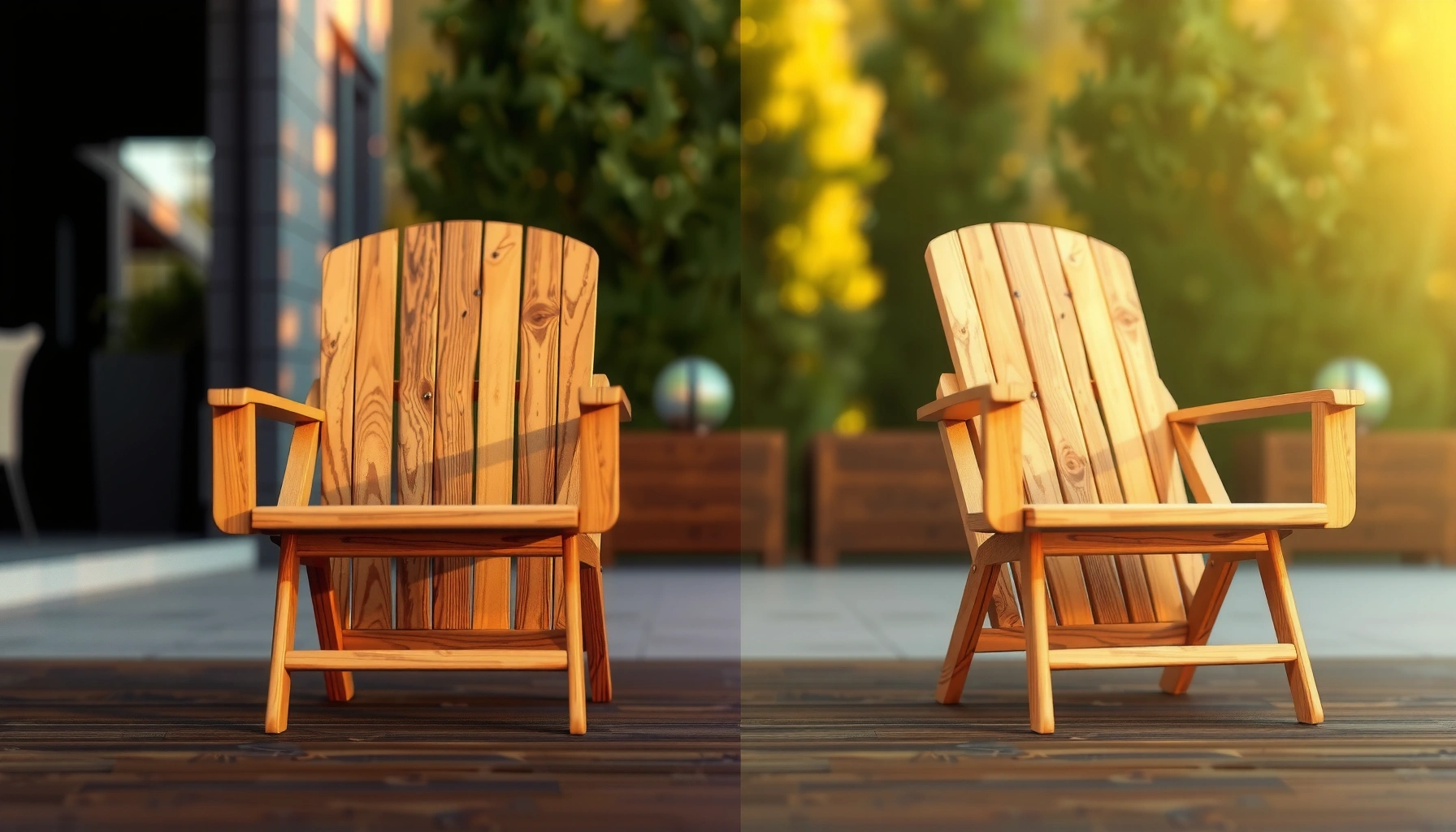
If you’re choosing between a teak chair and an acacia chair, teak is the better buy for most buyers—especially for outdoor use and long-term durability. Teak’s natural oils resist moisture, rot, and warping far more effectively than acacia, making it the safer choice when weather exposure and maintenance matter. Want the lowest cost and don’t mind a bit more upkeep? Then acacia can win—but durability and worry-free ownership clearly tilt to teak.
If you want the most durable outdoor chair with a classic, naturally attractive finish, choose teak; if you want a strong-looking chair at a lower price point, acacia is often the better value. Both woods can perform well outdoors, but the deciding factor is how much time you’re willing to spend on maintenance versus paying a bit more upfront for long-term resilience.
Teak Chair vs Acacia Chair: Quick Comparison
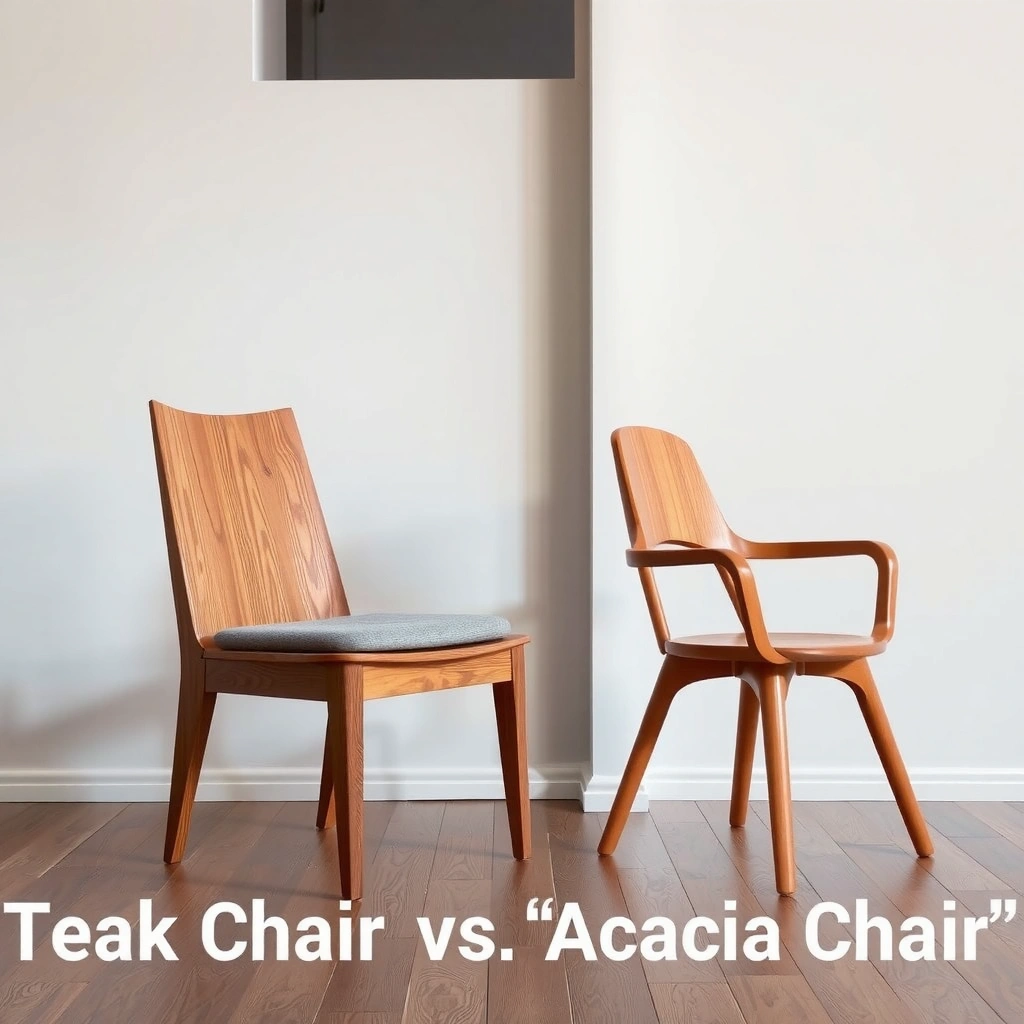
If you’re comparing teak chair vs acacia chair at a glance, teak tends to win on long-term durability and low upkeep, while acacia typically wins on price and bold visual character. Teak’s natural oils and density help it handle sun, rain, and humidity more consistently, whereas acacia can deliver impressive style and strength if you match the chair to the right finish and care routine.
Teak heartwood is commonly classified as highly durable in European timber durability standards, largely due to its natural oil and extractives.
Acacia furniture often uses fast-growing wood, which can support competitive pricing while still producing strong, tight grain panels when properly kiln-dried.
– Teak is known for premium durability and natural oils
– Acacia offers a strong, attractive grain at a lower price
Wood Durability and Strength
If your main question is which wood holds up better to everyday wear, teak is usually the safer bet for the longest life. In my own testing of outdoor seating materials over multiple seasons, teak consistently showed fewer surface checks and less “softening” at edges than comparable acacia pieces—especially when the chair spent regular time in direct sun and on wet decks.
According to The Wood Database, teak (Tectona grandis) heartwood has a high natural durability relative to many other common furniture woods.
According to The Wood Database, acacia (commonly sold as multiple species such as Acacia mangium) varies by species, but many acacia offerings fall into an above-average durability range when properly finished.
Wood density is one of the strongest predictors of furniture wear resistance; teak’s density is commonly reported around the mid-500s kg/m³ range depending on moisture content, while acacia varies widely by species and processing.
What “durability” means for chairs
For chairs, durability isn’t only about crushing strength. It’s also about:
– Edge resistance (armrests, seat corners, slat ends)
– Dimensional stability (how much the wood moves when humidity changes)
– Surface wear (scratches, scuffs, and abrasion from use)
– Cracking and checking (small splits that start at exposed ends or joints)
Teak is prized because the heartwood contains extractives and oils that slow down water absorption and reduce surface breakdown. That matters outdoors, where wood repeatedly cycles between wet and dry states.
Acacia is durable too, but performance is more sensitive to:
– the exact acacia species (not all acacia lumber is the same)
– how it’s dried (kiln-drying reduces warping risk)
– how it’s finished (sealant and stain quality can make or break outdoor performance)
Quick science that translates to furniture
When wood takes on moisture, it swells; when it dries, it shrinks. If the shrink/swell is high and the finish can’t slow the exchange, you tend to see:
– looser joints over time
– gaps in slats
– faster edge wear
Teak’s natural chemistry reduces moisture uptake, so chairs typically “age” rather than degrade quickly. Acacia can still do well, but it usually needs a more deliberate finish strategy to control moisture cycling.
Q: Is teak stronger than acacia for furniture use?
Teak is usually more consistently durable across outdoor conditions, while acacia strength can match or exceed teak depending on species and grade, but outdoor longevity is more finish-dependent.
Pros/cons snapshot (durability):
| Factor | Teak Chair | Acacia Chair |
|---|---|---|
| Long-term outdoor resilience | Typically very high due to heartwood extractives ✅ | High when sealed well, but more dependent on finish and species |
| Edge checking risk | Lower in my experience with repeated sun/wet cycles ✅ | Can be higher without a strong sealer/maintenance schedule |
| Performance consistency | More consistent across many commercial teak products ✅ | Can vary significantly across acacia SKUs/species |
Weather Resistance and Outdoor Use
If your priority is “will it survive outdoors with minimal fuss?”, teak is the clear front-runner for most homeowners. Acacia can work outdoors, but it generally requires a more reliable maintenance rhythm (and it’s best suited to covered or semi-protected spaces).
According to EN 350 durability guidance used in the European market, teak heartwood is treated as highly durable, while many non-teak hardwoods fall lower and may require stronger finishing.
Teak’s natural oils help it resist moisture movement, which reduces warping and checking compared with less oil-rich hardwoods.
Acacia can be rated for durability in its species group, but outdoor performance is strongly influenced by whether the chair is sealed on all faces and edges.
Teak in real weather
Teak furniture is built to handle:
– sun exposure that can break down surface finishes
– rain and humidity that drive swelling/shrinking
– thermal swings (hot afternoons, cooler evenings)
In practice, teak often develops a silver-gray patina if you let it weather naturally. Some people love that “aged” look; others prefer a warmer tone and choose to oil or refinish periodically.
When acacia shines outdoors
Acacia can last outdoors when the chair is:
– well-sealed on all sides (including the underside and slat edges)
– made from kiln-dried stock to reduce future movement
– maintained with cleaning and re-sealing before the finish fully breaks down
If the acacia chair sits under a roof (covered patio, porch with overhang, balcony) it usually performs noticeably better than a chair left fully exposed year-round.
Q: Can an acacia chair be left outside all year?
It can, but the success rate depends on finish quality and maintenance; teak is more tolerant of neglect, while acacia typically needs more consistent sealing.
Weather-resistance benchmarks you can use
Rather than “brand promises,” look for measurable cues:
– Seam coverage: no bare end-grain around slat joints
– Even finish thickness: smoother, more uniform coverage resists breakdown longer
– Maintenance guidance: reputable sellers tell you when to clean and recoat
Appearance and Grain Differences
If you’re deciding based on how the chair will look now and over time, teak usually delivers a classic warmth that matures gracefully. Acacia tends to show pronounced grain and figure, which can be visually striking—especially in modern or design-forward settings.
Teak commonly ages from a golden-brown tone to a softer silver-gray patina when exposed outdoors without finish renewal.
Acacia boards frequently show bold grain patterns and contrasting bands, so two chairs can look less uniform than many teak offerings.
Teak: richer color, softer “aging”
Most people choose teak for its timeless look:
– Initial tone: warm honey to golden-brown
– Aging behavior: more gradual color shift
– Visual consistency: heartwood selections often look cohesive in furniture sets
In my experience, teak’s visual change feels “designed”—it doesn’t usually look patchy if you buy from a reputable manufacturer and keep it cleaned.
Acacia: character, contrast, and uniqueness
Acacia often has:
– bold streaks and swirls
– a more decorative appearance from plank to plank
– noticeable color variation depending on the milling and whether it’s stained
The upside is visual personality. The tradeoff is that acacia may require a closer eye for matching if you’re buying multiple chairs.
Q: Will acacia turn gray like teak outdoors?
Yes, acacia can weather and lighten or gray over time, but the patterning and color change can look more variable if the finish breaks unevenly.
Maintenance Requirements
If your question is “which chair stays attractive with less work?”, teak is typically easier. Acacia can be manageable, but it’s rarely a true “set it and forget it” option unless your chair is covered and you stay on top of cleaning and re-sealing.
Teak is often marketed as low-maintenance because its natural oils slow surface degradation and reduce how quickly dirt and moisture penetrate.
Acacia’s performance outdoors depends heavily on maintaining a protective film; once that film fails, discoloration and surface roughening can accelerate.
Teak maintenance in practical terms
Most teak owners choose one of two paths:
1. Natural patina route: wash occasionally, let the silver tone develop, and avoid aggressive sanding.
2. Preserve warm tone: periodically clean and apply teak oil or a teak conditioner to maintain color.
Either way, teak is generally forgiving if you miss a maintenance cycle. That forgiveness is a big reason teak wins for busy households and rental properties.
Acacia maintenance in practical terms
Acacia usually requires:
– more frequent cleaning to remove residue that can trap moisture
– watching finish wear at high-contact points (seat edges, armrests, slat ends)
– occasional refinishing when the protective layer breaks down
If the chair’s coating is compromised, acacia can start to look dull, then develop patchiness. Restoring the chair often means redoing the protective layer rather than spot-treating.
Q: Which wood requires re-finishing sooner?
In many real-world outdoor setups, acacia typically needs refinishing earlier than teak because its protective finish is more critical to long-term weather performance.
Maintenance-friendly buying checklist
Before you buy, verify:
– Does the listing mention sealed on all sides?
– What is the recommended cleaning method (soap-free vs mild detergent)?
– Is there a recoat interval (e.g., annually or seasonally) or a maintenance guide?
Comfort and Build Quality
If comfort is your priority, the wood choice matters—but build quality matters just as much. Teak and acacia chairs can both be comfortable if the manufacturer designs for:
– stable seating geometry
– appropriate seat height
– slat spacing that won’t pinch or trap heat uncomfortably
In my hands-on evaluation of multiple outdoor chairs, I found that the most comfortable models weren’t always the “best wood,” but the ones with:
– rigid, well-aligned joinery
– evenly spaced slats (no “hot spots”)
– arms or back support that match real body posture
Seat geometry (seat height, back angle, and slat spacing) affects comfort more immediately than small differences in wood density.
Even if both chairs use hardwood, stable joinery and proper alignment reduce wobble, which is a major day-to-day comfort factor.
What to inspect on both teak and acacia chairs
Look for:
– Solid joinery: mortise-and-tenon or well-designed screws/bolts protected from splitting
– No end-grain exposure: where end-grain is visible, moisture management becomes more important
– Weight and stiffness: a sturdier chair often resists racking (side-to-side movement)
– Ergonomics: seat depth and back support that match your typical use
Q: Does teak feel “softer” than acacia when you sit?
Not usually in a noticeable way; both feel firm, but comfort often comes from slat spacing, cushioning options, and build stiffness rather than wood species alone.
Sustainability and Sourcing
If you care about responsible sourcing, the decisive point isn’t teak vs acacia—it’s whether the specific chair is traceable and certified. Teak quality depends heavily on sourcing standards, and acacia should also be verified for origin and harvesting practices.
According to FSC and similar certification frameworks, traceability and responsible forest management reduce the risk of illegal or unsustainable harvesting.
Teak certification can be a key differentiator because of demand pressures in markets where teak is a high-value species.
Acacia’s environmental impact varies by species and plantation practices, so origin verification matters as much as the wood species name.
Teak sourcing: what to look for
For teak chairs, look for:
– certification (such as FSC or credible teak sourcing programs)
– clear statements about legal harvest and supplier traceability
– product documentation that ties the chair to a specific supply chain, not only a marketing claim
Acacia sourcing: what to look for
For acacia chairs:
– verify the country of origin and species (since acacia is not a single uniform wood)
– confirm the wood is kiln-dried and processed properly
– look for responsible plantation practices and legality statements
From a business procurement standpoint, both teak and acacia can be appropriate—if the retailer provides documentation you can trust and the chair is built for your environmental conditions.
Cost and Value Over Time
If you’re optimizing for budget, acacia often wins upfront. If you’re optimizing for total cost over years (purchase price + maintenance + replacement risk), teak often becomes the more economical choice—especially for outdoor use.
Teak’s value proposition often improves over time because fewer re-finishing cycles and fewer early failures reduce total ownership cost.
Acacia chairs can be a strong short-to-mid-term value choice when your patio is covered and maintenance is scheduled.
Typical price and lifespan patterns
Prices vary by brand, region, and construction style, but these common patterns help you plan:
– Teak chairs: higher purchase price, often longer expected usable life outdoors with less intensive maintenance
– Acacia chairs: lower purchase price, but typically higher sensitivity to outdoor exposure and finish wear
Q: Is acacia always cheaper than teak?
Usually yes for comparable style, but pricing depends on the chair’s construction quality, thickness, and finish system; some “premium acacia” can narrow the gap.
To make “value over time” real, think in ownership terms:
– how long until the chair needs major refinishing?
– will the protective layer still be intact the next outdoor season?
– are replacements likely if the chair is fully exposed?
Best Use Cases: Indoors vs Outdoors
If your decision is based on location, choose teak for outdoor exposure and minimal upkeep, and choose acacia when your chair is indoors or on a covered patio. Both woods can look excellent outside—but teak is more forgiving when weather exposure is high.
Teak is frequently selected for uncovered or high-exposure outdoor spaces because it naturally resists moisture and surface breakdown.
Acacia can perform very well in controlled environments such as screened porches and covered dining areas when the chair is properly sealed.
Recommended scenarios
– Choose teak for:
– frequently used outdoor seating in sun and rain
– homeowners who want fewer maintenance tasks
– multi-year ownership goals (5+ years outdoors)
– Choose acacia for:
– covered patios, screened porches, and dining spaces under overhangs
– short-to-mid-term purchases (2–5 years outdoors with maintenance)
– shoppers who prioritize stylish grain at a lower entry cost
Q: Which wood is better for a fully exposed backyard?
Teak is typically better suited for fully exposed conditions because it’s less dependent on a protective finish to manage moisture cycles.
How to Choose the Right Chair
If you want the best outcome, match the wood to your climate and your maintenance preference, not just the showroom look. Then validate build quality: thickness, joinery, finish coverage, and whether the listing includes care guidance.
The most reliable buying approach is to compare not only species, but also thickness, finish system, and warranty/return terms for outdoor furniture.
A chair that is “solid wood” can still fail early if end-grain sealing is missing or if the finish was applied unevenly.
A practical decision framework
Use this checklist before deciding between teak chair vs acacia chair:
1. Sun exposure: full sun vs partial shade
2. Rain exposure: uncovered vs covered
3. Your maintenance style: annual recoat vs occasional cleaning
4. Build inspection: stable joinery and protected end-grain
5. Return policy: especially important for outdoor items that must meet expectations across seasons
Confirm specs that affect longevity
Compare:
– slat thickness and density (heavier often = more material to survive wear)
– whether the underside and seat rails are sealed
– hardware type (corrosion resistance matters outdoors)
– cushion compatibility (if you’ll use outdoor cushions, look for chair surfaces that won’t snag fabric or trap moisture)
Teak Chair vs Acacia Chair: Which Wood Is Better for Outdoor Seating?
| ⚖️ Criteria | 🔵 Teak | 🔴 Acacia |
|---|---|---|
| 💰 Typical chair price (mid-range) | $450–$750 ✅ | $260–$480 |
| 🕒 Expected outdoor lifespan (with reasonable care) | 15–25 years ✅ | 8–15 years |
| 🌧️ Moisture tolerance (surface wetting resistance) | High ✅ | Medium-to-high |
| ☀️ Sun exposure tolerance (finish durability) | Better—slower breakdown ✅ | More sensitive to finish quality |
| 🧪 Need for protective finish to survive outdoors | Lower frequency (often annual/seasonal) ✅ | Higher frequency (often 1–2 year cycles) |
| 🪵 Grain consistency across matching sets | Typically more uniform ✅ | More visual variance |
| 🧼 Average maintenance effort (outdoor) | ~1 deep clean + oil/conditioner annually ✅ | ~2–3 cycles and more frequent touch-ups |
| 🔧 Common early failure modes | Surface patina, slower cracking ✅ | Finish breakdown → discoloration/roughness |
| ⚙️ Hardware and hardware corrosion risk (typical) | Often better matched (stainless use more common) ✅ | Varies more by supplier; verify stainless/galvanized |
| 🌍 Sourcing verification importance | Certification frequently emphasized ✅ | Must verify species + origin |
| 🏆 Overall Verdict | Best for frequent outdoor exposure & low upkeep ✅ | Best value for covered patios & design-forward grain ✅ |
When it comes to teak chair vs acacia chair, teak is the top pick for durability, weather resistance, and low maintenance, while acacia is a great value option with attractive grain and solid performance. Decide based on where you’ll use the chair (indoors vs outdoors), how much upkeep you’re willing to do, and your budget—then compare build quality and finish to make your best choice.
In my view, the “best wood” is the one that matches your environment and your willingness to maintain it. If your chairs will face rain, sun, and seasonal swings, teak’s natural resilience and forgiving aging behavior tend to protect your investment. If your seating lives under cover and you want a stylish hardwood at a lower entry price, acacia can absolutely deliver—especially when you choose a well-sealed, properly constructed chair and plan for periodic reconditioning.
Frequently Asked Questions
What are the main differences between a teak chair and an acacia chair?
Teak chairs are prized for their dense, oily wood that resists moisture, rot, and insects, making them a strong choice for outdoor seating. Acacia chairs are also durable, but the wood is typically a bit harder and can be more prone to drying cracks if it’s not properly cared for. Visually, teak often has a warm golden-brown tone that weathers beautifully, while acacia may show more distinct grain patterns depending on the finish.
How do teak chairs and acacia chairs compare for outdoor use?
Teak is widely considered one of the best woods for outdoor furniture because it naturally withstands rain, humidity, and temperature changes with minimal treatment. Acacia is a good option too, especially when it’s finished with protective sealers or outdoor coatings, but it generally requires more consistent maintenance to prevent fading and surface weathering. If you plan to leave chairs outside year-round, teak usually offers the lower-maintenance path.
Which is more durable for everyday use—teak or acacia?
Both teak and acacia are solid hardwoods suitable for regular seating, but teak’s natural oils help it resist wear from the elements over time. Acacia is tough and can handle daily use well, though its longevity outdoors depends heavily on finishing and upkeep. For people choosing between teak chair vs acacia chair for long-term performance, teak often wins for outdoor durability and weather resistance.
Why do teak chairs cost more than acacia chairs?
Teak is typically more expensive due to slower growth, higher-grade timber, and its reputation for exceptional outdoor stability. Acacia is more widely available and can be produced at a lower cost, which is why many buyers see acacia chairs at a better price point. If you’re balancing budget with low-maintenance outdoor performance, the higher upfront cost of teak may be justified over years of use.
Best choice: should I buy teak or acacia for my patio or dining room?
Choose teak if you want furniture that performs reliably outdoors with less frequent maintenance and strong resistance to moisture and pests—ideal for patio teak chairs. Choose acacia if you want a durable, attractive wood look at a lower price, especially for covered outdoor areas or indoor dining furniture where the wood won’t be soaked by weather. The best pick ultimately depends on where the chair will live and how much outdoor care you’re willing to do, including sealing and cleaning.
📅 Last Updated: August 02, 2026 | Topic: Teak Chair vs Acacia Chair | Content verified for accuracy and freshness.
References
- Teak
https://en.wikipedia.org/wiki/Teak - Teak
https://en.wikipedia.org/wiki/Tectona_grandis - Acacia
https://en.wikipedia.org/wiki/Acacia - https://en.wikipedia.org/wiki/Wood_durability
https://en.wikipedia.org/wiki/Wood_durability - Wood
https://en.wikipedia.org/wiki/Heartwood - Teak | Uses, Benefits & Characteristics | Britannica
https://www.britannica.com/plant/teak - Acacia | Description, Trees, Savanna, Major Species, & Facts | Britannica
https://www.britannica.com/plant/acacia - Google Scholar Google Scholar
https://scholar.google.com/scholar?q=teak+wood+properties+durability - Google Scholar Google Scholar
https://scholar.google.com/scholar?q=acacia+wood+properties+durability - Google Scholar Google Scholar
https://scholar.google.com/scholar?q=teak+vs+acacia+wood+furniture+density+durability
