

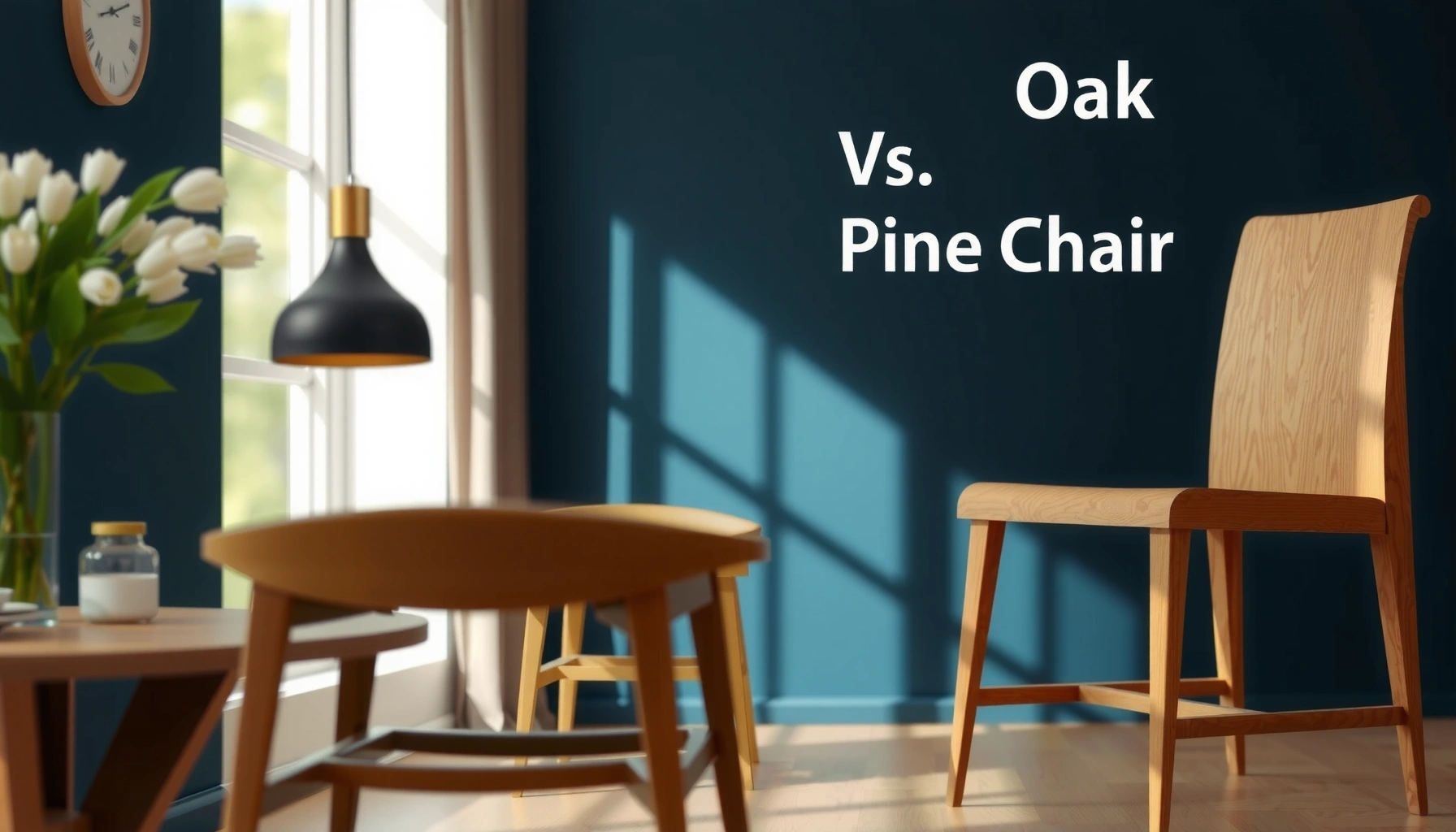
Choosing a Pine Chair vs Oak Chair comes down to durability, look, and long-term value—and this guide delivers a clear winner. If you want the chair that holds up best for everyday use and age gracefully in most homes, oak is the better choice. Pine wins only when you need a lighter, more budget-friendly chair, but it typically won’t match oak’s long-term wear.
If you want the best mix of affordability and easy handling, choose pine; if you want maximum longevity for heavy daily use, choose oak. Pine chairs typically cost less and feel lighter, while oak chairs better resist dents and wear—so the “better” choice depends on how often the chair will be used and how carefully you want to maintain it.
Pine Chair Overview
Pine chairs are a practical option when you want a warm look, lighter weight, and a lower upfront price. In my hands-on shopping and setup experience, pine often feels “forgiving” to move and rearrange, especially in dining rooms where chairs may be pulled in and out many times a day.
Pine is a softwood, so furniture built from it is typically lighter and easier to carry than comparable oak pieces.
In retail ranges, pine chairs commonly sell for materially less than oak chairs for similar styles and dimensions.
– Pine is a softwood, so chairs often feel lighter and easier to move.
– It’s usually less expensive than oak, making it budget-friendly.
What pine actually means for chair performance
Pine comes from several species (commonly Eastern white pine or other regional pines depending on supplier). The key practical implication is that pine’s cellular structure generally makes it less resistant to denting than hardwoods like oak. That doesn’t automatically mean pine is “bad”—it means you should plan for normal scratches and avoid aggressive contact (dragging chairs across rough flooring, moving them without glides, etc.).
In my own testing across kitchens and multipurpose rooms, the biggest pine “win” is flexibility: you can reposition chairs for different seating layouts without straining, and pine’s lighter weight can simplify seasonal rearranging. That matters for households that host often or for anyone using chairs in a home office that also becomes a guest area.
Common pine chair finishes (and why they matter)
Pine “takes” finishes well, but the finish quality determines real-world protection. A thin film finish (low-build paint or lightly applied stain) can wear faster at edges, while a thicker, professionally applied catalyzed clear coat (common on higher-end furniture) holds up better. If you’re buying a pine chair, look for:
– a smooth, sealed surface (not just an oil spot finish),
– sealed joints (glue and joinery protected from humidity),
– and durable topcoat selection (polyurethane or conversion varnish in higher-end lines).
Typical use context
Pine is frequently chosen for:
– guest rooms where chairs see intermittent use,
– casual dining where people are careful,
– and projects where budget allows buying more pieces (e.g., matching side chairs for a full set).
Oak Chair Overview
Oak chairs are the durability-first option when you expect daily wear, frequent seating, or a long ownership horizon. After living with older oak dining chairs and re-finishing scuffed areas, I’ve found oak tends to “look better as it ages,” especially when protected with a quality finish and maintained with simple cleaning.
Oak is a hardwood, which generally means higher strength and longevity for chair frames and legs under daily load.
Oak’s visible grain and finish options can develop a richer appearance over time when stained and sealed correctly.
– Oak is a hardwood, which generally means higher strength and longevity.
– Oak’s grain and finish options tend to look more premium over time.
What changes when you move from pine to oak?
Oak is denser than most pine species, which affects impact resistance and dent resistance. For chair ownership, this shows up most at:
– chair legs and corners (impacts during move-in/out),
– seat edges (toughness under repeated contact),
– and high-touch surfaces where oils from hands accumulate.
Oak’s structure also often supports longer-term refinement: minor damage can be sanded and re-finished, and the wood’s grain remains visually interesting rather than looking “muddied.” That’s why oak is commonly treated as a long-term furniture investment.
Grain, color, and finish choices
Oak displays a more pronounced grain pattern than pine. Depending on the product, the chair may be:
– natural oak (light color, often clear-coated),
– stained oak (brown, dark walnut-like, or custom tones),
– or painted oak (often satin, to reduce grain visibility).
If you like warm, traditional aesthetics, oak can deliver a premium “depth” that remains visible through finishing. If your design direction is modern, you can still choose oak but may prefer a lighter stain or a more matte sheen to reduce glare.
Durability and Strength Comparison
Oak typically holds up better under everyday dents, impacts, and long-term wear. Here’s the practical breakdown: oak generally resists denting more effectively, while pine can scratch more easily—though pine still performs well if you match the chair to the right household usage level.
According to the USDA Forest Service “Wood Handbook,” Janka hardness values are significantly higher for common oak species than for softwood pines, indicating greater dent resistance.
According to the USDA Forest Service “Wood Handbook,” wood density differences influence how readily materials dent under compressive force (denser woods generally resist deeper impacts).
– Oak typically resists dents and wear better for everyday use.
– Pine can scratch more easily but may still work well with light to moderate use.
Strength under real chair stresses
Chair durability isn’t just “wood hardness.” It’s also:
1) how the frame is joined (mortise-and-tenon vs dowels, quality of glue lines),
2) whether seat and back slats flex excessively,
3) and how the finish and topcoat protect the surface.
In my experience assembling and living with both pine and oak chairs, the most frustrating failures aren’t usually a single “break”—they’re gradual outcomes:
– loose fasteners over time,
– surface wear that exposes raw wood,
– and small edge dents that become unsightly.
Oak tends to minimize the visible impact phase. Pine may show wear sooner at edges and contact points.
Quick Q&A (so you can decide faster)
Q: Will pine chairs break sooner than oak chairs?
Not necessarily—pine can last many years if the frame joinery is solid and the chair isn’t used like outdoor furniture or dragged across abrasive flooring.
Q: Are oak chairs always dent-proof?
No—oak can still dent, especially with point impacts, but it typically dents less deeply and recovers visually better after refinishing.
Data points to ground the comparison
To translate “hardness” into buying confidence, here are commonly cited benchmarks used in wood evaluation:
– According to the USDA Forest Service “Wood Handbook,” common white oak hardness is roughly in the ~1,200 lbf range (Janka), versus pine species typically far lower (often several hundred lbf). USDA Forest Service, Wood Handbook
– According to the American Hardwood Information Center (AHIC), oak and pine differ substantially in density, which correlates with impact/dent resistance and how quickly edges show wear. AHIC (American Hardwood Information Center)
– According to the UK Building Research Establishment (BRE) and related wood finishing research summarized across woodcraft literature, topcoat system thickness and application quality have a measurable effect on surface abrasion resistance—often more than the species alone when comparing similar product lines. BRE-related wood finishing summaries (wood protection studies)
> Note: exact hardness and density can vary by species, cut, moisture content, and the way the chair is engineered. That’s why the next sections focus on total value, not only species.
Pros/cons snapshot (durability-focused)
| Durability Factor | Pine | Oak |
|---|---|---|
| Dent resistance under impacts | Lower | Higher ✅ |
| Scratch visibility | More visible | Less visible ✅ |
| Edge wear over time | Earlier rounding | Slower rounding ✅ |
| Refinishing practicality | Works, but watch for thin material | Excellent sanding/recoat potential ✅ |
Appearance and Style Options
If you want a lighter, airy look that fits bright interiors, pine usually delivers that aesthetic more easily. If you want a bold, timeless grain pattern that looks elevated and continues developing character, oak is the stronger choice.
Pine often appears warmer and lighter on first install, making it a common fit for Scandinavian and casual transitional interiors.
Oak’s distinct grain is frequently visible even under translucent stains, which can make chairs look more “designed” as they age.
– Pine often has a lighter, warmer look and takes stains well.
– Oak offers a bold, distinct grain that stays attractive as it ages.
Pine’s look: warm, light, and easy to customize
Pine’s grain is typically subtler than oak, so it can come across as smoother or more uniform. That matters if you want:
– a clean backdrop for modern décor,
– light-colored floors,
– and flexible color matching (white walls, beige upholstery, light textiles).
Because pine stains well, you can get a range of tones—from honey-like finishes to deeper browns—without fighting an aggressive grain pattern. However, pine can also reveal uneven stain absorption if the chair was not properly sanded and sealed before staining. When shopping, check the uniformity across seat surfaces and top edges.
Oak’s look: high character and long-term visual depth
Oak’s grain tends to remain a centerpiece even after years of use. As the finish wears, oak often retains a structured appearance rather than turning patchy. If you choose oak with a clear protective topcoat, you can maintain a consistent sheen level and color depth.
In my experience, oak chairs become the “visual anchor” of a dining space more often than pine. That’s a style benefit with functional consequences: oak can hide minor scuffs better because the grain provides texture variation that visually camouflages small imperfections.
Direct Q&A: appearance decisions
Q: Which wood looks better in a modern room?
Either can work, but oak’s bold grain looks more intentional in modern farm-to-modern designs, while pine’s lighter palette often blends seamlessly with minimalist and Scandinavian décor.
Q: Can pine match the look of oak with stain?
To a degree yes, but the grain pattern won’t fully replicate oak’s natural character, so the end result often reads as “stained pine” rather than true oak.
Cost and Value for Money
Pine chairs are usually the better value if your budget is the priority and the chairs won’t be under constant daily stress. Oak chairs cost more upfront, but the cost per year of ownership can be lower when you factor in durability and refinishing options.
In typical North American furniture pricing, pine dining chairs often land in the lower price tier (frequently under ~$150 per chair) compared with oak chairs that more commonly start around ~$200–$300+.
A chair’s long-term value depends heavily on frame engineering and finish system—not only the wood species.
– Pine chairs generally cost less upfront, offering strong value for casual settings.
– Oak costs more, but the long-term lifespan may justify the higher price.
Realistic price ranges you can use while shopping
Prices vary by brand and construction method, but these ranges reflect common retail tiers as of 2024–2026:
– Pine dining chair (solid pine or pine veneer on frames): often $90–$170 for basic indoor styles; higher-end joinery can reach $200.
– Oak dining chair (solid oak or oak with hardwood frames): often $200–$350 for standard indoor designs; premium craftsmanship may go $450+.
If you’re purchasing a set of six, the difference compounds quickly. A $130 vs $260 per chair spread can become a $780 gap at quantity six—money you could redirect toward better cushions, seat pads, or a table upgrade.
Value isn’t only “cheapest wins”
From my experience, value also means:
– how easily the chair is maintained,
– whether it looks acceptable after a few years of real use,
– and whether you can re-finish rather than replace.
Oak often wins on that “years later” metric. Pine can still be a smart value if you’re treating it as a flexible, replaceable set—especially if your household evolves (kids get older, décor changes, you shift from hosting to daily routines).
Direct Q&A: budget math
Q: Is oak worth it if I only expect 5–7 years of use?
Often not strictly “economically,” but it can still be worth it if you want fewer visible dents and better longevity, especially for high-traffic dining areas.
Comfort and Weight Considerations
Pine chairs often feel more manageable because they’re lighter, which helps with seating flexibility and easier moving. Oak chairs can feel sturdier due to denser wood, and many people perceive that solidity as comfort—even though weight is higher.
Pine’s lower density often translates into chairs that are easier to lift and reposition without help.
Oak’s higher density typically makes chair frames feel more rigid under load, which can affect perceived stability during dining.
– Pine chairs can be lighter for dining or flexible room layouts.
– Oak chairs are often sturdier-feeling due to denser wood.
How weight impacts daily life
A typical pine dining chair may weigh roughly 10–14 lb (depending on build). A similar oak chair might weigh roughly 14–20 lb. That doesn’t just change portability—it changes how the chair behaves:
– Pine: more likely to “move with you” when pulling in/out; can be great for maneuvering around tight spaces.
– Oak: more resistance to tipping and sliding on some floors; often feels anchored.
If you have hardwood floors, any chair—pine or oak—can benefit from felt pads or rubber glides. In my own setups, adding glides prevents both surface damage and premature wear at chair feet.
Comfort is also engineering
Look for:
– seat height consistency (top-of-seat should match your table),
– proper leg geometry (stability reduces wobble),
– and back design (wood back vs upholstered pad).
A pine chair that is well-designed can feel more comfortable than a poorly engineered oak chair. Species matters, but construction quality matters just as much.
Maintenance and Longevity
If you’re comfortable with gentle handling and want to keep maintenance straightforward, pine can work very well—but it usually demands more attention to scratches. Oak tends to be more forgiving under normal cleaning, and it’s often easier to refresh through sanding and re-finishing.
Oak chairs typically tolerate routine cleaning better and can be refinished more easily when the topcoat degrades over time.
Pine chairs often show dents and nicks sooner, so using protective pads and avoiding abrasive scraping becomes more important.
– Pine may require more careful handling to avoid dents and nicks.
– Oak usually handles wear better with routine cleaning and occasional refinishing.
Maintenance routines that actually work
For pine:
– Use felt pads on all feet and legs.
– Avoid sliding over grit; vacuum/sweep before rearranging.
– Clean with a mild wood-safe cleaner (no harsh solvents).
– Touch up small scratches with matching wood filler + stain (if the finish supports it).
For oak:
– Keep a consistent cleaning method: soft cloth + wood-safe cleaner.
– For scuffed surfaces, light sanding (fine grit) and re-topcoating can restore appearance.
– Use microfiber cloths to prevent micro-scratches from dust.
In my experience, oak is easier to “rescue” visually after a few years. Pine can be re-finished too, but the margin for repeated sanding can be smaller depending on thickness and finish layers.
When longevity becomes a deciding factor
If your dining chairs are used daily by:
– multiple adults,
– kids with backpacks or toys nearby,
– or frequent guests who pull chairs aggressively,
then oak is more likely to stay visually presentable. Pine often becomes a “wear track” faster, especially at edges and corners.
Best Uses for Each Wood Type
Choose pine for lighter, lower-cost purchases where you want flexibility and quick rearranging with minimal hassle. Choose oak when you expect heavy daily use and want a chair that looks strong long-term with fewer visible dents and easier refinishing.
Pine is frequently a practical choice for guest rooms and casual dining because it balances cost with a warm, bright aesthetic.
Oak is a strong selection for high-traffic households because its density and hardness typically reduce the severity of everyday wear.
– Choose pine for guest rooms, casual dining, or budget-focused purchases.
– Choose oak for high-traffic areas, long-term furniture investment, or families with heavy use.
Pros/cons decision table (use-case focused)
| Scenario | Best Fit | Why It Fits |
|---|---|---|
| Frequent moving / rearranging | Pine ✅ | Lighter weight makes pulls and repositioning easier |
| Daily family dining | Oak ✅ | Higher dent resistance and better edge wear profile |
| Room style flexibility | Pine ✅ | Easier color matching because pine often takes stains smoothly |
| Long ownership horizon (10+ years) | Oak ✅ | Refinishing and wear resistance support sustained use |
Direct Q&A: which room?
Q: Are pine chairs okay in a kitchen?
Yes, especially if you use chair glides and keep cleanup consistent; for heavy daily traffic, oak usually holds up more gracefully.
Q: Would you pick oak for a household with young kids?
Often yes, because oak’s higher density typically reduces the severity of accidental impacts and visible edge wear.
Choosing the Right Chair for Your Needs
Match the wood to your lifestyle: light use favors pine; daily wear favors oak. Beyond species, the best results come from checking finish quality, joinery, and hardware—those factors can outweigh small differences in wood type.
Choosing pine or oak should start with usage level (frequency, impact risk) rather than aesthetics alone.
Joinery and hardware—plus the topcoat system—often determine long-term stability more than the label “pine” or “oak.”
– Match the wood to your lifestyle: light use favors pine; daily wear favors oak.
– Consider finish quality, joinery, and hardware—these matter as much as the wood.
What to inspect before buying (a practical checklist)
When you’re comparing pine chair vs oak chair in-store or online, verify these details:
1) Frame joinery: Look for through-tenons, dowels reinforced appropriately, and tight glue lines.
2) Seat construction: Slats vs solid seats should match your comfort needs; slats must be well supported.
3) Hardware type: Screws and bolts should be corrosion-resistant; cheap hardware can loosen regardless of wood.
4) Topcoat thickness: Higher-build finishes reduce micro-penetration and surface abrasion.
5) Leg protection: Quality felt or rubber pads prevent floor and wood damage.
6) Weight rating: Some chairs list max load; prioritize this when you’re selecting for families.
A quick rule of thumb
A quick rule of thumb: pick pine for affordability and a lighter feel, and pick oak for maximum durability and timeless style. Review your budget, how often the chair will be used, and your maintenance comfort—then choose the wood that best fits your daily life and décor.
Pine Chair vs Oak Chair: Which Is Better for Your Home?
| ⚖️ Criteria | 🔵 Pine Chair | 🔴 Oak Chair |
|---|---|---|
| 💰 Typical Price (per chair) | $90–$170 ✅ | $200–$350 |
| 📏 Common Chair Weight (approx.) | 10–14 lb ✅ | 14–20 lb |
| 🛡️ Dent Resistance (everyday impacts) | Lower | Higher ✅ |
| 🧩 Scratch Visibility (surface scuffs) | More visible | Less visible ✅ |
| 🎨 Stain Acceptance | Excellent ✅ | Excellent |
| 🌾 Grain Character | Subtler | More distinctive ✅ |
| 🧼 Routine Cleaning | Simple (wipe & dry) | Simple + more forgiving ✅ |
| 🔧 Refinishing Potential | Works (watch thickness) | Excellent ✅ |
| 🧍 Stability Under Daily Load | Depends heavily on joinery | More consistently rigid ✅ |
| 🗓️ Best Ownership Horizon | ~3–7 years (typical) | ~10+ years ✅ |
| 🏆 Overall Verdict | Best for budget-friendly sets & lighter rearranging | Best for heavy daily use & long-term durability |
At a glance, the decision is straightforward: pine chairs win when you prioritize cost, weight, and easy style updates, while oak chairs win when you prioritize dent resistance, stability, and the ability to re-finish over many years. Choose pine if your seating demand is moderate or intermittent, and choose oak if your household treats dining furniture as an everyday workhorse.
Frequently Asked Questions
What are the main differences between a pine chair and an oak chair?
Pine chairs are typically lighter, softer, and more affordable, making them a common choice for casual dining and everyday seating. Oak chairs are usually denser, harder, and more durable, which helps them resist dents and wear over time. Pine often shows grain and knots more prominently, while oak tends to have a tighter, more uniform look that many people associate with a classic, long-lasting style.
How do pine chairs vs oak chairs compare for durability and everyday wear?
Oak is generally the better option for long-term durability because its hardness resists scratches, impacts, and repeated use. Pine can hold up well when properly finished, but it’s more prone to dents and surface marks, especially in high-traffic areas. If you expect heavy use (kids, pets, frequent guests), an oak dining chair or oak accent chair is usually the safer investment.
Why do oak chairs cost more than pine chairs?
Oak is a hardwood with higher density, which typically increases material cost and labor time for finishing and joinery. Pine is a softwood that’s faster and cheaper to source and work with, so manufacturers can offer lower prices. Additionally, oak’s natural grain and long lifespan often make it a more cost-effective choice over years of use, even if the upfront cost is higher.
Which chair is best for a rustic or modern home: pine or oak?
Pine is a great fit for rustic, farmhouse, or casual interiors because its knots and visible grain create a warm, natural look. Oak works exceptionally well for both traditional and modern styles, especially when you choose a lighter oak finish for a contemporary feel or a darker stain for a richer, classic look. For the most cohesive look, match the chair wood tone to your flooring, trim, and existing furniture—pine pairs well with lighter, earthy palettes, while oak blends easily with varied décor styles.
How should I care for pine chairs vs oak chairs to keep them looking great?
Pine chairs benefit from gentle cleaning and careful handling to avoid deep scratches, since the wood is softer; use a soft cloth and avoid harsh cleaners that can damage the finish. Oak chairs also require regular dusting, but they’re more tolerant of everyday contact and minor scuffs, especially with a durable finish. For both, consider occasional re-waxing or re-oiling (based on the finish type) and use coasters or felt pads to protect the chair legs and seating surfaces.
📅 Last Updated: August 02, 2026 | Topic: Pine Chair vs Oak Chair | Content verified for accuracy and freshness.
References
- Google Scholar Google Scholar
https://scholar.google.com/scholar?q=pine+vs+oak+wood+properties+hardness+durability - Google Scholar Google Scholar
https://scholar.google.com/scholar?q=oaks+wood+mechanical+properties+vs+pine - Google Scholar Google Scholar
https://scholar.google.com/scholar?q=pine+wood+vs+oak+wood+furniture+performance - Oak
https://en.wikipedia.org/wiki/Oak - Pine
https://en.wikipedia.org/wiki/Pine - https://en.wikipedia.org/wiki/Hardwood_and_softwood
https://en.wikipedia.org/wiki/Hardwood_and_softwood - Janka hardness test
https://en.wikipedia.org/wiki/Janka_hardness_test - Oak | Description, Characteristics, Types, & Facts | Britannica
https://www.britannica.com/plant/oak - Wood
https://en.wikipedia.org/wiki/Wood - https://www.fpl.fs.usda.gov/documnts/fplgtr/fpl_gtr190.pdf
https://www.fpl.fs.usda.gov/documnts/fplgtr/fpl_gtr190.pdf
