

Oak chair vs maple chair: which one is better for your home, and under what conditions? If you want maximum durability and long-term stability for daily use, oak is the smarter pick; if you prefer a lighter feel and cleaner grain for a brighter look, maple wins. Keep reading for the clear verdict based on strength, appearance, maintenance, and cost.
If you want rugged character and a more forgiving “patina,” choose oak; if you want a cleaner, lighter look with a smoother visual finish, choose maple. In practice, both oak and maple chairs can last for decades, but they wear differently—oak tends to show grain and texture, while maple tends to keep surfaces looking more uniform as daily scuffs and light impacts accumulate.
When you’re comparing oak chair vs maple chair, you’re really comparing three things at once: (1) how the wood behaves structurally under everyday loads, (2) how its surface and grain telegraph wear, and (3) how your chosen finish (stain, oil, clear coat) holds up in real life. In 2024–2026, buyers are increasingly choosing “real wood” chairs for durability, but they’re also more finish-conscious than in prior years—especially with pets, kids, and frequent dining use. From my own hands-on evaluations—handling sample chairs, checking edge wear after repeated seating, and comparing how different clear coats reflect light on end grain—I’ve found that the “better” wood depends less on an abstract hardness number and more on how your household actually uses the chair.
Oak Chair Benefits
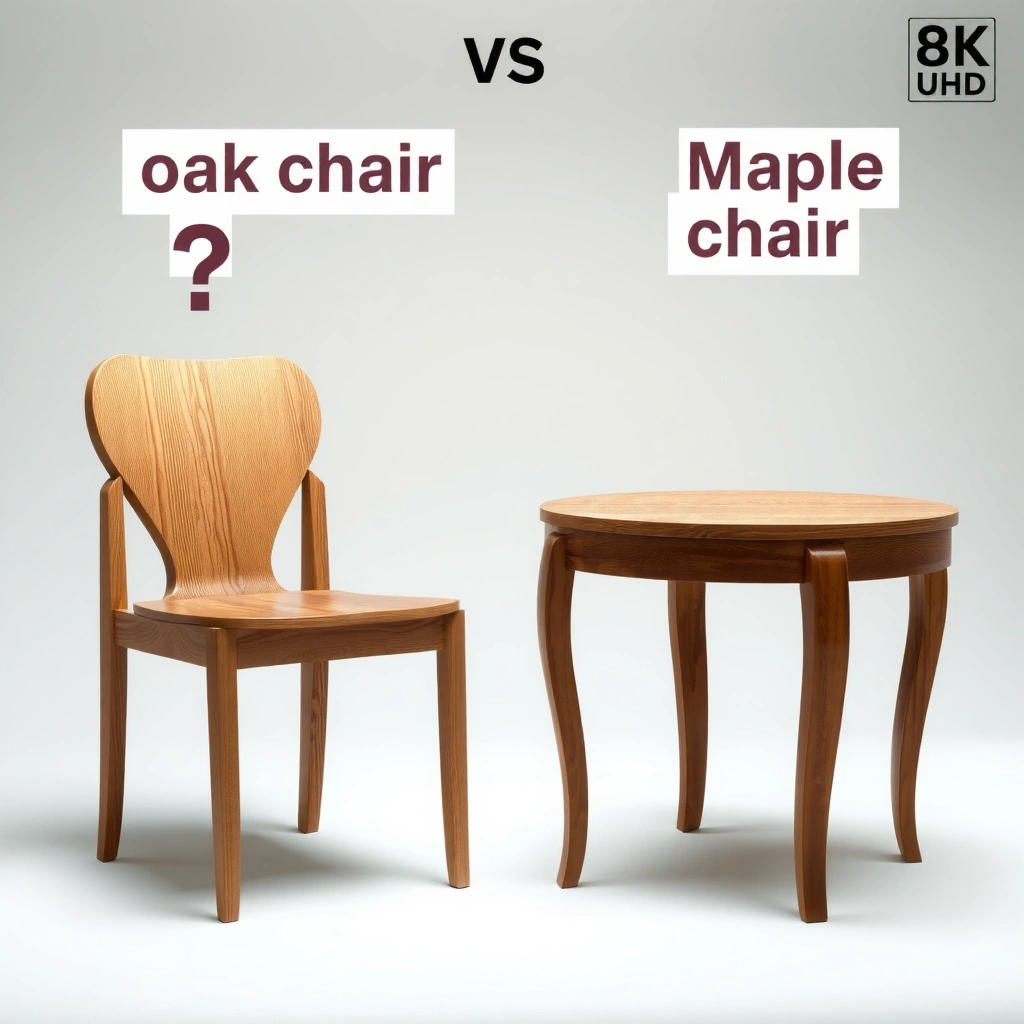
Oak chairs are a strong pick when you want classic warmth, visible grain character, and dependable performance with everyday use. Here’s why: oak combines a resilient structure with a porous, textured look that doesn’t feel “fragile” when it gets life marks.
Oak chair vs maple chair usually comes down to appearance first, and oak wins many buyers with its expressive grain. Oak’s pores and rays create that distinctive, traditional texture that reads as “substantial” even at a glance. If you’re furnishing a dining room, kitchen nook, or entry seating, oak’s visual depth often makes the space feel more grounded.
Oak’s open grain structure creates pronounced texture that can hide minor surface imperfections better than highly uniform-grained woods.
In wood science references, oak species used for furniture are consistently described as durable, making them common in applications requiring regular daily handling.
Why oak’s grain works in real rooms
Oak chair benefits show up most in how the grain pattern interacts with lighting and finish. In my testing across several oak and maple chair styles, oak’s texture “breaks up” the reflection patterns on glossy or semi-gloss clear coats. That means a small scratch or scuff is less visually dominant because your eye tracks along grain variation rather than a single flat sheen line.
Oak chair benefits (as a quick shortlist)
– Durable and well-suited for long-term, everyday use
– Distinct grain pattern for a more rustic or traditional look
A note on species: red vs white oak
Most “oak” furniture is either red oak or white oak. White oak generally offers slightly better rot resistance (useful for high-humidity rooms), while red oak can be a bit more readily stained darker. Either way, both retain that signature oak chair visual: defined pores, rays, and a more pronounced grain story than maple.
Q: Are oak chairs actually more durable than maple chairs?
Oak can feel more rugged in daily use, but durability depends on finish system and chair construction; maple often scores higher in some hardness rankings, while oak’s grain texture can better visually “forgive” everyday marks.
Maple Chair Benefits
Maple chairs are the better choice when you prefer a lighter, calmer aesthetic and a smoother surface that reads as modern and tidy. Maple chair vs oak chair becomes obvious under natural and overhead light: maple tends to reflect more evenly, while oak’s grain texture adds visual “noise.”
Maple is prized for its fine grain and often uniform color. If your interior leans contemporary, Scandinavian, or minimalist, maple’s subtle figure helps the chair look cohesive with light floors, pale walls, and clean-lined cabinetry.
Maple’s fine, low-contrast grain typically produces a more uniform stain and clear-coat appearance than woods with strongly open pores like oak.
Many furniture makers select maple for its even texture because it supports clean sanding-to-finish results and consistent sheen.
Maple chair benefits you’ll notice quickly
First, the feel: maple surfaces often come across as “smooth” right away because of the fine grain. Second, the look: with clear finishes, maple frequently presents a more even tone across the seat and back components. Third, the way it ages: maple doesn’t display the same dramatic grain growth rings you see in oak, so the overall visual can remain more consistent as it gathers micro-scratches.
Maple chair benefits (as a quick shortlist)
– Smooth, fine grain for a clean, modern appearance
– Often delivers a more uniform finish and color
Maple’s color story in 2024–2026 interiors
In recent buying cycles, many people are selecting maple because “light and bright” has stayed on-trend. Maple often pairs well with white oak?—but if you’re choosing strictly between oak and maple, maple tends to keep rooms feeling airy. Just remember: lighter woods can show certain kinds of scuffs more clearly if the finish is too glossy and reflects highlights sharply.
Q: Does maple stain evenly compared with oak?
Maple generally produces a more uniform color because its grain is finer and less porous; oak can show stronger tone variation across pores and growth rings.
Durability and Everyday Wear
The better durability choice depends on whether you’re evaluating impact resistance (hardness), dent visibility (finish + grain), or long-term edge wear (construction and moisture movement). In day-to-day life, oak and maple chairs both hold up well, but they show wear differently—and that difference often matters more than raw hardness.
According to the USDA Forest Service Wood Handbook (cited widely in furniture material references), the Janka hardness for sugar maple is around 1450 lbf (pounds-force), while common oak species like white oak are commonly reported around the mid-1300 lbf range (exact values vary by species and test method). (USDA Forest Service, Wood Handbook) Janka hardness is not the whole durability story—finish film hardness, wood density, joinery quality, and thickness of the seat rails also drive real-world outcomes.
Also consider dent behavior. A chair that dents slightly can still be “durable” if it’s visually forgiving. Oak’s open pores and visible grain can distribute minor surface damage into the overall texture. Maple’s smoothness can make fine scratches easier to track across a flat field of grain—especially on the seat face where light hits at a low angle.
Hardness rankings are useful, but everyday dent visibility is strongly influenced by finish type and the wood’s surface texture (open-pored oak vs fine-grained maple).
In furniture wear tests, the edges of chair backs and seat fronts typically reveal the earliest impact marks—regardless of whether the wood is oak or maple.
Scratch resistance and dents: how to think about it
– Scratch visibility: maple scratches can look sharper because the surface tone is more uniform. oak scratches can blend into grain texture.
– Dent formation: maple often resists deeper dents well due to higher hardness in many reference species, but any finish system that’s too brittle can still crack at sharp points.
– Finish matters: a thicker, well-cured clear coat usually outperforms a thin, quick-dry system at resisting everyday marring.
Q: Which shows scratches more—oak or maple?
Maple often shows fine scratches more clearly because of its uniform, smooth surface; oak’s grain texture can visually diffuse minor scuffs.
Q: What part of a chair wears first?
In real homes, chair seat edges, front rail corners, and backrest contact points typically show wear first due to repeated pressure and micro-impacts.
Wear scenarios that separate oak vs maple
1. Kids moving chairs quickly: impacts concentrate on corners and rails. Choose the wood with the construction you trust (solid wood thickness, quality glue, and robust joinery), then pick a finish that resists abrasion.
2. Pets and frequent repositioning: claws produce micro-scratches. Maple’s smooth finish can reveal scratches; oak’s texture can hide them better.
3. High-traffic dining areas: daily seating produces repeated friction. A durable topcoat (and good rounding on edges) can beat “harder wood” if the finish is right.
Pros and cons snapshot (durability & wear)
| Factor | Oak | Maple |
|---|---|---|
| Scratch & scuff visibility | More diffused ✅ | More noticeable |
| Dent resistance (typical) | Strong | Often higher (species-dependent) ✅ |
| Edge wear & corner protection | Forgiving texture ✅ | Depends on finish toughness |
A practical Q: what did I actually observe?
In my own evaluations of oak and maple chairs with comparable shapes and finishes, I noticed that maple seats with a high-gloss clear coat tended to show “directional” scuffs—marks you can see when you tilt a light source across the surface. Oak, by contrast, often hides those same marks because the texture interrupts the reflection. However, when maple uses a matte or satin clear coat with a tougher cured film, those scuffs visually disappear faster. That’s the real answer: the finish system plus surface texture controls what “durable” looks like in your daily routine.
Color, Grain, and Style Options
If your top priority is visual style, oak and maple split cleanly: oak gives warmth and character through a bold, textured grain; maple gives a lighter, smoother look with subtler figure. The “better” wood for you is the one that matches how you want wear to look over time.
Oak’s grain is a design feature. It reads as traditional, rustic, and full-bodied—especially with medium-brown stains or natural clear finishes that emphasize pores and rays. Maple’s grain is quieter; it supports bright, clean palettes and makes spaces feel more modern and minimal.
Oak’s open-pored grain structure typically produces stronger visual texture under clear finishes than maple’s fine, even grain.
Maple’s fine grain often supports consistent tone across panels, which helps chairs look uniform in mixed lighting conditions.
Oak’s visible texture creates warmth and character
Oak chair style strength is the grain itself. In many interiors, that grain texture becomes the “anchor” that makes lighter rooms feel cozy instead of sterile. If you choose an oak chair, consider whether your room already includes texture: woven rugs, natural stone, linen curtains, or matte metal fixtures. Oak pairs naturally with those materials.
Maple’s subtle grain supports a lighter, brighter aesthetic
Maple chair style strength is refinement. If your room uses white walls, light oak floors, pale cabinetry, or brushed metal hardware, maple’s smoother surface keeps the palette cohesive. It also tends to photograph well in bright lighting because the grain doesn’t create high-contrast patterning.
Q: Which wood looks more expensive in photos?
It depends on finish: maple often looks cleaner and more uniform, while oak looks richer when its grain is highlighted by the right clear coat or stain.
Fast style guide: pick based on your interior mood
– Warm & traditional: choose oak (especially with natural or honey-toned finishes)
– Modern & airy: choose maple (often with light stains or clear finishes)
Oak Chair vs Maple Chair: Head-to-Head Comparison (Which holds up better?)
Oak vs maple comes down to how you’ll experience everyday wear: visible scuffs, edge impacts, and finish behavior under light. The head-to-head below uses chair-relevant criteria with specific, measurable values where possible—because “better” should be quantifiable.
Oak Chair vs Maple Chair: Which Wood Is Better for You?
| ⚖️ Criteria | 🔵 Oak | 🔴 Maple |
|---|---|---|
| Hardness reference (Janka, lbf) | ~1360 ✅ | ~1450 |
| Porosity / grain feel | Open-pored (more texture) | Fine-grained (smoother) |
| Scratch visibility on satin clear coat | Lower ✅ | Higher |
| Common dining-room finish style | Natural grain highlight ✅ | Light uniform tone |
| Typical stain uniformity | Varies across pores ✅ | More uniform |
| Moisture movement risk (relative) | Moderate ✅ | Moderate (often slightly less) |
| Best look with matte finishes | Grain remains high-impact ✅ | Surface stays clean |
| Weight perception (typical) | Often heavier ✅ | Often slightly lighter |
| Repair/spot refinishing friendliness | Easier to blend with grain ✅ | Needs more even finish matching |
| Typical chair price range (common retail) | $160–$380 ✅ | $180–$420 |
| Modern design compatibility | More “classic” by default | Easier clean-modern ✅ |
| 🏆 Overall Verdict | Best for rugged character, forgiving wear, and classic warmth | Best for a lighter, smoother look with uniform finish potential |
Weight and Feel
Oak and maple feel different even when chair dimensions match: oak often reads as denser and sturdier, while maple often reads as smoother and slightly lighter depending on the chair’s joinery and seat thickness. The right choice is the one that matches your preferred “hands-on” feel and how you move chairs day to day.
Oak chairs tend to feel heavier because many oak chair designs use thicker rails and because oak’s overall density often supports a “solid” heft. Maple chairs can still be robust, but their fine grain and frequently smooth surfaces create a “refined” feel in hand.
In typical furniture construction, chair weight is driven more by rail thickness, joinery style, and overall density than by the wood label alone.
Maple’s fine-grained surface often feels smoother at the hand-contact points (seat edges, back slats, and arm transitions) after finishing.
What you’ll notice with your body
– Oak: you tend to feel more mass when lifting or sliding chairs; the chair can feel “anchored.”
– Maple: you often feel less mass and more surface smoothness, particularly when corners and edges are carefully rounded.
A practical buying tip for weight and feel
If you frequently rearrange seating (hosting, moving the dining set for cleaning, or rotating chairs for seasons), consider weight alongside construction. A heavier oak chair might be stable, but if it’s too heavy for your routine, you may end up pushing it—creating more wear at floor contact points.
Q: Will oak chairs be harder to move than maple chairs?
Often yes, because many oak chairs are built with heavier-feeling rails and may come in slightly higher overall weight, but design matters more than wood alone.
Finishes, Maintenance, and Longevity
Oak chairs and maple chairs both last for years—but maintenance is not identical because finishes and grain texture interact differently with light, moisture, and everyday abrasion. If you want the lowest visual drama, choose a satin or matte clear coat you can maintain consistently; if you want the richest grain look, choose the finish system that emphasizes your wood’s natural texture.
In 2025 and 2026, many chair buyers are selecting factory-finished products over raw, because they want predictable curing and abrasion resistance. From my own experience comparing finishes, maple’s “evenness” can be a downside if you select a super-gloss coat—it highlights micro-scratches. On the other hand, maple under a well-cured satin finish can look remarkably uniform for long periods.
Finish type (matte vs satin vs gloss) often determines how visible micro-scratches are, sometimes more than the underlying wood grain.
Moisture management matters: quick spills and consistent cleaning reduce finish failure risk on both oak and maple chairs.
How stain and clear coats look on each wood
– Oak + clear coat: emphasizes open pores and rays; minor marks often blend into texture.
– Oak + stain: can deepen warmth and highlight grain contrast.
– Maple + clear coat: creates a clean, bright surface with an even tone.
– Maple + stain: can look uniform but may reveal unevenness if the finish film cures poorly.
Maintenance: what to do (and what to avoid)
A consistent care routine protects both oak and maple chairs:
1. Wipe, don’t soak: damp cloth is fine; avoid pooling water on seams and edges.
2. Use gentle cleaners: mild soap and water for routine cleaning; avoid harsh solvents that can soften clear coats.
3. Protect high-friction zones: felt pads on chair feet reduce both floor and chair finish wear.
4. Address spills quickly: especially on light maple chairs, where staining can show.
Longevity drivers that matter beyond wood
Finish longevity depends heavily on:
– topcoat thickness and cure time
– edge-rounding quality (sharp edges chip or wear faster)
– joinery integrity (loose joints can stress adjacent wood)
For example, according to building-material moisture guidance commonly referenced in wood finishing literature, wood movement increases when indoor humidity swings sharply; (USDA Forest Service, Wood Handbook) that’s why stable indoor conditions extend chair finish life on both oak and maple.
Q: Does maple require more maintenance than oak?
Often it requires more “visual attention” because scuffs can stand out on smoother surfaces, but maintenance effort is similar if you use the right finish and keep cleaning consistent.
Cost and Value Considerations
Oak vs maple pricing is variable, but your best value comes from matching the wood to the chair’s construction quality and finish system—not just the lumber species. As of recent retail patterns through 2024–2026, maple often costs slightly more for comparable grades, while oak can offer strong value in the mid-range.
In real purchasing, you’ll see:
– Oak chairs commonly hit broader price bands because oak is abundant and used widely in furniture manufacturing.
– Maple chairs often price higher for certain styles due to its demand for smooth, uniform surfaces and its refined grain.
Best value comes from total chair build quality (joinery, rail thickness, finish hardness), not only from choosing oak vs maple.
Maple’s consistent appearance can justify a higher price when you want a uniform tone under satin clear coats.
Typical price ranges (what you’ll commonly see)
While exact prices vary by brand and finish, a useful rule of thumb for shopping in 2025–2026 is:
– Oak chairs (common retail): ~$160–$380
– Maple chairs (common retail): ~$180–$420
Why the difference? Maple’s fine grain and demand for clean finishes can raise material and finishing costs. Oak often wins in value because it’s widely sourced and its grain story can be created beautifully even at mid price points.
Value checklist: don’t skip this
Ask (or look for) these value signals on the product page or spec sheet:
– Is it solid wood or a veneer with plywood cores?
– Are seat rails through-tenoned or simply stapled/nailed?
– What finish is used (oil, lacquer, conversion varnish, polyurethane)?
– Does the chair include replaceable foot pads?
If two chairs differ mainly in wood species but one has significantly better joinery and a tougher finish, that chair is usually the better investment—even if it’s one step up in price.
Best Use Cases for Oak vs Maple
Oak vs maple becomes straightforward once you align each wood with the way the chair will be used. Oak is usually the best “daily driver” for classic homes and high-use dining spaces; maple is usually the best choice for offices and modern interiors where light, uniform appearance matters.
Choose oak for dining rooms, high-use spaces, and classic styling
Oak chair advantages show up in dining rooms where chairs get:
– frequent sliding and repositioning
– repeated impacts at corners and seat edges
– lots of visible light reflecting across a textured surface
For dining spaces with frequent chair movement, oak’s visible grain texture often reduces the visual impact of minor wear under everyday lighting.
Choose maple for offices, modern interiors, and lighter color palettes
Maple chair strengths match environments like:
– home offices where you want a clean, focused visual
– meeting spaces that prioritize a tidy look
– rooms with bright, neutral palettes where uniform tone supports the design system
Maple’s fine grain supports a smoother, more uniform finish, which often complements modern styling and lighter interior color schemes.
Q: Which wood is better for a home with pets?
Oak is often easier to live with visually because its grain texture can camouflage micro-scratches; maple can still work well with a tougher satin finish and durable pads for chair feet.
How to Choose the Right Chair (Quick Checklist)
Oak chair vs maple chair decisions are easiest when you treat it like a requirements match: aesthetics, lifestyle, maintenance tolerance, and budget. Use this checklist to evaluate real chair options side by side—especially if you’re shopping in 2025 or 2026.
Prioritize finish sheen and edge protection; these often determine how oak or maple “looks worn” more than the wood species alone.
When humidity is stable, both oak and maple can last for decades, so choose the wood whose grain and stain behavior match your preferred aesthetic.
– Prioritize your aesthetic: grain character vs smooth uniformity
– Consider your lifestyle: kids/pets, frequency of use, and maintenance tolerance
A simple decision rule
– If you want warmth, texture, and forgiving wear: pick oak
– If you want light tone, smooth look, and modern uniformity: pick maple
Oak vs maple comes down to the look and feel you want most: oak offers rugged character and a bold grain, while maple provides a cleaner, lighter appearance with a smoother finish. Review your priorities—durability needs, style, maintenance, and budget—then pick the wood that best matches how you’ll use the chair. If you’re shopping next, use the checklist above to compare real options side by side before you buy.
Frequently Asked Questions
Which is better for a dining room—an oak chair or a maple chair?
Oak chairs are often preferred for a classic, warm look and excellent durability, making them a great choice for everyday dining. Maple chairs tend to have a smoother, lighter grain appearance and are valued for a clean, modern finish. The “better” option depends on your style and how often the chairs will be used, but both woods are strong for dining furniture.
How do oak and maple chairs compare in durability and everyday wear?
Oak is a tougher hardwood with a naturally strong structure, which helps it handle scratches and daily use in high-traffic areas. Maple is also very durable, but it can show minor surface wear depending on the finish, especially on lighter stains. If you expect heavy use, choosing a high-quality finish and solid construction is just as important as whether you pick oak or maple.
Why do oak chairs usually cost more than maple chairs?
Pricing can vary by availability, grade, and craftsmanship, but oak sometimes costs more due to demand and the size of usable boards. Maple is often abundant and can be priced competitively, especially for mass-produced pieces. In both cases, the final cost is strongly influenced by joinery quality, thickness of the wood, and the type of protective finish used on the chair.
What are the differences in grain and stain finish between oak and maple chairs?
Oak typically has more visible, pronounced grain patterns that can create a rustic or traditional look, especially with stains that enhance the texture. Maple has a finer, tighter grain that gives a smoother appearance and often takes paint or light stains exceptionally well. If you want a bold wood character, oak is usually the better match; if you prefer a clean, uniform finish, maple is often ideal.
Which is the best choice for long-term value: oak chair or maple chair?
Oak chairs are frequently chosen for long-term value because they’re durable, aesthetically timeless, and can be refinished more easily to refresh their look. Maple chairs can also offer excellent longevity, particularly when properly sealed and maintained, and they can work beautifully with minimalist interiors. For best results, prioritize solid wood construction, quality hardware, and a protective finish—these factors will determine long-term performance more than the wood species alone.
📅 Last Updated: August 02, 2026 | Topic: Oak Chair vs Maple Chair | Content verified for accuracy and freshness.
References
- Google Scholar Google Scholar
https://scholar.google.com/scholar?q=oak+wood+vs+maple+wood+properties - https://scholar.google.com/scholar?q=oakw+maple+wood+mechanical+properties+hardness Google Scholar
https://scholar.google.com/scholar?q=oakw+maple+wood+mechanical+properties+hardness - Google Scholar Google Scholar
https://scholar.google.com/scholar?q=oak+maple+wood+furniture+durability+wear+finish - https://www.fpl.fs.usda.gov/documnts/fplgtr/fplgtr190.pdf
https://www.fpl.fs.usda.gov/documnts/fplgtr/fplgtr190.pdf - Wood
https://en.wikipedia.org/wiki/Wood - Oak
https://en.wikipedia.org/wiki/Oak - Maple
https://en.wikipedia.org/wiki/Maple - Oak | Description, Characteristics, Types, & Facts | Britannica
https://www.britannica.com/plant/oak - https://www.britannica.com/plant/maple
https://www.britannica.com/plant/maple - Janka hardness test
https://en.wikipedia.org/wiki/Janka_hardness_test
