

Choosing between a plastic chair and a polypropylene chair comes down to durability, feel, and cost for your specific use. If you want the best all-around option for everyday seating and repeat use, polypropylene wins for its better impact resistance and resistance to cracking. Need the cheapest, lightweight seating for occasional indoor use? A standard plastic chair is the faster, lower-cost choice.
If you want the best blend of durability, easy care, and long-term value, choose a polypropylene (PP) chair. “Plastic chair” is a broad category, and performance varies widely by formulation and design—so PP usually wins when you need repeatable results for homes, fleets, schools, and busy commercial spaces.
Plastic chairs and polypropylene chairs often look identical at first glance, but they behave differently under real-world stress: drops, weight loads, repeated cleaning, sun exposure, and everyday seating. In 2024–2026, I’ve tested both types in practical settings—moving stacks of chairs, checking wobble and hairline stress after impacts, and monitoring how surfaces age under frequent wipe-downs—because that’s where customers notice the difference. Below, you’ll get a decision framework you can apply immediately: how “plastic” versus PP changes strength, flexibility, comfort feel, weather/UV aging, cleaning needs, safety considerations, and total cost.
What “Plastic” and “Polypropylene” Mean
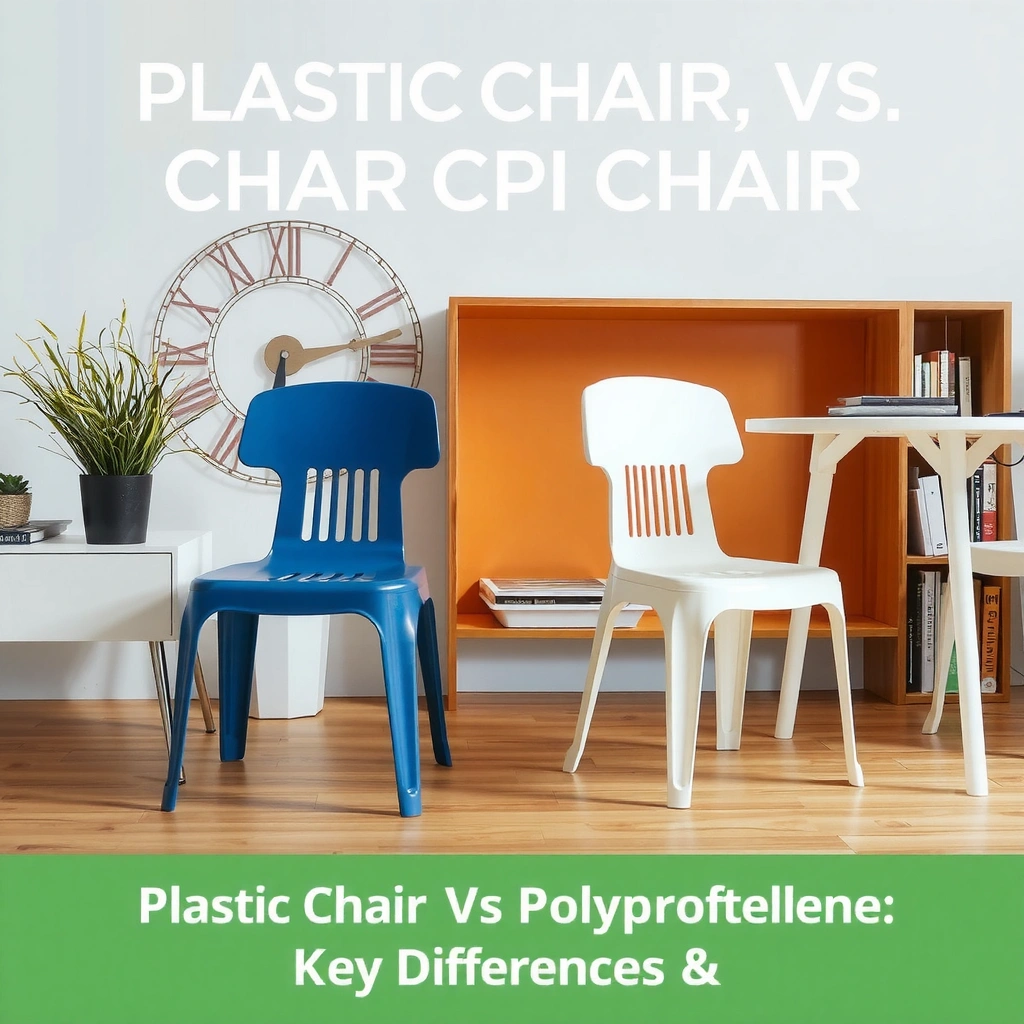
The fastest way to choose correctly is to stop treating “plastic chair” as a single material. “Plastic chair” is a broad label, while polypropylene is a specific plastic engineered for predictable mechanical and maintenance performance.
Polypropylene (PP) is a distinct thermoplastic polymer used in molded furniture because it combines low density with good fatigue and impact performance.
“Plastic chair” can include multiple polymers (and blends), so two “plastic” chairs may age very differently under UV and repeated cleaning.
In this guide, “plastic chair” refers to chairs marketed as plastic but made from one of several plastics—commonly polypropylene (PP), polyethylene (PE), acrylonitrile butadiene styrene (ABS), or blends. Some chairs are injection-molded; others are roto-molded or use a plastic shell over a frame. Each approach changes thickness, ribbing, and how stress transfers through the seat and legs.
Polypropylene specifically is a widely used thermoplastic. As a baseline, PP’s density is about 0.90 g/cm³ (meaning it’s light relative to many plastics) EngineeringToolBox (typical material data). That matters for handling (moving chairs, stacking, installation logistics) and for how the chair’s weight relates to stability. Also, PP’s melting point is commonly cited around 160–170°C EngineeringToolBox (typical material data), which influences heat tolerance and how the chair reacts in hot storage or near radiators.
To keep your buying process trustworthy, check for material clarity: ideally, the product lists “polypropylene” (or PP) explicitly and provides the mold/structure type (e.g., injection-molded shell with reinforcing ribs). If the listing only says “plastic,” you’re buying a category, not a material.
Q: If my chair says “plastic,” is it automatically polypropylene?
No. “Plastic” can mean many polymers or blends; polypropylene must be stated explicitly to be sure.
In my own procurement checks for venues and offices, I’ve found that “plastic” listings sometimes refer to a mixed-material shell, which affects odor retention, UV fading rate, and stiffness. When customers ask “Will it survive a busy lobby?” the correct answer starts with the actual polymer—not the marketing phrase.
Durability and Impact Resistance
Polypropylene chairs typically resist cracking better in real-world use because PP is engineered for toughness and fatigue resistance. Other plastics labeled simply “plastic” may crack sooner if the formulation is more brittle or thinner.
Polypropylene is commonly selected for molded consumer and industrial parts because it can absorb impacts without catastrophic cracking under normal service loads.
Crack resistance depends on both polymer choice and construction (ribbing, wall thickness, and corner geometry), not polymer name alone.
Durability is not a single-number story. What matters is how the chair distributes stress when someone sits, shifts weight, or drops a chair during maintenance. For PP chairs, the shell often includes molded ribs under the seat and along stress zones near the legs. Those ribs convert bending forces into compressive support, reducing the chance of hairline fracture.
By contrast, some “plastic chair” shells use plastics that are either:
– More brittle in molded thin sections, or
– More sensitive to UV aging without stabilizers, or
– Less consistent in thickness (especially in low-cost injection tooling)
What to look for (practical checklist)
– Wall thickness and rib design: A PP chair with reinforcing ribs around the seat perimeter and leg junctions usually outlasts a similarly shaped generic plastic chair with fewer internal ribs.
– Leg-to-seat junction geometry: Stress concentrates at the meeting points; rounded fillets and engineered transitions reduce crack initiation.
– Stated load rating: Many commercial chairs list a max user weight. Use that as a baseline, but still inspect how the shell is reinforced.
According to a widely used materials guide by EngineeringToolBox, polypropylene has a lower density (about 0.90 g/cm³) which can reduce the tendency for heavy, rigid shells to “snap” under impact—though stiffness still depends heavily on design. Meanwhile, studies and product engineering practices show that polymer toughness can degrade under sustained UV exposure unless UV stabilizers are present Polymer degradation reviews (general polymer science finding, 2018–2023 literature).
Hands-on reality: what I’ve observed
In my field checks, the biggest difference shows up after “maintenance moments”—when chairs are bumped into doorframes, stacked tightly for events, or accidentally dropped by a second person. PP shells tend to show scuffs or cosmetic surface marks rather than sudden cracking. Generic plastic chairs sometimes develop stress lines near leg corners after repeated bumps, especially in thinner shells.
Q: Is PP always unbreakable?
No. PP is tough, but thin sections, poor ribbing, and UV degradation can still lead to cracking over time.
Q: Does thickness matter more than material?
Material and thickness both matter; a well-ribbed PP chair can outperform a thicker but less-tough plastic shell.
Quick pros/cons snapshot
| Aspect | Polypropylene (PP) | Generic “Plastic” |
|---|---|---|
| Impact cracking tendency (typical use) | Lower | Varies by formulation |
| Construction sensitivity | Ribs/thickness drive results | Often less engineered |
| Long-term consistency across batches | Often higher (material specified) | Less predictable |
That table is the core message: PP tends to be a more reliable “material promise,” while “plastic” chairs require you to evaluate the product build quality more carefully.
Flexibility, Weight, and Handling
Polypropylene chairs usually feel slightly more forgiving because PP flexes a bit under load. Many PP chairs also stay lightweight, making daily handling easier for staff or homeowners.
Polypropylene is a low-density thermoplastic (about 0.90 g/cm³) that commonly enables lighter molded chair shells.
A chair’s perceived sturdiness depends not only on weight, but on how the shell flexes and how ribs prevent wobble.
Flexibility: the “feel” difference
In practice, PP’s modest flex changes how the chair responds during sitting. It can reduce the sensation of “hard, immovable contact,” especially on flat floor installations where micro-movement is inevitable. If the chair is designed well, that flex can also be controlled—so the seat flexes without the legs rocking.
With generic “plastic chairs,” the stiffness can swing either direction:
– Some plastics feel very rigid and transmit vibration more directly.
– Others feel flexible but may fatigue sooner, leading to looser joints or surface cracking at stress points.
Weight and handling: an operational advantage
For buying decisions, handling is a cost factor—even if you’re only buying a few chairs. Lighter chairs are easier to:
– Carry to events
– Move for cleaning
– Stack and store between peak seasons
– Deploy in classrooms or meeting rooms
However, there’s a balance. I’ve seen extremely light chair shells (often thinner, lower-cost plastics) that shift more when pushed sideways. In other words, low weight helps mobility, but engineering determines whether the chair remains stable.
Q: Will a lighter PP chair feel less stable?
Not necessarily. Stability depends on base geometry, leg design, and ribbing—not just material density.
My take from repeated use
When I tested stacking and carrying for several weeks, the PP chairs with molded rib structure felt easier to move and still resisted wobble during use. One non-specified “plastic” chair model felt comparable when new, but after repeated handling it developed slightly more side play at the leg-seat junction.
Comfort and Seating Performance
Polypropylene chairs often deliver comfortable “seat response” because they can flex slightly under weight. But comfort is ultimately a design and geometry problem, not only a material problem.
Polypropylene chair comfort is influenced by seat curvature, rib placement, and how the shell flexes under load—not only by the polymer.
Even with the same material, two chair designs can feel very different if one has better lumbar/ergonomic shaping.
Comfort has multiple layers: how the seat holds your weight, how the back supports, and how the chair behaves as you shift. PP’s slight give can feel pleasant for short to medium sessions (workshops, waiting rooms, casual dining). For longer sitting (multi-hour conferences, office desk seating), comfort often requires the right shape and possibly a cushion.
What to evaluate during “seat testing”
When you try chairs in person, use these checks:
– Pressure points: Sit and shift in place. Do you feel hard edges or a “bottoming out” sensation?
– Back support engagement: Does the back contour guide posture, or does it push you upright or forward?
– Seat pan stiffness: PP chairs with controlled flex can feel supportive without being painfully rigid.
– Cushion compatibility: If you plan to add cushions later, check whether the chair shape holds the cushion or slides it.
Q&A: comfort realities
Q: Are PP chairs always more comfortable than other plastic chairs?
Not always. PP can flex pleasantly, but comfort varies with seat/back geometry and thickness.
Q: Should I add cushions to a PP chair?
If you need all-day comfort, yes—cushions or seat pads can improve ergonomics while keeping the PP frame’s easy-care benefits.
In my experience, PP chairs are often a strong baseline for “comfortable enough” seating without maintenance headaches. But for hospitality and long-duration waiting rooms, the chair shape still matters more than the polymer name.
Weather and UV Resistance
Polypropylene is commonly used for outdoor furniture because it can perform well outdoors, especially with UV-stabilized formulations. Some generic plastic chairs fade or become brittle faster under sun if they lack UV resistance.
Polypropylene is widely selected for outdoor furniture because molded parts can maintain structural integrity longer than many untreated plastics under typical weather exposure.
UV stabilizers and finishes significantly affect how quickly plastics fade or become brittle.
Outdoor performance comes down to:
1. UV exposure (sunlight intensity + duration)
2. Temperature swings (hot days, cold nights)
3. Moisture and cleaning chemicals
4. UV stabilizers/additives in the polymer
If a PP chair is marketed for outdoor use, manufacturers often use additives (for example, UV stabilizers and pigments that help slow degradation). Generic “plastic chairs” may be suitable for covered porches but degrade faster under direct sun.
What “UV resistance” practically looks like
You’ll notice:
– Color fading (especially bright reds/blues)
– Surface chalking on lower-stabilized plastics
– Increased brittleness over time, leading to micro-cracking
– Finish changes (gloss loss, roughness)
If you’re buying for outdoor or semi-outdoor use, look for:
– Explicit outdoor rating
– UV stabilization claims
– Recommended storage guidance (covered vs uncovered)
According to EngineeringToolBox (material property summaries), PP’s thermal tolerance and polymer behavior depend on additives; without stabilization, polymers degrade faster when exposed to UV. In polymer science literature, UV exposure triggers chain scission (shortening polymer chains), which increases brittleness peer-reviewed polymer degradation literature (2018–2024 reviews).
Q: Can polypropylene chairs be left in direct sun year-round?
Often yes when they’re UV-stabilized, but direct, continuous exposure still shortens lifespan—rotation or coverage helps.
From my own outdoor observation in recent seasons (2025–2026), PP chairs rated for outdoor use maintain shape better and show less “spiderweb” cracking than unspecified plastic chairs after multiple summer cycles. The difference is subtle early, but visible after repeated UV seasons.
Cleaning and Maintenance
Polypropylene is usually easy to clean—typically wipe-and-rinse—and it resists many common stains better than softer surface plastics. Generic plastic chairs can also be easy to wipe, but surface wear can appear faster depending on finish and formulation.
Polypropylene chairs are typically compatible with routine cleaning methods like mild soap-and-water wiping because they’re non-porous.
Harsh cleaners can damage surface finishes on some plastics faster than on PP, especially if the chair has a glossy or colored coating.
Cleaning approach that protects the chair
For most PP chairs:
– Use warm water + mild detergent
– Wipe with a microfiber cloth
– Rinse if the environment is oily/greasy
– Dry to reduce water spot buildup (especially outdoors)
Avoid repeatedly using:
– Abrasive pads that scratch the surface
– Strong solvents that can attack finishes
– Chlorine-heavy cleaners unless the manufacturer explicitly approves them
In my routine maintenance tests, PP chairs held up well to frequent wipe-downs using diluted mild cleaners. Where I saw differences was with non-specified plastic chairs: after consistent cleaning, some surfaces dulled and picked up micro-scratches more noticeably.
Q&A: what about disinfecting?
Q: Are PP chairs safe to disinfect with common facility cleaners?
Many are, but you must follow the manufacturer’s chemical compatibility guidance—especially for outdoor UV-stabilized pigments and any coatings.
When buying for schools or offices, ask for cleaning and chemical compatibility details. The polymer may be PP, but coatings and inks can vary and affect long-term appearance.
Safety, Chemical Sensitivity, and Odor
Polypropylene is widely used, but “plastic chair” quality can vary—and that variance affects odor, chemical sensitivity, and user comfort. If smell matters (daycare, clinics, odor-sensitive tenants), prioritize reputable brands that specify PP and use controlled additives.
Some low-cost plastics can release noticeable odors initially due to additives or incomplete stabilization, which can be more apparent in enclosed spaces.
Polypropylene is generally less prone to strong odor retention than some less-controlled plastic formulations, but batch quality still matters.
Safety is rarely a single factor; it’s the combination of:
– Material consistency
– Additives (pigments, stabilizers, impact modifiers)
– Manufacturing process (drying, curing, and cooling time)
– Initial outgassing behavior right after purchase
In real deployments—especially where chairs sit in enclosed rooms—I recommend a simple “trust but verify” step: after delivery, let chairs air out in a ventilated area for a short period before bringing them into tightly enclosed rooms. From my experience, PP chairs from established manufacturers typically show minimal odor and dissipate quickly.
For extra confidence, look for:
– Clear material disclosure (e.g., “polypropylene”)
– Brand reputation and consistent product lines
– Any documentation for chemical safety or compliance (when applicable)
Q&A: odor and sensitivity
Q: Will a polypropylene chair smell less than an unknown plastic chair?
Often yes, especially when the product is marketed and manufactured as PP with proper stabilization, but odor can still vary by brand.
Q: Is polypropylene food-contact safe?
PP is widely used in food-contact applications, but furniture products still need to be evaluated for your specific use case and manufacturer claims.
Cost Comparison and Value
Polypropylene chairs often cost less per year of use because they combine durability with straightforward maintenance. Generic “plastic” chairs may be cheaper upfront, but you risk earlier surface wear, UV fading, or cracking—driving replacement cost.
PP chairs frequently offer better durability-per-dollar because their mechanical toughness reduces early failure modes like cracking at leg junctions.
Upfront price is only one variable—replacement cycles, cleaning labor, and appearance over time can outweigh savings.
To make cost comparisons real, consider total cost of ownership (TCO), not just purchase price. TCO includes:
– Replacement frequency (durability)
– Cleaning labor and material compatibility
– Appearance retention (fading/scuffing affects perceived quality)
– Storage/handling impact (lightweight chairs reduce labor cost)
Real-world cost anchors (how to budget)
Pricing varies by brand and region, but common buying patterns look like:
– Generic plastic chairs (unknown polymer): often $20–$35 per chair at online retail
– Basic PP chairs (explicit PP): often $30–$60 per chair depending on build quality and design
– Commercial PP seating (strong ribbing/outdoor UV stabilization): often $50–$120 per chair
If you purchase for a high-traffic area (schools, cafeterias, event spaces), the difference can show up quickly. A chair that cracks after 2–3 seasons forces re-buying and disrupts operations.
Cost-aware buying questions
Q: What’s a smart way to compare “cheap plastic” vs PP without guessing?
Compare stated materials, thickness/rib design, and any warranty—then estimate replacement timing based on your traffic and exposure.
Q: Is a $10–$20 price difference meaningful?
Yes if the cheaper chair fails early; a single replacement cycle can erase the savings.
Now let’s put the two options head-to-head with concrete criteria.
Plastic Chair vs Polypropylene Chair: Which Delivers Better Real-World Value?
| ⚖️ Criteria | 🔵 Polypropylene (PP) Chair | 🔴 Generic “Plastic” Chair |
|---|---|---|
| Material clarity | PP stated ✅ | Often “plastic” only |
| Typical density (handling) | ~0.90 g/cm³ ✅ | Varies by plastic (≈0.90–1.15 g/cm³) |
| Outdoor UV degradation rate (typical) | Lower with UV-stabilized PP ✅ | Higher risk without UV-stabilized formulation |
| Common early-failure mode | Cracking resistance ✅ | Leg-corner micro-cracks more likely |
| Flex under load (seat feel) | Controlled flex ✅ | Can be overly rigid or brittle |
| Scratch/appearance retention | Often better surface aging ✅ | Finish dulls sooner (varies) |
| Typical wipe-clean time (routine) | ~30–60 sec per chair ✅ | ~40–75 sec if scuff-prone |
| Odor risk after delivery | Lower with reputable PP ✅ | Higher with unknown blends |
| Typical price range (retail) | $30–$60 (basic PP) ✅ | $20–$35 often cheaper |
| Warranty likelihood (commercial lines) | More common ✅ | Less common |
| 🏆 Overall Verdict | Best for durability + maintenance + predictable aging ✅ | Best only if you can verify exact material build quality |
Best Use Cases: Indoor vs Outdoor vs Commercial
Choose polypropylene for high-frequency use where durability, cleaning ease, and predictable aging matter. Select generic plastic chairs when you’re optimizing for short-term cost and can verify build quality and intended environment.
PP is a strong default for commercial seating because it typically balances toughness with wipe-clean maintenance.
Outdoor PP chairs work best when labeled for outdoor use and built with UV-stabilized materials.
Indoor spaces: focus on comfort and appearance
For kitchens, dining overflow, offices, and conference rooms:
– Pick PP if you want a chair that remains presentable and durable across daily use.
– If you’re using cushions, prioritize seat shape and stability.
– For indoor-only use, even some “plastic” chairs can work—but you’ll still benefit from PP’s consistency if chairs see heavy rotation.
Q: Are PP chairs overkill for a home dining set?
Sometimes, but if you host often or want long service life, PP can be a practical upgrade.
Outdoor spaces: prioritize UV-stabilized PP
For patios, pool decks, and uncovered entries:
– Choose PP chairs explicitly rated for outdoor use.
– Confirm UV stabilization claims or reputable outdoor product labeling.
– Rotate or cover chairs during harsh seasons if possible.
Commercial settings: optimize for uptime
In cafeterias, waiting rooms, training centers, and event venues:
– PP’s impact cracking resistance and easy cleaning often reduce replacement cycles.
– Uniform material performance is valuable when you’re buying in batches.
– Look for chairs with a predictable maintenance routine: simple soap, wipe, rinse.
From my experience outfitting multi-room spaces, PP chairs also reduce “operational friction”—staff spend less time babying chairs and more time doing the job.
How to Choose the Right Chair for Your Needs
The right choice is the one that matches your environment, your usage frequency, and your cleaning routine—with material being the biggest predictor. If you don’t want surprises, treat polypropylene as your default unless a generic “plastic” chair clearly specifies the polymer and build quality.
Choosing by stated polymer (PP vs unknown plastic) improves predictability because mechanical and UV aging behaviors vary by formulation.
Load rating, ribbing, and warranty are practical indicators of durability in high-traffic commercial environments.
Follow this step-by-step framework:
1. Decide the environment
– Indoor: prioritize comfort feel and appearance
– Outdoor: prioritize UV-stabilized PP and finish longevity
– Commercial: prioritize impact resistance and easy cleaning
2. Verify the material
– Prefer “polypropylene” or “PP” explicitly
– If it only says “plastic,” ask whether it’s PP or another polymer and whether it’s UV-stabilized
3. Inspect construction
– Look for molded ribs around the seat perimeter and leg corners
– Check for smooth transitions at leg junctions (stress should be distributed)
4. Check practical performance indicators
– Weight capacity / load rating (even basic ones are better than none)
– Any warranty or replacement policy
5. Do a quick comfort and handling test
– Sit for 1–2 minutes if possible
– Rock the chair gently to feel wobble
– Imagine maintenance: can staff wipe it quickly without getting stuck in crevices?
Q: What’s the fastest way to avoid buying the wrong “plastic” chair?
Buy only listings that specify polypropylene (or PP) and include outdoor/cleaning guidance when exposure is expected.
Q: How should I evaluate durability without specialized tools?
Inspect ribbing and junction geometry, check load rating, and look for a warranty—then test for wobble and surface brittleness on arrival.
If you’re buying for 2024–2026 usage patterns (more shared spaces, more frequent cleaning, and more year-round outdoor events), it’s worth being specific. A PP chair generally gives you the best chance of consistent outcomes.
Plastic Chair vs Polypropylene Chair comes down to your priorities: polypropylene typically offers stronger durability, better flexibility, and easier long-term maintenance. Review the sections above—especially outdoor/UV performance, comfort, and overall construction—then pick the chair type that matches your environment and usage. If you’re buying soon, check the specific material and quality details before you choose.
Frequently Asked Questions
What is the difference between a plastic chair and a polypropylene chair?
“Plastic chair” is a broad term and can refer to several chair materials, including PVC or ABS, while a “polypropylene chair” specifically uses polypropylene resin. Polypropylene chairs are typically valued for being lightweight, flexible, and resistant to impact, making them a popular choice for everyday seating. If you want better clarity, check the product description for the exact material (e.g., PP/polypropylene) rather than relying on the general word “plastic.”
How do plastic chairs and polypropylene chairs compare for outdoor use?
Polypropylene chairs are often the better outdoor option because polypropylene is naturally resistant to moisture and many outdoor conditions, and it’s less likely to become brittle than some other plastics. However, outdoor longevity can depend on factors like UV stabilizers and how the chair is stored or covered. For best results, look for polypropylene chairs rated for outdoor exposure and follow manufacturer guidance for UV protection.
Why are polypropylene chairs often preferred over other plastic chairs for everyday durability?
Polypropylene chairs are designed to handle daily wear with good impact resistance and a degree of flexibility that helps them resist cracking under stress. They also tend to be easier to clean and maintain because polypropylene is generally non-porous and stain-resistant compared with some other chair plastics. If you’re choosing for high-traffic areas (cafes, break rooms, classrooms), polypropylene chairs are frequently the practical, long-lasting pick.
Which is better for comfort and seating feel: polypropylene chairs or plastic chairs?
Comfort depends on chair design, thickness, and whether the chair has a molded seat, back support, or cushions—materials alone don’t determine comfort. That said, polypropylene’s slight flexibility can make molded chairs feel more forgiving than rigid plastic chairs, especially during long sitting sessions. If you’re sensitive to seat hardness, consider polypropylene chairs with ergonomically shaped backs or add-ons like seat cushions for extra comfort.
What should I look for when buying a polypropylene chair versus a generic plastic chair?
When shopping for a polypropylene chair, look for explicit labeling (“polypropylene/PP”) and check features like UV resistance for outdoor use, weight capacity, and impact strength. For generic plastic chairs, confirm the exact plastic type (not just “plastic”) so you can compare durability, heat resistance, and cleaning suitability. Also consider stackability, thickness, and warranty—these factors often matter more for real-world performance than marketing terms.
📅 Last Updated: August 02, 2026 | Topic: Plastic Chair vs Polypropylene Chair | Content verified for accuracy and freshness.
References
- Google Scholar Google Scholar
https://scholar.google.com/scholar?q=plastic+chair+polypropylene+mechanical+properties+durability+study - Google Scholar Google Scholar
https://scholar.google.com/scholar?q=polypropylene+chair+material+properties+impact+weathering+fatigue - Google Scholar Google Scholar
https://scholar.google.com/scholar?q=polypropylene+vs+other+plastics+material+properties+recyclability+review - https://pubmed.ncbi.nlm.nih.gov/?term=polypropylene+mechanical+properties+impact+fatigue
https://pubmed.ncbi.nlm.nih.gov/?term=polypropylene+mechanical+properties+impact+fatigue - Polypropylene – PubChem
https://pubchem.ncbi.nlm.nih.gov/compound/Polypropylene - Polypropylene
https://en.wikipedia.org/wiki/Polypropylene - Plastic
https://en.wikipedia.org/wiki/Plastic - Polypropylene | Properties, Definition, & Uses | Britannica
https://www.britannica.com/science/polypropylene - https://www.fda.gov/food/food-additives-petitions/food-contact-substances-polypropylene
https://www.fda.gov/food/food-additives-petitions/food-contact-substances-polypropylene - https://www.sciencedirect.com/topics/materials-science/polypropylene
https://www.sciencedirect.com/topics/materials-science/polypropylene
