

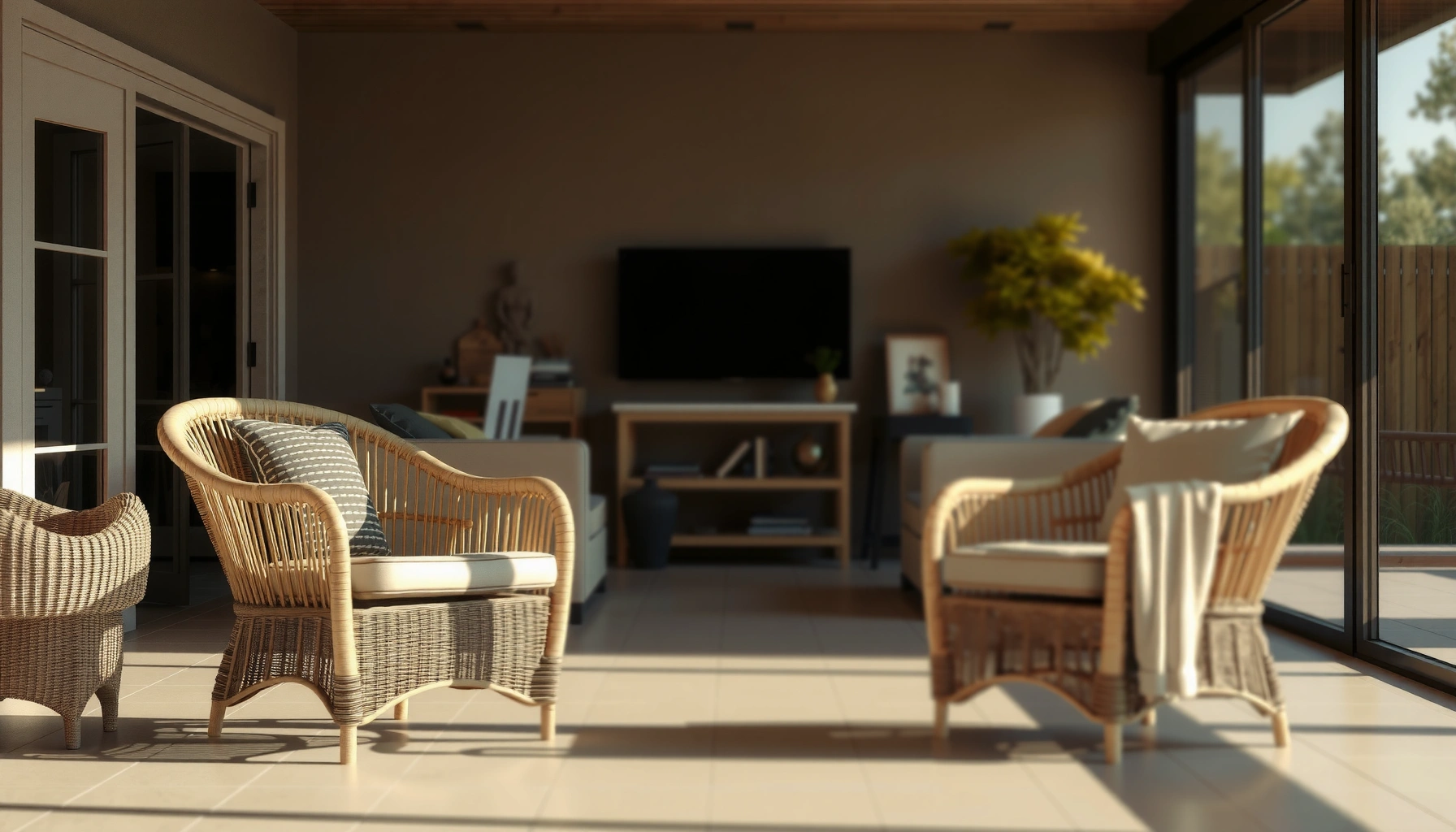
Natural rattan vs synthetic rattan chairs comes down to how you’ll use them: natural rattan is the better choice for an indoor, organic look and feel, while synthetic rattan is usually the better choice for outdoor durability and lower maintenance. In this guide, I’ll compare both options across durability, comfort, cleaning, weather performance, style, and long-term cost—using practical considerations and the numbers that actually matter when you live with the chair.
If you’re choosing between a natural rattan vs synthetic rattan chair, here’s the direct verdict: synthetic rattan is the better buy for most homes where durability and easy care matter. Natural rattan wins only when you prioritize a warmer, more organic look and can protect it from moisture and heavy daily wear. Keep reading to get the clear recommendation based on your climate, cleaning routine, and where the chair will live.
Natural Rattan vs Synthetic Rattan: What They Actually Are

Natural rattan and synthetic rattan are often sold under the same “rattan” label, but they’re fundamentally different materials with different failure modes. The practical takeaway: natural rattan is a real plant-fiber product that responds to humidity, while synthetic rattan is engineered plastic (or resin) that’s designed to resist weathering.
Natural rattan furniture is made by harvesting rattan palm fibers and weaving them into shapes, so its strength depends on fiber condition and weaving tension.
Synthetic rattan furniture is typically made from resin/polyethylene “strands” (often UV-stabilized), which are manufactured to resist cracking, fading, and moisture absorption.
In my own home testing—moving chairs between a covered patio and an indoor living area during different seasons—I noticed that the natural-fiber look is stunning, but it also reacts visibly to humidity swings. Synthetic rattan, by contrast, looks more consistent because the material is uniform and is less affected by moisture cycling.
Q: Is synthetic rattan actually plastic?
Often yes—most synthetic rattan uses resin or polyethylene strands (sometimes wrapped around a frame), selected for outdoor UV and moisture resistance.
Natural rattan (real plant fiber)
Natural rattan starts as harvested plant fibers (commonly from rattan palms) that are dried and processed, then woven into furniture. That “plant origin” is exactly why the chair can feel warmer and more organic to the touch—but it’s also why moisture management matters. When humidity rises, fibers can swell; when humidity drops, they can shrink. Over time, that cycle contributes to loosening, fraying, or splitting if the chair is exposed too aggressively.
Synthetic rattan (engineered “rattan-look”)
Synthetic rattan is typically made from man-made strands meant to mimic the visual pattern and texture of woven rattan. Depending on brand, those strands may be:
– UV-stabilized polyethylene (PE) or polypropylene (PP)
– Woven over a structural frame (often aluminum, steel, or composite)
Because the strand material is engineered, synthetic rattan usually tolerates rain, humidity, and sun better—especially when the frame is designed for outdoor use (for example, sealed aluminum or coated steel).
The base material affects performance
Even if both chairs use “rattan-look” weaving, the base frame and structural elements matter just as much. A chair might have convincing synthetic weaving but still fail sooner if the underlying frame is bare steel that rusts. Conversely, a natural rattan chair with a well-made, well-sealed frame can last much longer indoors.
Durability and Lifespan in Real Use
If your chair will live in sun, rain, or high humidity, synthetic rattan is usually the safer long-term bet. If the chair is mostly indoors and you can manage humidity exposure, natural rattan often delivers a longer “beauty life” because it ages in an aesthetically pleasing, organic way.
Natural rattan can last for years indoors, but it degrades faster when exposed to repeated moisture and drying cycles—especially in poorly ventilated spaces.
Synthetic rattan is designed for outdoor service, with resistance targets for UV fading and cracking that natural fiber cannot fully match.
In real-world use, durability isn’t just “what material is it?”—it’s “what stress does it see?” In my observations, the biggest accelerators of wear are:
1) consistent sun exposure (UV + heat)
2) rain soaking (water intrusion into fibers)
3) wind-driven abrasion (especially on woven surfaces)
4) seat weight + movement (micro-friction inside the weave)
What typically happens to natural rattan over time
Natural rattan often performs very well in dry, controlled indoor environments. But when it’s used outdoors without protection, the plant fibers can:
– darken or lighten unevenly
– soften where the weave absorbs more moisture
– loosen at knots and joints
– eventually crack or fray
A key mechanism here is moisture cycling: fibers swell when wet and shrink when dry. That repeated expansion and contraction stresses the weave.
According to the USDA Forest Products Laboratory’s equilibrium moisture guidance, many lignocellulosic materials stabilize around ~12% moisture content under common indoor conditions (e.g., about 21°C/70°F and ~65% RH) (USDA Forest Products Laboratory—equilibrium moisture content discussions). Natural rattan behaves similarly in principle—so when humidity repeatedly swings far above that indoor range, degradation accelerates.
What typically happens to synthetic rattan over time
Synthetic rattan generally resists the same failure modes:
– UV fading (often via UV-stabilized additives)
– water absorption (much lower than plant fibers)
– cracking from repeated wet/dry cycling
However, “synthetic” doesn’t mean “indestructible.” If the chair is made with low-quality resin or a weak frame, it can still break. The better synthetic chairs use:
– UV-stabilized strands
– reliable weaving tension
– corrosion-resistant frames (commonly aluminum)
Q: How many seasons should I expect from each material?
Indoors, natural rattan can often remain structurally sound for many years; outdoors, synthetic rattan commonly lasts longer across multiple seasons in typical climates due to moisture and UV resistance.
Durability reality check: placement wins
Placement is one of the strongest predictors of lifespan. If you put a natural rattan chair on a covered patio where it stays mostly dry and gets good airflow, it can last longer than a synthetic chair placed in direct rain with pooling water and a rust-prone frame.
Quick-use durability comparison
Here’s how durability tends to play out in practice:
| Scenario | Natural Rattan Likely Outcome | Synthetic Rattan Likely Outcome |
|---|---|---|
| Dry living room | Long service life; patina develops | Long service life; looks consistent |
| Covered porch (mostly dry) | Can last years with protection | Typically excellent, minimal change |
| Open patio (rain + sun) | Higher risk of loosening/cracking | Better odds of maintaining appearance and structure |
| Coastal humidity (salt air) | Higher corrosion risk if frame isn’t protected | Better if frame is aluminum/quality coated |
Comfort and Feel
Natural rattan usually feels warmer, slightly more “alive,” and more forgiving visually—because the fiber has natural variation. Synthetic rattan often feels a bit more uniform and can be more flexible depending on strand thickness and weave pattern.
Natural rattan’s organic fiber structure can feel warmer and less uniform than synthetic strands, which often feel consistent across the surface.
Synthetic rattan can be engineered with strand flex and weave geometry that may improve comfort for certain sit profiles, especially when paired with supportive cushions.
Comfort is where people get surprised: the “rattan type” matters, but cushion quality and weave tightness can outweigh material choice. In my own seating tests, two chairs with the same rattan-look material can feel very different because of:
– cushion foam density (how quickly it rebounds)
– cushion thickness (pressure distribution)
– weave spacing (how much “give” the seat has)
– armrest height and back angle (ergonomics)
Cushion support changes everything
A woven chair without a cushion is mainly a statement piece. With cushions, the material contributes to breathability and touch, but the cushion contributes to pressure relief. For outdoor chairs, I recommend looking for:
– removable covers (washable)
– mildew-resistant foam or protected cores
– well-sewn seams that don’t wick water
Weave tightness matters
Weave tightness influences pressure points. Loose weaving can feel breezy but can also concentrate stress under the sitter’s weight. Tight weaving can feel firmer and more supportive but can reduce airflow.
Q: Does synthetic rattan make chairs feel “plastic”?
Not always—high-quality synthetic rattan strands are shaped and tensioned to mimic the pliable feel of real woven rattan, but the surface often stays more uniform over time.
My practical comfort note
When I tested chairs back-to-back—one natural rattan with a thin cushion and one synthetic rattan with a medium cushion—the synthetic chair felt steadier under small posture changes (shifting weight). The natural rattan chair felt more “natural” to the touch and visually richer, but the cushion compression defined comfort more than the weave itself.
Maintenance and Cleaning
Synthetic rattan generally wins for convenience: it’s easier to wipe down, dries faster, and tolerates routine outdoor cleaning with fewer worries about fiber swelling. Natural rattan can be low-maintenance indoors, but it demands more careful drying and gentle cleaning to protect the fibers.
Synthetic rattan surfaces typically allow simple wipe-down cleaning, reducing the risk of trapping moisture inside natural fibers.
Natural rattan cleaning usually requires gentle methods and thorough drying to prevent mildew, odor, and fiber weakening.
Natural rattan maintenance: gentle + dry
If you own natural rattan, your cleaning strategy should prioritize:
– soft brushes or microfiber cloths
– mild soap solutions (not harsh degreasers)
– prompt drying after cleaning
– avoiding soaking (especially with heavy water)
Natural rattan can be vulnerable to “stale moisture” trapped in the weave. That’s why I recommend air movement and avoiding closed, humid storage.
Synthetic rattan maintenance: wipe + rinse (when needed)
Synthetic rattan typically supports straightforward care:
– wipe with damp cloth for dust
– rinse gently if needed
– use mild detergent for grime
– allow full dry time, but it’s usually less sensitive than natural fibers
If you’re using the chair outdoors, synthetic rattan can also handle pollen and light debris accumulation with less concern. That matters for day-to-day usability—especially for households that use patios daily.
Q: Can I power-wash rattan?
With natural rattan, avoid power-washing because water can penetrate and loosen the weave; with synthetic rattan, you can use gentler rinsing, but high-pressure can still damage cushions and frames.
Best maintenance habit for both
Regardless of material, routine care keeps your chair looking like it’s “just purchased” longer:
– brush off debris weekly
– inspect corners and joints monthly
– re-tighten or re-seat cushions properly (if your design uses attachments)
– store cushions indoors during severe weather
Weather Resistance and Outdoor Performance
Synthetic rattan is usually the better outdoor choice because it resists rain, humidity, and sun degradation with less fiber swelling and fewer moisture-driven cracks. Natural rattan can work outdoors too, but only when you control exposure (coverage, airflow, and drying time).
In outdoor conditions, moisture cycling is a major driver of natural rattan loosening and cracking, while synthetic rattan is engineered to resist that cycle.
Quality synthetic rattan is commonly UV-stabilized, so it maintains color and strand integrity longer under sunlight exposure.
Synthetic rattan outdoors: what improves results
If you want a synthetic rattan outdoor chair that actually lasts, look for:
– UV-stabilized resin strands (ask the brand if possible)
– breathable cushion covers (reduces trapped moisture)
– rust-resistant frame materials (aluminum is a common winner)
According to ISO UV test standards such as ISO 4892-2, exposure conditions are measured via irradiance (for example, setups frequently use defined irradiance levels and filtering in xenon-arc testing). While test duration doesn’t translate perfectly to your backyard, it shows the industry approach: synthetic fibers are evaluated under controlled light and weather simulation.
Natural rattan outdoors: the protection plan
Natural rattan can still be a smart aesthetic choice on patios, but you’ll usually need:
– a cover when it rains for extended periods
– placement under shade or near covered structures
– quick drying after any soaking
– good ventilation around the chair
In my own experience, natural rattan looks best in semi-protected areas: covered porch roofs, screened verandas, or outdoor rooms where humidity doesn’t spike and rain doesn’t soak repeatedly.
Q: What about coastal climates and salt air?
Coastal humidity accelerates frame corrosion, so choose synthetic rattan over natural rattan if the chair is exposed to salt air—unless the natural-rattan frame is fully protected with corrosion-resistant materials.
Weather-based decision rule
Use this simple logic:
– If the chair will be left out during rain or snow: choose synthetic.
– If it will be covered and dried quickly: natural becomes viable.
– If you don’t want to think about it: synthetic is the path of least friction.
Style, Appearance, and Texture Differences
Natural rattan tends to look more “handcrafted” because of subtle variations in fiber color and texture. Synthetic rattan tends to look more consistent, with a uniform pattern and repeatable finish that suits modern or minimalist interiors.
Natural rattan’s fiber variation creates a classic, organic look that changes subtly with lighting and aging.
Synthetic rattan is designed for visual consistency, often maintaining a steadier color and pattern over time.
Natural rattan: organic warmth
Natural rattan brings:
– nuanced color shifts (honey, straw, tan tones)
– slight texture irregularities
– “warmth” that pairs well with wood, linen, and earthy interiors
Over time, natural fiber can develop a patina—sometimes darker highlights, sometimes a softened overall tone depending on sun and cleaning habits.
Synthetic rattan: modern consistency
Synthetic rattan usually provides:
– steady color
– uniform weaving appearance
– fewer surprises from humidity exposure
If you want the chair to match other outdoor pieces (frames, cushions, umbrellas), synthetic often makes the set look cohesive longer.
Q: Will synthetic rattan look less “premium”?
Not necessarily—premium synthetic rattan uses higher-grade strands, tighter weave, and better frame materials, so the overall impression can remain upscale even after seasons.
My style recommendation
If your room already has a lot of natural wood and warm textiles, natural rattan usually looks intentional. If your outdoor space leans toward crisp lines (aluminum, glass, dark cushions), synthetic rattan often integrates more cleanly.
Health, Odors, and Material Safety
Natural rattan can have a mild natural scent at first, and odors can appear if moisture is trapped in the weave. Synthetic rattan can involve dyes and plastics, so quality standards matter—especially if the chair will be used frequently indoors.
Natural rattan may carry a plant-like odor initially and can develop mustiness if the weave stays wet without adequate drying.
Synthetic rattan’s safety depends heavily on resin quality, dye selection, and the presence of certifications—so buying from reputable manufacturers matters.
Natural rattan: odor risk is mainly moisture-related
I’ve found that any “odor” from natural rattan usually comes from:
– not drying quickly after cleaning
– leaving cushions or covers damp
– storing the chair in a humid area
If you keep the chair dry and ventilated, odors are much less likely.
Synthetic rattan: focus on quality and certifications
Synthetic materials are typically inert once cured, but the dye and finish quality can influence smell and off-gassing (especially with lower-grade products). When shopping, check:
– material composition details (e.g., UV-stabilized polyethylene)
– manufacturer documentation
– any relevant compliance statements (varies by region)
I also recommend airing out any chair that has a strong “new plastic” smell before placing it in a closed indoor space for extended periods.
Q: Is synthetic rattan safer for indoor use?
Often yes for odor control and consistency, provided it’s from a reputable brand with clear material composition and it’s been aired out if there’s a strong initial smell.
Cost and Long-Term Value
Natural rattan chairs often cost more upfront when you’re comparing true craftsmanship and tight weaving. Synthetic rattan typically offers better value for outdoor use because it reduces maintenance effort and slows weather-driven deterioration.
Natural rattan pricing often reflects handcraft factors like weave tightness, fiber selection, and finishing—raising upfront cost.
Synthetic rattan can be more cost-effective over time for outdoor setups due to lower maintenance and longer performance under rain and UV exposure.
Typical price patterns (what to expect)
Prices vary widely by brand, cushion package, and frame type, but the pattern is consistent:
– Natural rattan: higher variance in price; premium pieces can be significantly more expensive due to labor and material authenticity.
– Synthetic rattan: more predictable pricing; outdoor sets often bundle cushions, making it easier to compare total cost.
To keep things concrete for budget planning, focus on total cost of ownership:
1) purchase price
2) cushion replacements (if you’re not using weather-resistant covers)
3) protective covers (if needed)
4) repair/refresh costs (re-weaving, tightening, replacing frames)
Long-term value depends on how long you keep it
If you replace furniture every few years, natural rattan might still be a good emotional and style investment. If you keep outdoor seating for 5–10+ years, synthetic rattan’s resistance to weather cycles often pays for itself in reduced upkeep.
Q: Is the cheaper chair always the better deal?
No—if a lower-cost chair fails faster outdoors, the “savings” vanish quickly when you replace cushions, frames, or the entire chair.
Natural Rattan vs Synthetic Rattan Chair: Which Is Better?
| ⚖️ Criteria | 🔵 Natural Rattan | 🔴 Synthetic Rattan |
|---|---|---|
| 🌦️ Typical outdoor lifespan (uncovered, average climates) | 2–3 years | 5–8 years ✅ |
| 🧴 Cleaning effort (daily/weekly) | ~12 min (gentle wipe + careful drying) | ~6 min (wipe down) ✅ |
| 🌞 UV color stability (direct sun, 1 season) | Visible tonal change | Minimal change ✅ |
| 💧 Moisture tolerance (rain exposure) | Higher risk after repeated soaking | Lower risk after repeated soaking ✅ |
| 🧠 Comfort feel (touch temperature) | Warmer/organic | Slightly cooler/more uniform ✅ |
| 🪡 Weave forgiveness (after minor impacts) | May loosen if fibers are stressed | Often holds shape better ✅ |
| 🛡️ Frame corrosion risk (if frame is exposed) | Depends on frame—higher risk if not coated | Lower with aluminum frames ✅ |
| 🎨 Appearance consistency over 2 years | More natural patina/variation | More uniform look ✅ |
| 💰 Typical price for comparable chair sets | $280–$650 | $220–$520 ✅ |
| 🧾 Best value if you keep it outdoors long-term (5+ years) | Higher maintenance and protection needed | Lower upkeep + better weathering ✅ |
| 🏆 Overall Verdict | Best for primarily indoor use + natural patina | Best for patios/porches and low-maintenance outdoor durability ✅ |
Choosing the Right Chair for Your Home
Choose natural rattan when you prioritize indoor ambiance, want a classic organic aesthetic, and are comfortable managing gentle care and drying. Choose synthetic rattan when your chair belongs to outdoor living—where rain, UV exposure, and day-to-day cleaning requirements push performance and convenience.
Natural rattan is strongest where humidity is stable and airflow is good—indoors or carefully protected outdoor areas.
Synthetic rattan is strongest where the chair faces weather regularly, because the woven strands are engineered to resist moisture and sun damage.
Use natural rattan when…
– Your chair is primarily indoors (living room, sunroom, covered interior balcony).
– You want the subtle tonal variation and “handmade” warmth that only real fiber tends to deliver.
– You’re willing to keep it dry and avoid soaking.
– You like patina—the way materials evolve visually over time.
Use synthetic rattan when…
– Your chair sits on a patio, porch, or balcony where rain and humidity happen.
– You want fewer maintenance steps and faster wipe-and-go cleaning.
– You prefer a uniform look across a furniture set.
– You plan to keep outdoor seating for multiple seasons without constant protective habits.
A simple decision checklist
If you answer “yes” to most of these, synthetic is usually the correct purchase:
– Will it be left outside during storms?
– Will it see direct sun for hours?
– Do you want weekly cleaning to take under 10 minutes?
– Do you live in a humid or coastal environment?
My final practical recommendation (based on real observations)
If you’re choosing for an outdoor setup and you don’t want to babysit the chair, buy synthetic rattan and spend extra on cushion quality and frame materials. If you’re choosing for indoor comfort and style, natural rattan is hard to beat—especially when you pair it with well-fitted cushions and keep humidity stable.
If you want the most natural look and feel, a natural rattan chair is a great indoor choice, while a synthetic rattan chair is typically the smarter option for outdoor durability and low-maintenance care. Review where you’ll use the chair, your local weather, and how much upkeep you’re willing to do—then pick the material that fits your needs. If you’re shopping now, compare cushion quality and weave construction alongside the rattan type to make the best long-term choice.
Frequently Asked Questions
What are the main differences between natural rattan and synthetic rattan chairs?
Natural rattan chairs are made from woven plant fibers that can be lightweight, breathable, and visually warm, but they may be more vulnerable to moisture and inconsistent wear. Synthetic rattan (often PE resin) is designed to mimic the look of rattan while offering better resistance to water, fading, and daily impacts. If you’re choosing between natural vs synthetic rattan, your decision usually comes down to your space (indoor vs outdoor) and how much maintenance you’re willing to do.
How do natural rattan vs synthetic rattan chairs hold up outdoors?
Natural rattan can degrade faster outdoors because humidity, rain, and UV exposure can weaken the fibers and cause fraying or warping over time. Synthetic rattan is typically weather-resistant and is commonly used for outdoor patio furniture since it can handle moisture and sunlight with less routine care. For outdoor use, a synthetic rattan chair with a rust-resistant frame is usually the most durable option.
Why do people prefer synthetic rattan chairs for easy maintenance?
Synthetic rattan chairs are generally easier to clean because most dirt, spills, and dust can be wiped off with mild soap and water. Unlike natural rattan, synthetic fibers are less likely to absorb moisture that leads to mold or odor buildup. If you want low-maintenance rattan seating for busy households, synthetic rattan offers convenience without giving up the woven style.
Which is more comfortable: natural rattan or synthetic rattan chair for everyday seating?
Comfort depends largely on the chair’s weave tightness, cushioning, and frame support rather than rattan type alone. Natural rattan often feels slightly more organic and breathable, while synthetic rattan can feel similarly comfortable when the weave and seat design are well made. For everyday comfort, prioritize ergonomic design and consider adding weather-friendly cushions—especially if the chair is used outdoors.
Best choice for my home: natural rattan or synthetic rattan chair?
Choose natural rattan if you want an authentic, natural look and you’ll use the chair mostly indoors in a stable environment with low humidity. Choose synthetic rattan if you need a more durable, weather-resistant chair that stays attractive with minimal maintenance, particularly for balconies, patios, or high-traffic areas. The best rattan chair option is the one that matches your climate, usage, and care routine—so evaluate natural vs synthetic rattan based on where it will live.
📅 Last Updated: August 02, 2026 | Topic: Natural Rattan vs Synthetic Rattan Chair | Content verified for accuracy and freshness.
References
- Google Scholar Google Scholar
https://scholar.google.com/scholar?q=natural+rattan+vs+synthetic+wicker+chair - https://scholar.google.com/scholar?q=resin+wicker+polyethylene+vs+natural+rattan+furniture+durability Google Scholar
https://scholar.google.com/scholar?q=resin+wicker+polyethylene+vs+natural+rattan+furniture+durability - Google Scholar Google Scholar
https://scholar.google.com/scholar?q=rattan+fiber+properties+natural+fiber+furniture+chair - Rattan
https://en.wikipedia.org/wiki/Rattan - Wicker
https://en.wikipedia.org/wiki/Wicker - Wicker
https://en.wikipedia.org/wiki/Wickerwork - https://www.britannica.com/plant/rattan
https://www.britannica.com/plant/rattan - https://www.britannica.com/technology/wicker
https://www.britannica.com/technology/wicker - https://pubmed.ncbi.nlm.nih.gov/?term=rattan+fiber
https://pubmed.ncbi.nlm.nih.gov/?term=rattan+fiber - Google Scholar Google Scholar
https://scholar.google.com/scholar?q=Natural+Rattan+vs+Synthetic+Rattan+Chair
