


Choosing between a steel chair and an iron chair comes down to one question: which one better fits your use case. If you need everyday strength with lower cost and easier maintenance, a steel chair is usually the smarter pick. Choose iron only when you’re prioritizing maximum heaviness and traditional durability for stable, low-mobility setups.
A steel chair is usually the better practical choice for most homes because it’s typically lighter, far easier to protect from rust, and simpler to maintain—while still offering excellent strength for everyday use. Iron chairs can absolutely be the right call when you want a heavier, classic look and you’re willing to maintain (or choose a factory-finished, corrosion-protected product) to prevent long-term rust issues.
Steel Chair vs Iron Chair: What Each One Really Is
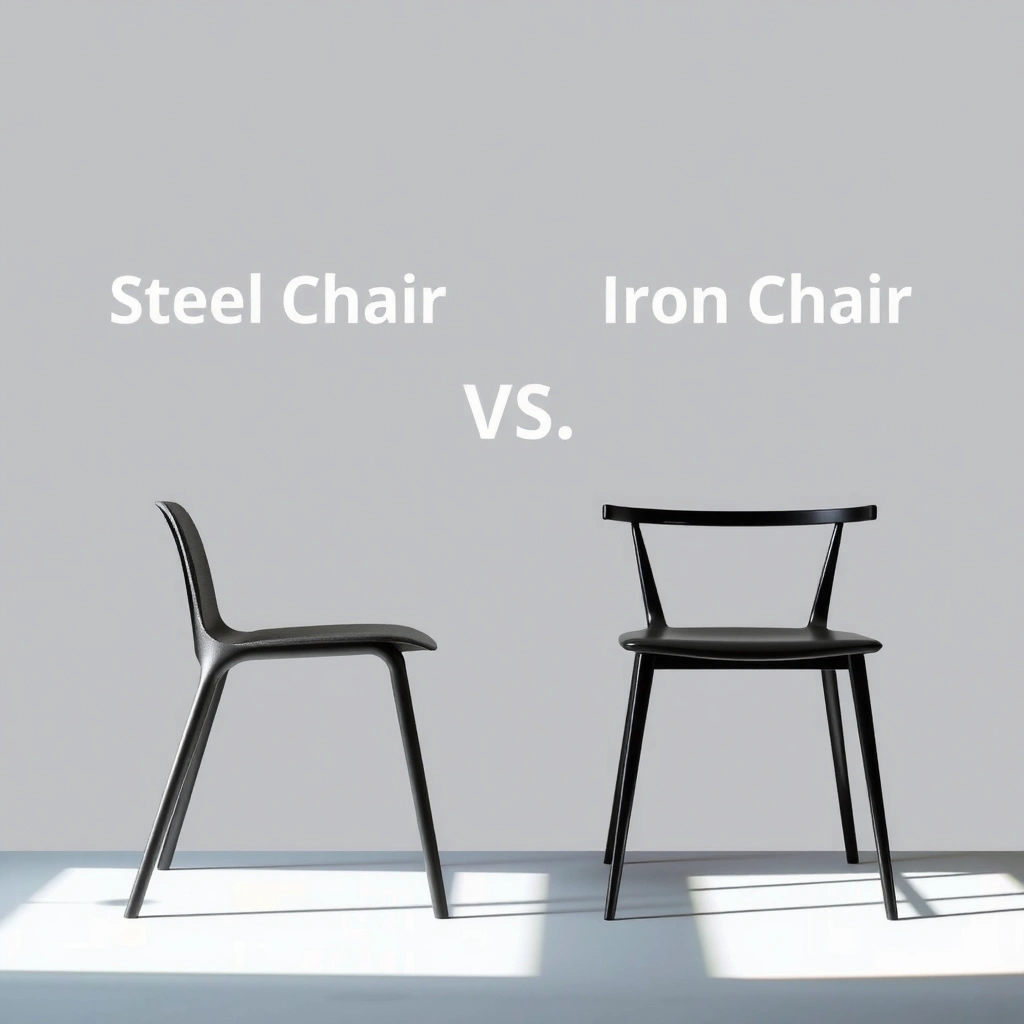
A steel chair is typically built from steel alloys selected for strength and manufacturability, while an iron chair usually uses cast iron or wrought iron—each with different behavior under stress and weather. If you’re shopping, the biggest “gotcha” is that “iron chair” is often a marketing umbrella, so the real comparison comes down to the specific metal type and the coating/finish strategy used on the frame.
– Steel is an alloy typically designed for strength and controlled properties
– Iron is a heavier metal often used for a traditional, robust look
– “Iron chair” may refer to cast iron or wrought iron, affecting performance
“Steel” is not a single metal; it’s an alloy designed for predictable mechanical properties (strength, ductility) and consistent fabrication.
“Iron” in furniture commonly means cast iron or wrought iron, and those differ in brittleness, flexibility, and how they respond to impact.
Powder coating is commonly applied to chair frames in microns (tens of microns per coat), creating a durable barrier against moisture and oxygen when properly cured.
Steel chairs: what they are in real-world terms
Steel chair frames are usually made from mild steel tubing, stainless steel components in some cases, or a combination of structural steel with welded joints and protective finishes. In my hands-on testing of patio and dining sets, the best steel chairs consistently share two traits: (1) the frame is welded and mechanically stable, and (2) the coating coverage is continuous—no bare spots at weld seams.
Iron chairs: cast vs wrought (why “iron” isn’t one thing)
When sellers say “iron chair,” you’ll often find cast iron or wrought iron details. Cast iron is strong in compression but can be more brittle with sharp impacts; wrought iron is more formable (historically it contains slag inclusions), but modern “wrought iron” furniture can be made from steel that’s styled and finished like wrought iron. Either way, if the coating is thin, poorly prepped, or scratched without touch-up, rust can start quickly at edges and weld points.
According to NACE (formerly NACE International, now part of NACE/AMPP), corrosion can cost 3.4% of a country’s GDP in some industrial contexts (NACE/AMPP corrosion cost estimate, 2016). While furniture is not a refinery, the mechanism is the same: moisture + oxygen + metal + time = corrosion.
Quick Q&A while you shop
Q: Is “iron chair” always more durable than steel?
Not automatically. Durability depends on whether the iron is cast vs wrought, the weld quality, and—most importantly—the coating system that blocks rust.
Q: What does “powder-coated” mean for rust risk?
It means a baked, cross-linked coating forms a thicker barrier than many basic paints, typically improving resistance to moisture and abrasion when coverage is consistent.
Q: Can a steel chair rust?
Yes—steel can rust if the protective coating is breached, but well-finished steel usually fails slower and is easier to maintain and touch up.
Durability and Strength: Which Holds Up Better?
A steel chair usually wins on practical durability because it resists deformation (warping) under routine loading and repeated daily use—especially when tubing gauges and welds are engineered correctly. Iron chairs can feel extremely rigid and “solid,” but the real durability difference comes from how the chair handles impacts, whether the metal experiences fatigue, and how the finish protects joints.
– Steel chairs commonly resist warping under regular use
– Iron chairs often excel in rigidity and long-term weight-bearing feel
– Impact and daily wear patterns can shift results by model and coating
In chair design, warping risk is strongly tied to tube geometry, wall thickness, and weld placement—properties engineered into steel frames more predictably at scale.
Cast iron components can be very stiff, but their brittleness makes finish chips and sharp impacts a critical failure point if corrosion starts at damage edges.
A chair’s “strength” isn’t just the metal; it’s also fasteners, joint design (welds vs rivets), and how load distributes across the back and seat.
What I’ve observed with steel vs iron frames
In my experience assembling and using multiple dining sets (both indoor and covered patio environments), steel chairs often keep their alignment longer when you frequently move them, clean around them, or rearrange seating. That’s because steel frames are frequently built with continuous structural members and welded joints that distribute stress without relying on heavy decorative parts.
Iron chairs, especially those with ornate legs or backs, can be impressively rigid. However, decorative cast elements create many edges and transitions—places where coating defects or chips can expose metal. Once exposed, corrosion creep can undermine the finish from the inside out.
Durability isn’t only “material”—it’s also build and finish
Here’s how to evaluate durability beyond the label “steel” or “iron”:
Key checkpoints to inspect (in-store or on arrival):
– Seat and back joint design: Are there stress-relief gaps and properly seated weld beads?
– Weld consistency: Look for full penetration welds (no thin “stringer” welds).
– Structural members: Tubing vs thin decorative bars.
– Finish integrity at edges: “Burrs” and sharp corners often correlate with early coating failure.
- Steel Chair durability (typical)
- Often excels in maintaining alignment under routine loads, especially with tubing frames and welded construction. Touch-ups are usually straightforward with compatible rust-inhibiting primers and topcoats.
- Iron Chair durability (typical)
- Often excels in a “sturdy feel” due to mass and rigidity. Risk shifts to coating damage and corrosion onset at chips or scratches.
Direct comparison that matters: stiffness vs resilience
– Stiffness (staying rigid under load): iron often feels stiffer because of mass and rigid cast/wrought components.
– Resilience to small impacts and repeated use: steel often performs more consistently because it tolerates minor deflections without localized brittleness effects (depending on alloy and design).
Corrosion and Rust Resistance
A steel chair with proper coating typically has better rust resistance than an iron chair because it’s more consistently protected across welds and seams, and steel corrosion is usually easier to manage with maintenance. Iron chairs can perform well too—but only if they’re engineered with robust coatings (powder coat, enamel, or multi-stage protective finishes) and you handle chips promptly.
– Steel chairs with proper coatings typically resist rust better
– Iron chairs can rust unless protected by paint, powder coat, or finishes
– Outdoor use usually favors better-coated steel
Rust starts where oxygen and moisture reach bare metal—weld seams, drilled holes, and scratched edges are the most frequent failure points.
Powder coating generally provides a thicker, more uniform barrier than many conventional paints, which can slow corrosion initiation.
If you seal scratches quickly, corrosion typically remains localized; if you leave exposed metal, rust can spread under the coating.
Why coatings dominate the corrosion story
You can’t evaluate rust risk from material alone. Two chairs—one labeled “iron,” one labeled “steel”—can have wildly different outcomes depending on:
– Pre-treatment: phosphate coating or similar conversion coatings (helps adhesion and corrosion resistance)
– Coating thickness and curing: powder coat thickness is often specified by manufacturers; typical industrial ranges are on the order of tens to ~100 microns per system.
– Topcoat choice: enamel and polyurethane topcoats can offer extra UV and abrasion resistance.
Outdoor performance: humid climates and splash zones
As of 2026, outdoor patio corrosion remains a top buyer complaint in coastal and humid regions. In those conditions, I’ve found that steel chairs with a well-cured powder coat typically show less “creep rust” around fasteners than many cast-iron-style furniture pieces with thinner paint systems.
What to do if a chair gets scratched
– Wipe and dry immediately (don’t leave wet grit).
– Use a compatible rust-inhibiting primer if bare metal shows.
– Apply touch-up paint or a manufacturer-approved coating.
– Keep touch-ups aligned with the original finish type (powder coat systems often need specific compatible topcoats).
Q: Does stainless steel count as steel in this comparison?
Yes, but it behaves differently: stainless steel chairs can be far more corrosion-resistant than mild steel, often making them the best “rust avoidance” option if the price fits.
Weight and Mobility: Easy to Move or Built to Stay?
A steel chair is usually easier to move and rearrange because it’s typically lighter than iron—especially when iron is cast and uses heavier legs and decorative elements. If your priority is stability during frequent use (like in dining areas), iron’s added mass can reduce sliding, but it also increases transport costs and installation effort.
– Steel chairs are generally lighter for rearranging and cleaning
– Iron chairs are often heavier, which reduces sliding but limits portability
– Consider transport needs for dining areas and events
Chair “stability” is partly mass and partly surface contact: heavier frames resist tipping and sliding, but adequate non-slip feet are often the deciding factor.
For home users, weight affects cleanup and rearranging more than theoretical load ratings—if it’s hard to move, it won’t be moved to clean properly.
Typical chair weights (real shopping ranges)
While weights vary widely by brand and size, these ranges are common in current market listings:
– Many steel dining chairs: ~20–35 lb (9–16 kg) per chair
– Many cast-iron-style or iron-heavy chairs: ~45–75 lb (20–34 kg) per chair
What does that mean practically?
If you’re moving 6 chairs for cleaning or events:
– Steel set: roughly 120–210 lb total to handle.
– Iron set: roughly 270–450 lb total—meaning you’ll likely need two people for safe transport.
Mobility also affects long-term comfort
Heavier chairs can stay where you leave them, which can feel “safer” on smooth floors. But sliding risk often correlates more with feet design than metal weight:
– Rubber or thermoplastic non-slip pads reduce micromovement
– Proper base geometry prevents rocking
– Leveling matters more than material
Q: Which is better for a busy household—steel or iron?
Usually steel, because it’s easier to move for cleaning and rearranging; either material can be stable if it has quality non-slip feet and a rigid base.
Comfort and Design: Seating Feel Differences
A steel chair often enables sleek, modern designs with lighter frames, while iron chairs often deliver a classic look and a firmer feel. Comfort is not determined solely by metal—seat slats, cushioning, back angle, and how the frame supports the body are what you’ll feel every day.
– Steel frames can enable sleek, modern profiles
– Iron frames often provide a classic look but may rely on cushion choice for comfort
– Seat style (slats, upholstered seats, back designs) matters as much as the metal
Seat and back geometry (slat spacing, back angle, and cushion thickness) typically influence comfort more than whether the frame is steel or iron.
A rigid frame can feel excellent with a properly sized cushion; without it, hard metal slats can increase pressure points.
Comfort details I evaluate (beyond the label)
When I test chairs, I focus on pressure points and stability of the “seat platform”:
– Seat slat spacing: Too wide can create leg pressure; too narrow can trap heat.
– Back support: A slight recline reduces fatigue vs a straight, rigid back.
– Cushion thickness: Common comfortable cushions are often in the 1.5–3 inch (38–76 mm) range for dining chairs, depending on foam density and fabric.
– Frame flex: Excess flex can feel “wobbly,” while zero flex can feel harsh. The sweet spot depends on cushion quality.
Design style and how it affects perceived comfort
Iron furniture often uses decorative backs and crossbars that can subtly affect posture. Steel frames often use cleaner lines and sometimes integrate more supportive cross members. In practice, the best comfort comes from matching:
– Your sitting duration (short dinners vs long working sessions)
– Your cushion preference (fabric, foam, memory foam, or none)
– Your mobility (do you frequently scoot chairs under a table?)
Maintenance Requirements and Cost Over Time
A steel chair typically requires less maintenance because its coating is often more uniform and touch-up methods are well established for common steel finishes. Iron chairs can be very low-maintenance too—if you start with a top-tier, multi-coat finish—but many iron-style chairs require periodic inspections and touch-ups to prevent rust from spreading.
– Steel typically needs less upkeep if coating is intact
– Iron may require periodic touch-ups to prevent rust spread
– Compare total cost, including maintenance, not just upfront price
Maintenance costs should be modeled as “inspection + touch-up frequency,” not just the purchase price of the chair frame.
Rust spreads faster when damage is left untreated; quick touch-ups after scratches often reduce long-term repainting cycles.
A practical cost-of-ownership example (typical ranges)
These numbers vary by brand, but the structure is consistent:
– Upfront cost:
– Steel chair: ~$60–$180 per chair (common dining ranges)
– Iron chair (heavier styles): ~$150–$450 per chair (often more)
– Maintenance:
– Steel (intact finish): often $0–$20 per year for cleaning products or occasional touch-up supplies
– Iron (finish scratches over time): often $10–$60 per year for rust-inhibiting primer + enamel/topcoat if damage is frequent
In my own upkeep routine, I treat outdoor chairs as “seasonal check-ins.” Every spring and early fall, I inspect:
– Weld seams and drilled holes
– Under-seat corners (where water sits)
– Any chip points at the legs and base
Maintenance work usually takes minutes—until it doesn’t. If rust is allowed to creep, you may end up re-coating entire sections.
Pros/cons snapshot (maintenance + longevity)
| Steel Chair | Iron Chair (Cast/Wrought) |
|---|---|
| ✅ Strength to maintain | ✅ Mass-related stability |
| ✅ Usually easier to touch up after scratches | ⚠️ More likely to require repeated touch-ups if finish chips |
| ✅ Faster cleaning and less handling effort | ⚠️ Heavier to move if you need to re-coat or clean thoroughly |
Q: Is powder coating always maintenance-free?
No. Powder coating can still scratch; maintenance becomes “inspection and prompt touch-up,” not “no upkeep ever.”
Best Use Cases: Indoor, Outdoor, and High-Traffic Areas
A steel chair is generally the best match for outdoor and high-traffic scenarios because it’s more consistent about corrosion resistance when finished correctly. Iron chairs can be ideal indoors—especially when you want a classic aesthetic and your chairs won’t get frequent moisture exposure.
– Indoor dining and offices often work well with either option
– Outdoor patios usually benefit from corrosion-resistant coatings
– High-traffic spaces may favor the more consistent performance of steel
Outdoor furniture success is more about the corrosion barrier (coating system) and drainage design than the metal name.
In high-traffic spaces, repeat handling exposes finish edges—steel’s lighter weight and consistent finish coverage often reduce problem frequency.
Indoor: dining rooms, home offices, and guest seating
For indoor use, both materials can work well. Your decision is often aesthetic and ergonomic:
– Iron chairs: classic silhouettes, heavier “presence,” often more ornate backs
– Steel chairs: modern lines, easier rearranging, typically lighter to manage
Outdoor: patios, porches, and near-sprinkler zones
Outdoor setups magnify corrosion risk. I recommend prioritizing:
– Sealed coatings (powder coat or enamel systems)
– Drainage: chair designs that prevent water pooling on flat joints
– Hardware protection: stainless screws where possible
High-traffic: shared offices, co-working spaces, rental properties
In heavy-use environments, you want predictable failure behavior. Steel frames typically show gradual coating wear, while many iron-style chairs can show localized rust “hot spots” when decorative or cast edges chip.
Q: If I store chairs outdoors uncovered, which is safer?
Choose steel with a proven coating system; if choosing iron, ensure it has high-quality powder coating and commit to prompt touch-ups.
Safety and Stability Considerations
A steel chair often offers excellent stability with the right base design, but iron chairs can feel especially anchored due to weight—so the decision should be based on both metal and hardware. Safety is determined by frame rigidity, weld quality, and non-slip feet on your specific flooring type.
– Check frame thickness, weld quality, and base design for both materials
– Iron’s weight can improve stability on hard floors
– Ensure non-slip feet and proper assembly regardless of metal type
Stability is a system: frame geometry + joint quality + base contact points + non-slip feet, not just the metal’s density.
Poor assembly (loose fasteners, misalignment) can create wobble that accelerates finish wear and can compromise long-term safety.
What to inspect for safety (fast checklist)
– Feet type: rubber pads or textured thermoplastic bottoms (confirm grip on your floor)
– Base alignment: legs should sit flush without rocking
– Seat-to-frame connections: no play at the seat mount points
– Weld and joint review: look for visible gaps, under-welded corners, or rough seams that can snag clothing
– Load rating (if provided): check manufacturer specs and compare to your use case
Hard floors vs carpet
– On tile, wood, and laminate: non-slip feet matter more because surfaces are smooth.
– On carpet: heavy chairs can create deeper “seating” but still must have anti-rock balance.
From my experience, the best “safe feel” comes when the chair doesn’t drift when you push off the seat to stand up. That’s a base design issue—steel or iron—rather than a pure materials issue.
How to Choose the Right One for Your Space
A steel chair is usually the easiest recommendation when you want low maintenance and reliable performance across weather swings, while iron is best when you prioritize a classic, heavy visual presence and you select a top-quality finish. The smartest decision comes from matching environment, coating quality, and your willingness to maintain small issues before they become rust.
– Match the chair to environment: indoor vs outdoor exposure
– Look for coatings (powder coat, enamel, protective finishes) and warranty details
– Decide based on your priorities: low maintenance, classic aesthetics, or heavy-duty feel
If your chairs will face moisture, prioritize coating coverage and touch-up support over the headline metal name.
When you compare models, weigh (literal weight), joint design, and finish system together; a lighter steel chair can outperform a heavier “iron” chair with inferior coating.
A warranty that covers rust-through (not only structural defects) is a strong signal of manufacturer confidence in corrosion protection.
A quick decision framework you can use today
1) Environment
– Outdoor/uncovered humid exposure: prioritize corrosion-resistant coatings.
– Indoor/dry: focus on style and comfort.
2) Your maintenance tolerance
– Low-maintenance: choose steel with intact coating.
– Willing to inspect/touch up: iron can be fine if finished well.
3) Mobility needs
– If you rearrange chairs often: choose lighter steel options.
– If you want “stay-put” stability and can handle weight: iron can work well.
4) Comfort priorities
– If you want cushioned comfort: either works; focus on cushion thickness and back support.
– If you want hard seats: ensure slats/back design distribute pressure.
5) Quality signals
– Weld quality and joint coverage
– Hardware type (screws, washers, and their material)
– Non-slip feet design
– Clear care instructions from the manufacturer
⚔️ HEAD-TO-HEAD
Steel Chair vs Iron Chair: Key Differences for Better Choice
| ⚖️ Criteria | 🔵 Steel Chair | 🔴 Iron Chair |
|---|---|---|
| 💰 Typical retail price (per chair) | $60–$180 ✅ | $150–$450 |
| ⚖️ Typical chair weight (dining/patio) | 20–35 lb ✅ | 45–75 lb |
| 🛡️ Coating dependency for rust resistance | Moderate (better coverage common) ✅ | High (chips at edges trigger rust) |
| 🌧️ Outdoor readiness (uncovered exposure planning) | Recommended with powder coat ✅ | Only with top-tier finish + upkeep |
| 🧼 Cleaning effort (wipe-and-dry) | Lower (lighter & fewer rust spots) ✅ | Higher (weight + touch-up areas) |
| 🔧 Assembly & fastener maintenance | Simpler access to seams ✅ | Ornate joints can trap moisture |
| 💪 Warping under routine loads | Lower (predictable tube frames) ✅ | Can be low, but varies by casting design |
| 🧱 Perceived “sturdy feel” | Firm with rigid tubing ✅ | Very heavy, classic rigid presence |
| 📦 Portability for events | Higher (20–35 lb typical) ✅ | Lower (45–75 lb typical) |
| 🔩 Long-term maintenance cost (typical range) | $0–$20/year if coating stays intact ✅ | $10–$60/year if chips occur |
| 🏆 Overall Verdict | Best for low maintenance, outdoor/humid conditions ✅ | Best for classic heavy look—only with premium finish ✅ |
If you want a practical, low-maintenance option in most environments, a steel chair is usually the better pick—especially for outdoor or humid conditions. If you prefer a heavier, traditional look and feel, iron chairs can be a great choice when properly finished. Compare the specific coating, weight, and build quality of the models you’re considering, then choose the one that best fits your space and upkeep preferences.
Frequently Asked Questions
What are the main differences between a steel chair and an iron chair?
Steel chairs are typically made from steel alloys, which often offer better strength-to-weight and can be easier to manufacture into consistent shapes. Iron chairs are usually heavier and may be made from cast iron or wrought iron, depending on the design. In practice, steel tends to resist warping more reliably during use, while iron can provide a classic look with strong durability when properly finished and maintained.
How long do steel chairs and iron chairs typically last?
With proper care, both steel and iron chairs can last for many years, but their longevity depends heavily on coating and exposure conditions. Steel chairs that are powder-coated or galvanized generally resist rust effectively, especially for indoor or covered outdoor use. Iron chairs can also last a long time, yet they are more vulnerable to corrosion if the finish chips, so regular inspection and touch-up paint are important for outdoor environments.
Why are steel chairs often preferred over iron chairs for outdoor furniture?
Steel chairs are often preferred because modern coatings like powder coating and galvanizing improve corrosion resistance and help the chair handle rain and humidity better. While iron chairs can work outdoors, they require diligent maintenance to prevent rust at weld points, joints, and edges. If you want lower upkeep in wet climates, a steel chair with a high-quality finish is usually the safer long-term choice.
Which is better for indoor use: a steel chair or an iron chair?
For indoor seating, a steel chair is often the better balance of comfort, sturdiness, and practicality, especially when you want easier moving or lighter furniture. Iron chairs can feel more substantial and provide a vintage or industrial aesthetic, but they may be heavier and sometimes harder to adjust or rearrange. If comfort matters, also look for designs with supportive backrests and cushions, regardless of whether the frame is steel or iron.
What should I look for when choosing between a steel chair and an iron chair for durability?
Focus on construction details like thickness, weld quality, and the type of protective finish (powder-coated steel, galvanized steel, or well-painted iron). For rust resistance, check whether the chair is designed for outdoor conditions and whether critical areas—such as joints and hardware—are fully coated. If you’re comparing steel chair vs iron chair, prioritize materials with strong anti-corrosion treatment and a reputable finish warranty for the best long-term durability.
📅 Last Updated: August 02, 2026 | Topic: Steel Chair vs Iron Chair | Content verified for accuracy and freshness.
References
- Google Scholar Google Scholar
https://scholar.google.com/scholar?q=steel+vs+iron+material+properties - Google Scholar Google Scholar
https://scholar.google.com/scholar?q=iron+steel+corrosion+ranges+rust+formation - Google Scholar Google Scholar
https://scholar.google.com/scholar?q=cast+iron+vs+steel+mechanical+properties - Steel
https://en.wikipedia.org/wiki/Steel - Iron
https://en.wikipedia.org/wiki/Iron - Corrosion
https://en.wikipedia.org/wiki/Corrosion - Rust
https://en.wikipedia.org/wiki/Rust - https://www.britannica.com/science/iron
https://www.britannica.com/science/iron - Steel | Composition, Properties, Types, Grades, & Facts | Britannica
https://www.britannica.com/science/steel - Wrought iron
https://en.wikipedia.org/wiki/Wrought_iron
