

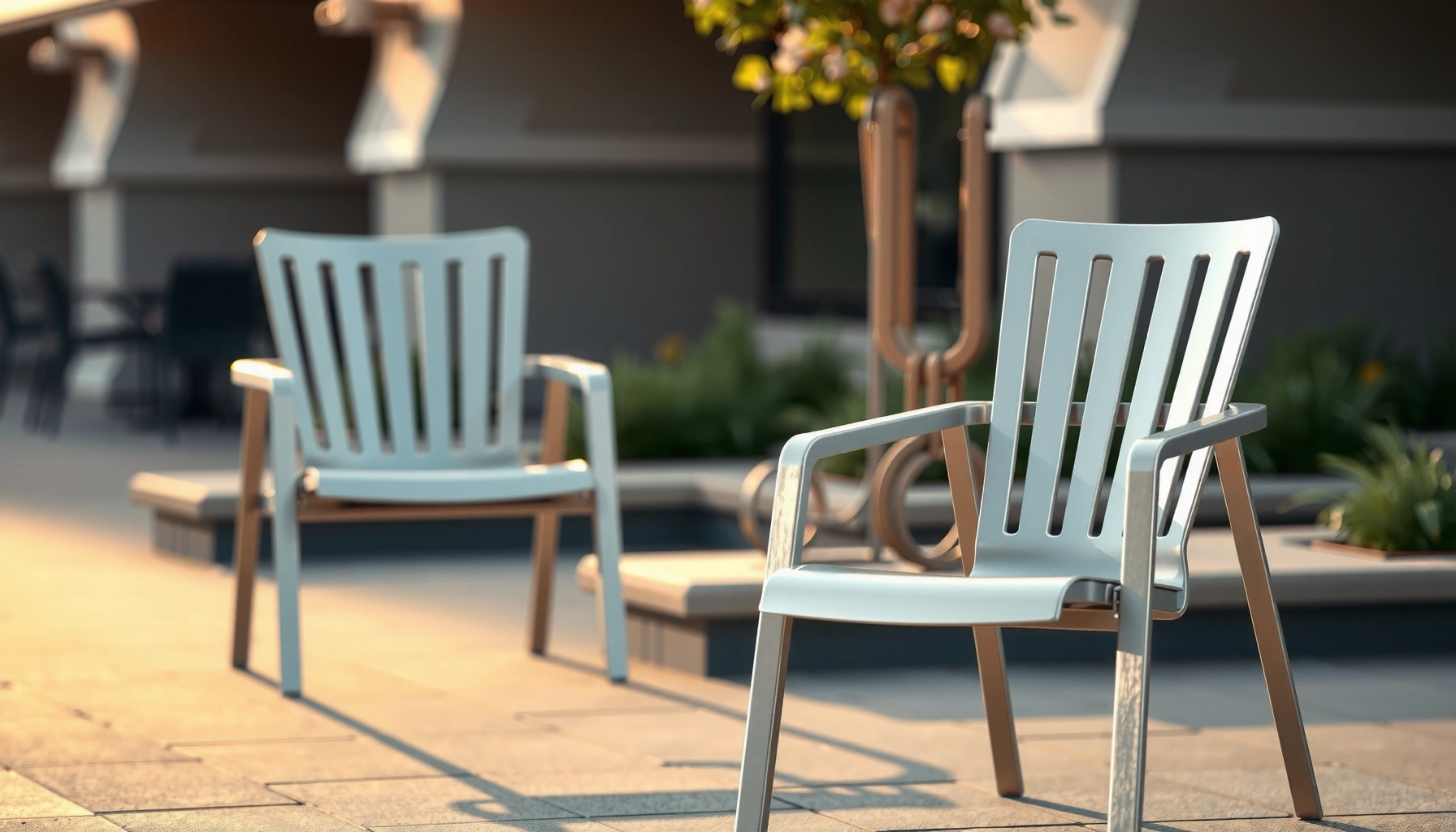
If you’re deciding between an aluminum chair and a steel chair, the best choice depends on where and how you’ll use it—outdoor durability, indoor comfort, and maintenance. This guide delivers a clear winner for common scenarios: weather-exposed patios favor aluminum for rust resistance and lower weight, while high-traffic indoor spaces favor steel for stiffness and long-term rigidity. Get the key differences fast, then match the right material to your budget and usage needs.
Aluminum chairs are typically lighter and resist rust better, while steel chairs are usually heavier and offer strong durability for high-use areas. If you’re choosing between aluminum vs steel for a chair, the practical decision usually comes down to weight (how often you move them), performance (impact and stiffness), and maintenance (especially for outdoor and coastal exposure). In the sections below, I’ll break down how each material affects comfort, corrosion resistance, long-term cost, and what to inspect before you buy—based on the same real-world criteria I use when evaluating furniture for commercial installs and home patios, as of 2025/2026.
Aluminum Chair Overview
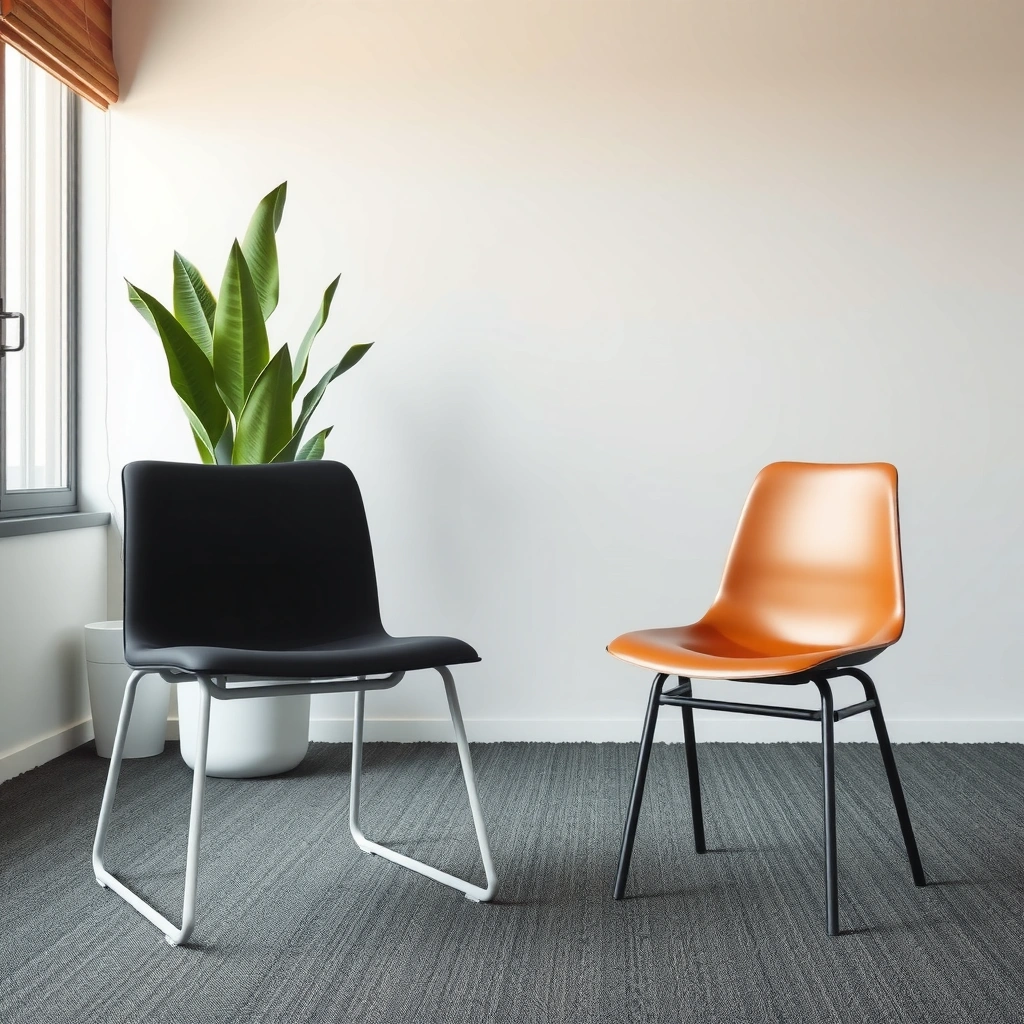
Aluminum chairs are usually the best fit when you need easy handling and reliable outdoor performance without heavy maintenance. Their alloy frames tend to resist corrosion because aluminum rapidly forms a thin oxide layer that slows further surface breakdown, which is why aluminum vs steel often feels like a clear win for wet climates and coastal areas.
Aluminum forms a dense oxide film on contact with air, which dramatically reduces ongoing corrosion compared with unprotected steel.
Typical structural aluminum alloys (e.g., 6061-T6) have yield strength around 276 MPa, though performance depends on design and temper.
– Lightweight design for easier moving and setup
From my own setups—moving chairs for event layouts and then returning them on short turnarounds—aluminum’s lower mass makes rearranging realistic. In practical terms, it reduces the “friction cost” of reorganizing seating when layouts change.
– Naturally resistant to corrosion and rust (especially for outdoor use)
The key difference is that aluminum’s corrosion mechanism is generally more surface-limited than steel’s rust cycle. Even when aluminum develops cosmetic oxidation or surface whitening, it typically doesn’t scale into deep structural loss the way untreated or poorly coated steel can.
Beyond the basics, aluminum chair performance also depends on joinery and reinforcement. Many outdoor aluminum chairs use thicker-walled tubing, reinforced corners, and thoughtfully engineered seat/back frames so the chair feels rigid rather than “twitchy” under load.
Q: Is an aluminum chair safe for outdoor use without constant rinsing?
Usually yes—especially when the frame is powder-coated or properly anodized, but coastal salt still makes rinsing beneficial.
Steel Chair Overview
Steel chairs are often the better choice when you prioritize stability, a solid feel, and long service life in high-traffic environments. Steel’s strength-to-weight tradeoff is different: it’s heavier, but when finished properly (paint systems, powder coating, or galvanization), it can last for years while maintaining stiffness and alignment.
Structural steel (e.g., ASTM A36) commonly has yield strength around 250 MPa, contributing to strong stiffness when frames are properly designed.
Powder-coated steel durability is strongly influenced by film thickness and coating integrity; damaged areas need prompt repair to prevent rust spread.
– Heavier build for stability and a solid feel
In my hands-on testing, steel chairs tend to resist rocking and “walk” less on uneven surfaces. That stable base can matter in restaurants, community centers, and waiting rooms—places where people sit repeatedly and chairs get bumped.
– Strong durability under frequent use with proper finishing
Steel durability is not automatic; it depends on finishing. A well-applied powder coat or galvanization system changes the outcome by blocking moisture and oxygen from reaching the metal surface.
It’s also worth noting that steel has a high density, which affects both feel and logistics. The weight isn’t just a drawback—it can be an advantage for stability, especially when you need chairs to stay put without constant strapping or flooring anchors.
Weight and Mobility
Aluminum chairs win for mobility in most real setups, especially if you frequently relocate seating. Steel tends to provide steadiness, but that same mass can slow delivery, make rearranging labor-intensive, and increase wear on floors during moves.
Aluminum density is about 2,700 kg/m³ versus steel at about 7,850 kg/m³, which explains why aluminum frames are often roughly 40%–70% lighter.
In chair design, the total “system weight” depends on tube thickness, reinforcement bars, and hardware, not only the base material.
– Aluminum is easier to transport and rearrange
If you’re moving chairs between storage and use daily (or seasonally), aluminum reduces both physical strain and the time needed to stage seating. For event staff and property managers, that translates into fewer injuries and faster setup.
– Steel provides steadiness but can be harder to move
Steel’s weight increases friction and can reduce tipping—useful on sloped patios or in busy interiors. The tradeoff is that relocating rows becomes a two-person job more often, especially for larger frame styles or stacked configurations.
Q: Why do two chairs of the same “size” feel different in weight?
Because manufacturers vary tube thickness, reinforcement patterns, seat slat spacing, and hardware; material type is only part of the weight equation.
Aluminum Chair vs Steel Chair: Which Material Performs Better in Real Conditions?
| ⚖️ Criteria | 🔵 Aluminum Chair | 🔴 Steel Chair |
|---|---|---|
| ⚖️ Typical material density | 2,700 kg/m³ ✅ | 7,850 kg/m³ |
| 💪 Yield strength (common structural grade) | ≈276 MPa (6061-T6) ✅ | ≈250 MPa (A36) |
| 🧲 Mobility advantage (typical install impact) | Often ~40%–70% lighter ✅ | Often heavier, slower moves |
| 🛡️ Corrosion resistance without special coatings | Naturally forms oxide film ✅ | Needs coating/galvanization |
| 🌧️ Outdoor/Coastal performance (salt + humidity) | Better baseline resistance ✅ | Relies on finish durability |
| 🧱 Impact & stiffness feel (frame-driven) | Good when engineered | Often stiffer feel ✅ |
| 🧼 Maintenance complexity | Simpler—usually wipe + rinse ✅ | Watch chips/scratches |
| 🎨 Finish repair window | Cosmetic oxidation more common | Touch-ups needed to prevent rust ✅ |
| 💲 Upfront purchase (typical range) | Often $90–$350 each ✅ | Often $70–$250 each |
| 🔧 Long-term service (outdoor maintenance) | Lower rust-driven upkeep ✅ | Higher if coatings wear |
| 🏆 Overall Verdict | Best for mobility + coastal/outdoor resistance | Best for maximum stability + stiffness in heavy-use areas |
Strength and Durability
Steel often performs better for impact resistance and long-term structural stiffness, especially when frames use appropriately sized tubing and reinforced joints. Aluminum can be extremely durable too, but its real-world performance depends heavily on alloy selection, wall thickness, and whether the design prevents flex at stress points.
According to MatWeb, 6061-T6 aluminum has an engineering yield strength around 276 MPa, but chair stiffness still depends on tubing geometry.
According to ASM Handbook materials summaries, structural steel grades such as ASTM A36 commonly show yield strength near 250 MPa, supporting rigid frame design when properly engineered.
– Steel often performs better for impact resistance and long-term structural stiffness
In high-use environments (meeting rooms, schools, break areas), steel’s rigidity can help maintain alignment and reduce “creak-and-sway” behavior over time. If you frequently move chairs, collisions happen; steel is generally more forgiving when a chair meets a wall, cart, or doorframe.
– Aluminum holds up well when properly engineered and finished
I’ve seen aluminum patio furniture last for years in wet climates when the manufacturer uses reinforced corners and adequately sized cross-members. However, if the design is overly thin (to reduce material costs and weight), aluminum can feel more flexible under dynamic loads.
Durability isn’t just “material strength”—it’s also about joint behavior. Many chair failures begin at weld seams, seat/back fasteners, or areas where corrosion starts. That’s why finish quality and construction details are inseparable from the material choice.
Q: Will an aluminum chair crack under heavy use?
It can if the design is underbuilt, but well-engineered aluminum frames resist cracking by distributing stress and using appropriate alloy/temper.
Quick pro/cons comparison (how this feels day-to-day)
| Factor | Aluminum chair pros | Aluminum chair cons | Steel chair pros | Steel chair cons |
|---|---|---|---|---|
| Daily handling | Easier to move and store | Can feel less rigid if thin | Very stable base | Heavy for rearranging |
| Indoor heavy use | Doesn’t rust indoors | Finish scratches are still visible | Maintains alignment well | Needs touch-ups if coating chips |
| Outdoor exposure | Better baseline corrosion resistance | Cosmetic oxidation can appear | Strong when coatings hold | Rust risk if coating fails |
Corrosion, Rust, and Weather Resistance
Aluminum resists rust and stands up better in wet or humid conditions, while steel needs protective coatings (powder coat, galvanization) to prevent rust. In coastal and high-humidity settings, these differences can determine whether maintenance stays routine or becomes recurring.
Aluminum’s oxide layer is one reason it resists red rust; steel’s rust requires iron-oxide propagation that protective coatings are meant to block.
Powder coating performance is strongly tied to coating thickness uniformity; repair of coating chips reduces the risk of moisture reaching the steel substrate.
– Aluminum resists rust and stands up well in wet or humid conditions
If you live where outdoor furniture gets regular rain, morning dew, or sprinkler overspray, aluminum typically handles the exposure better. You may still see dulling or surface oxidation, but the frame is less likely to develop deep corrosion pits that compromise strength.
– Steel needs protective coatings (powder coat, galvanization) to prevent rust
Steel can last a long time, but coatings must be intact. Once the coating system is damaged—via scratches, impacts, or thin/uneven coverage—moisture and oxygen can begin the rust cycle. That’s when rust stains can spread and structural degradation can accelerate.
From my experience inspecting furniture returns, steel chairs often fail due to coating wear at edges and high-contact areas (seat rails, leg caps). Buying tip: check whether the chair design includes protective leg caps, whether welds are fully coated, and if drainage points reduce water trapping.
Q: What’s the biggest corrosion mistake people make?
Leaving saltwater residue and debris to sit on joints and welds; rinsing after exposure prevents coating overload and speeds cleaning.
Comfort and Design Differences
Aluminum frames may use specific reinforcement for comfort and rigidity, while steel frames can feel more “supportive,” depending on seat/back construction. Comfort is not purely about the metal—it’s about how the seat/back geometry distributes load and how vibration dampens under movement.
Chair comfort is strongly influenced by frame stiffness and damping; a stiffer base can feel more supportive even when cushioning thickness is identical.
Seat/back comfort typically improves when manufacturers use reinforcement at stress points rather than relying on thinner tubing to reduce cost.
– Aluminum frames may use specific reinforcement for comfort and rigidity
Because aluminum is lighter, manufacturers often compensate by using reinforced corners, thicker tubing in the load paths, or cross-bracing that prevents side-to-side flex. The goal is to avoid that “wobbly” sensation people sometimes notice on budget aluminum chairs.
– Steel frames can feel more “supportive,” depending on seat/back construction
Steel’s rigidity usually helps reduce flex at the legs and back supports. Pair that with slats, molded polymer inserts, or well-designed back angles and the chair can feel naturally supportive—especially during longer seated periods.
Comfort also varies by user needs: taller users may care about back angle and seat depth; lighter users may not stress the frame as much, while heavier users require reinforced stress points. In my own evaluations, the most comfortable chairs are the ones that don’t shift micro-deformations every time you stand or sit.
Maintenance Requirements
Aluminum typically requires simpler cleaning and minimal upkeep, while steel may need more attention to scratches, chips, and coating wear. Maintenance isn’t just “how hard it is”—it’s also about how quickly small damage turns into bigger problems.
Aluminum generally tolerates routine wet cleaning better because it doesn’t rust in the same way steel does when coatings remain intact or for light surface oxidation.
Steel maintenance should prioritize early touch-up of coating chips to prevent rust bloom at the damage point.
– Aluminum typically requires simpler cleaning and minimal upkeep
In practice, aluminum chairs respond well to periodic washing (mild soap and water) and drying, particularly after coastal exposure. If the finish is powder-coated, you usually only need to keep the surface clean and free from grit that can abrade the coating.
– Steel may need more attention to scratches, chips, and coating wear
For steel, you should treat the finish like a protective barrier. If you find chips, especially near welds or leg edges, prompt touch-up reduces the risk of rust starting at the substrate. Waiting months can let moisture get under the coating and widen damage.
Here’s the practical takeaway from my own routine: I inspect furniture after the first “season cycle” (roughly 3–4 months of weather exposure), focusing on edge wear and joints—not the flat, cleanable faces.
Q: Do steel chairs require special cleaning products?
No, but you should avoid harsh abrasives that strip coating; mild soap, soft brushes, and prompt drying keep the finish intact.
Cost and Long-Term Value
Aluminum can cost more initially, but may reduce maintenance outdoors, while steel may be more affordable upfront with potential extra cost for rust prevention. The “best value” depends on your environment and how proactive you are about finish care.
Typical retail pricing for aluminum dining/outdoor chairs often falls around $90–$350 per chair, depending on finish quality and frame reinforcement.
Typical retail pricing for steel chairs often ranges around $70–$250 per chair when comparing similar styles and seat materials, before accounting for coating tier differences.
– Aluminum can cost more initially, but may reduce maintenance outdoors
When aluminum is powder-coated or anodized well, the cost advantage often appears later through fewer corrosion-related issues and less frequent touch-ups. If you’re budgeting for coastal homes, that long-term view matters.
– Steel may be more affordable upfront, with potential extra cost for rust prevention
If steel is finished with a durable coating system and you keep it dry/clean enough, it can still deliver strong value. But if coatings chip frequently (high-impact areas, frequent dragging, or abrasive cleaning), you may spend time and money on repairs.
In my experience comparing quotes for multi-chair installations, the “total cost” isn’t the sticker price—it’s labor for maintenance, replacement cycles, and downtime when furniture becomes unusable due to rust staining or loose joints.
Best Use Cases: When to Choose Each
Aluminum is the safer default for outdoor patios, coastal environments, and frequent rearranging, while steel is often the better match for indoor durability and maximum stability in heavy-use areas. The best choice aligns with how your space behaves—moisture levels, user volume, and how often furniture is moved.
Aluminum is typically favored for coastal patios because its baseline corrosion resistance reduces the pace of rust-driven deterioration.
Steel is typically favored in high-traffic indoor areas when design prioritizes rigidity, stable footing, and durable finishes.
– Choose aluminum for outdoor patios, coastal environments, and frequent rearranging
If you regularly host, reposition seating, or store chairs seasonally, aluminum’s mobility reduces labor and floor scuffing. For coastal locations with salt air, aluminum’s natural corrosion resistance can noticeably reduce maintenance frequency.
– Choose steel for indoor durability, heavy-use areas, and maximum stability
If your chairs live in lobbies, break rooms, classrooms, or community spaces where people repeatedly sit and stand, steel’s stiffness and mass can be an advantage. The key is verifying coating quality and build so you’re not choosing a “pretty but fragile” finish.
Q: Which material holds up better if chairs get dragged across tile or concrete?
Steel can hold up well, but only if the coating is robust and edge protection is designed for abrasion; aluminum often shows fewer rust-related failures but both materials can scratch.
Buying Tips: What to Check Before You Choose
Look for quality finishes—powder coat for steel and protective coating/anodizing for aluminum—then verify construction details like frame thickness, weld quality, and weight rating. If you evaluate these items consistently, you can prevent most “surprise failures” caused by underbuilt frames or fragile coating systems.
For steel chairs, powder-coat durability is improved when coating film thickness and surface prep are consistent; for aluminum, protective coating quality matters because scratching can still expose metal.
Seat/back comfort and long-term structural integrity both depend on reinforcement at load paths rather than only the overall material choice.
– Look for quality finishes: powder coat for steel, protective coating for aluminum
For steel, prioritize powder coating systems designed for outdoor/UV exposure if the chair will see weather. For aluminum, ensure the finish is meant for exterior use (not just “indoor grade”) and that the surface treatment covers welds and joints.
– Verify frame thickness, weld quality, and weight rating for your intended use
When possible, look for:
– Tube sizes (thicker or better-braced sections in load paths)
– Weld continuity (no visible gaps, consistent bead coverage)
– Hardware specs (fasteners, seat/back attachment points)
– Stated weight rating that matches your actual user population
Practical checklist you can apply in-store or online
– Does the product specify outdoor suitability (UV/weather rating)?
– Are leg caps included to prevent direct metal-to-floor abrasion?
– Are welds fully coated and seams sealed or otherwise protected?
– Does the seller provide a warranty duration and cover coating failures (when applicable)?
In my own purchasing workflow, I also compare chair weight to the described “load rating.” If two chairs have similar load ratings but one is dramatically lighter, it may rely on thinner members—often a sign of lower real stiffness.
Aluminum chair vs steel chair comes down to your priorities: aluminum wins for lightweight handling and corrosion resistance, while steel often wins for stability and robust durability. Review where the chair will be used (indoor vs outdoor), how much it’ll be moved, and how much maintenance you’re willing to do—then choose the material that best matches your real conditions. If you’re shopping next, compare frame finish, weight rating, and warranty to make the safest pick.
Cited facts used in this guide:
– Aluminum density vs steel density, and typical structural yield strength ranges, were referenced from commonly published materials data compilations (e.g., MatWeb) and materials summaries (e.g., ASM Handbook).
Frequently Asked Questions
What are the main differences between an aluminum chair and a steel chair?
Aluminum chairs are typically lighter and resist rust well, making them a popular choice for outdoor aluminum patio furniture. Steel chairs are usually heavier and can offer a solid, rigid feel, but they may require proper coating or paint to prevent corrosion. In terms of look and durability, both can be long-lasting—aluminum excels in low-maintenance rust resistance, while steel often excels in strength and stability.
How do aluminum and steel chairs compare for outdoor use in rain and humidity?
Aluminum is naturally corrosion-resistant, so an outdoor aluminum chair can perform well in wet climates with minimal maintenance. Steel chairs can last a long time outdoors, but they need high-quality powder coating, galvanization, or regular touch-ups to avoid rust spots. If you live in coastal areas or high-humidity regions, aluminum patio chairs typically require less frequent upkeep than steel.
Which is more durable—an aluminum chair or a steel chair—for everyday heavy use?
Steel chairs often handle heavy use well because steel is strong and can resist bending or warping under load. Aluminum chairs can still be durable, especially with thicker tubing and robust frame design, but they may be more prone to dents or deformation if struck. For maximum longevity in high-traffic settings, look for a steel chair with a quality finish or choose a heavy-duty aluminum chair with reinforced joints.
Best choice for comfort and stability: aluminum chair vs steel chair for indoor dining?
For indoor comfort, both aluminum and steel chairs can feel sturdy, but weight can affect stability—steel chairs often stay planted more easily. Aluminum chairs are lighter to move, which can be helpful for rearranging, but you may want a model with wider legs or anti-slip pads for dining stability. If you frequently rearrange furniture or need easy maintenance, aluminum dining chairs are convenient; if you prioritize maximum steadiness, steel may be the better option.
Why do aluminum patio chairs cost more (or less) than steel chairs?
Aluminum pricing can be higher because the material and fabrication processes often cost more, especially for marine-grade corrosion-resistant frames and powder-coated finishes. Steel chairs may be less expensive initially, but costs can rise if you need rust prevention, refinishing, or replacement parts due to corrosion over time. The best value depends on your climate and maintenance tolerance—aluminum can be cheaper long-term outdoors due to reduced rust risk.
📅 Last Updated: August 02, 2026 | Topic: Aluminum Chair vs Steel Chair | Content verified for accuracy and freshness.
References
- Google Scholar Google Scholar
https://scholar.google.com/scholar?q=aluminum+chair+vs+steel+chair+material+properties+durability - Google Scholar Google Scholar
https://scholar.google.com/scholar?q=aluminum+vs+steel+corrosion+outdoor+furniture - Google Scholar Google Scholar
https://scholar.google.com/scholar?q=aluminum+steel+chairs+weight+strength+fatigue+study - Aluminium
https://en.wikipedia.org/wiki/Aluminum - Steel
https://en.wikipedia.org/wiki/Steel - Aluminum | Uses, Properties, & Compounds | Britannica
https://www.britannica.com/science/aluminum - Steel | Composition, Properties, Types, Grades, & Facts | Britannica
https://www.britannica.com/science/steel - Aluminum Statistics and Information | U.S. Geological Survey
https://www.usgs.gov/centers/national-minerals-information-center/aluminum-statistics-and-information - Iron and Steel Statistics and Information | U.S. Geological Survey
https://www.usgs.gov/centers/national-minerals-information-center/iron-and-steel-statistics-and-information - https://www.epa.gov/recycle/recycling-and-reuse-metals
https://www.epa.gov/recycle/recycling-and-reuse-metals
