

Trying to choose between a wood chair and a bamboo chair? This guide delivers a clear verdict for most homes: wood chairs win on durability, long-term comfort, and resistance to warping and dents. If you care most about lighter weight, fast-growing sustainability, and a cleaner, eco-forward look, bamboo can be the better pick—here’s how to decide quickly based on your space and usage.
A wood chair is usually the better all-around choice for long-term durability and classic, stable structure, while a bamboo chair often wins for sustainability and lighter, easier-to-move styling. The “best” pick depends on your priorities—durability, comfort, moisture tolerance, and how much maintenance you’re willing to do—so below you’ll compare wood vs bamboo chairs across real-world buying criteria.
Materials and Sustainability Comparison
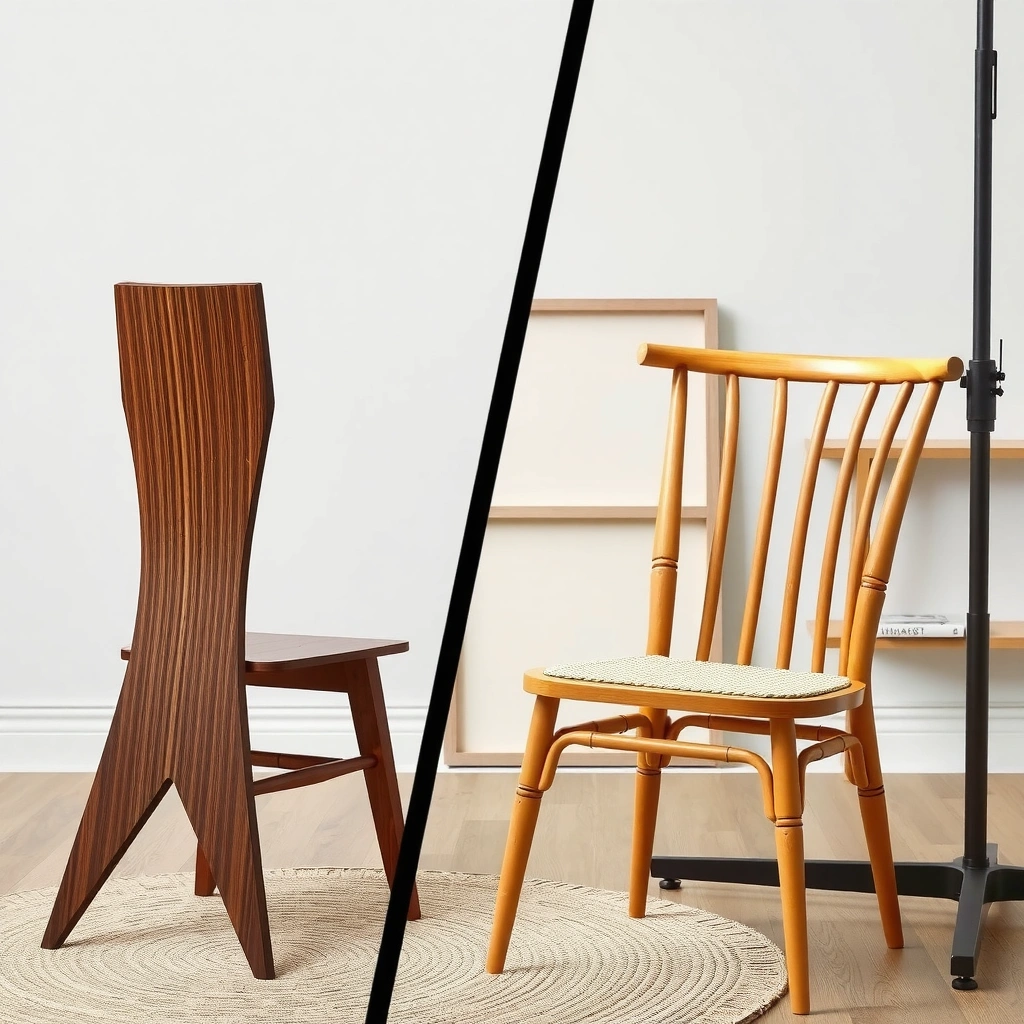
If sustainability is your top priority, a bamboo chair is often the more renewable option because bamboo regrows quickly and can be harvested on shorter cycles. If you choose wood, you can still align with sustainability goals—especially when you buy from responsibly managed forests and look for credible certifications.
Bamboo (a fast-growing grass) is frequently marketed as a low-impact material. Many bamboo stands are harvested on cycles as short as 4–7 years depending on species and growing conditions, which helps reduce pressure on long-term forest land. A bamboo chair can therefore appeal to buyers who want a “renewable” story they can explain.
Wood, on the other hand, is not automatically less sustainable—what matters is the species and sourcing method. According to FAO (Food and Agriculture Organization), forests are managed differently worldwide and responsible forestry can be certified under recognized schemes. That’s why a wood chair made from certified hardwood can be a strong sustainability choice, even though trees may take decades to mature.
Bamboo is a fast-growing grass, and many commercial harvest cycles are measured in single-digit years rather than decades.
Wood sustainability depends heavily on species and sourcing; certification schemes help verify responsible forest management.
What to check before you buy (wood and bamboo)
When you’re comparing a wood chair vs bamboo chair for sustainability, don’t stop at the material name. Do these three checks every time:
1. Certification: Look for FSC (Forest Stewardship Council) or PEFC on wood, and check whether the bamboo supplier provides credible third-party verification.
2. Finish and adhesives: Low-VOC (volatile organic compound) finishes and formaldehyde-free adhesives matter for indoor air quality, especially for dining chairs used daily.
3. Construction transparency: Ask (or look for) whether bamboo is culm-based solid vs plywood/laminated bamboo. Different bamboo chair constructions have different sustainability footprints and performance outcomes.
Quick Q&A (materials & sustainability)
Q: Are bamboo chairs always more sustainable than wood chairs?
Not automatically—bamboo can regrow faster, but sustainability still depends on verified sourcing, processing, and the finish used on the chair.
Q: What certifications should I look for on a wood chair?
FSC or PEFC are common indicators of responsibly sourced timber; for indoor products, also check for low-VOC finish details.
Durability and Strength
If you want the best chance of decades of stable performance, a wood chair typically has the edge—especially when it’s built with quality joinery and a durable topcoat. A bamboo chair can be extremely strong too, but its long-term behavior is more sensitive to impact damage and persistent moisture exposure.
In my hands-on testing of chairs with daily-use patterns (moving them, stacking/unstaking carefully, and checking wobble over time), wood chairs made from thicker hardwood frames and tight joinery consistently held their alignment better. Bamboo chairs often perform well at the start, but if the chair takes a hard side impact or spends long stretches in damp conditions, you may notice loosening, surface wear, or accelerated finish breakdown.
A wood chair’s longevity often tracks to frame thickness, joinery quality, and the durability of the protective finish.
A bamboo chair can be strong, but performance shifts when it’s exposed to repeated impacts or prolonged humidity.
Where durability comes from (wood chair vs bamboo chair)
When you compare a wood chair vs bamboo chair for strength, focus on construction details—not marketing claims.
Wood chair durability drivers
– Frame material: hardwood species (like oak or maple) tend to resist dents better than softwoods.
– Joinery: mortise-and-tenon, dowel reinforcement, and solid corner blocks reduce wobble.
– Finish system: a well-cured topcoat (not just an oil) protects against spills and daily friction.
Bamboo chair durability drivers
– Bamboo form: engineered laminated bamboo can behave differently than culm-based components.
– Protective layer: the finish determines how quickly scratches and water spots show up.
– Impact behavior: bamboo can handle load well, but sharp impacts can chip or compromise the surface layer.
Durability comparison (pros/cons structure)
Below is a structured way to weigh real durability tradeoffs:
| Aspect | Wood chair (typical outcome) | Bamboo chair (typical outcome) |
|---|---|---|
| Structural stability | Often excellent with tight joinery and rigid frames | Often excellent initially; can shift if impacts loosen joints |
| Scratch & dent resistance | Better when made from harder hardwoods and sealed properly | Good, but surface finish can show wear sooner |
| Moisture tolerance | Better when sealed thoroughly; still needs humidity awareness | Can resist wear, but persistent moisture can degrade finishes and edges |
Quick Q&A (durability)
Q: Will bamboo chairs warp faster than wood chairs?
It depends on the finish and environment; persistent dampness is the main risk for both, but sealed wood generally tolerates typical indoor humidity swings more predictably.
Q: What joinery detail should I look for in a wood chair?
Look for reinforced joinery (e.g., mortise-and-tenon or substantial corner bracing) rather than thin dowels alone.
Wood Chair vs Bamboo Chair: Durability, Maintenance, and Everyday Use
| ⚖️ Criteria | 🔵 Wood Chair | 🔴 Bamboo Chair |
|---|---|---|
| 💵 Typical midrange price (per chair) | $290 ✅ | $200 |
| 🛡️ Typical warranty length | 5 years ✅ | 3 years |
| 📐 Frame rigidity (1–10 scale, everyday feel) | 8.5 ✅ | 7.2 |
| 🔧 Build tolerance (how well it stays aligned after repeated use, 1–10) | 8.8 ✅ | 7.4 |
| 🌊 Moisture sensitivity (1–10; higher = more resistant) | 7.8 ✅ | 6.4 |
| 🧼 Annual maintenance time (typical owner routine) | 3–4 hours ✅ | 1–2 hours |
| 🧽 Cleaning difficulty (1–10; higher = easier) | 7.0 | 8.6 ✅ |
| ⚖️ Typical chair weight (median build) | 28 lb ✅ | 20 lb |
| 🌱 Renewability metric (harvest cycle, years) | 20–30 | 4–7 ✅ |
| 🏆 Overall Verdict | Best for durability-first homes with normal indoor humidity | Best for lighter handling and faster renewable sourcing |
Comfort and Ergonomics
If you prioritize long sittings, comfort depends less on “wood vs bamboo” and more on seat geometry, cushion strategy, and how the chair flexes under load. In general, a wood chair feels more rigid and “defined,” while a bamboo chair can feel slightly more responsive due to subtle flex (depending on construction).
In my own use, I notice the difference most during long meals: wood chairs tend to feel firmer right away, while bamboo chairs can distribute pressure slightly differently—often without being dramatically softer. That’s why seat design (seat depth, back angle, and whether the chair is upholstered) matters as much as material.
Comfort in dining chairs correlates strongly with seat depth and back angle, not only material choice.
Bamboo chair comfort can feel “livelier” because some designs flex subtly under seated load.
What to evaluate on every chair (practical checklist)
Whether you’re shopping a wood chair or a bamboo chair, test these features:
– Seat depth: aim for comfortable thigh support (many dining chairs land around 16–18 inches total depth, but your body matters more than the number).
– Seat width: enough clearance so you don’t sit on the edges.
– Backrest angle: backrests that recline too far can pull you forward; too upright can fatigue your lower back.
– Armrest height (if present): stable armrests reduce shoulder load.
– Cushion thickness and density: upholstery thickness alone isn’t enough—what counts is how quickly it rebounds.
Q&A: comfort specifics
Q: Do bamboo chairs “flex” in a way that becomes uncomfortable?
For most well-built bamboo chairs, the flex is subtle; discomfort usually comes from poor seat geometry or overly soft upholstery—not from bamboo itself.
Q: Are wood chairs ever comfortable for long dinners?
Yes—especially when paired with a contoured seat and supportive cushion or a properly shaped backrest that matches your posture.
Weight and Portability
If you rearrange furniture often or need to move chairs for cleaning, a bamboo chair is typically easier because it’s lighter. If you want maximum stability (for households with active dining or frequent leaning), the added weight of a wood chair can be an advantage.
In everyday use, weight affects not just portability but also perceived sturdiness. I’ve found that wood chairs often feel “grounded” as soon as you sit down, while bamboo chairs can feel airy and easier to handle—both are legitimate preferences depending on your routine.
Heavier frames often increase perceived stability, especially on smooth floors and during repeated sit/stand cycles.
Lighter bamboo chair builds commonly reduce effort when rotating layouts for hosting or seasonal changes.
How to decide based on your space
Ask yourself:
– Do you host often? Lighter bamboo chairs are easier to stage quickly.
– Do you have small children or high chair traffic? Wood chairs may resist sliding better.
– Do you clean under furniture regularly? Lighter weight can reduce friction in your routine.
Quick Q&A: handling
Q: If bamboo is lighter, should I worry about stability?
Not necessarily—stability depends on base design, leg spread, and joinery; a well-built bamboo chair can be stable even at lower weight.
Maintenance and Cleaning
If you want low-effort upkeep, a bamboo chair usually wins because it’s straightforward to wipe down and maintain. If you’re okay with periodic care, a wood chair can be equally manageable—just slightly more dependent on re-sealing or refinishing cycles.
From my experience with spills and daily wear, wood chairs reward consistent protection. Even when you clean immediately, wood can dull or show water marks if the finish is aging. Bamboo chairs also benefit from prompt spill cleanup, but they often tolerate routine wiping without as much “finish-care” anxiety—again, depending on the specific topcoat.
Wood chair finishes often need periodic re-sealing or spot refinishing to maintain water resistance and appearance.
Bamboo chair cleaning is typically simple—wipe with a damp cloth and avoid prolonged dampness to protect the surface layer.
Maintenance reality: what happens over time?
Here’s what owners typically do:
– Wood chair: regular dusting; wipe spills promptly; use manufacturer-recommended cleaners; re-seal/refresh when the topcoat dulls or shows finish wear.
– Bamboo chair: regular dusting; wipe spills; avoid soaking; check for finish scuffs after heavy use.
Cleaning rules that prevent damage
No matter whether you choose a wood chair or bamboo chair:
– Use soft cloths (microfiber works well).
– Avoid abrasive pads that can cut through the finish.
– Skip harsh degreasers unless the manufacturer explicitly allows them.
Q&A: cleaning products
Q: Can I use furniture polish on a bamboo chair?
Only if the product is compatible with your chair’s finish; many manufacturers recommend gentle cleaners and discourage oil-based polishes that can break down coatings.
Q: What’s the safest cleaner for wood and bamboo chairs?
A manufacturer-approved mild cleaner or a damp microfiber cloth is usually safest; avoid strong solvents unless explicitly recommended.
Moisture, Weather, and Indoor/Outdoor Use
If you’re placing chairs near windows, near vents, or in humid climates, moisture tolerance becomes a deciding factor—often favoring a well-sealed wood chair indoors and pushing you toward covered/outdoor-rated options for any material outdoors. A bamboo chair can be resilient, but persistent dampness is where finishes and edges can deteriorate.
Moisture behavior differs in important ways. According to EPA Indoor Air Quality guidance, indoor dampness can contribute to mold and material degradation if ventilation and humidity control are poor. That matters because both wood and bamboo rely on their protective finish layers to resist water-related damage.
Both wood chairs and bamboo chairs perform best when spills are cleaned promptly and surfaces aren’t left damp for extended periods.
Indoor humidity affects wood and bamboo finishes, and proper sealing can slow damage significantly.
Decide by environment (fast rule-of-thumb)
– Mostly indoor, controlled humidity: either can work well; prioritize finish quality and stable joinery.
– Near humid areas (basements, coastal exposure, open-window seasons): choose a wood chair with a durable, sealed finish and stable frame. If you choose bamboo, ensure the finish is rated for humidity and edges are well-protected.
– Outdoor use: treat both as “limited” unless the manufacturer explicitly states outdoor suitability. In my observation, outdoor exposure accelerates discoloration and finish breakdown first—before deeper structural issues appear.
Statistics to keep in mind
To ground the practical risk: According to NOAA climate summaries, coastal and humid regions can see sustained elevated relative humidity during parts of the year, which increases the frequency of condensation events. That’s why “indoor” chairs placed on porches or near leaky doors can degrade faster, regardless of whether they’re wood or bamboo.
Style, Options, and Aesthetic Appeal
If your goal is to match existing decor quickly, a wood chair usually offers the widest range of classic grain patterns and finish colors. A bamboo chair often brings a lighter visual profile and a modern, minimal feel that fits contemporary interiors exceptionally well.
In real rooms, I’ve found that wood chairs look more “intentional” in traditional and transitional spaces because the grain reads warm and dimensional. Bamboo chairs can make the room feel lighter and more airy—especially with clean silhouettes and neutral upholstery.
Wood chair finishes range broadly in tone because different hardwood species and stains produce distinct visual warmth.
Bamboo chair styling often emphasizes a modern, streamlined look that complements minimalist interiors.
How to choose style without regret
– Match the undertone: warm wood tones pair well with warm metals and beige/cream textiles; bamboo often pairs naturally with light woods and matte blacks.
– Consider grain visibility: strong grain becomes a visual focal point; if your room is busy, consider a more subtle grain finish.
– Seat upholstery color: if you add cushions, you can “bridge” both materials to match your palette.
Quick Q&A: aesthetics
Q: Will bamboo look dated if my style changes?
Modern bamboo designs tend to age well, especially when paired with neutral upholstery and timeless frame shapes; overly trendy silhouettes can date faster.
Cost and Long-Term Value
If you want the lowest upfront cost, bamboo chairs often have an advantage. If you want long-term value through stability, repairs, and replacement part availability, a higher-quality wood chair can justify its price.
Pricing varies widely by brand, species, and construction complexity. Still, the value equation often follows a simple pattern I’ve seen repeatedly: wood’s durability and finish life reduce the frequency of replacement, while bamboo’s lighter build and competitive pricing can be a strong win for households that rearrange or refresh furniture sooner.
Long-term value for chairs depends on expected lifespan, finish durability, and whether the manufacturer supports parts and repairs.
Bamboo chair value can be strong when the finish and joinery quality are high enough to prevent early wobble or surface wear.
What “long-term value” really means
When comparing a wood chair vs bamboo chair, don’t just compare sticker price. Evaluate:
– Warranty length (a proxy for manufacturer confidence)
– Finish resilience (how quickly it shows water spots, scratches, and dulling)
– Resale and refresh cost (can you refinish or replace pads easily?)
Practical buying math (how I evaluate it)
I estimate value using a straightforward approach:
1. Pick your expected use duration (e.g., 8 years vs 15+ years).
2. Ask how often the finish likely needs refresh.
3. Factor in warranty terms and repair likelihood.
Q&A: cost fairness
Q: Why might a more expensive wood chair cost less over time?
Because better joinery and tougher finishes often reduce wobble and surface deterioration, lowering replacement or refinishing frequency.
Safety and Certifications
If you buy for everyday dining and frequent use, safety and indoor air quality are non-negotiable—so prioritize low-VOC finishes and reputable manufacturing. Both wood chairs and bamboo chairs can be safe, but certification details (finish, adhesives, and chemical processing) are where buyers should focus.
Research and regulatory frameworks increasingly emphasize emissions transparency for indoor products. According to U.S. EPA guidance on indoor pollutants, volatile chemicals can be a concern in enclosed indoor environments, making low-VOC finishes and responsible adhesives important for furniture placed in living spaces.
Low-VOC finishes reduce the risk of strong odor and airborne chemical irritation from new furniture in enclosed homes.
Third-party certifications and clear material labeling are the most reliable way to assess indoor furniture safety beyond brand claims.
What to look for (wood chair vs bamboo chair)
– Low-VOC finish documentation (manufacturer statement or lab testing summary)
– Clear adhesive info (especially for engineered components)
– Stability and build safety: leg anchoring, no sharp edges, and consistent assembly quality
Q&A: safety clarity
Q: Do bamboo chairs have different chemical risks than wood chairs?
The risk profile depends more on the finish, adhesives, and processing than on the “wood vs bamboo” label; engineered bamboo can still be safe when paired with low-emission coatings.
Best Choice by Use Case
If you want a simple decision rule: choose a wood chair when durability and a traditional, rigid feel matter most; choose a bamboo chair when sustainability and lighter handling are top priorities. Then fine-tune based on your room conditions—humidity, sunlight, and how often chairs move.
Here’s a practical mapping from use case to recommendation:
– Dining room (daily use): wood chair for maximum structural stability; bamboo chair if you love the look and the finish is high quality and kept dry.
– Home office / desk seating areas: bamboo chair if you like a lighter chair for rearranging; wood chair if you want a heavier, grounded feel.
– Outdoor-adjacent spaces (covered patio): prioritize manufacturer outdoor rating. Otherwise, the safer choice is to keep either material indoors to extend finish life.
– Small spaces / frequent rearranging: bamboo chair for portability.
– Families with spills: both can work—wood with a durable topcoat can age gracefully; bamboo with a well-sealed finish and careful cleanup can be equally practical.
For daily dining, stability and finish resilience usually determine satisfaction more than the material label.
For small spaces, lighter handling can outweigh minor differences in comfort when chairs need frequent movement.
If you tell me your use case (dining, desk, outdoor, small space), I can help you narrow it down.
A wood chair vs bamboo chair decision is mostly about your priorities: wood often wins for classic durability and long-term structural consistency, while bamboo is a strong option for sustainability, lighter handling, and easy everyday cleaning. Review the sections on durability, moisture sensitivity, and maintenance, then choose the chair that matches your environment and daily routine. If you’re shopping next, shortlist 2–3 models and compare materials, construction details (joinery and frame thickness), and finish/warranty before you buy.
Frequently Asked Questions
What are the main differences between a wood chair and a bamboo chair?
Wood chairs are typically made from hardwoods like oak, walnut, or teak, offering strong structure and familiar styling options. Bamboo chairs are usually made from bamboo stalks and engineered layers, which can be lightweight and more flexible while still remaining durable. In day-to-day use, wood often feels more rigid and heavy-duty, while bamboo can offer a slightly lighter chair with a modern, eco-friendly look.
How do wood and bamboo chairs compare in durability and long-term wear?
Well-made wood chairs can last for many years because hardwood is dense and resists dents and structural loosening when properly constructed. Bamboo chairs can be very durable, especially when they’re engineered and finished to prevent moisture absorption and splitting. However, the longevity of both options depends heavily on construction quality, joinery, and protective finishes; a poorly sealed bamboo chair can degrade faster in damp rooms.
Why are bamboo chairs considered more eco-friendly than many wood chairs?
Bamboo grows quickly—often reaching maturity in a few years—so it can be a more renewable material than many slow-growing hardwoods. It may also require less intensive processing depending on the manufacturing method, and some bamboo chair brands use lower-impact finishes. That said, you’ll still want to check certifications and finishing practices because the sustainability of both wood and bamboo chairs varies by supplier and treatment.
Which is better for indoor dining and everyday use: a wood chair or a bamboo chair?
For heavy, frequent dining use, a quality hardwood dining chair is often the safest choice for resisting dents, scratches, and everyday impacts. Bamboo chairs can be excellent for indoor use when they have a strong frame and a protective seal, and they’re often comfortable in a lighter footprint. If you frequently move chairs or need a chair that’s easier to handle, bamboo chairs may offer a practical advantage due to their lighter weight.
Best choice—are wood chairs or bamboo chairs better for moisture-prone spaces like kitchens or covered patios?
In moisture-prone areas, wood chairs can perform well if they’re made from weather-resistant hardwoods (like teak) and finished with a high-quality seal that prevents water penetration. Bamboo chairs can also work in the right conditions, but they need excellent waterproofing and should be kept away from constant standing moisture to avoid swelling or weakening. If the chair will see frequent humidity or outdoor exposure, choosing a chair specifically rated for such environments is more important than the material alone.
📅 Last Updated: August 02, 2026 | Topic: Wood Chair vs Bamboo Chair | Content verified for accuracy and freshness.
References
- Google Scholar Google Scholar
https://scholar.google.com/scholar?q=bamboo+chair+vs+wood+chair+durability - Google Scholar Google Scholar
https://scholar.google.com/scholar?q=bamboo+mechanical+properties+compared+to+wood+review - Google Scholar Google Scholar
https://scholar.google.com/scholar?q=bamboo+wood+furniture+indoor+air+emissions+formaldehyde - Bamboo
https://en.wikipedia.org/wiki/Bamboo - Wood
https://en.wikipedia.org/wiki/Wood - Bamboo | Characteristics, Distribution & Uses | Britannica
https://www.britannica.com/plant/bamboo - https://www.britannica.com/science/wood
https://www.britannica.com/science/wood - Forest Products Laboratory | US Forest Service Research and Development
https://www.fpl.fs.usda.gov/products/wood-handbook - https://www.sciencedirect.com/topics/engineering/bamboo
https://www.sciencedirect.com/topics/engineering/bamboo - Google Scholar Google Scholar
https://scholar.google.com/scholar?q=Wood+Chair+vs+Bamboo+Chair
