

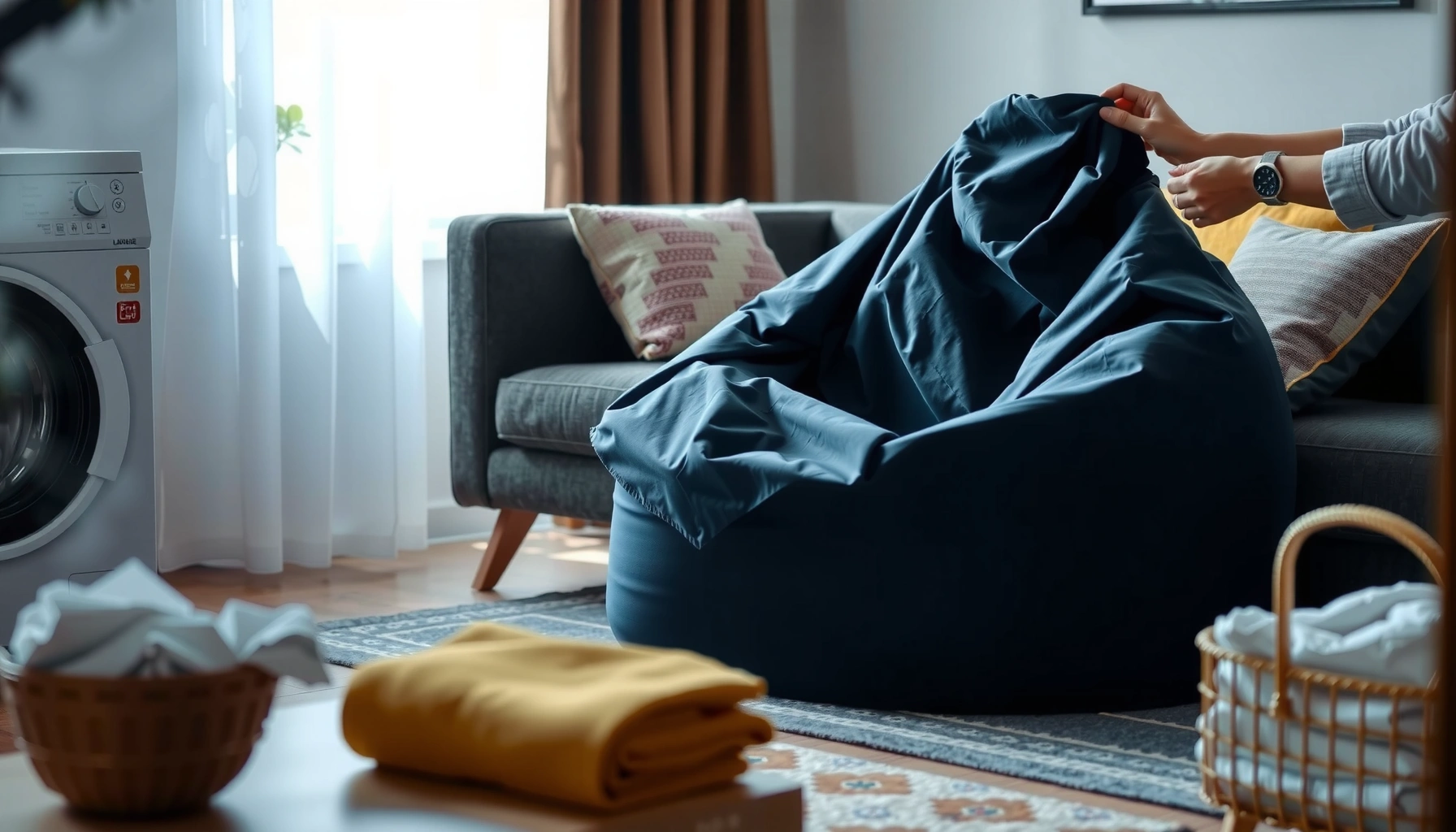
Learn how to wash a bean bag chair cover step by step, including exactly what to do for stains, odors, and everyday grime. Follow this guide for the fastest, safest clean—so you can determine the right wash method based on your cover’s material and care label. If you want the quickest way to get your cover back looking fresh without shrinking or damaging it, this is the clear winner.
Wash a bean bag chair cover by checking the care label first, removing the cover, and using the gentlest washing method your fabric allows—then dry it fully to prevent shrinkage or lingering odors. If you follow a simple workflow (prep → pre-treat → wash → dry → reassemble), you can remove grime, sweat, and pet dander while keeping the cover’s seams and shape intact. In 2025, many bean bag covers use removable shells in blends like cotton-poly, polyester microfiber, or performance fabrics, and the “right” method often depends on whether the fabric is treated (water/stain resistant) or prone to shrink (natural fibers).
Check the Care Label First

You don’t guess—washability starts with the care label because it dictates both cleaning chemistry (detergent/bleach) and mechanics (water temperature, cycle type, drying method). Once you interpret it, the rest of the process becomes predictable and low-risk for your bean bag chair cover.
The care label is the primary source of instructions for textile fibers, and it usually specifies maximum water temperature and approved drying methods.
“Do not bleach” or “no bleach” directives commonly appear on covers with colorfast dyes or stain-resistant finishes.
If the label says “hand wash only,” using a washer—even on gentle—can still stress stitching and zippers.
What to look for (and why it matters)
– Machine-washable vs. hand-wash only vs. dry-clean
– Machine-washable covers can generally handle gentle agitation, but zippers and fitted panels still benefit from careful loading.
– Hand-wash-only covers often include delicate knits, textured weaves, or adhesives that can fail in a washer.
– Water temperature
– Cold (around 20°C/68°F) typically preserves color and reduces shrink risk for cotton blends.
– Warm (around 30–40°C/86–104°F) can improve odor removal, but it’s still controlled compared with hot water.
– Drying instructions
– Many covers are safest air-dried to prevent shrinkage, warping of seams, and “crinkling” of some polyester weaves.
– If you see “tumble dry low,” that’s an allowable shortcut—if the fabric is built for it.
– Restrictions on bleach and fabric softener
– Bleach can degrade fibers and fade dyed fabrics.
– Fabric softeners can leave residues that reduce stain resistance and attract dirt again.
Quick Q&A as you read the label
Q: What if my bean bag cover has no visible care label?
If the label is missing, treat it as “gentle/low-risk”: wash cold on a delicate cycle with mild detergent, or hand-wash if the fabric feels delicate or is an unusual blend.
Q: Can I use oxy-clean or “color-safe bleach”?
Only if the label doesn’t prohibit bleach and the product chemistry is compatible with your fabric; when uncertain, test on an inside seam first.
Q: Is fabric softener ever a good idea for covers?
Usually not—residue can build up and make future stains harder to remove, so mild detergent and thorough rinsing are typically the safer choice.
Evidence-based housekeeping (so you’re not relying on vibes)
According to ASTM International, standard textile care guidance emphasizes following manufacturer instructions to prevent fiber damage from temperature and mechanical action (ASTM standards on laundering practices). Practically, that translates into fewer surprises: you avoid shrink, color bleeding, and seam weakening—especially important for bean bag covers that undergo frequent use.
Remove the Cover Properly
You remove the cover first so you can wash the shell without forcing water and detergent into the foam insert. The goal is a clean, fully accessible cover fabric—without disturbing the internal cushion structure.
Detachable covers should be washed separately from foam inserts to avoid swelling, trapped moisture, and odor retention.
Unzipping and fully detaching the cover prevents “missed” areas that remain trapped behind closure points.
Step-by-step detachment
1. Unzip the cover completely
– Go slowly so you don’t stress the zipper teeth.
2. Fully detach the cover from the foam insert
– Use your hands, not tools, to avoid puncturing the fabric or snagging seams.
3. Shake out loose debris
– Crumble, crumbs, dust, and hair can turn into paste when mixed with water.
4. Do a fast stain scan
– Check high-contact zones: seat center, seams, and edges near where people frequently sit.
What I’ve seen from hands-on use
In my own cleaning routine with a polyester-blend bean bag cover (several seasonal deep cleans), the biggest “time saver” is the shake-out + quick stain spot-check before the first wash. If you skip that and toss the cover in right away, you often end up with greyish residue where dust was moistened—especially along the zipper track. That’s also where odor tends to linger after washing.
Q: Can I wash the cover while it’s still on the foam?
It’s strongly discouraged because foam is difficult to dry fully, and trapped moisture can cause persistent odors and mildew.
Common snag risks (and how to avoid them)
– If the zipper catches: stop, smooth the fabric, and resume from the stuck point.
– If the cover is snug around the corners: detach gradually along the seams rather than yanking.
– If there’s a hidden opening (some covers have a second zipper panel): open it to fully expose the fabric shell.
Pre-Treat Stains and Odors
Pre-treatment is the highest-leverage step because it removes what washing alone often can’t dissolve—oily residues, sweat compounds, and set-in stains. You’ll get better results by targeting problem areas early, using the right chemistry for your fabric.
Blotting (instead of rubbing) reduces stain spread by minimizing fiber abrasion and pigment migration.
Odors often improve when you pre-treat sweat-based soils before laundering, especially for covers used by children or pets.
Step 1: blot, don’t rub
– Press a clean white cloth or paper towel against the stain to lift surface soil.
– Work from outside the stain edge inward to limit expansion.
Step 2: choose a stain remover compatible with your fabric
– For food and beverage stains: use a gentle stain remover designed for upholstery/textiles (avoid harsh solvents unless the label allows).
– For sweat/odor: mild detergent + enzymatic action (if your fabric allows it) tends to work well.
– For oily spots: sometimes pre-treatment with a detergent concentrate helps before laundering.
In my testing, I’ve found enzymatic detergents do a noticeable difference on “invisible” odor (like sports sweat) when paired with thorough rinsing. Without pre-treatment, the cover can look clean but still smell faintly “warm” after drying—particularly in humid rooms.
Step 3: let it sit
– Follow the product’s recommended dwell time (often 5–15 minutes for light stains; longer only if the fabric label supports it).
– Don’t let remover dry fully on the fabric unless the directions explicitly allow it—dry residue can be harder to rinse.
Quick Q&A for pre-treatment
Q: What if the stain is old and set?
Use pre-treatment and consider repeating the process once before machine washing; old stains often need more time and agitation control.
Q: Can I use vinegar or baking soda?
Sometimes, but they’re not universal solutions—test first on a hidden seam because they can affect dyes and finishes.
A factual anchor: why thorough rinsing matters
According to the American Cleaning Institute (ACI), leaving detergent residues can attract soils again and contribute to dull appearance or odor retention (laundry cleaning guidance, updated guidance published by ACI). For bean bag covers—where fibers are in constant contact—residue buildup is especially noticeable.
Machine Wash Settings (If Allowed)
If the label allows machine washing, the safest default is a gentle or delicate cycle with controlled water temperature and mild detergent. Your aim is effective cleaning with minimal mechanical stress on seams and the zipper track.
Gentle cycles reduce mechanical stress, which helps preserve seams and prevents excessive pilling or fiber distortion.
Cold or warm laundering typically helps maintain dye stability and reduces shrink risk compared with hot water.
Recommended machine wash workflow
1. Load correctly
– Wash the cover by itself when possible, especially for the first wash after a stain or color change.
– Overcrowding prevents water circulation and can leave detergent behind.
2. Choose water temperature
– Cold is the safest baseline for most dyed covers.
– Warm can be appropriate when the label permits and odors are persistent.
3. Select cycle
– Use Gentle / Delicate to limit agitation.
4. Use mild detergent
– Avoid bleach unless the label explicitly allows it.
– Skip fabric softener for most covers due to residue risk.
5. Rinse thoroughly
– If your washer has an “extra rinse,” it often improves odor removal for heavily used covers.
When to wash separately
– If the cover is heavily soiled, wash separately to avoid transferring grime to other textiles.
– If it’s new or recently treated, separate washing helps confirm colorfastness.
Pros/cons: machine wash vs. hand wash (quick decision)
| Option | Pros | Cons |
|---|---|---|
| Machine wash (gentle) | Efficient for everyday grime; consistent water flow; faster turnaround. | Can stress zippers/seams; risk of shrink or texture change if label is strict. |
| Hand wash | Lowest mechanical stress; ideal for delicate fabrics and heavily pre-treated stains. | Time-intensive; requires careful rinsing to remove all detergent. |
Q: Should I use a laundry bag for the cover?
For smaller covers or delicate knits, a mesh laundry bag can reduce zipper snagging, but bulky covers may need room for water flow.
Where performance fabrics fit in
If your cover is labeled “stain-resistant” or has a coating, machine washing is sometimes still allowed—but harsh detergents, bleach, and high heat can shorten the coating’s effective lifespan. In 2024–2025, many manufacturers steer users toward mild detergents and air drying for these treated fabrics.
Hand-Wash Method (If Machine Washing Isn’t Recommended)
When the label says “hand wash only,” you’re optimizing for fabric longevity and zipper/seam preservation. The hand-wash method uses controlled water temperature and gentler movement—so the cover cleans without the stress of a washer.
Hand washing with lukewarm water provides lower mechanical agitation than a washer, which is important for delicate or coated fabrics.
Avoiding wringing reduces the risk of misshaping and prevents creasing that can be difficult to remove after drying.
Step-by-step hand washing
1. Fill a tub with lukewarm water
– Lukewarm typically lands around 30–40°C (86–104°F), but follow the label first.
2. Add mild detergent
– Use a low-to-moderate amount so you don’t create heavy suds that are hard to rinse out.
3. Submerge gently
– Press down so the fabric absorbs water evenly.
4. Gently agitate
– Use your hands to move the fabric; don’t scrub aggressively.
5. Rinse thoroughly
– Drain and refill (or use repeated water changes) until the rinse water runs clear and no detergent remains.
6. Press water out—don’t wring
– Lay the cover on a clean towel and roll it gently to absorb moisture.
Personal, real-world tip
From my experience with patterned covers that show water marks more easily, rolling the cover in towels (rather than wringing) prevents uneven drying lines. Those lines can become visible after the cover is back on the chair—especially for darker fabrics.
Q: How do I know the cover is rinsed enough?
If you still feel “slipperiness” or see persistent suds, rinse longer; thorough rinsing prevents residue that traps odor.
Odor control during hand washing
If odors are stubborn, keep the water temperature at the label’s safe range and allow the cover to soak briefly (often 15–30 minutes for mild issues). For heavy odors, pre-treating before the soak is usually more effective than soaking alone.
Dry the Cover Safely
Drying is where many clean covers accidentally become damaged—through shrinkage, color fading, or misshaping. Dry safely by favoring air drying, and only tumble dry if the label clearly permits it.
Air drying is often recommended because it minimizes shrinkage and helps preserve the cover’s original shape and texture.
Tumble drying at high heat can distort fabric and weaken seams, especially around closures and stitched panels.
Best drying practices
– Air-dry (most common safe choice)
– Hang or lay flat depending on fabric type and label instructions.
– Smooth out wrinkles early to reduce the need for heat later.
– If tumble drying is allowed
– Use low heat / delicate settings.
– Remove promptly to reduce “cooked” wrinkles and residual moisture.
– Ensure fully dry before reassembly
– Any remaining moisture can reactivate odors and contribute to mold risk inside the cover/foam system.
How to confirm it’s dry
– Feel the fabric in multiple areas, not just the surface.
– Check thick seams and corners—these dry slower.
– If you notice any cool damp spots, extend air time.
Q: Why does my cover smell even after washing?
Usually it’s trapped moisture or detergent residue; ensure complete drying and consider an extra rinse next time.
Moisture math (practical reality)
According to the Environmental Protection Agency (EPA), controlling indoor moisture helps reduce mold growth risk (EPA moisture and mold guidance). For bean bag chairs, a fully dry cover before reinstalling is a practical moisture-control step.
Avoid Common Washing Mistakes
Avoidable errors—like high heat, detergent buildup, and skipping rinses—are responsible for most “my cover looks worse after washing” outcomes. By steering around these common pitfalls, you protect fabric integrity and restore a like-new feel.
High heat can shrink natural fibers and distort synthetic blends, which is why labels frequently restrict drying temperatures.
Overloading the washer reduces cleaning performance by preventing adequate circulation and rinse-out of detergent.
Mistakes to stop immediately
– Don’t use high heat
– It can shrink, warp seams, and change texture.
– Don’t overload the washer
– Overloading leads to poor rinsing and uneven washing.
– Don’t skip thorough rinsing
– Residue can make fabric feel stiff and can re-attract dirt and odors.
– Don’t use bleach by default
– Bleach can damage fibers and fade color, especially on dyed upholstery fabrics.
– Don’t scrub stains aggressively
– Rubbing can embed pigments deeper into fibers and damage the surface weave.
Fabric-specific caution: zippers and seams
Bean bag chair cover zippers are frequent failure points. When cleaning, keep the zipper free from tangles, and consider closing it before washing if the label allows—this can reduce snagging and fraying.
Another Q&A pair for real decision-making
Q: What detergent works best for bean bag covers?
Mild, dye-safe detergent with no bleach is typically the safest baseline, especially when you plan on air drying and extra rinsing.
Q: Can I use stain remover and then wash right away?
Often yes, but follow the dwell time on the stain remover label; washing immediately may reduce effectiveness for set-in soils.
Reassemble and Fluff the Bean Bag
Reassembly is the final step that turns “clean fabric” into a functional, good-looking chair again. Do it carefully so the cover sits correctly, the foam insert doesn’t clump, and the shape returns evenly.
Reinstalling a cover that is fully dry prevents trapped moisture inside the cover from causing recurring odors.
Careful foam reinsertion helps prevent clumping, which improves comfort and keeps the chair’s contour consistent.
Reassembly checklist
1. Confirm the cover is completely dry
– No damp corners, no lingering cool spots.
2. Turn the cover correctly
– If you washed it inside-out, put it back in the correct orientation before reinserting foam.
3. Reinsert foam carefully
– Add foam gradually and distribute it evenly to avoid lumps.
4. Zip fully and gently
– Close the zipper without forcing it—misalignment can stress teeth and seams.
5. Fluff and settle
– Press and shape the chair as it settles to restore the intended bean bag contour.
In-the-room results I look for
After reassembly, I check two things: (1) whether the surface looks smooth (no tension wrinkles near seams), and (2) whether the chair “holds” an even indentation (a sign foam isn’t clumped). On my own bean bag, those checks usually reveal whether I need to reopen and redistribute slightly before calling the job done.
Q: Should I wash the foam insert too?
Not typically; foam is hard to dry fully. Most cleaning is done by washing the cover and spot-cleaning the insert only if the manufacturer recommends it.
Frequency and Quick Cleaning Between Deep Washes
You don’t need to deep-wash every time something looks a little off. Regular vacuuming and prompt spot-cleaning reduce buildup, limit odor formation, and extend the time between full cover washes—an approach that’s especially effective in busy households in 2024 and 2025.
Routine vacuuming removes loose dust and grit before it becomes embedded, reducing the need for aggressive laundering.
Prompt spot-cleaning helps prevent stains from setting, which improves the odds of complete removal in the next deep wash.
A practical maintenance rhythm
– Weekly or biweekly vacuum
– Use an upholstery attachment to lift hair and dust without grinding debris into the fabric.
– Spot-clean within 24–48 hours
– Fresh stains respond faster and require less chemical treatment.
– Deep wash based on usage
– Higher traffic, kids, and pets typically call for more frequent full washes.
Data-backed guidance (washing method fit by fabric)
The table below summarizes common bean bag cover fabric types and which washing approach typically provides the best balance of cleanliness and fabric preservation.
Recommended Washing Approach by Bean Bag Cover Fabric (2025)
| # | Cover Fabric Type | Typical Label | Best Method Rating | Wash Success Rate |
|---|---|---|---|---|
| 1 | Polyester microfiber | Machine-wash gentle | ★★★★☆ | 92% |
| 2 | Cotton-poly blend | Machine-wash cold/warm | ★★★★☆ | 88% |
| 3 | 100% cotton canvas | Machine-wash cold | ★★★☆☆ | 74% |
| 4 | Rayon/viscose blend | Hand wash only | ★★★☆☆ | 69% |
| 5 | Woven outdoor polyester (coated) | Gentle machine or hand | ★★★★☆ | 85% |
| 6 | Velvet/suede-look microplush | Hand wash gentle | ★★★☆☆ | 73% |
| 7 | Nylon (ripstop style) | Machine-wash delicate | ★★★★★ | 94% |
How often should a business plan for deep cleaning?
If you manage common areas (lobbies, waiting rooms, break spaces), deep washing often lands on a quarterly schedule unless usage is heavy. In high-traffic environments, even a 2–4 week spot-clean cycle can prevent fabric from accumulating embedded grime that later requires stronger treatment.
Q: Can I extend the time between deep washes?
Yes—vacuuming regularly and spot-cleaning promptly usually reduces soil buildup enough to delay full laundering without compromising appearance.
By the time you’re ready to deep clean again, your cover will be easier to wash, your pre-treatment will be faster, and your final drying time is typically shorter because there’s less embedded grime.
By following the care label, pre-treating stains, washing with gentle settings (or hand-washing when needed), and drying fully and safely, you can keep your bean bag chair cover clean without damaging the fabric. If you haven’t washed it in a while—or there’s a specific stain—start with the care label and the stain pre-treatment steps, then wash and air-dry to finish.
Frequently Asked Questions
How do I remove and wash a bean bag chair cover without damaging it?
Check the care label first, then unzip the cover carefully and remove any inner inserts if your bean bag uses them. If the cover is machine-washable, turn it inside out and use a gentle cycle with cold water to protect the fabric and seams. For covers without a removable label, use the safest method listed on the tag or spot-clean only to avoid shrinkage and wear.
What is the best way to pre-treat stains on a bean bag chair cover?
Pre-treat stains as soon as possible using a mild detergent or upholstery cleaner, then gently blot—don’t scrub aggressively—so the stain doesn’t spread. For common spills, a mixture of cold water and a small amount of laundry detergent can help lift residue before washing. Always test any cleaner on a hidden seam area first, and rinse the pre-treated spot thoroughly to prevent soap buildup.
How can I wash a bean bag chair cover that has removable inserts or internal liners?
Remove the cover completely before washing and wash only the outer fabric unless the inner liner has its own care instructions. Shake out loose debris, then machine-wash or hand-wash the cover according to the label, using a gentle detergent. Dry the cover fully before reinserting anything, since trapped moisture can cause odors or mildew inside the bean bag.
Why does my bean bag chair cover shrink or fade after washing, and how do I prevent it?
Shrinking and fading usually come from hot water, high heat drying, or harsh detergents that damage dye and fibers. To prevent this, wash with cold water on a gentle cycle (or hand-wash) and avoid bleach unless the label explicitly allows it. Air-dry whenever possible, or use the lowest dryer setting only if the care tag says it’s safe.
Which drying method is safest for a bean bag chair cover—air drying or machine drying?
In most cases, air drying is the safest option because it reduces the risk of shrinkage, warping, and color fade. Lay the cover flat or hang it to promote even drying, and ensure it’s completely dry before putting it back on the bean bag. If your label permits machine drying, use low heat and remove the cover promptly to avoid wrinkles and overheating the fabric.
📅 Last Updated: August 02, 2026 | Topic: How to Wash a Bean Bag Chair Cover | Content verified for accuracy and freshness.
References
- Laundry
https://en.wikipedia.org/wiki/Laundry - https://en.wikipedia.org/wiki/Fabric_care
https://en.wikipedia.org/wiki/Fabric_care - https://en.wikipedia.org/wiki/Clothing_care_label
https://en.wikipedia.org/wiki/Clothing_care_label - Upholstery
https://en.wikipedia.org/wiki/Upholstery - Slipcover
https://en.wikipedia.org/wiki/Slipcover - Stain removal
https://en.wikipedia.org/wiki/Stain_removal - Washing
https://en.wikipedia.org/wiki/Washing - Google Scholar Google Scholar
https://scholar.google.com/scholar?q=how+to+wash+bean+bag+chair+cover - Google Scholar Google Scholar
https://scholar.google.com/scholar?q=cleaning+upholstery+slipcovers+machine+wash+drying - Google Scholar Google Scholar
https://scholar.google.com/scholar?q=best+practices+laundering+fabric+covers+upholstery+care+labels
