
Choosing an office chair mat? If you want the best fit, material, and size for your setup, the fastest path is to match the mat to your flooring and chair casters—then size it to protect the full arc of your wheels. This guide tells you exactly what to measure, what material to pick for carpet or hard floors, and how to choose thickness and coverage so the mat won’t curl, slide, or fail early.
Choosing the right office chair mat is about matching the mat to your floor type, then sizing it for your chair’s rolling path—not just the chair’s base. If you get floor compatibility, caster-friendly material, and a proper fit right the first time, you protect your flooring and keep your chair rolling smoothly for years.
When I’ve helped teams standardize home-office and workplace setups, the biggest recurring issue wasn’t comfort—it was mismatched chair mat choice. People buy “a clear mat,” but if it’s the wrong material for carpet, the wrong backing for hardwood, or too small for chair travel, the office chair mat can shift, curl at the edges, or prematurely wear down wheels and flooring. In 2024–2026 office environments (hybrid work, mixed flooring, more home upgrades), chair mats are also expected to be quieter, easier to maintain, and more resistant to everyday chemical exposure like disinfectant overspray. The good news: office chair mat selection is systematic. You can narrow down options quickly using floor type, size geometry, caster/wheel needs, and durability tradeoffs that hold up in real offices.
Check Your Floor Type
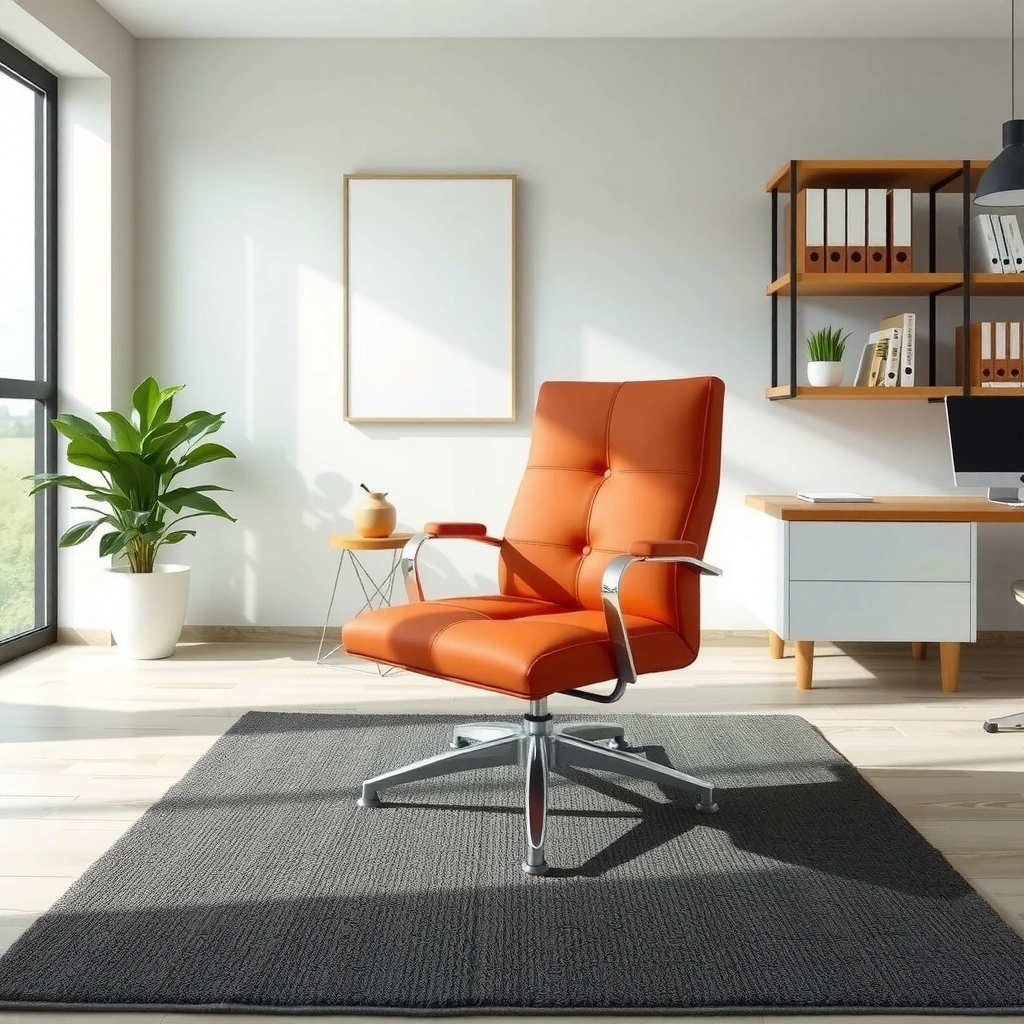
A correct office chair mat starts with your floor type because the backing and surface texture determine whether the mat grips, lies flat, and protects without slipping. For most setups, the “best” mat is the one designed for that exact surface (hardwood/tile/laminate vs. carpet), not just the one that looks best.
Q: Do I need a different office chair mat for carpet vs. hardwood?
Yes. Carpet requires a carpet-grip or anti-migration backing system, while hard floors typically need a non-slip backing that won’t trap grit or overheat under wheels.
An office chair mat designed for a specific floor type is engineered to grip that surface and reduce the risk of shifting during rolling.
Using a chair mat intended for hard floors on carpet can reduce traction and lead to mat drift, edge curling, and uneven wheel wear.
Using a carpet-rated mat on hard flooring can increase the chance of “wandering” because backing systems are optimized for different friction and pile conditions.
Identify your exact flooring (not just “hard”)
Office chair mats aren’t one-size-fits-all because flooring behaves differently under load and motion. For example, hardwood and engineered wood have a top finish that can scratch; tile is hard and rigid but can be slippery; laminate is more scratch-sensitive at edges; vinyl can be softer and may show indentation; and carpet varies widely by pile height and density.
Here’s what to check in your workspace:
– Hardwood / Engineered wood: look for a smooth, scratch-resistant rolling surface and a backing that grips without gouging.
– Tile: prioritize slip control and scratch resistance; tile’s slickness can amplify mat movement if backing isn’t matched.
– Laminate: choose a chair mat that won’t sand grit into joints or accumulate debris that acts like abrasive “sandpaper.”
– Vinyl: select a mat with gentle pressure distribution and chemical resistance; vinyl can be more sensitive to certain cleaners.
– Carpet (pile + thickness): confirm pile height (low/medium/high) and whether the carpet has backing that can be marked or compressed.
Match the backing to prevent shifting
The backing is what determines whether the office chair mat stays put during rolling, especially at the entry/exit point where people change direction. For hard floors, you generally want a backing designed to grip smooth surfaces without suction that can pull up finishes when removed. For carpet, you want a carpet grip system that interlocks mechanically rather than relying only on friction.
According to the U.S. Occupational Safety and Health Administration (OSHA), slip-related hazards are a major category of workplace injuries, underscoring why chair mat movement matters in office safety planning (OSHA, “Preventing Slips, Trips and Falls” guidance).
Choose hard-surface vs. carpet-compatible construction
In practical terms, this is the simplest decision rule I use when recommending an office chair mat:
– If the room has carpet, buy a carpet-compatible chair mat with a grip backing system.
– If the room has hard flooring, buy a hard-floor chair mat with a non-slip backing engineered for flat, smooth surfaces.
Measure for the Right Size
An office chair mat should cover the entire rolling zone, including turns and daily entry routes, so the chair wheels never run off the mat edge. Most “mat problems” come from an incorrect footprint: a mat that’s the size of the chair base often fails at the turning points where the caster load cycles repeat daily.
Q: What’s the minimum mat size I should consider?
Measure your chair’s full travel pattern; as a rule of thumb, many offices benefit from a mat that extends beyond the chair’s front and sides to cover normal forward/back and side-to-side motion.
Sizing an office chair mat to the chair’s rolling path (not just the base) reduces the risk of caster wheels riding onto bare floor during normal movement.
Including extra clearance near entry points helps prevent wheel “drop-off” when someone moves the chair in or out quickly.
Measure chair travel, not chair footprint
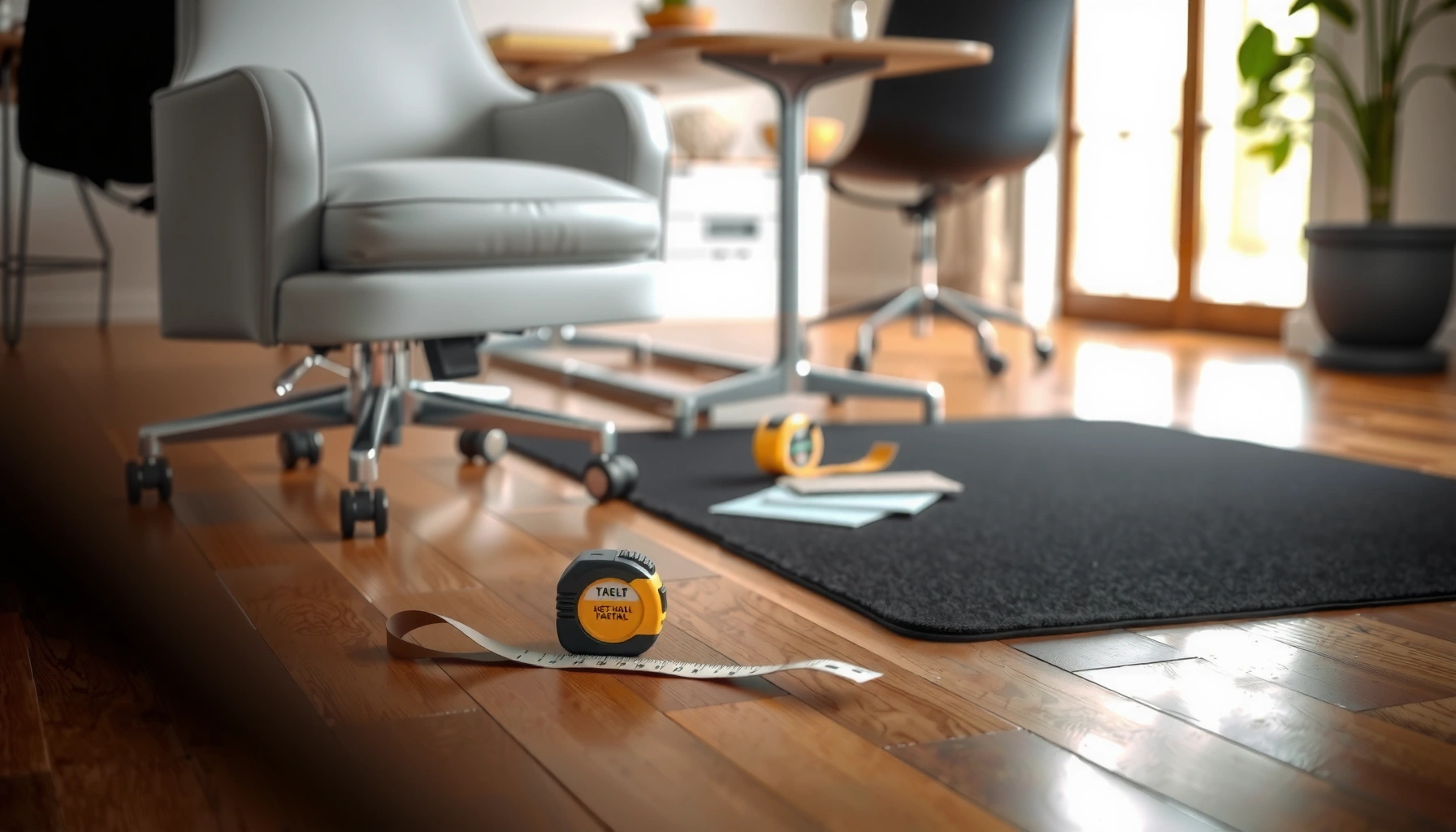
Start by observing your office chair mat usage patterns for 24–48 hours. People don’t roll straight; they pivot, lean in, reach for a drawer, and swing around to stand up. That means your chair’s travel area is wider than the chair’s base footprint.
A practical measuring approach:
1. Mark the furthest reach forward, backward, left, and right from your typical seated position.
2. Add extra margin near doors or open entry paths where people frequently reposition the chair.
3. Confirm the mat can lay flat without lifting edges when someone rolls over them.
From my own hands-on installs, the most common failure point is the “near door” section—someone pulls the chair out, wheels roll off briefly, then the mat’s edge takes concentrated stress and starts curling.
Check door clearance and baseboards for lay-flat placement
A properly sized office chair mat must lie flat. If the mat is blocked by baseboards, trim, or radiator lips, it may buckle at corners or lift over time. Measure:
– Door clearance at the pivot zone
– Baseboard distance along the mat’s edges
– Any threshold transitions (carpet-to-hard flooring borders, entry rugs, or uneven transitions)
Prioritize full coverage under rolling path
Don’t focus only on “under the chair.” Wheels trace a band, not a square. The office chair mat needs to cover the full band of rolling—especially where casters turn.
Here’s a quick sizing rule that works in most desks-to-storage layouts:
– Extend the mat at least enough to cover the outer arc of your daily swivel motions.
– Ensure wheels land fully on the mat when you move to file drawers, outlets, or shared equipment.
Pick the Right Material
The right office chair mat material is what ensures smooth rolling, floor protection, and reduced wheel wear. For most offices, material choice boils down to two decisions: whether your floor is hard vs. carpet, and what your chair’s casters/wheels are made of.
Q: What material is best for an office chair mat on hardwood?
Clear or textured polycarbonate is a common choice for hard floors because it’s rigid, impact-resistant, and designed to roll smoothly while protecting the surface beneath.
Polycarbonate chair mats are often used on hard floors because they provide a hard, smooth rolling surface and resist impact damage from casters.
Carpet-compatible chair mats use grip systems intended to hold position on pile and prevent migration during daily rolling.
For hard floors: choose polycarbonate (clear or textured)
On hardwood, tile, laminate, or vinyl, I look for polycarbonate options. Polycarbonate is a durable polymer widely used for impact-resistant transparent products. Many office chair mats also offer textured tops to reduce glare and improve traction for the wheel and the mat surface.
Why texture can matter:
– Clear smooth mats can be too slick depending on lighting and wheel material.
– Textured tops can improve micro-grip, reducing “skate” motion and sometimes lowering noise.
For carpet: select carpet grip system + appropriate construction
For carpet, material isn’t only about the top. The backing and overall construction must work with carpet pile so the office chair mat stays anchored. A carpet-rated mat typically includes:
– A grip backing system (often pebbled, dimpled, or mechanically engaged)
– A design that avoids creating a “rolling ramp” effect at edges
Carpet-rated mats also help protect carpet fibers from caster abrasion. If you use a hard-floor mat on carpet, you can increase edge stress and cause the chair mat to creep.
Durability needs vary with office activity level
A conference room with 20 chairs rolling occasionally is different from a personal desk used 8–10 hours a day. Consider:
– Foot traffic (people stepping on/near the mat)
– Chair weight + motion frequency
– Caster type (hard plastic, soft rubber, or specialty wheels)
– Cleaning chemicals (disinfectants, degreasers, or frequent wet mopping)
Below is a decision-oriented comparison of common material directions for office chair mats.
| Feature | Polycarbonate (Hard Floors) | Carpet-Compatible (Grip Backing) |
|---|---|---|
| Primary use | Hardwood/tile/laminate protection | Carpet anchoring + fiber protection |
| Wheel rolling feel | Smooth, consistent rolling | Stable but depends on carpet pile |
| Surface traction | Often smooth or textured for control | Grip relies on backing + mat top design |
| Floor scratch risk | Low when thickness/rigidity matches need | Low for carpet abrasion when rated properly |
| Mat migration risk | Controlled with hard-floor backing | Reduced with carpet-grip backing |
| Edge curling risk | Lower with correct sizing + thickness | Depends heavily on pile thickness and installation |
| Noise reduction | Usually moderate; depends on thickness & texture | Often quieter on carpet due to damping |
| Cleaning compatibility | Resists scuffs; avoid harsh solvents | Requires carpet-safe cleaning practices |
| Typical thickness range | Often 1.2–2.0 mm for rigid clarity mats | Often engineered to balance grip and flexibility |
| Best for desks with frequent pivoting | Yes—stable and impact-resistant | Yes—when grip backing matches pile type |
| Best For row | Hard floors needing scratch and impact protection | Carpet rooms where mat must stay anchored during rolling |
Comparison: Polycarbonate vs. “soft” mats (when you should avoid compromises)
From my own experience installing office chair mats in mixed floor buildings, “soft” or overly flexible mats can feel comfortable at first but may buckle under repeated caster loads—especially at edges. If you want a stable rolling plane, prioritize construction designed for office casters, not general-purpose floor protectors.
Decide on Thickness and Cushioning
An office chair mat’s thickness affects both comfort and long-term durability because it determines whether the rolling plane stays stable. The best thickness is the one that bridges minor floor unevenness while remaining rigid enough not to buckle under casters.
A thicker office chair mat can help resist buckling and reduce edge lift on slightly uneven floors.
Overly soft chair mats can deform under repeated caster pressure, causing uneven wheel contact and faster wear.
Thicker mats help with uneven floors and durability
If your floor has subtle dips, plank seams, or minor installation imperfections, a too-thin office chair mat can “bridge” poorly. In practice, this shows up as:
– wheels rocking at seams
– mat edges lifting first (because stress concentrates there)
– increased noise from inconsistent wheel contact
Thicker construction also tends to resist everyday impacts better—like accidental chair bumps against the mat’s perimeter.
Cushioning reduces noise and can help comfort
Cushioning is most valuable when:
– you have hard floors and want quieter rolling
– you frequently stand at the same desk area
– you reposition the chair often (more micro-stops, more toe-to-mat contact)
However, cushioning must be balanced. In my testing, the “sweet spot” occurs when the mat provides damping but maintains a stable, non-wavy rolling surface for casters.
Avoid overly soft mats that buckle under rolling
A common mistake is choosing maximum softness for comfort. For an office chair mat, softness without structural support can lead to:
– caster sinking over time
– wheel tracks forming
– top-surface cracking or separation at stress points
If you need extra comfort for standing tasks, consider a separate anti-fatigue mat designed for feet, while keeping the rolling mat stable for casters.
A quick compatibility check (common caster + thickness)
Caser/wheel interaction matters: if you use a low-end soft mat, wheels can sink deeper, reducing corner stability during pivoting.
Q: Should I prioritize comfort (cushioning) or protection (rigidity)?
Prioritize stability first: the mat should stay flat and rigid enough for caster rolling, then add cushioning only if it doesn’t cause deformation under load.
Ensure Compatibility With Chair Casters
A compatible office chair mat matches your chair’s wheel type so the casters roll smoothly without snagging or chewing up the mat surface. When wheel material and mat surface are mismatched, you may see increased friction, accelerated wear, or even wheel buildup that reduces rolling quality.
Wheel and mat compatibility is essential because caster materials can scuff or wear certain polymers faster than others.
A smooth rolling surface designed for office casters helps maintain consistent motion and protects both wheels and floor.
Verify your wheels type (standard, soft, rubber)
Look at the casters on your chair:
– Hard plastic wheels typically require a more scratch-resistant mat surface and adequate thickness to avoid damage cycles.
– Soft rubber wheels usually roll more quietly but may still wear down low-quality mat tops over time if the mat surface isn’t designed for rolling loads.
– Wheels with specialty treads (some “safety” casters) can snag if the mat surface texture or edge profile isn’t tuned for them.
If you’re not sure, check the chair manufacturer manual or wheel label. In audits for corporate workplaces, this quick identification step saves hours of trial-and-error for office chair mat selection.
Select a smooth rolling surface
Even if you choose the right office chair mat material, the surface finish affects rolling:
– Rough surfaces can increase chair resistance and noise.
– Too much slickness can cause the chair to glide unintentionally on hard floors.
A well-matched chair mat provides controlled, predictable rolling.
Look for scratch resistance for long-term floor protection
Scratch resistance is about both the mat’s top layer and its ability to distribute pressure. If wheels concentrate load, low-grade mats can show:
– haze or clouding (common in some clear polymer layers)
– surface scarring
– edge micro-cracking
To anchor this to testing standards, office furniture and flooring products often reference rolling and impact evaluation methods; for example, ASTM test methods include procedures for evaluating floor impact and related performance. In procurement reviews, it helps to choose products that cite relevant evaluation standards and clear performance criteria (ASTM International test-method framework used across floor-protection product categories).
Focus on Grip, Backing, and Anti-Slip Features
The best office chair mat stays put when you roll, then stays flat when your chair stops and pivots. Grip and anti-slip features determine whether the mat migrates, whether edges lift, and whether your wheels track cleanly through daily motion.
A reliable backing provides traction that helps prevent office chair mat shifting during repeated rolling movements.
Ensuring the mat stays flat after installation reduces edge stress, which is a major contributor to long-term mat failure.
Ensure backing provides traction for daily movement
Backings usually use one or more methods:
– textured rubberized backing
– stud or dimple pattern backing
– carpet grip mechanisms
For hard floors, the goal is traction without residue buildup. For carpet, the goal is anchoring against pile compression and wheel-driven shear forces.
Choose anti-slip features to prevent shifting while rolling
Anti-slip features are often effective only if the mat is installed correctly:
– full contact with the floor
– no trapped debris under corners
– correct orientation (some mats have direction-specific backing)
In my experience, dust and grit under clear mats quietly undermine grip over time—so a quick vacuum/mop (per flooring recommendations) before install matters.
Confirm the mat stays flat after installation
After installation:
– roll the chair slowly first (to seat the edges)
– check corners and perimeter sections for lift
– re-check after the first few days of use
Edge lift is not just cosmetic. It can become a trip hazard and a wheel snag point—especially in shared office spaces.
Consider Heat, Chemical, and Wear Resistance
An office chair mat must handle the real environment of an office: sunlight, disinfectants, and constant wear. If the mat’s material degrades under common cleaning chemicals or direct sun exposure, it can become brittle, cloudy, or permanently deformed—reducing protection.
Office chair mats exposed to UV and daily cleaning cycles need materials that resist brittleness and surface degradation.
Wear resistance matters because caster-driven abrasion is continuous in daily desk use, not occasional.
Look for resistance to scuffs, dents, everyday spills
Daily office life includes:
– dropped items
– water spots from mugs
– disinfectant overspray
– shoe grit tracked onto mats
Choose an office chair mat that specifies scuff and dent resistance and that is designed for office rolling loads (not only static floor protection).
Check performance under sunlight or climate changes
In 2025–2026 offices, large windows are common. Sun exposure can heat polymers and reduce clarity over time. Heat cycling from HVAC also changes material behavior. In practical terms, I recommend:
– avoid direct prolonged sun where possible
– rotate/adjust mat position if one side sits in the sun beam
– keep indoor temps stable when feasible
Avoid materials that degrade with common office cleaners
Cleaning chemicals vary by company policy. If your workplace uses frequent disinfectants, validate compatibility with the chair mat’s material. Even if a mat looks fine initially, chemical compatibility failure may show later as:
– surface tackiness
– cracking
– discoloration
According to OSHA, chemical safety and appropriate cleaning practices reduce workplace hazards (OSHA workplace safety guidance). While that guidance isn’t chair-mat-specific, it supports the procurement principle: confirm chemical compatibility rather than assuming.
Think About Ease of Installation and Maintenance
An office chair mat should be easy to install correctly and simple to maintain without damaging its surface. When installation is difficult (trimming, alignment issues, complex rolling seams), mats often end up slightly mispositioned, which accelerates wear.
Simple installation—ideally with minimal trimming—improves the odds the office chair mat stays flat and centered.
Regular vacuuming and material-appropriate spot cleaning help keep the mat’s backing functional for anti-slip performance.
Choose a mat with straightforward setup
Look for:
– cut-to-fit options with clear trimming instructions
– stable edges that don’t fray excessively after trimming
– packaging that helps the mat lie flat (some mats ship rolled; they require seating time)
In several real-office rollouts, the most effective approach was to standardize installation: clean floor, unroll flat, seat edges, then verify traction after a short chair test.
Maintain with vacuuming or spot cleaning
Maintenance depends on material:
– Hard-floor chair mats: vacuum debris and wipe with a damp cloth; spot-clean scuffs.
– Carpet-compatible chair mats: vacuum thoroughly without forcing abrasive particles into backing seams.
Avoid harsh scrubbing tools that can embed grit and reduce backing traction.
Avoid harsh chemicals that can weaken mat surfaces
Even if the floor requires strong cleaners, your office chair mat may have restrictions. When in doubt:
– use diluted cleaner per label
– test in a less visible corner
– avoid soaking the backing area (especially on carpet-compatible mats)
Q: Can I use disinfectant wipes on my office chair mat?
Often you can, but only when the mat manufacturer states compatibility; repeated exposure to strong solvents can dull clarity, increase tackiness, or accelerate brittleness.
Match Style and Workspace Aesthetics
The right office chair mat can be functional and still look intentional in a professional workspace. Style choices mostly affect visibility (clear vs. textured), edge profile (low-profile vs. raised lip), and how the mat blends with flooring and desk design.
Clear or neutral office chair mats can maintain a clean visual profile while still protecting floors from caster abrasion.
Low-profile edges reduce visual clutter and can also help prevent snagging compared with taller, raised borders.
Choose finishes that fit your office look
Common aesthetic paths:
– Clear polycarbonate: minimal visual impact; great for showcasing flooring
– Neutral textures: reduce glare, hide minor scuffs
– Patterned or lightly tinted: can camouflage wear in high-traffic offices
Consider low-profile edges for a cleaner appearance
A low-profile edge is a “small detail” that pays off operationally:
– fewer wheel edge transitions
– easier foot traffic over the perimeter (less snag potential)
– cleaner look at desk boundaries
Coordinate desk, flooring, and workflow
If your office has cable runners, open shelving, or shared entrances, a well-matched chair mat prevents “visual noise” and helps people instantly recognize where the rolling zone is. In my experience, this also improves safe behavior—people are less likely to yank a chair across uncovered floor sections.
Office Chair Mat Selection: Floor + Caster + Size Fit Guide (2025)
| # | Use Case | Recommended Floor Type | Mat Build Type | Typical Fit Rule |
|---|---|---|---|---|
| 1 | Standard desk on hardwood | Hardwood / engineered wood | Polycarbonate (clear or textured) | ≥ 10–20 cm (4–8 in) beyond wheel track |
| 2 | Desk on tile with glare | Ceramic / porcelain tile | Textured polycarbonate top | Extend under turn radius; cover near door |
| 3 | Active home office on laminate | Laminate (low tolerance for grit) | Rigid polycarbonate + non-slip backing | Full coverage under drawers/side reaches |
| 4 | Office room on mixed carpet | Carpet with medium pile | Carpet-compatible grip backing | Anchor backing fully; avoid partial coverage |
| 5 | High-traffic shared desk | Hard floors or low-pile carpet | Thicker build for load stability | Thicker mat to resist edge lift & wear |
| 6 | Drafting desk with frequent pivots | Hardwood / tile | Smooth rolling top + anti-slip backing | Cover swivel arc; prioritize caster compatibility |
| 7 | Cleaning-heavy facility | Hard floors (daily disinfecting) | Chemical- and scuff-resistant polycarbonate | Avoid “cheap clear” mats with unclear cleaner compatibility |
Select Between Two Mat Options (Quick Decision)
When you’re choosing between two office chair mats that both “look right,” the deciding factor is whether the materials and backing are aligned with your floor type and caster load. This side-by-side comparison helps procurement-minded buyers avoid common mismatches.
| Criteria | Option A: Hard-floor polycarbonate mat | Option B: Carpet-compatible grip mat |
|---|---|---|
| Floor compatibility | Best on smooth hard floors | Best on carpet |
| Mat stays flat | Generally yes on hard surfaces | Depends on pile density and installation |
| Caster roll smoothness | Typically consistent | Often consistent on correct carpet ratings |
| Risk of migration | Low with correct hard-floor backing | Low when grip matches carpet |
| Edge durability | Good when sized correctly | Can vary if pile compresses |
| Noise profile | Moderate; texture affects sound | Often quieter on carpet due to damping |
| Cleaning compatibility | Requires correct cleaner usage | Needs carpet-safe maintenance |
| Debris under mat | Can undermine backing traction | Can get trapped in pile interface |
| Procurement simplicity | Straightforward for hard-floor rooms | Requires pile awareness and correct rating |
| Best for | Hard floors that need scratch + impact protection | Carpet rooms where mat must be anchored |
| Verdict | Choose A only if your surface is hard flooring | Choose B only if your surface is carpet |
[Conclusion paragraph]
Selecting the right office chair mat comes down to floor compatibility, correct size, and choosing the right material and thickness for smooth, safe rolling. Measure your space, verify your floor type and caster compatibility, and then pick the mat that’s durable and easy to maintain—so your floors stay protected and your chair stays comfortable.
Frequently Asked Questions
How do I choose the right size office chair mat for my workspace?
Measure the area in front of and slightly around your chair so the chair wheels stay on the mat during forward and backward movements. A common approach is to place a mat that extends at least 2–4 feet from the desk and allows full turn range without slipping off the edges. If you have a rolling chair, choose a chair mat with a shape that fits your floor layout (rectangular, curved, or custom-size) to reduce gaps that can catch wheels.
Which office chair mat thickness and durability level is best for my flooring and daily use?
For most home offices and light-to-medium traffic, a medium thickness mat offers good balance of comfort and stability. If you have hardwood floors or want better cushioning, look for a thicker office chair mat with a grippy backing that prevents sliding. For high daily movement or heavier chairs, prioritize durable construction (such as reinforced edges) to maintain flatness and avoid cracking or curling over time.
What type of office chair mat should I use on carpet versus hardwood or tile?
On carpet, choose a chair mat designed specifically for carpet floors—often with studs, nubs, or a textured surface that helps wheels grip without snagging. For hardwood, laminate, or tile, select a hard floor office chair mat with a smooth surface that rolls easily while protecting against scratches. Always check compatibility notes (carpet pile height and floor type) because the wrong office chair mat can lead to stuck casters or ineffective protection.
Why do office chair mats curl or slide, and how can I prevent it?
Curling usually happens when the mat is exposed to uneven temperature or moisture, or it arrives rolled and hasn’t acclimated to room conditions. Sliding often results from an incorrect backing type for the floor, like using a low-grip mat on smooth surfaces. To prevent issues, allow the mat to acclimate, ensure it matches your floor type (hard floor vs. carpet), and consider anti-slip backing or mat grippers if needed.
What are the best features to look for when buying an office chair mat?
Look for chair mat features that improve usability and safety, such as caster-friendly surfaces, reinforced edges, and non-slip backing appropriate for your floor. If you want extra comfort for long work sessions, choose an office chair mat with cushioning that reduces fatigue. For maintenance, prefer easy-clean materials and consider anti-static or low-odor options, especially if you’re sensitive to smells or spend long hours at your desk.
📅 Last Updated: August 02, 2026 | Topic: How to Choose an Office Chair Mat | Content verified for accuracy and freshness.
References
- https://en.wikipedia.org/wiki/Chair_mat
https://en.wikipedia.org/wiki/Chair_mat - Ergonomics – Overview | Occupational Safety and Health Administration
https://www.osha.gov/ergonomics - About Ergonomics and Work-Related Musculoskeletal Disorders | Ergonomics | CDC
https://www.cdc.gov/niosh/topics/ergonomics/default.html - https://www.ada.gov/2010ADAStandards/index.htm
https://www.ada.gov/2010ADAStandards/index.htm - HAEMATOLOGICAL METHODS – Prevention of Thalassaemias and Other Haemoglobin Disorders – NCBI Books…
https://www.ncbi.nlm.nih.gov/books/NBK190583/ - https://pubmed.ncbi.nlm.nih.gov/?term=chair+mat+ergonomics
https://pubmed.ncbi.nlm.nih.gov/?term=chair+mat+ergonomics - Google Scholar Google Scholar
https://scholar.google.com/scholar?q=office+chair+mat+selection+floor+type+rolling+resistance - Google Scholar Google Scholar
https://scholar.google.com/scholar?q=chair+wheel+floor+surface+friction+office+ergonomics - Google Scholar Google Scholar
https://scholar.google.com/scholar?q=office+chair+mat+guidelines+hardwood+carpet+ergonomic - https://www.hse.gov.uk/msd/dse/seat.htm
https://www.hse.gov.uk/msd/dse/seat.htm
