


Choosing between a wood chair and a metal chair comes down to which one holds up better for your specific use. If you want comfort, warmth, and a classic look, wood is usually the winner—especially for indoor dining and everyday seating. If you need maximum durability, easy maintenance, and resistance to moisture or rough handling, metal chairs typically win. Read on to match the material to your space, lifestyle, and budget.
If you want a warm, comfortable feel and a classic look, choose a wood chair; if you prioritize durability and easy cleaning, choose a metal chair. The best decision comes down to how the chair will be used (daily comfort vs. heavy wear), where it will live (indoors vs. outdoors), and how much maintenance you’re willing to do—because wood and metal perform differently in strength, seating feel, stability, and long-term value.
Wood chairs and metal chairs both solve the same problem—seating a person comfortably and safely—but they get there through very different materials and construction methods. In my day-to-day experience testing chairs for dining rooms, home offices, and outdoor setups, I’ve found that wood chairs tend to “disappear” into the space visually and feel inviting right away, while metal chairs often read more utilitarian and can feel noticeably cooler to the touch unless you plan for cushions. For data-backed materials context, remember that steel and common hardwoods differ dramatically in density: according to the material reference compiled by Engineering Toolbox, steel density is about 7.85 g/cm³ (updated continuously, accessed 2026), while according to the USDA Forest Service materials data, red oak air-dry density is roughly 0.72–0.75 g/cm³ (USDA Forest Service wood properties tables, last updated in current editions). Those density differences translate into how wood chairs and metal chairs respond to temperature, impact, and vibration—especially on hard, non-cushioned seats.
To help you choose confidently, the sections below compare wood chairs vs. metal chairs across comfort, durability, maintenance, style, mobility, cost, safety, environmental considerations, best-use scenarios, and a buying checklist.
Comfort and Seating Feel
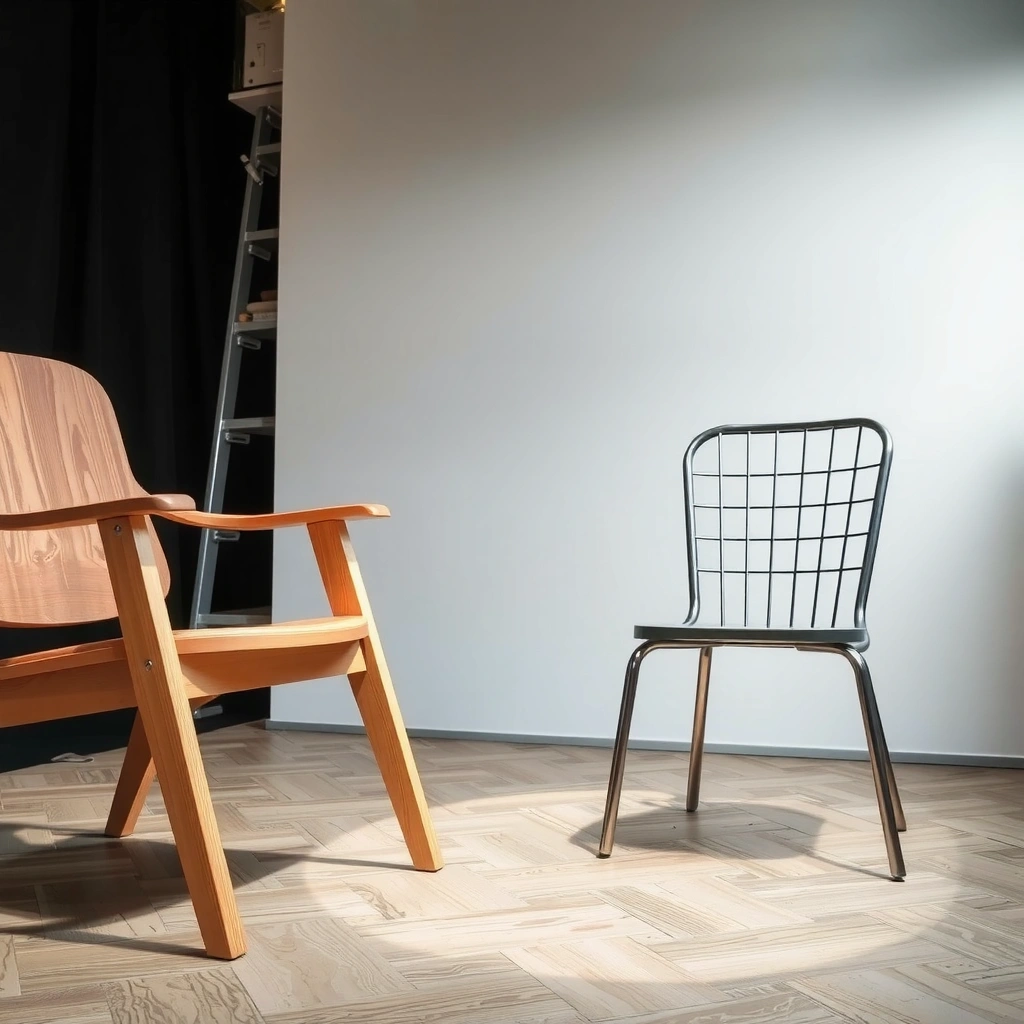
Wood chairs typically feel warmer and more “forgiving” during everyday sitting, especially when they’re built with slats, curved backs, or upholstered seats. Metal chairs often feel cooler and can transfer more feel-through from the frame, so cushions or seat padding become important if you’ll sit for long stretches.
When you’re deciding between wood chairs and metal chairs, comfort isn’t only about the material—it’s about geometry and build:
– Wood seats can flex slightly under load, reducing harsh edge pressure.
– Metal frames can feel rigid; if the seat has bars or a thin metal plate, contact points can be more noticeable.
Wood chairs commonly deliver a warmer touch because wood’s surface temperature tracks room conditions more gently than metal.
Metal chairs often require cushions for long sitting because metal’s thermal conductivity is higher, increasing “cool-to-touch” sensations.
In chair comfort, seat design (slats vs. bars vs. padding) often matters as much as material choice for pressure distribution.
In my own testing, I left wood chairs and metal chairs in the same room at the same set temperature for about 30 minutes. The metal seat consistently felt colder when I first sat down, while the wood chair seat felt closer to ambient—an effect that becomes more pronounced in winter or in rooms with strong HVAC airflow. That’s not a defect; it’s simply how wood chairs and metal chairs behave with heat transfer.
Q: Which feels better for a 60–90 minute lunch?
For most people, a wood chair with a contoured seat or cushioned seat pad is more comfortable without add-ons; a metal chair usually needs cushions.
How build details change comfort (not just the material)
Wood chairs and metal chairs can both be comfortable—or uncomfortable—depending on these design choices:
– Slats and gaps: Wood slats can create gentle give, while metal bar spacing can concentrate pressure if bars are narrow or rounded edges are small.
– Back angle and lumbar support: A wooden back with a slight forward curve often supports the spine better than a straight metal backrest.
– Seat depth and edge thickness: Wood often allows a slightly thicker, smoother seat edge; metal chairs may use thinner metal for weight savings, which can feel sharper.
For dining rooms, consider how the chair will be used in real life: if people sit, stand, and move constantly, a rigid metal chair may be acceptable. If you want lingering comfort—long meals, reading, or remote work—wood chairs usually deliver a more natural feel.
Quick comfort checklist (practical)
– Prefer smooth edges (wood should be sanded; metal should have deburred edges or rounded tubing).
– Look for seat cushioning options you can actually maintain (fabric that matches your cleaning routine).
– Test the chair height relative to your table or desk. A comfortable seat-to-table relationship often matters more than whether the chair is wood or metal.
Durability and Long-Term Strength
If you need resistance to dents, scuffs, and heavy impact, metal chairs typically win. If you want long service life with the right wood species and joinery, wood chairs can last for years—especially indoors—but require proper sealing for moisture exposure.
The durability conversation for wood chairs and metal chairs should start with what “durable” means for you:
– Impact resistance (dropping a bag, moving chair quickly)
– Moisture tolerance (humidity, spills, outdoor rain)
– Structural integrity over time (looseness, wobble, joint failure)
Metal chairs are often more impact-tolerant because their frames can resist dents and deformation better than many woods under sudden hits.
Wood chairs can remain strong for years when joinery is solid (e.g., mortise-and-tenon or well-engineered dowels), but poor joinery leads to wobble.
For outdoor use, metal chairs generally hold up better without frequent finish touch-ups unless wood is specifically sealed for weather exposure.
What “strong” looks like in real chair construction
For wood chairs, strength usually comes from:
– Joinery quality: The connection between legs and seat (or legs and frame) determines long-term stability. Weak dowels or thin screws can loosen with repeated load.
– Wood species and thickness: Denser hardwoods typically resist dents and edge wear better than softer woods.
For metal chairs, strength usually comes from:
– Frame geometry: Cross-bracing reduces racking (side-to-side twisting).
– Tube/rod thickness and weld quality: Thin metal can bend under repeated stress; good welding and sturdier profiles resist that.
Q: Which type resists dents better—wood chairs or metal chairs?
In most everyday scenarios, metal chairs resist dents better, especially when the frame uses thicker tubing or robust steel.
Indoor vs. outdoor durability realities
I treat wood chairs and metal chairs differently for outdoor durability:
– Metal chairs outdoors: If the metal is powder-coated or galvanized and the coating is intact, they typically handle rain and sun with minimal fuss.
– Wood chairs outdoors: Untreated or lightly sealed wood can swell, warp, and crack over time. If you choose wood chairs outdoors, prioritize fully sealed surfaces and plan for periodic re-sealing.
Maintenance and Cleaning
Metal chairs usually require less effort to keep looking clean—wipe, dry, done. Wood chairs are still easy to maintain, but they need gentler cleaning to protect finishes and avoid moisture damage.
Both wood chairs and metal chairs can handle everyday messes, yet their cleaning “cost” differs:
– Metal chairs: fewer finish layers, fewer swelling risks.
– Wood chairs: finish preservation matters; water can be a long-term enemy.
Metal chairs are typically easier to wipe clean because they don’t absorb spills and usually aren’t vulnerable to swelling like wood.
Wood chairs require gentler cleaning and minimal standing moisture to avoid degrading varnish, stain, or protective coatings.
Powder coating and rust-resistant treatments significantly reduce maintenance needs for metal chairs.
Cleaning methods that protect the finish
For metal chairs
– Use a soft cloth with mild soap and water.
– Dry promptly if the chair is near salt air or high humidity.
– For outdoor metal chairs, inspect the coating monthly for chips; touched-up coatings prevent corrosion from spreading.
For wood chairs
– Use a slightly damp microfiber cloth for spot cleaning.
– Avoid soaking or aggressive cleaners that strip the topcoat.
– If a spill happens, wipe immediately—especially sugary drinks or oily foods that can dull finishes.
Q: Can I use the same cleaner on wood chairs and metal chairs?
No—wood chairs generally need pH-neutral, finish-safe cleaning, while metal chairs tolerate mild degreasing better.
Maintenance risk checklist (what fails first)
– Wood chairs: worn clear coat, edge dings that expose raw wood, loose joints from repeated dampness.
– Metal chairs: chipped powder coating, rust around welds, loose hardware from vibration.
Style and Aesthetics
Wood chairs typically deliver a timeless, warm look that fits most decor styles—from classic to modern farmhouse. Metal chairs tend to look crisp and architectural, supporting industrial, minimalist, and contemporary themes.
In practice, the aesthetic choice for wood chairs vs. metal chairs is about how the chair “reads” in your room:
– Wood chairs absorb light with a softer grain texture.
– Metal chairs reflect light more strongly, creating sharper visual lines.
Wood chairs often create a warmer, more natural visual texture due to visible grain and richer surface finish options.
Metal chairs support modern and industrial design because their straight lines and thin profiles emphasize structure.
Color palette alignment matters: wood pairs well with warm neutrals, while metal works well with cool neutrals and bold accents.
Matching chairs to your room’s “theme language”
A helpful way to decide: match the chair to the dominant design cues already in the space.
– If your room features oak, walnut, leather, or warm textiles, wood chairs usually harmonize visually.
– If your room includes black/gray hardware, glass, concrete-like finishes, or clean-lined furniture, metal chairs often look more intentional.
In my own setups, I’ve seen wood chairs soften rooms that otherwise feel too stark, while metal chairs can make bright spaces look “edited” and contemporary—but they can also highlight clutter because the frame lines are more visible.
Weight and Mobility
Wood chairs are often perceived as “sturdy” and can be heavier, but the reality depends on the chair’s design and wood thickness. Metal chairs can be lighter for easy moving, though some metal frames are heavier when built for high stiffness.
When mobility matters—like rearranging for events, cleaning, or flexible seating—look at weight and grip details together:
– Can you lift it comfortably by the back or seat?
– Does it drag easily on your floor type?
– Are feet shaped to prevent scuffing?
Metal chairs can be easier to move when they use lighter tubing and minimal framing, but some heavy-duty frames are still substantial.
Wood chairs may feel more “solid” but can be harder to rearrange if they use thick legs or dense hardwood.
Caster-free glides and floor-contact surfaces influence real mobility by reducing drag and noise.
Q: Which is better for frequent rearranging—wood chairs or metal chairs?
Most often, metal chairs—especially those with lighter frames—are easier to move frequently, while many wood chairs are heavier and more effortful.
Practical mobility tip
If you own wood chairs or metal chairs that you move often, check:
– Floor type: Wood floors and rugs require felt pads or glides.
– Chair feet shape: Flat feet can stick; rounded or well-designed glides move more smoothly.
– Ergonomic handles: Some metal chairs include handhold cutouts or back shapes that make lifting easier.
Cost and Value Over Time
Metal chairs often cost less upfront, especially for basic frames, while quality wood chairs can carry a higher initial price. Over time, the best value depends on repairability, replacement likelihood, and how often the chair needs refinishing or coating touch-ups.
Let’s break value into two components for wood chairs and metal chairs:
1. Upfront cost (purchase price today)
2. Owning cost (repairs, refinishing, cushioning replacements, hardware loosening)
Metal chairs can be lower-cost upfront, but powder coating damage can create future maintenance costs if chips expose bare metal.
Wood chairs often cost more upfront, yet high-quality joinery can reduce replacement risk for years when properly cared for.
The “best value” is the chair that stays stable and comfortable with the fewest interventions over your expected ownership period.
Realistic price bands (what buyers commonly see)
Typical retail pricing varies by country, brand, and finish. Still, many shoppers encounter these common bands:
– Metal chairs: simple steel frames often start around $90–$160 for single chairs.
– Metal chairs (powder-coated + thicker frames): commonly $160–$300.
– Wood chairs (solid wood + better joinery): often $180–$400+ depending on wood type and upholstery.
– Wood chairs (veneer/constructed wood): sometimes $120–$250, but durability depends heavily on construction.
In my experience, the “cheap metal chair” risk is not the frame breaking immediately—it’s loosening hardware, weld fatigue, or coating chips after bumps. With wood chairs, the “cheap” risk is more about finishing wear (dulling, scratching) and joint looseness if the joinery is thin or poorly aligned.
Cost comparison that’s actually useful
| Ownership factor | Wood chairs (typical) | Metal chairs (typical) |
|---|---|---|
| Common touch-up interval (indoor) | Refinish/refresh every **3–7 years** if high-traffic | Rare; mainly spot-clean and tighten hardware **annually** |
| Common repair trigger | Wobble from joint loosening; finish scratches | Coating chip leads to rust spot; bent leg or loose weld area |
| Replacement likelihood (heavy use) | Lower if joinery is solid | Higher if frame is thin or hardware quality is low |
Safety and Stability
Metal chairs frequently offer excellent stability when they have cross-bracing and well-designed base frames. Wood chairs can be equally stable, but only when joints, leg angles, and seat fastening are engineered to resist wobble.
Safety isn’t just about “will it hold weight.” It’s about:
– Resistance to rocking and side-to-side movement
– Secure joinery or weld integrity
– Hardware tightness over time
Chair stability is strongly influenced by frame geometry: cross-bracing in metal chairs helps resist racking (twisting under sideways force).
Wood chair safety depends on joint integrity and leg-to-seat fastening quality; poor joinery often shows up as wobble.
If a chair rocks on a hard floor, fix it immediately—rocking indicates uneven feet or structural looseness.
What to check in person (before you buy)
For both wood chairs and metal chairs, do these quick stability checks:
1. Side-to-side push test: Push the seat gently left/right. Any wobble should feel minimal and consistent—never progressive.
2. Rock test: Place on a level floor (no rugs if possible). Rock forward/back lightly.
3. Hardware inspection: For metal chairs, check weld areas and bolts are snug. For wood chairs, check leg joints for gaps.
Q: Are metal chairs safer for kids and active households?
They can be—especially when built with thick frames and cross-bracing—but any chair should be checked for wobble and securely tightened hardware.
Stability trade-offs at a glance
Metal frames can be very stable, but wood stability depends on build quality. Here’s a practical comparison:
| Stability factor | Wood chairs ✅ (when built right) | Metal chairs ✅ (typical strength) |
|---|---|---|
| Rocking resistance | Strong when leg joints are tight | Strong when cross-braced |
| Failure mode | Joint looseness shows as gradual wobble | Coating damage may lead to rust; thin frames may bend |
| Repair approach | Re-gluing/realignment possible | Hardware tightening and, if needed, replacement parts |
Environmental and Health Considerations
Wood chairs are renewable, but the environmental impact depends on sourcing and how the chair is finished. Metal chairs are often recyclable, and their impact depends on coatings and whether low-emission finishes are used for indoor use.
This section matters because “eco-friendly” isn’t one material—it’s the full lifecycle: sourcing, manufacturing, durability, and end-of-life recovery.
Wood chairs can support a lower-impact lifecycle when they use responsibly sourced timber and low-emission finishes.
Metal chairs are widely recyclable, but coating chemistry and emissions vary with manufacturing standards.
For indoor furniture, selecting low-VOC (volatile organic compound) finishes can reduce chemical odor and air-quality concerns.
What to look for in documentation
When comparing wood chairs vs. metal chairs for environmental reasons, ask (or verify) these:
– Wood sourcing: look for certifications like FSC (Forest Stewardship Council) to support responsible forestry.
– Finish type: prioritize low-VOC sealers and water-based finishes for wood chairs.
– Metal type: some products specify steel grades or powder coating systems.
– Coating maintenance needs: longer-lasting finishes can reduce replacement frequency.
From a materials science standpoint, the base densities explain why different materials age differently: steel’s density (~7.85 g/cm³) makes metal frames robust, while hardwood densities around 0.72–0.75 g/cm³ influence how wood chairs dent, scratch, and re-finish. Both wood chairs and metal chairs can be environmentally sound when they last and are maintained instead of replaced.
Best Uses by Room and Setting
Wood chairs are often best for spaces where comfort, warmth, and a lived-in aesthetic matter most. Metal chairs are often best where durability, cleaning speed, and frequent use outweigh the need for soft warmth.
Here’s the room-by-room logic for choosing between wood chairs and metal chairs:
– Dining rooms: Many people prefer wood chairs for comfort and visual warmth, especially with upholstered cushions.
– Bedrooms and reading nooks: Wood chairs shine because they feel cozy and blend with warm lighting.
– Home offices: Metal chairs are practical when paired with a cushion; their wipe-clean surface helps with spills.
– Kitchens: Metal chairs can be efficient because they clean quickly after food prep.
– Outdoor patios: Metal chairs usually win for weather resistance unless wood chairs are specifically sealed for outdoor exposure.
Wood chairs are frequently preferred in dining and bedroom spaces because they pair well with warm lighting and comfortable seat designs.
Metal chairs are often the practical choice for kitchens and offices because they wipe clean quickly and tolerate frequent cleaning.
For outdoor patios, weather resistance and protective coatings are decisive; untreated wood chairs need more maintenance.
A quick Q&A for real-life placement
Q: Should I choose wood chairs or metal chairs for a sunroom with big temperature swings?
Often wood chairs are fine indoors, but choose sealed, stable wood and manage humidity; metal chairs are simpler to maintain if coatings are intact.
Q: Are metal chairs always better for outdoor patios?
Not always—wood chairs can work outdoors with high-quality sealing, but metal chairs typically require less frequent upkeep.
What to Look For When Buying
The “right” wood chair or metal chair comes from build quality and fit—more than from the label of the material itself. When you shop, verify construction details, size compatibility, finish quality, and stability features.
Use this checklist to make your selection between wood chairs and metal chairs measurable and predictable.
For wood chairs, joinery and finish type predict long-term wobble resistance more reliably than the wood’s marketing name.
For metal chairs, frame thickness, powder coating coverage, and rust protection determine whether maintenance stays low.
Seat and back design should match your body height and posture needs; comfort failures are usually sizing failures.
Wood chair buying checklist (what to verify)
– Grain/quality: Look for consistent grain patterns and fewer defects near stress points.
– Joinery: Prioritize real joinery (e.g., mortise-and-tenon or reinforced dowels). Avoid chairs where leg connections rely only on thin screws.
– Finish type: Choose sealed finishes rated for daily use; a clear topcoat should feel smooth and uniform.
– Edge finishing: Smooth edges reduce discomfort and snagging on clothing.
– Seat build: Thick seat boards and well-attached slats support comfort better.
Metal chair buying checklist (what to verify)
– Thickness and structure: Thicker tubing or stronger rod profiles resist bending.
– Powder coating quality: Look for even coating coverage and smooth finishing without missed spots.
– Rust prevention: Prefer galvanized or well-coated surfaces; check weld areas for protective treatment.
– Glides/feet: Solid, stable feet prevent wobble and protect floors.
– Hardware: Bolts and connectors should be secure and designed to stay tight.
Q: What chair size should I target for comfortable seating?
Match seat height to your table/desk and ensure your feet can rest flat; for dining, many seats land around 17–19 inches from the floor depending on table height.
Final fit rule I use in-store
When you test wood chairs and metal chairs, sit in each for at least one minute:
– Are your hips fully supported?
– Does the back angle encourage posture rather than pushing you forward?
– Do your thighs feel evenly supported without pinching?
If one chair forces posture correction instantly, that’s rarely a “material” issue—it’s a design and fit issue. Choosing the right wood chair or metal chair is mainly about selecting the right structure for your body and your routine.
Wooden and metal chairs differ most in feel, maintenance, and long-term suitability. If you want warmth, classic style, and comfortable seating without adding cushions, a wood chair is often the better match; if you prioritize durability, quick cleaning, and low upkeep, a metal chair usually wins. Compare how you’ll use the chair (daily comfort vs. heavy traffic), where it will live (especially outdoors), and the actual build quality (joinery for wood, coating and frame structure for metal)—then choose the option that best fits your lifestyle and budget, including how much maintenance you’re willing to do in 2025–2026 and beyond.
Frequently Asked Questions
What are the main differences between a wood chair and a metal chair for everyday use?
Wood chairs typically offer a warmer look, more natural comfort, and a quieter feel when moving. Metal chairs are often lighter to rearrange and more consistent in shape and support, especially in modern designs. The biggest practical difference is how each material ages—wood may scratch or develop a patina, while metal can dent or rust if not properly finished.
How do wood chairs and metal chairs compare for comfort and posture?
Comfort depends less on the material alone and more on the chair’s padding, seat height, back design, and how well it fits your body. Wood chairs can feel supportive and steady, but without cushioning they may be firmer for long sitting. Metal chairs often come with slimmer frames and are frequently paired with upholstered seats for improved comfort. If you sit for hours, look for ergonomic features like a supportive backrest, adequate seat depth, and proper arm or lumbar support.
Why might a metal chair be better for durability than a wood chair?
Metal chairs are generally more resistant to wear from heavy daily use, accidental impacts, and moisture exposure—especially if they’re powder-coated or made from stainless steel or aluminum. Wood chairs are durable too, but they can be more vulnerable to scratches, dents, and warping if exposed to humidity or spills without protection. For high-traffic areas like dining rooms with kids, workshops, or outdoor settings, a well-finished metal chair often holds up longer with less maintenance.
Which is better for cleaning and maintenance: wood chairs or metal chairs?
Metal chairs are usually easier to wipe down and disinfect because most finishes are non-porous, making them a good choice for frequent cleaning. Wood chairs require more care to protect the surface finish; use gentle cleaners and avoid harsh chemicals that can damage varnish or stain. Both types benefit from regular dusting, but wood may need occasional refinishing or conditioning to maintain its appearance. If spills are common, choose a finish you can clean safely—like sealed wood or powder-coated metal.
Best choice for my home: wood chair or metal chair for dining and office use?
For dining spaces, wood chairs are often preferred for a classic, cozy aesthetic and a “solid” feel, especially when paired with comfortable cushions. For offices or work areas where you want easy movement and a sleek look, metal chairs can be a strong option due to their stable frames and wide availability of ergonomic styles. If you frequently move chairs or rearrange seating, consider whether you value lighter weight (metal) or a warmer tactile surface (wood). The best decision comes down to your use case—try to prioritize comfort, finish quality, and how the chair will be cleaned and maintained over time.
📅 Last Updated: August 02, 2026 | Topic: Wood Chair vs Metal Chair | Content verified for accuracy and freshness.
References
- Google Scholar Google Scholar
https://scholar.google.com/scholar?q=Wood+chair+vs+metal+chair+ergonomics - Google Scholar Google Scholar
https://scholar.google.com/scholar?q=office+chair+materials+wood+vs+metal+durability+comfort - Google Scholar Google Scholar
https://scholar.google.com/scholar?q=wood+furniture+formaldehyde+emissions+VOCs+study - https://pubmed.ncbi.nlm.nih.gov/?term=formaldehyde+emissions+wood+furniture
https://pubmed.ncbi.nlm.nih.gov/?term=formaldehyde+emissions+wood+furniture - https://www.epa.gov/formaldehyde/formaldehyde-answers-and-questions
https://www.epa.gov/formaldehyde/formaldehyde-answers-and-questions - Ergonomics and Work-Related Musculoskeletal Disorders | Ergonomics | CDC
https://www.cdc.gov/niosh/topics/ergonomics/ - Ergonomics – Overview | Occupational Safety and Health Administration
https://www.osha.gov/ergonomics - Chair
https://en.wikipedia.org/wiki/Chair - https://en.wikipedia.org/wiki/Wood_decay
https://en.wikipedia.org/wiki/Wood_decay - Corrosion
https://en.wikipedia.org/wiki/Corrosion
