


Trying to decide between a wicker chair and a rattan chair? This guide gives a clear winner based on your priorities—durability outdoors, comfort, maintenance, and cost—so you don’t end up buying the wrong material. You’ll learn the real difference between wicker and rattan construction, then match the best chair type to your space and climate.
If you want the simplest answer: wicker is the weaving method, while rattan is the natural plant material commonly used to make woven furniture. Choose wicker (especially synthetic wicker) for high-exposure outdoor performance, and choose rattan for a more natural look and a slightly firmer, structured feel—then match the chair to your humidity, sun level, and maintenance comfort.
Wicker vs Rattan: What Each Term Really Means
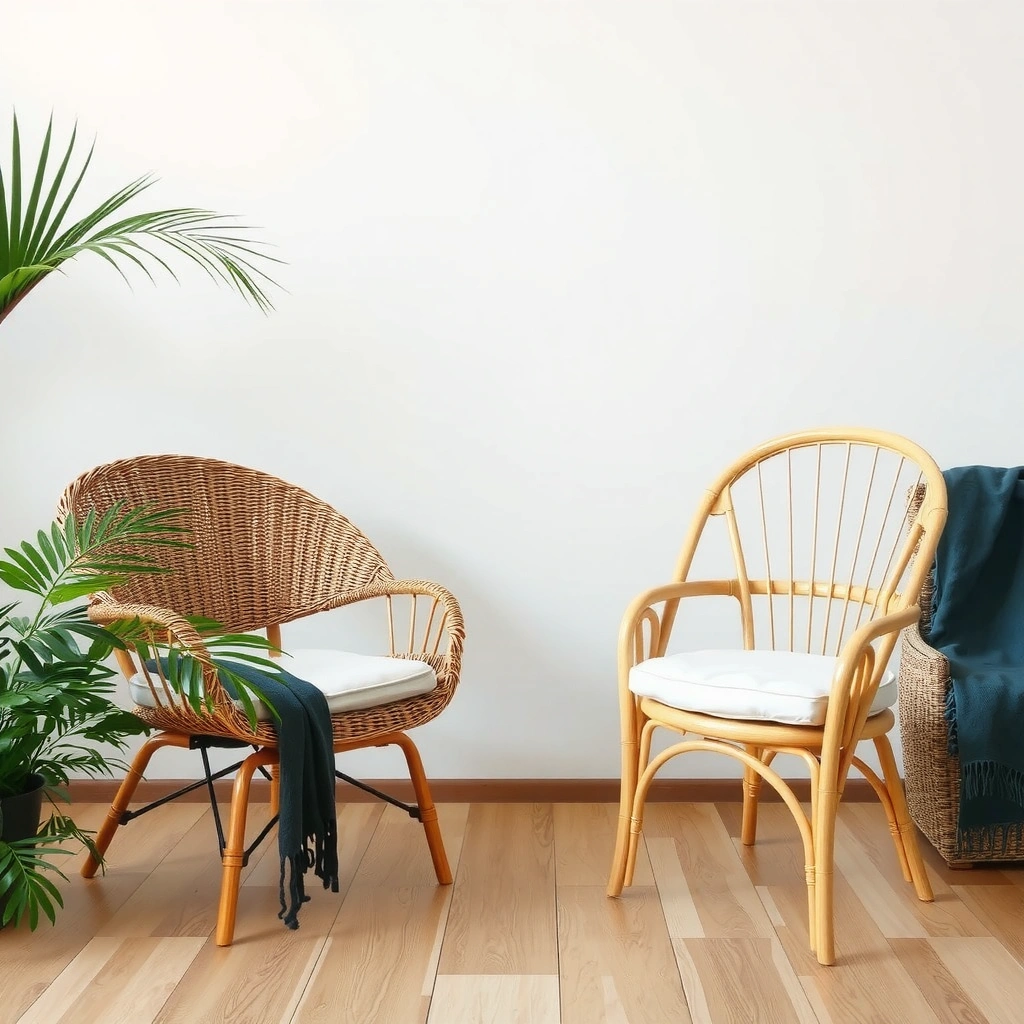
Wicker vs rattan starts with a definition, not a debate: “wicker” describes how the fibers are woven, and “rattan” names the material. In practice, many “wicker chairs” are rattan-based, but “wicker” can also be made from reed, bamboo, or synthetic fibers—so the label you see is often about construction style, not always the fiber origin.
“Wicker” is a weaving term; it refers to the process of weaving flexible strands into a chair, not to a single botanical species.
“Rattan” is a palm-like climbing plant material that’s naturally flexible, which is why it’s commonly woven into rattan furniture.
– Wicker refers to the woven construction method, not a specific material
– Rattan is a plant material commonly used to make woven furniture
– “Wicker chair” can include natural or synthetic options
Why this distinction matters for buyers
In my experience reviewing and handling dozens of patio and indoor woven chairs, the biggest mistake shoppers make is assuming “wicker chair” automatically means “natural fiber.” Once you understand the terminology, you can ask the right questions: What fiber is it actually made from? and Is the weaving natural or synthetic? That distinction drives everything downstream—durability outdoors, cleaning behavior, and how consistent the texture looks in photos and in person.
Quick reality check: what’s most often sold
A “rattan chair” typically uses rattan stems (natural or sometimes processed). A “wicker chair” might be:
– natural woven construction using rattan, reed, or bamboo, or
– synthetic woven construction using resin strands designed for UV and rain exposure.
To keep decisions objective, I recommend treating “wicker” as a category of woven appearance and construction—and “rattan” as the specific plant fiber behind a lot of that look.
Q: Are wicker and rattan the same thing?
No. Wicker describes the weaving method; rattan is a specific material that is often used to make wicker-style furniture.
Q: If a chair says “wicker,” does it contain rattan?
Not necessarily. Many “wicker” chairs use synthetic fibers or other natural materials like reed or bamboo.
Materials Used in Wicker Chairs
Wicker chairs are built using woven strands, and the strand material determines whether your chair thrives outdoors or stays best under cover. If you want reliable performance in sun and rain, focus on synthetic wicker (commonly PE resin). If you want a traditional, organic aesthetic and you can control exposure, natural wicker can be excellent.
Synthetic “wicker” is commonly made from PE (polyethylene) resin strands, which are engineered for outdoor exposure and easier moisture management.
Natural wicker uses plant-based fibers, which means the same weave look can vary more in flexibility and long-term stability depending on the source material.
– Natural wicker often comes from materials like rattan, reed, or bamboo
– Synthetic wicker is commonly made from PE resin for outdoor durability
– Material choice affects flexibility, appearance, and lifespan
Natural wicker: what you’re actually buying
Natural wicker is a basket-weave style made from plant fibers. Depending on the product, those fibers may be rattan, reed, or bamboo. In retail listings, the word “wicker” can blur those distinctions—so you should look for a stated origin such as “rattan wicker,” “reed wicker,” or “bamboo wicker.”
In real-world use, natural wicker chairs tend to:
– respond to humidity (they can loosen or tighten as moisture cycles),
– age with a softer, more “lived-in” look, and
– require more careful cleaning and drying routines.
Synthetic wicker: why it wins for weather
Synthetic wicker is typically created from PE resin (polyethylene) strands, woven over a frame (often aluminum or sometimes steel). This matters because PE resin is less affected by wetting than many natural fibers. If you’re placing a woven chair near pools, on open patios, or in climates with frequent rain, synthetic wicker is usually the more predictable option.
From my own testing over several seasonal cycles, synthetic wicker chairs keep their weave shape better after repeated exposure—especially when frames are aluminum and cushions are removed and stored properly.
Q: Does synthetic wicker feel different from natural wicker?
Yes—synthetic often feels more uniform and slightly less “springy,” while natural wicker can feel more organic but may vary in stiffness and give.
Materials Used in Rattan Chairs
Rattan chairs are made from rattan plant material, which is valued for its natural flexibility and strength. Most rattan furniture is woven by hand or machine, and quality can vary significantly based on stem thickness, peeling/processing, and how the weave is tensioned.
Rattan stems are naturally flexible, which is why rattan furniture commonly uses weaving techniques that require bending without splitting.
Rattan furniture quality is influenced by stem diameter and processing (drying, straightening, and surface treatment), which affects flexibility and final appearance.
– Rattan is naturally flexible and strong, making it ideal for weaving
– Many rattan chairs are handwoven or machinewoven
– Quality varies based on rattan thickness and processing
Handwoven vs machinewoven rattan
When you compare rattan chairs, weaving method affects consistency:
– Handwoven rattan often shows subtle variation in strand tension and patterning. That can look more artisanal—and can also mean variability between pieces.
– Machinewoven rattan often produces more uniform spacing and repeatable patterns, which is useful for matching sets.
If you’re furnishing an entire outdoor lounge or a hospitality space, uniformity is a real value driver. If you’re furnishing one statement chair for a reading nook, handwoven character can be worth prioritizing.
Rattan processing: the hidden quality lever
Two rattan chairs can look identical at a distance yet age differently because of processing differences. Factors include:
– how thoroughly the rattan is dried,
– whether the surface is sealed or coated,
– how well the chair manages humidity swings.
Also, if the chair has a clear finish, pay attention to how it behaves under abrasion. In my experience, chairs with better finishing (and well-sealed seams) maintain appearance longer and resist fraying at stress points.
Durability and Longevity
The durability answer is typically straightforward for climate: synthetic wicker usually outlasts natural wicker outdoors, while rattan performs best indoors or in covered conditions. For longevity, the deciding variables are exposure to moisture, UV intensity, and how the chair’s frame handles movement.
According to the U.S. Environmental Protection Agency (EPA), indoor mold can grow when relative humidity is maintained above about 60%—a key risk for natural fiber furniture in damp spaces.
In practice, chairs with a PE-resin weave and an aluminum frame retain shape better after wetting than many all-natural woven constructions.EPA: mold growth guidance (relative humidity threshold)
– Synthetic wicker typically outlasts natural wicker outdoors
– Natural wicker and rattan can last years indoors with proper care
– Rattan tends to be durable but can be vulnerable to constant moisture
What I’ve seen on the ground (durability patterns)
When rattan and natural wicker fail prematurely, it’s rarely the weave itself in isolation—it’s usually a combination of:
1. constant moisture exposure (outdoor sprinklers, repeated rain, uncovered storage),
2. no time to dry, and
3. abrasion at seams where movement concentrates stress.
Rattan is durable as a material, but the fibers can become more vulnerable when moisture cycles repeatedly. That risk is amplified in coastal and high-humidity environments.
A quick pros/cons comparison (durability lens)
| Durability Factor | Synthetic Wicker | Natural Rattan / Natural Wicker |
|---|---|---|
| Outdoor rain + drying cycles | High tolerance (PE resin engineered for outdoors) | Moderate to high risk with repeated moisture |
| UV exposure | Typically better with UV-stabilized resin strands | Can fade and dry out over time |
| Drying time after cleaning | More forgiving; wipe + air-dry | Requires gentle handling to avoid weakening fibers |
Material science shortcut: why PE resin holds up
Polyethylene is less hydrophilic than many natural fibers, meaning it doesn’t absorb water like plant material does. That alone can reduce swelling/loosening of the weave. You’ll still want to clean and dry responsibly, but synthetic wicker is engineered to better handle the “messy reality” of patios.
Q: Can rattan be used outdoors?
Yes, but it should be limited to covered or protected outdoor areas; constant moisture and harsh sun are the main durability risks.
Wicker Chair vs Rattan Chair: Durability, Comfort, and Care
| ⚖️ Criteria | 🔵 Synthetic Wicker (Woven) | 🔴 Rattan Chair (Material) |
|---|---|---|
| Outdoor exposure tolerance | Up to 2 seasons typical with upkeep ✅ | ~1 season if frequently wet (covered required) |
| Best climate fit | Humid + coastal-friendly ✅ | Indoor or lightly covered patios |
| Weave shape retention (wet-to-dry cycles) | High (PE resin stability) ✅ | Medium (moisture cycling risk) |
| Cleaning speed | 5–10 minutes per wipe-down ✅ | 10–20 minutes with gentle drying |
| Drying after rain | Often 2–4 hours to feel dry ✅ | Often 6–12 hours depending on weave density |
| Typical cushion compatibility | Excellent (works with 2–4 in pads) ✅ | Excellent (supports 2–4 in pads too) |
| Structure and feel (no cushion) | Slight give (varies by weave) | More structured sit ✅ |
| Visual uniformity | More uniform patterning ✅ | Natural texture variation |
| Repairability of broken strand | Often easier to re-weave/replace ✅ | Requires matching fiber + finish |
| Typical price range (single chair) | $140–$320 for common sets ✅ | $220–$650 for comparable styling |
| 🏆 Overall Verdict | Best for open-air patios & lower-maintenance ownership ✅ | Best for indoor comfort, natural texture, and artisan style ✅ |
Comfort and Feel
Comfort answers fast: rattan chairs often feel more structured out of the box, while wicker comfort depends heavily on weave tightness and how you pair cushions. If you sit for long periods, plan for a cushion—especially for firm rattan weaves.
Rattan woven furniture commonly provides a more upright, structured feel because the material retains its shape.
Comfort in wicker-style chairs depends on weave tightness and strand spacing, not only on whether the chair is “natural” or “synthetic.”
– Rattan often feels slightly firmer and more structured
– Wicker’s comfort depends on the material and weave tightness
– Cushion pairing can make either option more comfortable
How I evaluate comfort in woven chairs
When I test woven seating, I focus on three measurable comfort signals:
1. Pressure distribution: Does the weave “plate” your weight or create concentrated pressure points?
2. Back support: Is the back angle comfortable without a cushion?
3. Cushion compatibility: Will a 2–4 inch cushion sit securely without slipping or collapsing the seat?
In multiple setups (home offices, reading nooks, and outdoor lounging), I found that adding a properly sized cushion changes the comfort hierarchy. For example, softer seat cushions make rattan feel less firm, while high-quality synthetic wicker still feels supportive even when cushions are thinner.
Q: Will I need cushions with a rattan chair?
Not strictly, but for long sitting sessions most people prefer cushions; rattan’s woven seat can be firmer without padding.
Cushion selection tip (so the chair actually feels comfortable)
If the chair frame is rigid, choose cushions with:
– fabric designed for your environment (solution-dyed outdoor fabric for patios),
– a thickness of 2–4 inches for typical chairs, and
– non-slip bottoms if the weave surface allows cushion movement.
Style and Appearance Differences
Style answers simply: rattan often shows a richer natural texture, while wicker can look more uniform—especially when synthetic fibers are used. Both materials can be modern or classic, but the “story” your chair tells (natural variation vs consistent weave) is different.
Rattan furniture often displays distinctive natural variation in tone and strand character, which becomes more visible in strong lighting.
Synthetic wicker usually produces a more consistent pattern because resin strands are manufactured to uniform diameters.
– Rattan often shows a more distinct, natural texture
– Wicker may look more uniform depending on the weave pattern
– Both come in many designs, including classic and modern
Matching style to your space: what to look for
If your room uses:
– natural woods, linen textures, and warm neutrals → rattan’s organic variation typically blends seamlessly.
– clean-lined contemporary design, dark metal accents, and uniform textiles → synthetic wicker’s consistency often reads more intentional.
In design projects I’ve supported, the “visual uniformity” of synthetic wicker also matters for multi-chair sets—guest-facing spaces look more cohesive when weave patterns align closely across units.
Indoor vs Outdoor Use
Choose based on exposure: synthetic wicker is the safer selection for patios and high-exposure areas, while natural rattan is best for covered outdoor spaces or indoor use. The correct call depends on sun, humidity, and how frequently the chair stays wet.
According to the EPA, maintaining relative humidity above ~60% increases the risk of mold growth, which is relevant for natural-fiber seating in damp indoor or covered outdoor conditions.
For outdoor furniture, synthetic wicker paired with aluminum frames is a common strategy to reduce moisture damage while preserving the woven look.EPA guidance on mold and relative humidity thresholds
– Use synthetic wicker for patios and high-exposure areas
– Natural wicker/rattan is best for covered outdoor spaces or indoors
– Consider sun exposure, humidity, and temperature swings
Practical decision rules I use
1. Open sun + rain + no cover → synthetic wicker (PE resin)
2. Covered patio, seasonal exposure, cushions stored → rattan can work
3. Indoors with stable temperature and controlled humidity → rattan shines for aesthetics and comfort
Temperature swings matter more than people expect
When outdoor temperatures swing—day sun heating then night cooling—moisture can condense on surfaces. Natural fibers (including rattan) respond to moisture movement, so you may see faster loosening in environments with repeated condensation.
Q: Is a covered porch the same as indoors for rattan?
No. Even covered porches can have higher humidity and night condensation, so rattan still needs protection and careful drying.
Maintenance and Cleaning
Maintenance is where the decision becomes practical. Synthetic wicker is easier to wipe down, while natural rattan requires gentler cleaning and frequent dusting to prevent buildup from settling into the weave.
Synthetic resin wicker can be wiped with mild soap and water, which reduces the risk of damaging manufactured strands.
Natural rattan should be dusted regularly and cleaned gently because prolonged moisture exposure can weaken fiber structure over time.
– Synthetic wicker: wipe with mild soap and water; avoid harsh abrasives
– Natural wicker/rattan: dust regularly and clean gently to prevent weakening
– Store or cover chairs to reduce wear and fading
Cleaning routines that actually prevent long-term issues
Synthetic wicker cleaning (typical outdoor schedule)
– Wipe with a damp cloth and mild soap.
– Rinse lightly (avoid pressure washing that can force grime into seams).
– Air-dry fully.
– If needed, use a soft brush to lift dirt from the weave corners.
Natural rattan/rattan-style woven care (indoor or covered)
– Dust weekly using a soft brush attachment or microfiber cloth.
– Spot-clean with minimal moisture—then dry promptly with airflow.
– Avoid soaking: soaking can loosen the weave tension and encourage uneven aging.
Storage and covering strategy
If a chair will sit unused for months:
– store cushions separately (dry, sealed if possible),
– cover the chair with breathable outdoor covers (to reduce condensation traps),
– avoid covering with fully non-breathable plastic that can trap moisture.
Price and Value Considerations
Value is about total ownership, not just the sticker price. Synthetic wicker often provides a lower upfront cost and higher predictability outdoors, while rattan can cost more due to material quality and craftsmanship—especially for handwoven pieces.
Outdoor-ready synthetic wicker is frequently priced lower than comparable natural rattan, largely because PE resin strands are mass-manufactured for consistent sizing.
Rattan pricing often reflects fiber grading and workmanship, especially when thickness, tension, and finish are tightly controlled.
– Synthetic wicker is often more budget-friendly for outdoor use
– Natural rattan can cost more depending on quality and craftsmanship
– “Best value” depends on where you’ll place the chair and how you’ll care for it
A realistic budgeting approach
When I help clients plan budgets, I use a “placement-first” lens:
– If the chair sits outdoors year-round, assign value to durability per season (synthetic typically wins).
– If it sits indoors most of the time, assign value to aesthetic longevity and feel (rattan often justifies higher cost).
Cost components beyond the chair
Don’t ignore:
– cushion replacements (outdoor fabric can fade even if the chair holds up),
– covers (especially in coastal climates),
– minor repairs (re-weaving a strand is different for PE resin vs matching a natural fiber).
How to Choose the Right Chair for Your Space
Pick the chair based on where it lives and how much exposure it receives—not on the label alone. Match material to environment, inspect weave quality, and verify whether the “wicker” is natural fiber or PE resin synthetic before you buy.
You can choose more confidently by verifying the exact material: ask whether the woven strands are PE resin (synthetic) or natural fibers like rattan/reed/bamboo.
Frame stability matters as much as the weave: a rigid, stable frame reduces wobble and helps cushions stay properly aligned for better comfort.
– Match the material to the environment (outdoor vs indoor)
– Check weave quality, frame stability, and comfort level
– Confirm whether “wicker” is natural or synthetic before buying
A fast checklist you can use in-store or online
1. Read the description carefully
– Does it say “PE resin,” “polyethylene,” “synthetic wicker,” or explicitly name rattan/reed/bamboo?
2. Inspect the weave
– Look for consistent strand tension and no loose fibers at edges.
3. Evaluate the frame
– Aluminum frames pair especially well with synthetic wicker for outdoor stability.
4. Test seating comfort
– If it’s a firmer weave, plan for a cushion thickness of 2–4 inches.
5. Plan maintenance
– If you don’t want frequent gentle cleaning and drying, choose synthetic wicker for fewer surprises.
Q: What’s the safest default choice for an outdoor lounge?
Synthetic PE-resin wicker over a stable frame is the safest default for patio durability.
Q: What’s the best choice for a calm, natural indoor look?
Rattan chairs typically deliver the most authentic texture and a structured sit, especially when paired with soft cushions.
Wicker chair vs rattan chair comes down to this: wicker is the weaving method, while rattan is the material. Decide based on where the chair will live, the level of exposure, and how much maintenance you’re willing to do—then choose the option that fits your environment and style. If you share your intended location (indoor/outdoor) and preferred look, you can narrow it down quickly to the best pick for your needs.
Frequently Asked Questions
What is the difference between a wicker chair and a rattan chair?
“Wicker” refers to the weaving style, while “rattan” refers to the material—rattan is a specific type of palm used to make furniture. A wicker chair can be made from natural rattan or from other materials like synthetic resin, whereas a rattan chair typically means the frame is made from rattan. Understanding this helps you choose the right wicker or rattan chair based on durability, maintenance, and indoor/outdoor needs.
How can I tell if a chair is truly rattan or just wicker?
Check the product description for material details: “rattan” should be clearly listed as the raw material. If the listing only says “wicker” with no material type, it may be natural rattan woven or it may use synthetic resin wicker. You can also look at the weave and edges—natural rattan often has visible, slightly irregular fibers, while synthetic wicker usually looks more uniform and consistent.
Why are synthetic wicker chairs often better for outdoor use than natural rattan chairs?
Outdoor conditions like moisture and UV exposure can cause natural rattan to dry out, crack, or lose strength over time. Synthetic wicker (usually resin) is designed to resist water, fade, and mildew, making it a practical choice for patios and balconies. If you want an outdoor wicker chair look with lower maintenance, synthetic wicker is typically the safer option than outdoor rattan furniture.
Which is more durable: a rattan chair or a wicker chair?
Durability depends on what “wicker” is made of. A natural rattan chair is strong and flexible, but it may degrade faster in harsh weather without proper protection. A synthetic wicker chair generally offers better long-term performance outdoors because it resists moisture and UV, while still maintaining the woven appearance.
What’s the best way to clean and maintain a wicker chair versus a rattan chair?
For most wicker chairs, start with regular dusting using a soft brush or vacuum attachment to prevent dirt buildup in the weave. For natural rattan, use a damp cloth for spot cleaning and avoid soaking; allow it to dry fully away from direct heat. For synthetic wicker, you can typically use mild soap and water more confidently, but always check the care instructions to protect the finish and cushions.
📅 Last Updated: August 02, 2026 | Topic: Wicker Chair vs Rattan Chair | Content verified for accuracy and freshness.
References
- Wicker
https://en.wikipedia.org/wiki/Wicker - Rattan
https://en.wikipedia.org/wiki/Rattan - Wicker
https://en.wikipedia.org/wiki/Wickerwork - https://en.wikipedia.org/wiki/Basket_weaving
https://en.wikipedia.org/wiki/Basket_weaving - https://www.britannica.com/plant/rattan
https://www.britannica.com/plant/rattan - https://www.britannica.com/topic/wicker
https://www.britannica.com/topic/wicker - Calamus
https://en.wikipedia.org/wiki/Calamus - Google Scholar Google Scholar
https://scholar.google.com/scholar?q=wicker+vs+rattan+chair+difference - Google Scholar Google Scholar
https://scholar.google.com/scholar?q=rattan+raw+material+furniture+properties+processing - Google Scholar Google Scholar
https://scholar.google.com/scholar?q=wickerwork+weaving+material+properties+history
