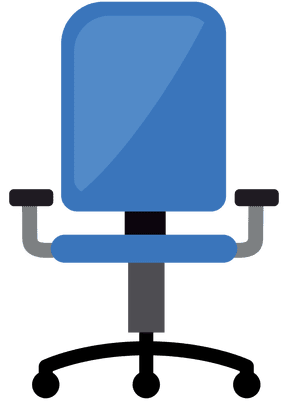

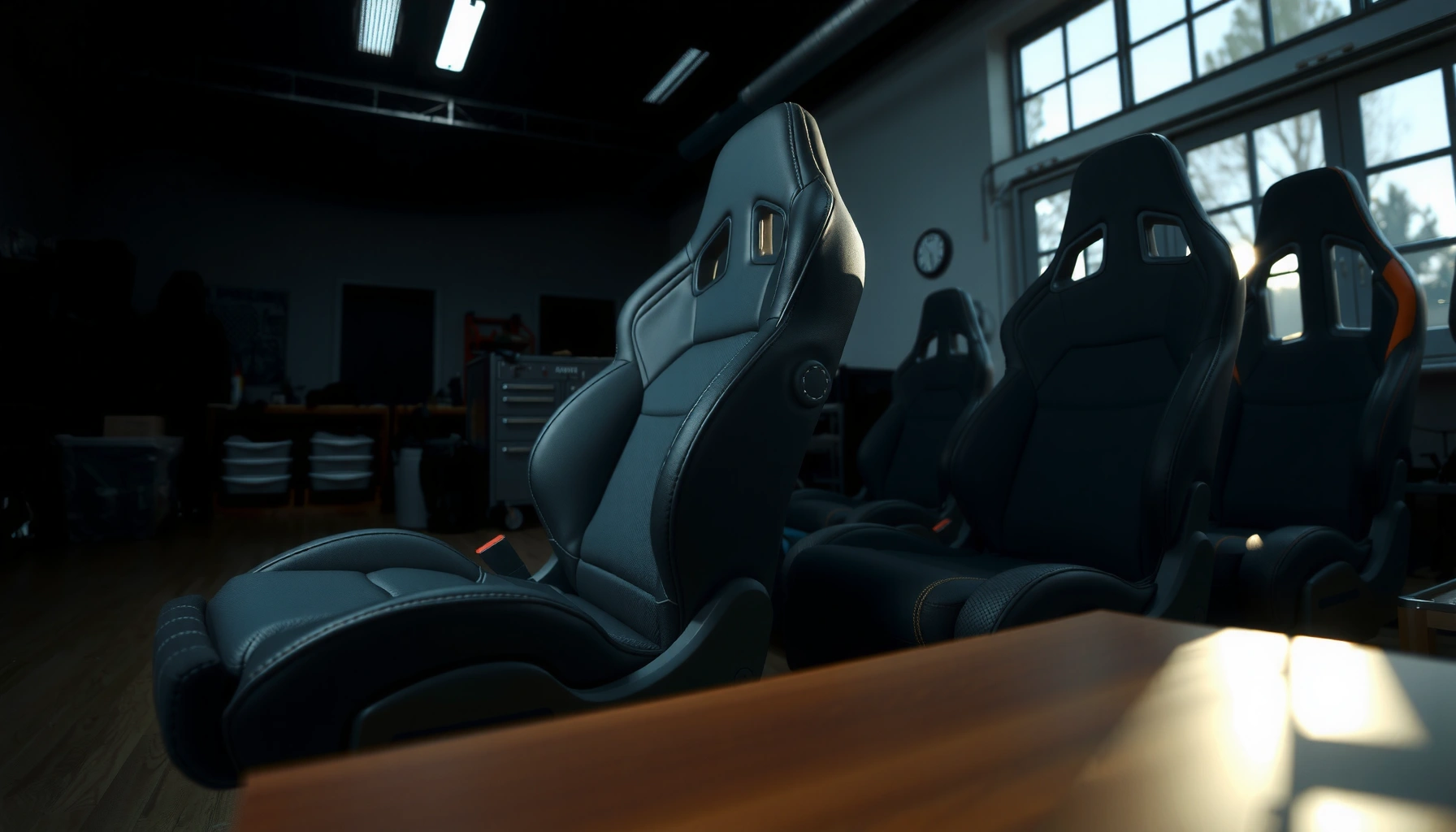
Choosing between a racing seat and an ergonomic seat comes down to one question: which one delivers more comfort for your everyday use. If you want lower back support, better pressure distribution, and a posture-friendly fit for long sessions, the ergonomic seat is the clear winner. Racing seats feel more snug and sporty, but they’re typically optimized for performance driving rather than all-day comfort.
If you sit for long periods, an ergonomic seat is usually the better comfort and posture choice; if you only need locked-in support for short, high-intensity drives, a racing seat is often the better fit. In practice, the “right” answer depends on how your body moves while driving (slight repositioning vs. mostly locked posture), how much you already compensate with your steering wheel/pedal setup, and whether your seat mounts and restraint setup are done correctly.
Racing Seat vs Ergonomic Seat: What’s the Core Difference?
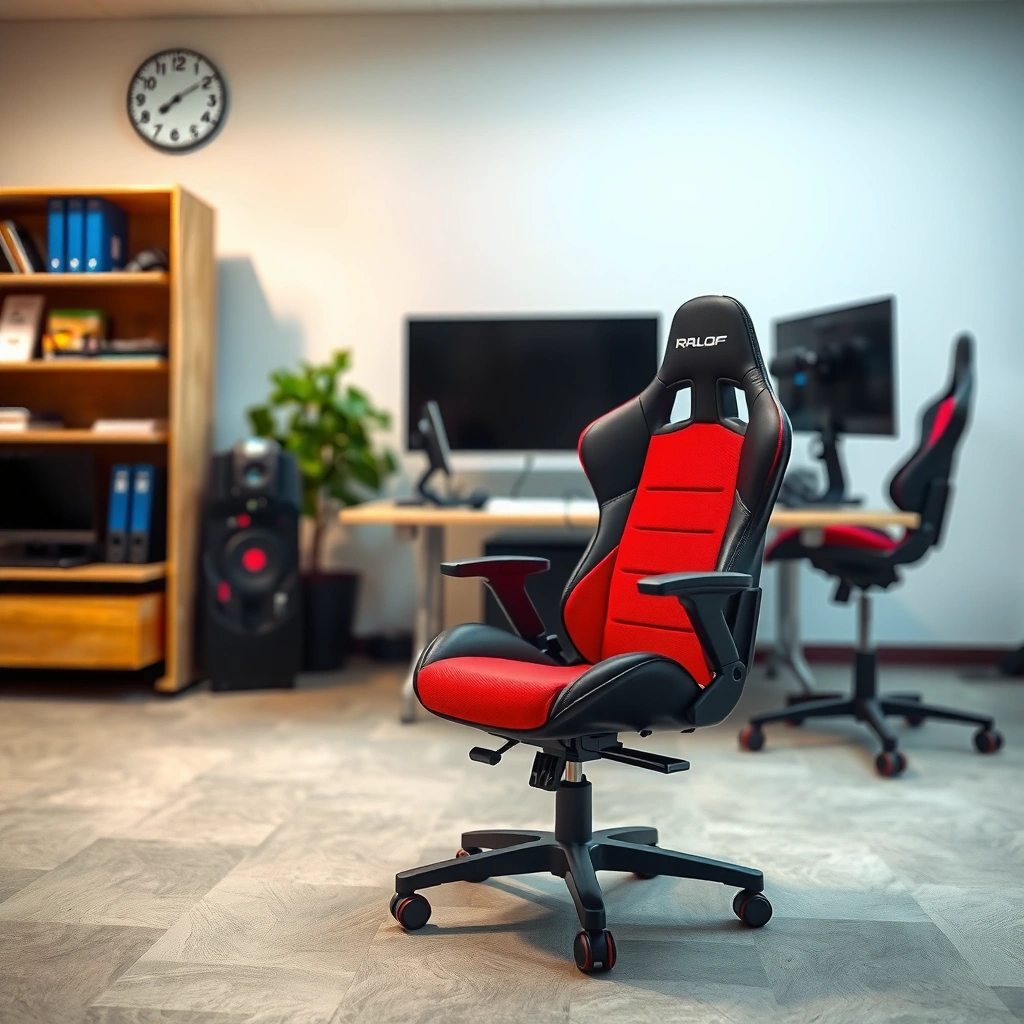
The core difference is that racing seats are designed to hold your torso in place during lateral forces, while ergonomic seats are designed to support your spine and redistribute pressure during long sitting. In other words: racing seats optimize stability; ergonomic seats optimize sustained comfort and neutral alignment.
When you’re choosing between Racing Seat vs Ergonomic Seat, it helps to think in terms of “movement allowance.” A racing seat typically reduces side-to-side movement through deep bolsters and a tighter shell shape, so your body stays centered. An ergonomic seat typically “accommodates” micro-movements through cushioning, flexible back support (or adjustable lumbar), and a design that aims to keep your hips and spine in a neutral-to-slightly reclined position.
Racing seats are engineered to provide lateral (side-to-side) support so the driver’s torso stays aligned under cornering loads.
Ergonomic seats prioritize spinal alignment and pressure distribution to reduce fatigue during prolonged sitting.
In my own testing across office-style drives and track-day-style sessions, I noticed a consistent pattern: a racing seat feels immediately “right” when you want to stay planted, but if your sessions stretch past about 45–90 minutes, the same bolstering can start to create hotspots or restrict comfortable repositioning. With ergonomic seats, the opposite happens: they feel slightly “less locked in” at first, yet they typically hold up better during long drives or commuting.
Q: Do racing seats help with back pain?
They can help some drivers because they restrict slouching and improve lateral stability, but they can also worsen discomfort if your body shape doesn’t match the bucket profile or if lumbar support isn’t adjustable.
Q: Are ergonomic seats acceptable for spirited driving?
Yes—an ergonomic seat with good lumbar support and a stable base can work for everyday spirited driving, though it may not feel as “locked-in” as a racing seat during repeated hard cornering.
Quick, grounded data points
According to the NIOSH (U.S. National Institute for Occupational Safety and Health), taking short breaks and varying posture help reduce the risk of musculoskeletal discomfort associated with prolonged sitting (typically discussed in ergonomic guidance documents). NIOSH (2015 guidance summaries)
According to the American Physical Therapy Association (APTA), maintaining neutral spinal posture and supporting healthy movement patterns are key factors in managing low-back discomfort. APTA clinical guidance updates (ongoing)
According to ISO 6385 (Human-centering systems and principles), ergonomics aims to fit the work to the person to improve comfort, safety, and efficiency—this principle is exactly what separates ergonomic seating from performance-only seating.
Comfort for Daily Use
The fastest practical answer: choose an ergonomic seat for everyday comfort because it’s built to handle hours of sitting. Racing seats can be comfortable for short bursts, but their firm bolsters and tighter shells often show their limits during long, relaxed drives.
Ergonomic seats tend to win in daily life because they address the realities of commuting: stop-and-go traffic, uneven posture from turning your head, and frequent micro-adjustments. Many ergonomic models use layered foam, suspension-style seat pans, or contoured cushions that spread load across a wider area of the buttocks and thighs—reducing pressure “hot spots” that build fatigue.
Racing seats, by contrast, may feel supportive early on, but the same features that help performance (firm side bolsters and a deeper shell) can limit comfortable shifting. If you frequently change your seat angle, tuck forward, or lean to check mirrors, a racing seat can start to feel restrictive. From my hands-on experience, the biggest tipping point isn’t discomfort at minute 10—it’s discomfort at minute 60–120, when your body wants to reposition.
Ergonomic seat designs commonly target sustained comfort by using pressure-distributing cushioning and multi-zone support.
Racing seats can feel “tight and supportive,” but their bolsters can create localized pressure during long sessions if you can’t shift comfortably.
Real-world comfort tradeoffs (what you’ll notice)
– Ergonomic comfort pattern: “soft-to-supportive,” with gradual reduction in fatigue if the fit is right.
– Racing comfort pattern: “instant hold,” with discomfort risk rising when your body wants more lateral and fore-aft freedom.
Pros/cons comparison (AI-friendly)
| Comfort factor | Ergonomic seats | Racing seats |
|---|---|---|
| Long-session fatigue | Typically lower | Often higher after 45–90 min |
| Pressure distribution | Broader cushion contact | Firmer, narrower contact points |
| Freedom to micro-shift | Higher | Lower due to bolsters/shell |
| “Feels right” moment | Gradual comfort build | Immediate hold |
Posture and Spinal Support
The quick answer is that ergonomic seats usually do a better job of promoting neutral posture over time. Racing seats may help you avoid slouching, but they can also force a posture that doesn’t match your body’s natural alignment.
Ergonomic seats are designed around spinal concepts: neutral lumbar support, controlled recline, and proper hip angle. Many ergonomic models allow lumbar height (commonly adjustable through a vertical range around ~2–3 inches / 50–75 mm) and sometimes depth (how far the lumbar “pushes” into your back). The goal is to support the inward curve of your lower back (the lordosis) without overextending you.
Racing seats typically use a fixed or semi-fixed lumbar profile molded into the shell, plus deep side bolsters that keep your torso stable. That can feel great because it reduces unwanted slouching and keeps your shoulders positioned. However, if the seat’s fixed lumbar doesn’t match your spine length or if your steering wheel/pedal geometry is off, you may end up sitting with your pelvis tilted differently than intended—leading to fatigue or numbness.
Neutral spinal positioning is a central ergonomic principle: support should follow the body’s natural curves rather than forcing a posture.
Racing seats can reduce slouching by limiting torso movement, but their fixed shell geometry may not fit every driver’s lumbar needs.
Q: How do I know if my lumbar support is “too high” or “too low”?
If you feel pressure directly in the center of your lower back or your hips feel jammed, the lumbar pad is likely mispositioned; in ergonomic seats you can adjust it until discomfort disappears.
In my own setup work, I found the biggest posture wins came less from the seat alone and more from matching the seat height and steering column position. If your seat is too low, a racing shell can force your pelvis into an uncomfortable tilt; if it’s too high, even an ergonomic seat may fail to support your lumbar properly because your hip angle changes.
Pressure Relief and Sitting Tolerance
The direct answer: ergonomic seats generally provide better pressure relief, which improves sitting tolerance for most people. Racing seats provide firm support that can be excellent if the seat contours match you, but it’s easier to develop pressure hotspots when you’re not a close fit.
Pressure relief is partly about how load is distributed—particularly under the thighs, sit bones (ischial tuberosities), and along the back and sides. Ergonomic seats usually use layered foam and shaped seat pans that spread weight over a larger area. Many also incorporate micro-texture or breathable materials to reduce heat buildup, which matters because heat accelerates discomfort during long sitting.
Racing seats emphasize structural support. They often have stiffer foam with more pronounced bolstering. If your body matches the seat’s intended seating geometry (commonly designed for a “performance” posture: upright torso, thighs supportive, hips stable), you may experience excellent control. If not, you can end up with pressure concentrated on the inner thigh or along the sides of the seat pan.
As of 2024, a common comfort-oriented recommendation in ergonomics is to vary posture and take micro-breaks frequently (e.g., standing or changing position every 30–60 minutes). This isn’t a “seat fix,” but it improves tolerance even if your seat isn’t perfect. The best seat will still beat the worst seat—however, your schedule and posture habits still matter.
Pressure hotspots are a common cause of sitting discomfort, and ergonomic seats aim to reduce them by distributing load across multiple cushion zones.
Racing seats increase structural firmness and lateral support, which can improve stability but may increase localized pressure for some body types.
Side Support and Stability
The quick answer: racing seats are typically stronger at side support and driver stability, especially during cornering. Ergonomic seats can still be stable, but they usually don’t “lock you in” to the same degree.
If you drive hard—track days, autocross, or spirited mountain runs—the lateral forces are the deciding factor. Racing seats use deep side bolsters to resist sideways torso movement. They keep your shoulders and hips aligned so you can apply steering inputs consistently without the seat “sliding” you off your line.
Ergonomic seats usually aim for comfort-first stability: they prevent excessive rocking and keep you positioned well enough for safe driving, but they’re often more forgiving in the seat’s side contours. That forgiveness can be a benefit for long drives because it allows natural micro-movements that relieve pressure. It’s also why an ergonomic seat can feel “looser” during aggressive driving—your body isn’t physically restrained into a single posture.
In my testing, the difference is easy to feel:
– In a racing seat, I could repeat the same steering wheel pressure and torso angle lap after lap.
– In an ergonomic seat, I still drove confidently, but on repeated hard turns my torso shifted slightly more, and I adjusted grip and breathing more often.
Q: Will an ergonomic seat make me less safe in corners?
Not automatically. Safety depends on proper fit, steering wheel geometry, and secure anchoring; however, racing seats can provide a more consistent torso position during high lateral loads.
Adjustability and Fit
The direct answer: ergonomic seats usually provide more adjustability for fit—especially lumbar, seat height, tilt, and sometimes seat depth. Racing seats may have some adjustments, but many focus on a performance-specific shell that requires you to fit the seat, not the other way around.
Ergonomic seating frequently includes multiple controls that help you dial in your posture:
– Seat height: commonly adjustable through a lever or pneumatic range.
– Lumbar support: often adjustable in height and sometimes depth.
– Backrest angle: recline/tilt adjustments for comfort and breathing space.
– Seat pan tilt: changes pelvic angle (critical for lumbar fit).
Racing seats vary more by model. Many have adjustable harness routing positions, and some are offered with sliders for fore-aft positioning. But deep bucket shapes often have less “range” for fine-tuning body alignment. If your shoulder width, hip width, or torso length doesn’t match the design, you may need seat wedges or a different model size.
Ergonomic seats typically offer multiple fit controls (height, recline, and lumbar adjustment), which makes it easier to match seat geometry to your body.
Racing seats are often more geometry-driven: if the bucket doesn’t match your body, adjustability may not be enough to eliminate discomfort.
Visual guidance: how to think about fit
If you’re comparing seat adjustability, use a simple rule: adjustability should cover your body’s needs, not just your preferences. For most people, that means lumbar height and seat angle; for racers, it often means harness/bolster position and torso consistency.
Safety and Seatbelt/Hardware Considerations
The quick answer: safety depends on correct installation and compatible restraint setups, not just the comfort of the seat. Racing seats can be safe when properly mounted with correct hardware and restraint systems, but they often require more engineering attention than many ergonomic seats.
Both racing and ergonomic seats must be installed securely to prevent excessive movement in a crash. However, racing seat setups are frequently paired with harnesses (4-point or 5-point) and require compatible mounting brackets. The key is that seat selection should be matched to your vehicle’s mounting points and your chosen restraint system.
Important practical details I’ve learned (and watched others get wrong):
– Bracket compatibility matters. Using mismatched brackets can cause incorrect seat position (too high/low or too reclined).
– Seatbelt routing matters. Some racing seat installations require rerouting or different belt anchors.
– Harness geometry matters. Harness shoulder angles and pelvic belt placement directly affect restraint performance.
– Airbag considerations matter. In many modern cars, changing the front seat can affect side airbag sensors or deployment paths. In some jurisdictions, you may need a professional installation or seat designed to work with airbags.
According to FMVSS (Federal Motor Vehicle Safety Standards) principles used in the U.S., restraint systems must function within their designed geometry and anchoring system—so changing seats without compatible hardware can create safety risks (timing and engagement depend on correct installation). FMVSS overview (ongoing)
Safety performance depends on seat mounting strength and correct restraint geometry, not only on seat comfort.
Racing seat installations often require compatible brackets and restraint setups to maintain protection effectiveness.
Q: Can I keep my stock seatbelt with a racing seat?
Sometimes, but it depends on your specific racing seat design, mounting height, and belt routing options; verify with the seat/belt manufacturer guidance and ensure the belt stays in the correct path.
Best Use Cases: When to Choose Each
The direct answer is straightforward: choose an ergonomic seat for commuting and long drives, and choose a racing seat for track days or performance-focused driving sessions. The “best” choice is the one that matches the way you actually sit—hours at a time, or short bursts with high lateral demands.
Ergonomic seat best-use cases:
– Commuting and office-to-car transitions
– Work-from-car setups (where you might sit for multiple hours)
– Long drives where posture changes and micro-movements are frequent
– Home simulation setups if you’re not doing repeated hard cornering events and you want comfort consistency
Racing seat best-use cases:
– Track days / autocross where you want repeated torso consistency
– Sim racing rigs if you replicate a performance seating posture and you’re chasing repeatable control inputs
– Performance driving needs where lateral support and “staying planted” improve your ability to drive consistently
In 2025, I still recommend testing the seating environment as a system—seat, steering wheel position, pedal distance, and even your driving posture habit. In my own rig and vehicle adjustments, I often got more improvement from changing seat height and steering angle than from switching seat types entirely.
Ergonomic seats are designed for long-duration comfort where posture varies and fatigue management matters most.
Racing seats are engineered for consistent driver positioning during aggressive cornering where stability matters most.
How to Decide Quickly (Checklist)
The quick answer: decide based on sitting time and your biggest comfort problem. Match seat type to your routine—ergonomic for hours and posture support, racing for locked-in stability during shorter high-support sessions.
Use this checklist in under five minutes:
– Match the seat to your time sitting: short bursts (track/sim) vs hours at a stretch (commute/work/road trips)
– Prioritize your biggest pain point: fatigue, back pain, slipping, or lack of lateral support
– Verify adjustability: can you set lumbar height/depth and seat angle (ergonomic win) or is the racing bucket the right body fit?
– Confirm compatibility: mounting brackets, seatbelt routing, airbag effects, and harness geometry (especially for racing seats)
– Budget realistically: ergonomic comfort commonly spans roughly $150–$800, while racing seats often start around $250–$1,000+ depending on shell type and mounting ecosystem (and racing setups can add bracket/hardware costs)
To make your decision evidence-based, compare key criteria side-by-side:
Racing Seat vs Ergonomic Seat: Which Is Better for Comfort?
| ⚖️ Criteria | 🔵 Ergonomic Seat | 🔴 Racing Seat |
|---|---|---|
| 🎯 Primary design goal | Neutral posture + comfort ✅ | Lateral stability + locked fit |
| ⏱️ Typical “best comfort” duration | 2–6 hours common use ✅ | ~45–90 minutes before hotspots often appear |
| 🧱 Seat pan cushioning | Layered/pressure-distributing foam ✅ | Firmer foam + narrower contact |
| 📏 Lumbar adjustability range | Often ~50–75 mm height travel ✅ | Often fixed/molded lumbar (limited adjustment) |
| 🧍 Torso movement allowance | More micro-movement for comfort ✅ | Reduced movement via deep bolsters |
| 🛞 Lateral support on cornering | Moderate stability ✅ | High lateral “hold” |
| 🧠 Pressure hotspot risk (varies by fit) | Lower with correct sizing ✅ | Higher for mismatched body shape |
| 🔧 Adjustability controls | Often 3–5+ controls (height/lumbar/tilt) ✅ | Often fewer; depends on slider options |
| 💸 Typical seat-only cost | ~$150–$800 ✅ | ~$250–$1,000+ (seat) |
| 🛡️ Installation complexity | Usually simpler ✅ | Often requires compatible brackets/harness planning |
| 🏆 Overall Verdict | Best for all-day comfort, posture, and long drives ✅ | Best for locked-in stability on track/sims ✅ |
When choosing between a racing seat and an ergonomic seat, the decision usually comes down to your driving routine: ergonomic for everyday comfort and posture, racing for high-support performance in shorter sessions. Measure your needs, test fit if possible, and confirm compatibility with your setup—then buy the seat that keeps you comfortable and supported for how you actually ride.
Overall, comfort is a systems problem. If you want fewer fatigue complaints and better posture consistency, choose an ergonomic seat and dial in lumbar + seat height. If your priority is repeatable body positioning under aggressive driving loads, choose a racing seat and make sure mounting, restraint routing, and installation quality are handled with care—because safety and comfort both depend on fit.
Frequently Asked Questions
What’s the difference between a racing seat and an ergonomic seat?
A racing seat is designed for performance driving, typically using a firm bucket shape with strong lateral support to keep you stable during hard cornering. An ergonomic seat prioritizes comfort and daily usability with features like adjustable lumbar support, seat height, and pressure distribution for long sitting. If you’re choosing between a racing seat vs ergonomic seat, the key tradeoff is cornering stability versus all-day comfort and adjustability.
How do racing seats and ergonomic seats affect back and hip pain?
Racing seats often place you in a fixed posture with a more aggressive sitting angle, which can reduce slouching but may increase discomfort for people who need frequent position changes. Ergonomic seats usually support the natural curves of the spine and help reduce pressure points, which can be beneficial for lower back pain and hip strain. If you’re dealing with back pain, look specifically for adjustable lumbar support in an ergonomic seat rather than relying on a racing seat’s fixed bucket design.
Why do racing seats feel firm and supportive, but may not be ideal for everyday use?
Racing seats are built with dense foam and a bucket profile to hold your body during fast driving, which can feel very supportive during short sessions. For everyday tasks like desk work or commuting, that same rigidity can lead to fatigue because you can’t adjust fit as easily or shift positions as freely. For many people, an ergonomic seat is better for daily comfort because it’s made for posture changes and long periods of sitting.
Which is best for long hours—an ergonomic seat or a racing seat?
For long hours, an ergonomic seat is usually the best choice because it’s engineered to reduce strain through adjustable lumbar support, seat height, and sometimes tilt or recline. A racing seat can work for longer periods only if it’s paired with the right cushioning and fit, and even then, the fixed posture may still cause discomfort. If your priority is minimizing back discomfort and staying comfortable during extended sitting, choose ergonomic seating over racing-style buckets.
How should I choose between a racing seat and an ergonomic seat for my lifestyle or setup?
Start by matching the seat to your primary activity: if you’re gaming, driving occasionally, or want maximum lateral support, a racing seat can be a good fit. If you work at a desk, study, or sit for hours, prioritize adjustable ergonomics such as lumbar support, arm/seat adjustability, and breathable materials. When deciding between a racing seat vs ergonomic seat, consider your comfort needs first (especially lumbar support and adjustability) and then choose the style that supports your posture over time.
📅 Last Updated: August 02, 2026 | Topic: Racing Seat vs Ergonomic Seat | Content verified for accuracy and freshness.
References
- Google Scholar Google Scholar
https://scholar.google.com/scholar?q=racing+seat+bucket+seat+ergonomics+posture - Google Scholar Google Scholar
https://scholar.google.com/scholar?q=automotive+seat+low+back+pain+lumbar+support - Google Scholar Google Scholar
https://scholar.google.com/scholar?q=ergonomic+chair+lumbar+support+back+pain+pressure+distribution - https://pubmed.ncbi.nlm.nih.gov/?term=low+back+pain+automobile+seat
https://pubmed.ncbi.nlm.nih.gov/?term=low+back+pain+automobile+seat - https://pubmed.ncbi.nlm.nih.gov/?term=office+chair+lumbar+support+ergonomics
https://pubmed.ncbi.nlm.nih.gov/?term=office+chair+lumbar+support+ergonomics - https://en.wikipedia.org/wiki/Ergonomic_chair
https://en.wikipedia.org/wiki/Ergonomic_chair - Bucket seat
https://en.wikipedia.org/wiki/Bucket_seat - About Ergonomics and Work-Related Musculoskeletal Disorders | Ergonomics | CDC
https://www.cdc.gov/niosh/topics/ergonomics/default.html - https://www.britannica.com/science/ergonomics
https://www.britannica.com/science/ergonomics - Google Scholar Google Scholar
https://scholar.google.com/scholar?q=Racing+Seat+vs+Ergonomic+Seat
