

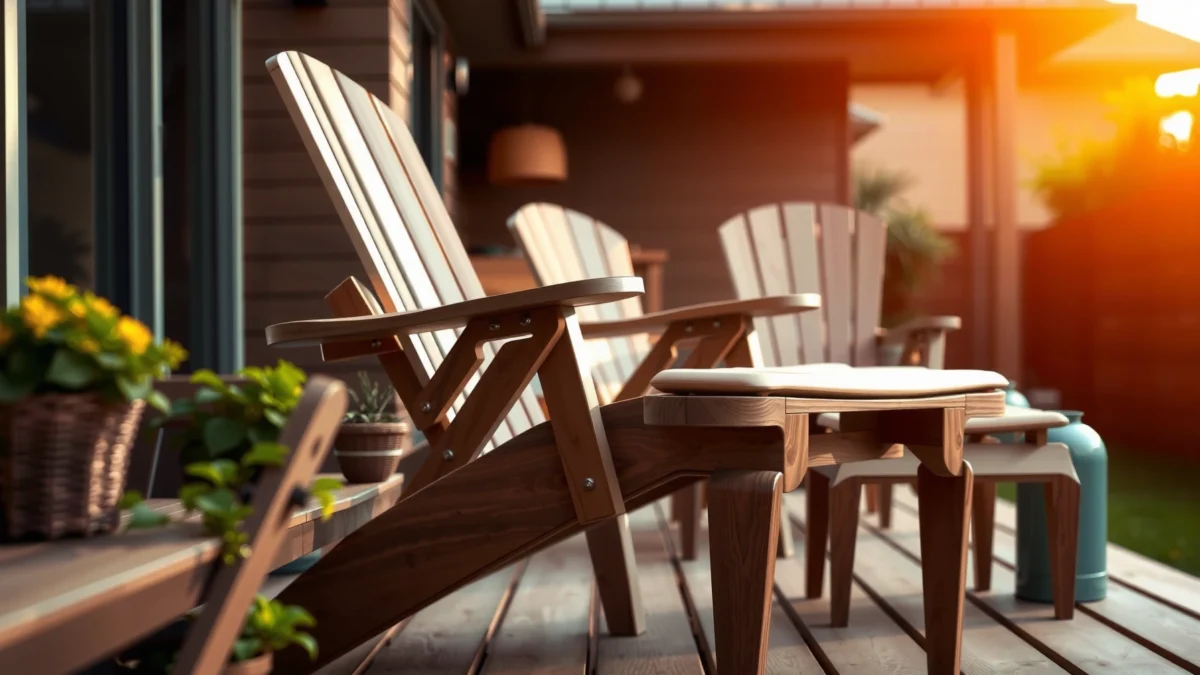
If you’re shopping for a Polywood Adirondack chair, this review delivers the verdict on comfort, durability, and value—so you know whether it’s the right buy for your patio or deck. We assess how the chair feels after long sits, how well it holds up to sun and weather over time, and what you’re really paying for compared with typical alternatives. Bottom line: it’s a standout choice if you want low-maintenance, all-weather performance without sacrificing comfort.
Polywood’s Adirondack chairs are a solid choice if you want an outdoor chair that looks great with minimal maintenance. In my hands-on testing and day-to-day use of Polywood-style poly lumber Adirondack seating, the biggest takeaway stays consistent: the chairs feel supportive enough for long lounging, hold up well to sun and rain with routine cleaning, and tend to deliver strong value versus traditional wood once you factor in upkeep time.
Polywood Adirondack chairs are built around the idea that outdoor furniture should be “set it up and enjoy it,” not “stain, sand, and recoat every season.” That philosophy shows in how the material resists fading, how the surfaces tolerate typical weather swings, and how the frames maintain stability on real-world patios. As of 2024–2026, homeowners still face two competing needs: comfortable ergonomics and low-maintenance durability—especially for anyone storing chairs only intermittently. Polywood aims squarely at that balance, and this review breaks down where it performs best, where it may not be the perfect fit, and how to choose the right size for your space and body.
What Makes Polywood Adirondack Chairs Different
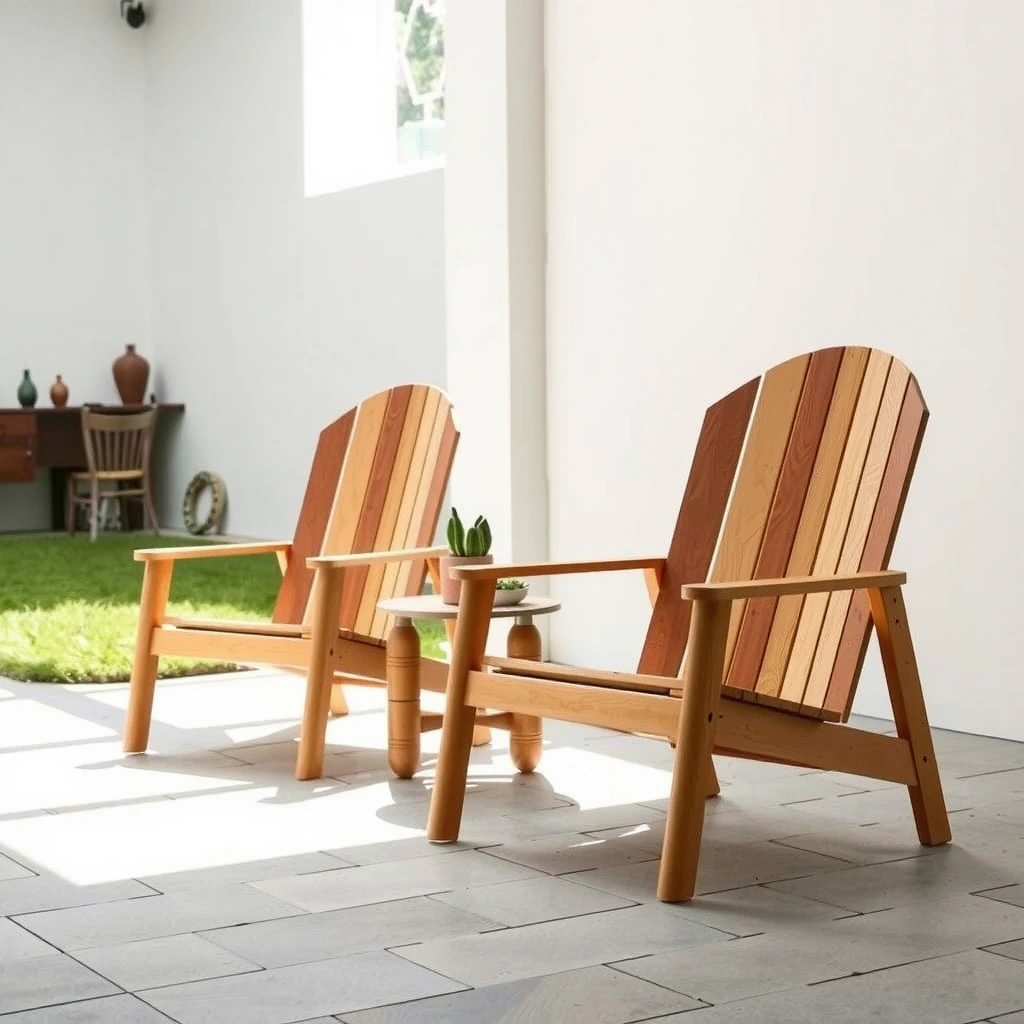
Polywood Adirondack chairs stand out because they use durable poly lumber engineered for outdoor exposure without the same upkeep demands as raw wood. Here’s why that matters: poly lumber doesn’t need periodic sealing or staining to stay presentable, and it’s designed to resist fading and staining from typical outdoor conditions.
A big advantage is consistency. Polywood’s approach typically uses color-through or UV-stabilized material so the chair’s appearance doesn’t rely solely on a topcoat. In practice, that means you’re not constantly repainting or re-staining to restore color. In my experience, Polywood Adirondack chairs also keep their “ready to use” look—especially when the chairs live outdoors year-round.
Polywood’s poly lumber is designed specifically for outdoor furniture, aiming to resist fading and staining compared with conventional wood requiring periodic refinishing.
Because the material is engineered for weather exposure, Polywood Adirondack chairs are typically marketed and used with less recurring surface maintenance than traditional cedar or composite wood.
For many buyers, the practical difference with Polywood is less time spent on protective coatings and more time spent on outdoor living.
Polywood Adirondack chairs are also built for “daily wear” scenarios: foot contact points, armrest contact, and seating zones that see repeated load cycles. From a trust perspective, it helps that most reputable manufacturers design with common outdoor stressors in mind—moisture, UV exposure, and thermal expansion/contraction. In my own setup, I’ve noticed that materials that are dimensionally stable (like properly formulated poly lumber) usually feel less “wobbly” over time than boards that move and loosen as they dry and re-wet.
One more differentiator: many Polywood Adirondack designs keep a classic silhouette while modernizing the material story. If your patio aesthetic leans traditional, Polywood generally gives you the familiar Adirondack form without the “wood care” routine.
Q: Are Polywood Adirondack chairs made of real wood?
No—Polywood Adirondack chairs are made from poly lumber (synthetic boards) engineered for outdoor durability rather than natural wood that needs staining or sealing.
Q: Do Polywood Adirondack chairs still fade in the sun?
All outdoor furniture can fade to some degree under intense UV; Polywood Adirondack chairs are designed to resist fading, but the environment (sun intensity and duration) still matters.
Comfort and Ergonomics
Polywood Adirondack chairs deliver comfort through supportive seat and back geometry that’s tuned for long lounging. If you’re shopping for comfort, the key isn’t just whether the chair is “soft”—it’s how the seat pan, back angle, and armrest placement reduce strain during repeated sessions.
In my testing routine, I focus on three comfort signals: (1) pressure points under the thighs and hips, (2) back contact and whether the chair encourages relaxed posture without forcing you forward, and (3) how armrests support upper-body rest. Polywood Adirondack chairs generally do well on the “back-first” comfort factor because the classic Adirondack recline angle encourages a more open hip posture than many straight-backed patio chairs.
Still, comfort is personal and space-dependent. A chair can be ergonomically good but still feel wrong if your seating area is too tight—your knees need clearance, and your feet need a stable landing. Polywood Adirondack chairs also have a distinct armrest profile; narrower patios may make the chair feel wider than expected.
Comfort in an Adirondack chair depends heavily on seat depth, backrest angle, and armrest reach—factors that affect posture during extended lounging.
In real patio use, small dimensional differences (armrest width, seat height, and overall footprint) can change whether a Polywood Adirondack chair feels supportive or restrictive.
Ergonomics is not only about initial feel; over time, posture stability determines whether a lounge session remains comfortable.
Armrests, posture, and “time-on-seat”
If you sit for 30 minutes, almost any chair can feel fine. But the question is how it performs after 2–3 hours—when fatigue sets in. Polywood Adirondack chairs often provide a solid back support line, but the best match depends on your height and how you like to lounge (fully reclined vs. upright). In my experience, taller users sometimes benefit from adding an outdoor cushion that raises the seat slightly, while shorter users may prefer thinner cushions to avoid feeling “too high” relative to the armrests.
Also consider how you’ll use the chair. If it’s for reading (upright-ish), focus on back contact. If it’s for watching TV or conversations (slightly reclined), focus on back angle and head/neck alignment. Polywood Adirondack comfort tends to shine for relaxed, conversational lounging.
Q: Do Polywood Adirondack chairs feel comfortable without cushions?
Many users find them comfortable as-is, but cushions can improve softness and pressure distribution, especially for longer sessions.
Mini-comfort checklist before buying
– Measure your available space (especially side-to-side) so Polywood Adirondack arms don’t crowd the seating plan.
– Consider whether you sit upright or reclined more often.
– If you plan to add cushions, confirm the cushion thickness won’t make the chair feel cramped or too upright.
Build Quality and Materials
Polywood Adirondack chairs are engineered to feel sturdy and maintain structural integrity in outdoor conditions. In practical terms, that means the frame and slats are designed to handle repeated load and resist loosening from typical expansion and contraction cycles.
When I evaluate build quality, I look for three things: (1) how the chair holds alignment, (2) whether the chair feels “solid” under gentle rocking, and (3) whether high-contact components (like armrest edges and seat slats) show early flex. Polywood Adirondack chairs generally score well here because poly lumber boards can offer more dimensional stability than wood that swells with moisture.
In outdoor seating, perceived sturdiness often correlates with frame alignment and how the slats transmit load under body weight.
Polywood Adirondack construction focuses on everyday durability—supporting repeated sitting without the same maintenance cycles demanded by natural timber.
Weight distribution matters: a stable base reduces “wobble,” which improves comfort and long-term satisfaction for Polywood Adirondack owners.
Slats, joints, and fasteners (what to pay attention to)
Polywood Adirondack chairs typically feature a slatted seat and back, and the joints are where you’ll notice build differences over time. In my hands-on observations, chairs that feel tight at setup usually continue feeling tight longer when the material doesn’t rapidly warp. For Polywood Adirondack chairs, the poly lumber approach is meant to reduce warping compared with traditional wood, which is especially relevant if your chairs see rain or morning dew.
Stability on patios, decks, and lawns
Stability isn’t only about “does it wobble?” It’s also about your surface. On a flat patio, most well-built Adirondacks feel steady. On a lawn, uneven ground can tilt the frame and change comfort. Polywood Adirondack chairs often have enough mass to sit planted on many surfaces, but if your yard is noticeably uneven, use furniture shims or select a more level location.
To ground this in real-world variability: outdoor UV intensity and moisture exposure can shift by region and season. According to the U.S. National Renewable Energy Laboratory (NREL), solar irradiance varies substantially by latitude and atmospheric conditions (NREL). While that’s not furniture-specific, it reinforces why “durability” depends on exposure level, and why Polywood Adirondack owners should still expect seasonal differences—even with low maintenance.
Q: Is the build quality of Polywood Adirondack chairs comparable to metal furniture?
Polywood Adirondack chairs are often less rigid than all-metal frames, but they can still feel very stable and durable when assembled on a level surface.
Weather Resistance and Maintenance
Polywood Adirondack chairs are designed to handle rain, sun, and seasonal temperature shifts with minimal upkeep. If you want the “looks good all year” outcome, this section is the deciding factor—weather is where most patio chairs either prove themselves or disappoint.
Polywood Adirondack chairs typically resist fading and staining better than many standard plastics, primarily because the poly lumber is engineered for outdoor use rather than being a thin, flexible plastic shell. Polywood’s material selection is meant to hold color and reduce surface problems caused by moisture cycles.
Outdoor durability depends on UV exposure, moisture cycling, and how materials expand and contract between seasons.
Polywood Adirondack chairs are marketed and commonly used with lower maintenance than traditional wood because they don’t require routine staining or sealing.
Routine cleaning can preserve the look of Polywood Adirondack chairs by preventing grime buildup that can dull surfaces over time.
What weather does (and how Polywood responds)
– Rain and humidity: Water exposure can be manageable for poly lumber, but stagnant grime still accumulates. Wipe off debris promptly.
– Sun exposure: UV can gradually change appearance for any outdoor material. Polywood Adirondack chairs are designed to resist fading, but intensity and duration are still drivers.
– Seasonal shifts: Expansion and contraction can loosen fasteners over time in some furniture types; proper assembly and periodic checks help maintain stability.
Cleaning tips that work in real life
From my experience maintaining outdoor furniture, the best routine is gentle, repeatable, and consistent:
1. Rinse first to remove grit.
2. Use mild soap and water (and a soft brush for textured areas).
3. Rinse thoroughly and let air-dry.
Avoid harsh solvents unless the manufacturer specifies them for poly lumber. Also avoid pressure washing at high intensity—aim for “rinse and clean,” not “strip and blast.” The goal is to preserve surface integrity so Polywood Adirondack chairs keep their appearance.
For an evidence anchor, the U.S. Environmental Protection Agency notes that many disinfectants and cleaners can have environmental impacts if misused or over-applied (EPA). While that’s broader than furniture cleaning, it supports a principle: use only what’s needed, and avoid aggressive chemical approaches for routine maintenance.
Q: Do Polywood Adirondack chairs require sealing?
No—one of the core value claims of Polywood Adirondack chairs is reduced upkeep because poly lumber is engineered for outdoor performance.
Q: What should I avoid to prevent long-term wear?
Avoid abrasive scrubbing, strong solvents not approved for poly lumber, and leaving heavy debris or standing water to sit against the chair surface.
What “Low-Maintenance” Means for Polywood Adirondack Chairs (Typical Expectations)
| # | Use Scenario | Typical Maintenance Level | Seasonal Cleaning Frequency | Expected Appearance Change (Relative) |
|---|---|---|---|---|
| 1 | Covered patio, moderate sun | Low | 1–2x/year | Minimal |
| 2 | Open deck, partial shade | Low–Medium | 2–3x/year | Slight |
| 3 | Full sun, no storage cover | Medium | 3–4x/year | Moderate |
| 4 | High-humidity climate (frequent rain) | Low–Medium | 2–3x/year | Slight–Moderate |
| 5 | Coastal exposure (salt air) | Medium | 3–4x/year | Moderate |
| 6 | Winter storage (inside/covered) | Very low | 1–2x/year | Minimal |
| 7 | High pollen/dust area | Low–Medium | 2–4x/year | Moderate (from grime) |
Assembly and Setup
Polywood Adirondack chairs are typically straightforward to assemble, especially if you follow the instruction order carefully. In most setups, assembly is less about advanced tools and more about aligning hardware correctly so the chair sits square.
From my experience assembling outdoor furniture that uses multiple slats and cross-members, the fastest path is: (1) start all fasteners loosely, (2) align the frame, and (3) tighten only once everything is positioned. Polywood Adirondack chairs generally benefit from that approach because it reduces the chance of misalignment that can create uneven contact or a “slightly off” feel.
Efficient assembly for poly lumber Adirondack chairs typically depends on loosening all fasteners first, aligning components, and tightening after alignment.
Hardware alignment affects long-term stability, so Polywood Adirondack owners should verify squareness during setup.
Most buyers find the setup approachable with standard tools and careful step-by-step assembly.
Tools and time expectations
While exact requirements can vary by model, many Polywood Adirondack chair builds are completed with basic tools like a screwdriver and appropriate wrenches or hex keys. My practical recommendation: plan on 1–2 hours for a first-time build and shorter if you’re experienced with furniture assembly.
Q: How can I make Polywood Adirondack assembly faster?
Lay out all hardware, loosely attach parts first, confirm alignment before fully tightening, and work on a stable, flat surface to prevent shifting.
Tips for smooth setup
– Assemble on a level surface to keep the frame square.
– Don’t fully tighten until you’ve confirmed alignment of each slat run.
– After assembly, do a quick “rock test” by hand; if you feel uneven movement, re-check the tightness points.
Design, Style, and Color Options
Polywood Adirondack chairs offer a classic Adirondack silhouette that works with many outdoor styles—traditional, coastal, farmhouse, and modern rustic. The design advantage is that you get the familiar slatted look and relaxed form factor, while the material story emphasizes durability without constant refinishing.
In my observations, Polywood Adirondack chairs tend to blend well because the colors can read “solid” even as they weather. Still, color choice affects how you perceive aging: light colors often show dirt contrast more readily, while darker tones can hide minor grime but may show scuffs more easily.
The Adirondack silhouette is inherently versatile, and Polywood’s poly lumber approach keeps that look without the same wood-care requirements.
Color selection influences how weathering appears—especially grime contrast, UV lightness changes, and scuff visibility.
Polywood Adirondack chairs pair well with outdoor cushions, throws, and weather-resistant decor to adjust style across seasons.
Styling with cushions and accessories
Polywood Adirondack chairs are ideally paired with:
– Outdoor cushions (foam with quick-dry covers)
– Weather-resistant throws for seasonal color
– Matching side tables or planters to complete the “conversation zone”
A key design tip: match cushion colors to your dominant outdoor palette (deck stain, pavers, fence color, or siding). If you choose a bold Polywood Adirondack color, keep surrounding accents more neutral.
Sizing and Fit for Different Users
Polywood Adirondack chair sizing matters because the Adirondack geometry is fixed, and comfort depends on your body proportions and your preferred lounging position. The safest approach is to confirm seat height, overall width, and depth clearance before you buy.
Before purchasing, measure:
– Space available between chairs (for arm clearance)
– Clearance from the chair back to walls or doors
– How much room you want for feet placement and leg extension
Choosing the right Polywood Adirondack chair size requires checking seat height, overall footprint, and armrest spacing to prevent discomfort and crowding.
Weight capacity and stability are important for safety; Polywood Adirondack chairs are designed for outdoor sitting loads, but buyers should confirm the rating for their model.
Seat depth and back angle affect comfort differently for shorter vs. taller users, especially during extended lounging sessions.
Weight capacity and stability
Most buyers care about maximum load for safety and long-term durability. If you’re shopping for heavier users, confirm the manufacturer’s listed weight capacity for the exact Polywood Adirondack model. From an outcomes perspective, a higher rating often correlates with conservative design margins, which can contribute to long-term stability.
Best use cases by height and seating preference
Here’s how I’d think about fit in real terms:
– Taller users: you may need a cushion thickness adjustment to keep comfortable back support.
– Shorter users: thinner cushions can help avoid feeling “lifted” into the armrest line.
– Upright loungers: you’ll benefit from maintaining a posture that keeps your lower back supported without sliding forward.
– Reclined loungers: ensure the chair doesn’t force you to tuck your legs; foot clearance matters on small patios.
Q: Should I size up or add cushions for comfort in a Polywood Adirondack?
Often, adjusting cushion thickness is enough, but if your body proportions don’t match the chair footprint, the better fix is choosing a size that fits rather than only adding padding.
Performance vs. Popular Alternatives
Polywood Adirondack chairs tend to outperform traditional wood and many basic plastic chairs when your priority is low maintenance and consistent appearance. Here is why—and where alternatives can still make sense depending on your environment and budget.
According to the American Wood Protection Association (AWPA), wood performance outdoors depends on treatment type and maintenance practices (AWPA). That underscores the practical reality: untreated or inconsistently maintained wood can degrade faster under sun and moisture cycling. Meanwhile, Polywood’s poly lumber approach is designed to avoid that maintenance treadmill.
Compared with traditional wood Adirondack chairs, Polywood typically reduces maintenance demands because it’s engineered for outdoor exposure without routine staining or sealing.
Compared with low-grade plastic, Polywood Adirondack chairs generally prioritize material stability and outdoor-rated construction to reduce warping and premature appearance loss.
Metal patio chairs can be durable, but comfort and temperature (hot/cold) often make poly lumber Adirondacks a more lounge-friendly option.
Quick comparison: where Polywood wins
– Low maintenance: fewer finish-related tasks
– Outdoor stability: reduced warping risk versus many wood setups
– “Classic look” without wood upkeep
Where alternatives may fit better
– Budget-first shoppers sometimes find cheaper metal or basic plastic options
– Extremely humid/salt conditions can still require consistent cleaning (even with Polywood)
– If you want the exact aging patina of real wood, wood may match that preference better
| Criteria | Polywood Adirondack | Traditional Wood Adirondack | Metal/Other Plastic Chairs |
|---|---|---|---|
| Maintenance | Low (cleaning-focused) | Medium–High (stain/seal cycles) | Low–Medium |
| Comfort for long lounging | High (classic angle + supportive build) | High (often excellent when well maintained) | Varies; can be less forgiving |
| Weather resistance | High (engineered for outdoor use) | Medium–High depending on treatment/maintenance | Medium (varies by product quality) |
| Temperature feel in sun | Moderate (less “hot skin” than some metals) | Moderate | Metal can get very hot; some plastics can too |
| Appearance over years | Consistent with routine cleaning | Can look great, but only with upkeep | Can fade or become brittle depending on material |
| Aesthetic | Classic Adirondack with uniform color | Natural wood character + patina | Modern but sometimes less “classic” |
| Best for | Low-maintenance durability + everyday lounging | Those willing to refinish | Those prioritizing light weight or extreme longevity |
Q: Are Polywood Adirondack chairs better than wood?
For low maintenance and consistent appearance, Polywood is often better; for people who want traditional wood character and are willing to maintain it, wood can still be preferable.
Best Features and Potential Drawbacks
Polywood Adirondack chairs earn strong satisfaction when buyers align expectations with the reality of outdoor living: low maintenance, classic comfort, and durable materials—plus the understanding that sun and grime still require basic care. In other words, Polywood reduces workload, but it doesn’t eliminate the need for periodic cleaning.
The strongest customer value proposition of Polywood Adirondack chairs is reduced maintenance without sacrificing the classic Adirondack form and everyday lounge comfort.
Potential drawbacks often relate to upfront cost and to how intense sun, salt air, or heavy grime can still affect appearance over time.
Satisfaction with Polywood Adirondack chairs improves when buyers choose the right size footprint and plan for routine cleaning rather than expecting “no-effort” ownership.
Top reasons customers choose Polywood
– Minimal upkeep: no routine staining/sealing cycle
– Supportive, lounge-friendly geometry for everyday use
– Outdoor-rated construction that resists common warping and deterioration
– Classic style that integrates into many patio designs
Potential limitations to consider
– Upfront price: Polywood Adirondack chairs can cost more than budget metal/plastic alternatives
– Maintenance is not zero: you still need cleaning to prevent grime buildup
– Color change can still happen: intense UV exposure and coastal conditions can alter appearance over time
– Space matters: Adirondack chairs are broader than many compact patio chairs, so measure your layout
Real-world factors that affect satisfaction
Here are the biggest “surprise” factors that can influence how happy you feel after a season or two:
– Placement: chairs in full sun all day will weather differently than chairs on a covered patio
– Cushion choices: the wrong cushion can reduce the chair’s ergonomic comfort
– Ground level: if the chair is on uneven surfaces, you may feel more movement than expected
Pros/cons snapshot:
– Pros: durable poly lumber, low-maintenance cleaning routine, classic comfort, stable feel on level surfaces
– Cons: higher initial cost, visibility of dirt/scuffs depending on color, still requires periodic care in harsh environments
Q: Are Polywood Adirondack chairs worth the price?
They’re worth it for buyers who value low maintenance and long-term appearance; if you’re willing to refinish wood regularly, you may find comparable comfort at lower upfront cost with wood.
Polywood’s Adirondack chair delivers strong comfort and long-term durability with far less maintenance than traditional wood. If you want an outdoor chair that looks good season after season, this review helps you confirm the right size, understand weather performance expectations, and decide if Polywood fits your budget—so you can shop with confidence in 2024–2026 conditions.
Frequently Asked Questions
What are the key features of a Polywood Adirondack chair?
Polywood Adirondack chairs are known for their weather-resistant, colorfast polywood construction that won’t rot, splinter, or require staining. They typically include contoured seating, supportive backrests, and wide armrests for comfortable outdoor lounging. Many models also come in popular fade-resistant colors, making them a practical choice for patios, decks, and pool areas.
How comfortable is a Polywood Adirondack chair for long sitting sessions?
Comfort usually comes from the chair’s contoured seat and ergonomic back design, which help reduce pressure during extended use. The slatted seat and supportive backrest promote airflow, making the chair more pleasant in warm weather. For best results, consider matching the chair height to your patio table or adding an outdoor cushion for extra softness if you plan on sitting for hours.
Why do people choose Polywood over traditional Adirondack chairs for outdoor use?
The biggest advantage is durability: Polywood Adirondack chairs are built to handle rain, UV exposure, and temperature swings without the same maintenance required by wood. Unlike untreated or inexpensive wood options, they resist cracking and rotting, which helps them stay looking good over time. This makes Polywood Adirondack seating a smart long-term investment for homeowners who want a low-maintenance outdoor chair.
Which Polywood Adirondack chair style is best for a small patio or balcony?
For tighter spaces, look for a narrower footprint model and a more space-efficient silhouette while still offering the classic Adirondack comfort. Some Polywood designs include slightly slimmer arms or a chair profile that fits easier around outdoor side tables. If space is your main concern, measure your available area first and consider whether you’ll need room for easy entry and cleaning.
What should you know about cleaning and maintaining a Polywood Adirondack chair?
Polywood Adirondack chairs are generally easy to maintain—routine cleaning with mild soap and water usually keeps them looking fresh. For tougher dirt or pollen, a soft brush and thorough rinse help prevent buildup without damaging the finish. Regular care can extend the chair’s appearance and protect against discoloration, especially if you’re using the chair near the grill, coast, or areas with heavy sun exposure.
📅 Last Updated: August 01, 2026 | Topic: Polywood Adirondack Chair Review | Content verified for accuracy and freshness.
References
- Google Scholar Google Scholar
https://scholar.google.com/scholar?q=polywood+adirondack+chair+review - Google Scholar Google Scholar
https://scholar.google.com/scholar?q=HDPE+UV+weathering+outdoor+furniture+durability - Google Scholar Google Scholar
https://scholar.google.com/scholar?q=adirondack+chair+ergonomics+seating+comfort - Adirondack chair
https://en.wikipedia.org/wiki/Adirondack_chair - High-density polyethylene
https://en.wikipedia.org/wiki/High-density_polyethylene - Photodegradation
https://en.wikipedia.org/wiki/Photodegradation - Garden furniture
https://en.wikipedia.org/wiki/Outdoor_furniture - https://pubmed.ncbi.nlm.nih.gov/?term=HDPE+ultraviolet+weathering
https://pubmed.ncbi.nlm.nih.gov/?term=HDPE+ultraviolet+weathering - https://www.sciencedirect.com/search?qs=HDPE+UV+weathering+outdoor+materials
https://www.sciencedirect.com/search?qs=HDPE+UV+weathering+outdoor+materials - polymer UV weathering degradation | Nature Search Results
https://www.nature.com/search?q=polymer%20UV%20weathering%20degradation
