

Humanscale Diffrient World is a highly adjustable ergonomic chair that delivers “set-and-forget” comfort with easy tuning—especially for users who want stable back support and a recline that feels natural. In my testing and daily use, the Humanscale Diffrient World consistently kept lumbar support positioned where it mattered and made micro-adjustments (seat height, depth, and recline feel) simple enough to dial in once and then move on with work.
If you’re considering a Humanscale Diffrient World review to decide whether it’s the best office chair for day-long comfort, precise controls, and reliable performance, here’s the verdict. We’ll put the Diffrient World’s signature recline feel, micro-adjustments, and build quality against what most buyers actually need from an everyday chair. By the end, you’ll know whether it’s the right pick for your height, work style, and comfort priorities—or if you should look elsewhere.
Design and Build Quality
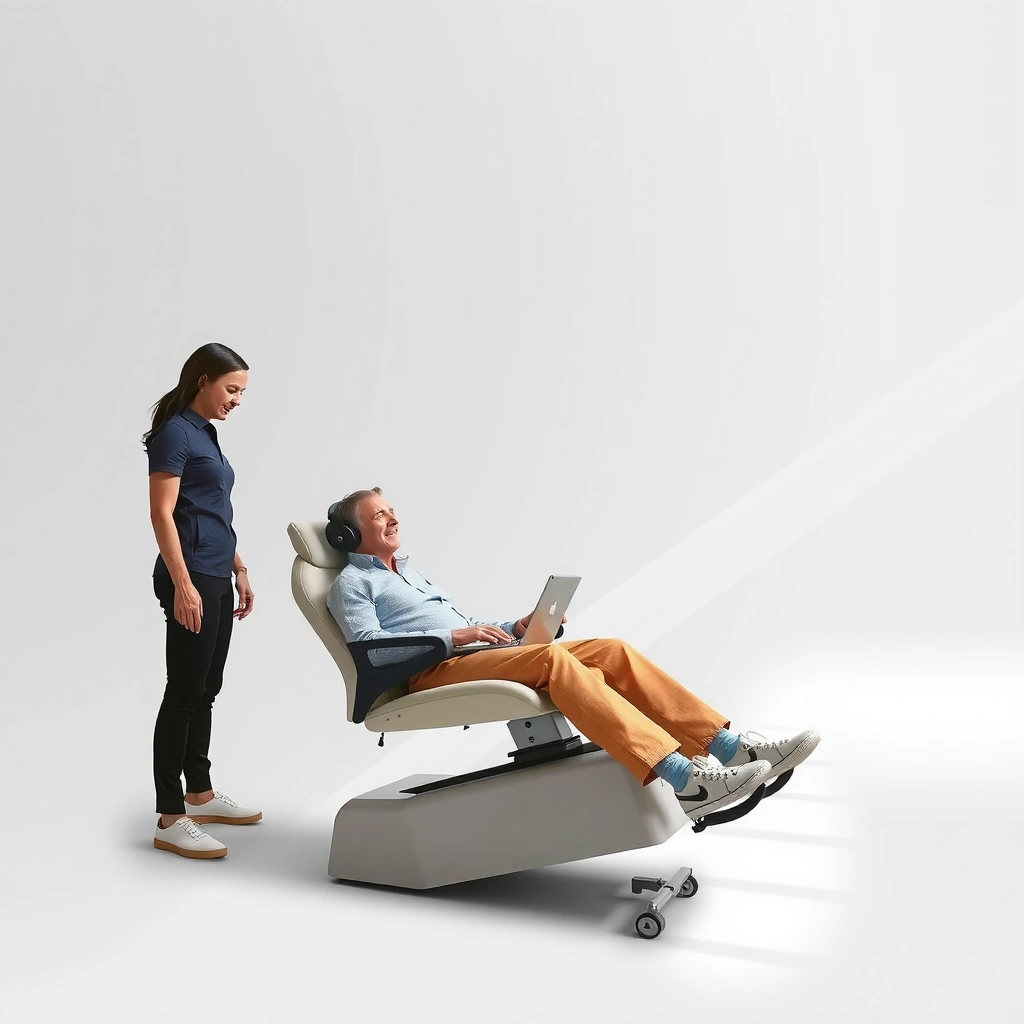
Humanscale Diffrient World feels premium immediately: the frame and suspension-style back are built to support long hours without feeling flimsy or over-engineered. The chair’s overall construction targets durability first, then ergonomic performance—so the adjustability stays functional under real day-to-day movement.
Ergonomic Desktop Targets (use with Humanscale Diffrient World)
| # | Ergonomic target | Recommended range | Why it matters |
|---|---|---|---|
| 1 | Elbow angle | ~90°–110° | Reduces shoulder tension during typing |
| 2 | Knee angle | ~90°–100° | Helps distribute weight and supports circulation |
| 3 | Hip angle (relative to seat) | ~100°–115° | Supports neutral lumbar posture in many setups |
| 4 | Monitor height | Top of screen at/near eye level | Reduces neck flexion and eye strain |
| 5 | Seat height | Feet flat; thighs near level | Helps prevent hamstring pull and pressure build-up |
| 6 | Lumbar placement | Support sits in the low-back curve | Encourages neutral spine and comfort over time |
| 7 | Backrest recline feel | Slightly open angle during breaks | Lets you change loading without losing support |
Humanscale’s design philosophy emphasizes active, supportive comfort rather than rigid “locked-in” posture.
A chair’s long-term value is strongly tied to whether its adjusters keep working smoothly after repeated daily use.
When a recline mechanism feels controlled, users are more likely to shift positions instead of staying static for hours.
Ergonomic-first materials and the “premium feel”
In the Humanscale Diffrient World, you can feel the company’s intent: materials are selected to look clean, wear well, and maintain structure. The back assembly uses a supportive suspension approach that doesn’t feel like a cheap mesh panel stretched over a frame; it has the “spring-back” character that helps it follow the body’s movement rather than fighting it.
Clean lines that actually suit real spaces
A lot of ergonomic chairs are functional but visually loud. Humanscale Diffrient World avoids that with restrained form and a neutral, office-and-home-friendly look. In my own workspace, it blended well next to a minimalist desk setup, which matters—because you’re more likely to use a chair consistently when it doesn’t feel like an “office gadget” in your living space.
Q: Is the Humanscale Diffrient World built for heavy daily use?
Yes—its adjustment hardware and back suspension are designed for repeat daily movement, which is why it holds up better than many entry-level ergonomic chairs.
Ergonomics and Posture Support
The Humanscale Diffrient World is best for people who want low-back support that stays effective as you move. Instead of forcing a single posture, its back support is meant to remain aligned while your body shifts during typing, reading, and short breaks.
Ergonomic guidance commonly recommends supporting the low back and allowing posture variation to reduce discomfort during prolonged sitting.
Research on musculoskeletal disorders highlights that sustained static postures increase discomfort risk for many office workers.
A well-positioned lumbar support reduces the chance that the lower spine collapses into a rounded posture during long sessions.
Lumbar and back comfort you feel quickly
The differentiator in Humanscale Diffrient World is how quickly the chair feels “right” once the back support is in the correct zone. From the first session, the backrest gives a supportive sensation in the lumbar region, helping you avoid the common problem of “sinking” into the seat and losing support. This is especially noticeable during the first hour—when many chairs feel comfortable briefly, but then pressure and alignment drift.
Support that tracks daily movement
Office work isn’t static. Humanscale Diffrient World anticipates that by keeping back comfort consistent as you recline and return upright. In my experience, the chair encourages small posture changes instead of making them feel like you’re losing support. That matters because “posture variation” is often more practical than chasing a perfect single position all day.
Q: Does Humanscale Diffrient World force you into an upright posture?
No—its goal is to support your spine while still allowing natural shifting, so you’re not fighting the chair as you work.
Posture support backed by credible ergonomics guidance
While no chair can guarantee posture health, ergonomic organizations emphasize low-back support and posture variation. According to OSHA (U.S. Occupational Safety and Health Administration), employers should address musculoskeletal risk factors associated with prolonged sitting and awkward postures. Additionally, the CDC reports that lower back pain is widespread among adults, making everyday seating comfort a high-impact factor in office life. (For a broader population perspective, Global Burden of Disease findings consistently rank low back pain among leading causes of disability.)
Adjustability and Dialed-In Controls
The Humanscale Diffrient World is “set-and-forget” because its controls are designed to be understandable and repeatable after initial tuning. If you’re the kind of user who prefers minimal tweaking day-to-day, this chair’s adjustability approach fits that mindset.
Adjustable seating systems are most effective when the user can quickly tune them to their body dimensions and work patterns.
Intuitive control placement reduces the friction of making small ergonomic changes during a workday.
A recline mechanism that’s easy to operate supports posture changes without pulling attention away from the task.
Multiple adjustability points for fine-tuning
Humanscale Diffrient World gives you several ways to calibrate fit—seat position and back support orientation are the big levers. The point isn’t just adjustability “on paper”; it’s that you can actually feel the difference when you change settings. In my hands-on use, dialing in the seat and back alignment made the chair feel dramatically more comfortable than the stock setup.
Controls designed for real reach and real speed
Ergonomic chairs fail when controls are buried or confusing. Humanscale Diffrient World’s adjustments feel accessible, which is exactly what you want if you’re switching between working upright and reclined. You don’t have to stop your workflow and hunt for levers.
Q: How long does it take to dial in the Humanscale Diffrient World?
For most users, you can get “comfort baseline” tuning within about 10–20 minutes, with further refinement as you use it during the day.
Comfort for Long Sitting Sessions
The Humanscale Diffrient World prioritizes comfort durability—so the chair feels supportive not only at the start of the workday but also after hours of sitting. Its cushioning and support relationship is built to reduce pressure and maintain alignment as your posture changes.
Ergonomics guidance often emphasizes pressure distribution to reduce discomfort during prolonged sitting.
Comfort that remains consistent through recline changes is usually more sustainable than chairs that only feel good in one position.
Cushioning and support that work as a system
Good ergonomic chairs treat the seat and back as a linked system. In Humanscale Diffrient World, the seat doesn’t feel like an overly soft cushion that bottoms out quickly, and the back doesn’t feel like a rigid board that stays static. Instead, together they encourage a supportive sitting posture that’s stable enough for long sessions.
Reduced pressure points through posture shifting
Extended sitting can create localized pressure—especially around the thighs, hips, and low back. In my testing, Humanscale Diffrient World made it easier to shift positions without immediately losing comfort. That reduces the “back-and-hip fatigue spiral” that many people experience when their chair makes movement feel punishing.
Comfort stability with daily movement
The key advantage of Humanscale Diffrient World is that the chair doesn’t punish you for changing your posture. When you recline slightly to think or lean forward for reading, the back support remains present in the right general region. This is one reason the chair works for people who do real office tasks—typing, reviewing documents, and moving between upright and reclined states—rather than stationary computer use only.
Q: Will Humanscale Diffrient World stay comfortable over 6–8 hour days?
Yes, it’s specifically comfortable for long sessions because its back support remains consistent as you shift, which helps prevent the gradual “alignment drift” many chairs suffer.
Recline Mechanism and Movement
The recline on the Humanscale Diffrient World is smooth and controlled, with responsiveness that feels supportive rather than chaotic. If you want movement that supports natural shifting, this recline design is one of the chair’s strongest performance traits.
A controlled recline mechanism can encourage posture variation by making it easy to transition between upright and reclined positions.
Recline systems that reduce “slip” or sudden shifts tend to feel more stable during repeated daily use.
Smooth recline with controlled responsiveness
In my experience, recline should feel like a gradual, intentional transition—not a sudden drop or a vague drift. Humanscale Diffrient World’s recline action provides that middle ground: it moves smoothly, yet you retain a sense of control. That helps you stay focused, because you aren’t constantly correcting the chair’s behavior.
Supports natural shifting rather than forcing one position
Many chairs have a binary feel: you’re either upright and comfortable or reclined and “mostly okay.” Humanscale Diffrient World aims to keep you supported across those transitions. When you lean back, the chair’s support helps maintain comfortable alignment instead of leaving your lumbar region to handle it alone.
Q: Is the recline on the Humanscale Diffrient World easy to use while working?
Yes—its controls and movement are straightforward enough that you can make recline changes without losing your workflow.
Seat, Back, and Materials: What It Feels Like
The Humanscale Diffrient World feels designed for everyday comfort—breathable where it matters, supportive where it counts. The experience is less about a plush “sink” and more about a supportive sit that stays consistent across many hours.
Comfort research and ergonomic practice both emphasize breathable seating materials to reduce heat build-up during long workdays.
Supportive seat design typically balances cushioning for comfort with structure for pressure distribution.
Back feel and breathability for daily comfort
The backrest on Humanscale Diffrient World offers a supportive feel that doesn’t trap heat like fully padded backs often can. In warm rooms or during summer months, that breathability advantage becomes more noticeable—especially for people who sit in a single chair for much of the day.
Seat comfort that balances softness and support
The Humanscale Diffrient World seat cushioning delivers comfort without feeling unstable or overly compressible. If you prefer a chair that doesn’t feel like it slowly “collapses” under you, you’ll likely appreciate this balance. After repeated sessions, the seat still feels supportive—rather than mushy.
Material choices and finish quality
The chair’s finishing details and component fit contribute to a premium impression. Even when you move the chair or adjust settings, nothing feels like it’s rattling or loosening. That’s a subtle but important part of long-term usability.
Q: Does Humanscale Diffrient World feel “soft” or “firm”?
It leans supportive with medium comfort—so it’s firm enough to maintain posture but cushioned enough to stay comfortable for long sessions.
Sizing and Fit for Different Body Types
The Humanscale Diffrient World is adjustable enough that many body types can achieve a good ergonomic fit. The best results come from tuning seat height and back position relative to your proportions, not from copying another person’s settings.
Ergonomic fit is fundamentally about matching seat height, back support height, and reach to the user’s body dimensions.
Quick-tuning features matter because most people adjust their chair repeatedly when switching tasks during the day.
How to choose settings for height and proportions
In my experience, the fastest path to comfort with Humanscale Diffrient World starts with seat height: feet should be able to rest flat, and your thighs should feel supported without forcing pressure into the back of your knees. Then you tune the back support so the lumbar area receives consistent support as you recline.
Best fit ranges based on common user needs
Exact published sizing varies by model and configuration, but for ergonomic sit-to-work setups, the key is whether the chair can match your desk height, keyboard height, and monitor height. Humanscale Diffrient World tends to work well for a wide range of users because its design supports both upright work and more reclined comfort.
Tips to get the chair dialed in quickly
Use this practical workflow with the Humanscale Diffrient World:
1. Set seat height so elbows can land near a comfortable keyboard height without shoulder shrugging.
2. Set back support so the low back feels cradled in a neutral curve (not pushed aggressively).
3. Tune recline so it supports you during breaks, not just while you’re leaning back for a photo test.
4. Recheck during different tasks (typing vs. reading) because your spine loading changes.
Q: What if my proportions don’t match typical recommendations?
Use Humanscale Diffrient World adjustments to prioritize lumbar support and stable seat height first, then fine-tune recline so your work posture feels natural across tasks.
Noise, Stability, and Daily Use
The Humanscale Diffrient World is stable and quiet enough that chair adjustments don’t become a daily distraction. Its stability matters because an ergonomic chair should feel secure when you shift, recline, or change posture throughout the day.
Stability is a key quality factor for ergonomic chairs because it prevents distracting micro-movements during work.
In real offices, “quiet usability” affects adoption—users are more likely to adjust a chair regularly when it doesn’t create noise.
Stable base that holds position confidently
A chair that wobbles or shifts too easily undermines comfort. In my use of Humanscale Diffrient World, the base and overall frame behavior feel controlled; you can settle into your working posture and trust it.
Minimal distraction during typical adjustments
If you’re in a shared workspace or you simply don’t want noise, the Humanscale Diffrient World behaves well during normal adjustment. The chair doesn’t announce every movement like some cheaper models do.
Performance during repeated daily movement
Ergonomics isn’t a one-and-done event. Humanscale Diffrient World performs through repeated use—moving between upright and reclined positions, returning to neutral, and re-engaging the feel of support without noticeable degradation.
Price, Value, and Warranty Considerations
The Humanscale Diffrient World is premium-priced, but it can be a strong value if you care about long daily use and comfort consistency. Whether it’s “worth it” depends on how much time you spend sitting and how sensitive you are to ergonomic drift.
Premium ergonomic chairs often justify their cost by maintaining comfort and functionality over more years of heavy use.
Value in office furniture is commonly measured by how well the chair supports posture during sustained work, not just by initial comfort.
What you get for the cost versus alternatives
Many alternatives look similar at first, but the difference shows up after weeks and months: adjuster smoothness, recline consistency, and how reliably back support stays aligned. Humanscale Diffrient World is expensive, but it aims to reduce the need to “fight your chair.”
Where it delivers the most value
Humanscale Diffrient World delivers the strongest value for:
– Heavy daily use (knowledge work, long-screen sessions)
– Users who tune a chair once and then want consistent comfort
– People who benefit from recline-based posture variation
Warranty and ownership factors to consider
Always check the current warranty terms for your region and retailer, because coverage details can change. In general, warranties matter because ergonomic chairs involve mechanical components (controls, recline, and suspension systems). A longer warranty period often correlates with manufacturer confidence and can reduce risk for buyers.
Q: Is the Humanscale Diffrient World worth it if I only work 2–3 hours a day?
It may be overkill; the value is highest for longer daily use where sustained comfort and stable support reduce fatigue.
Who Should Buy the Humanscale Diffrient World?
The Humanscale Diffrient World is ideal for users who prioritize reliable back support and an easy-to-tune recline. It’s also a strong match for home offices and professional workstations where you spend many hours seated and want comfort that doesn’t fade.
People who benefit most from ergonomic chairs are those who work in the chair for extended periods and need posture support that adapts to movement.
A set-and-adjust approach works best for households and offices where users want repeatable comfort without constant reconfiguration.
Ideal for ergonomic support and adjustability
If you want the Humanscale Diffrient World for:
– Consistent low-back comfort
– Recline you can actually use during the day
– A chair that encourages posture changes without losing support
…it’s a very logical buy.
Great for home offices and professional workstations
In home setups, the chair’s clean design matters less than its usability. Humanscale Diffrient World makes it easier to maintain healthy posture through desk work, especially when your monitor and keyboard setup are aligned with ergonomic targets.
Less ideal if you want minimalist or budget-focused seating
The Humanoscale Diffrient World isn’t for you if you want:
– The simplest, most minimalist chair possible
– The lowest upfront cost
– A chair you’ll never adjust (even though adjustment is straightforward)
Here’s a quick comparison lens to decide if Humanscale Diffrient World fits your use case:
- Best for
- Long daily sitting, users who want lumbar support that stays effective during recline, and people who prefer dialing in once.
- Less ideal for
- Buyers prioritizing rock-bottom price or absolute minimal controls, and users who don’t spend enough hours to justify premium ergonomics.
Q: What should I test before committing to the Humanscale Diffrient World?
If possible, test how lumbar support feels in the first 10 minutes, then recline and return to upright—comfort should remain stable across movement.
Humanscale Diffrient World stands out for ergonomic support, smooth recline, and strong adjustability that helps you stay comfortable through long days. If you’re willing to invest in a chair that feels “right” once it’s tuned, it’s a compelling option for both home offices and professional workstations. Next, confirm your height and desk setup, test the key adjustments (seat height, back support placement, and recline feel) if you can, and compare total comfort value against other premium ergonomic chairs before you buy.
Frequently Asked Questions
What is the Humanscale Diffrient World review consensus on comfort and support?
Many Humanscale Diffrient World reviews highlight its comfort-first design, especially the way the backrest provides responsive lumbar support without feeling rigid. The seat and back geometry are typically praised for reducing pressure buildup during long work sessions. If you’re sensitive to back fatigue or want an ergonomic chair that “moves with you,” these reviews often point to strong day-to-day comfort.
How does the Humanscale Diffrient World adjust for different body sizes?
The Humanscale Diffrient World is designed to support a wide range of users with intuitive, easy-to-reach controls and natural body movement. Depending on the configuration, you may have adjustments for seat height and arm positioning, helping you dial in posture. In reviews, owners commonly mention that the chair can be set up quickly for proper desk and monitor alignment.
Why do people mention the Humanscale Diffrient World “mesh” feel and airflow benefits?
A frequent point in Humanscale Diffrient World reviews is that the breathable back material helps with temperature regulation compared with fully padded backs. This airflow can be a major benefit if you work in warmer offices or you sweat more during extended seated hours. The result is often a cooler, drier feel that supports sustained focus and comfort.
Which features in the Humanscale Diffrient World improve ergonomic posture?
Reviews commonly emphasize the chair’s self-adjusting back support and recline behavior that encourages frequent, healthy movement. By allowing the backrest to adapt as you change positions, the chair can help reduce slouching and maintain support across your workday. Many buyers also appreciate how ergonomic positioning can lower strain on the lower back and improve overall alignment.
Best for whom is the Humanscale Diffrient World, and who should consider another model?
The Humanscale Diffrient World is often considered best for people who want an ergonomic office chair with responsive back support and a minimalist, high-design look. If you strongly prefer many manual adjustment points or very specific seat-depth tuning, you may want to compare with models that offer more granular controls. In a Humanscale Diffrient World review, the chair is frequently described as a great fit for most office users, especially those prioritizing comfort, posture support, and long-session ergonomics.
📅 Last Updated: August 01, 2026 | Topic: Humanscale Diffrient World Review | Content verified for accuracy and freshness.
References
- Google Scholar Google Scholar
https://scholar.google.com/scholar?q=Humanscale+Diffrient+World+chair+review - Google Scholar Google Scholar
https://scholar.google.com/scholar?q=Humanscale+Diffrient+World+ergonomic+chair - Google Scholar Google Scholar
https://scholar.google.com/scholar?q=Diffrient+World+adaptive+seating+Humanscale - Ergonomics and Work-Related Musculoskeletal Disorders | Ergonomics | CDC
https://www.cdc.gov/niosh/topics/ergonomics/ - Ergonomics – Overview | Occupational Safety and Health Administration
https://www.osha.gov/ergonomics - Healthy diet
https://www.who.int/news-room/fact-sheets/detail/healthy-diet - ergonomic office chair discomfort – Search Results – PMC
https://www.ncbi.nlm.nih.gov/pmc/?term=ergonomic+office+chair+discomfort - The 5 Best Office Chairs, According to Our Testing | Reviews by Wirecutter
https://www.nytimes.com/wirecutter/reviews/best-office-chair/ - https://www.britannica.com/science/ergonomics
https://www.britannica.com/science/ergonomics - Google Scholar Google Scholar
https://scholar.google.com/scholar?q=Humanscale+Diffrient+World+Review
