

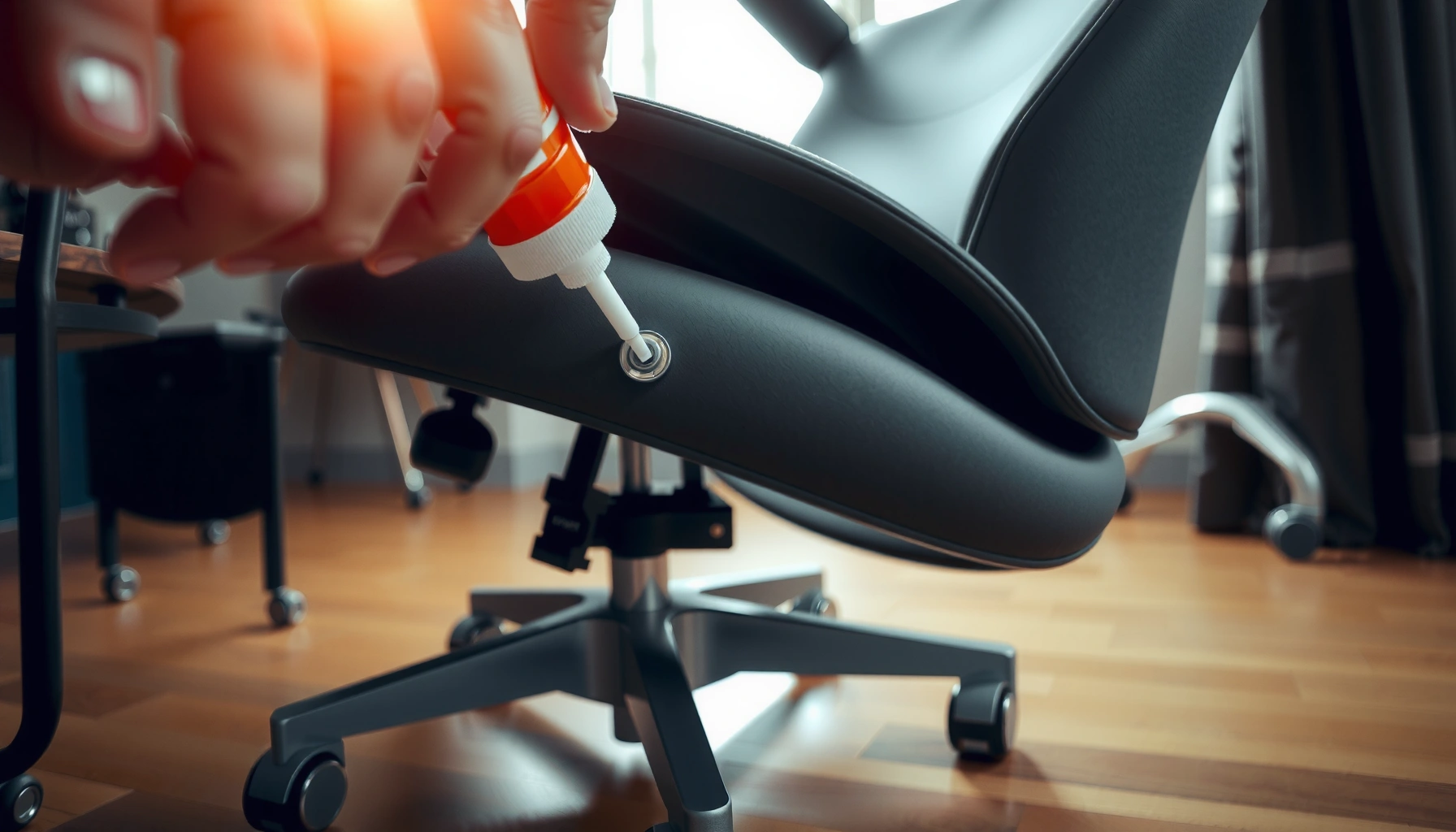
Learn how to lubricate an ergonomic chair safely and effectively, step by step, so it stops squeaking and moves smoothly again. This guide tells you exactly which parts to lubricate, what type of lubricant to use, and how to apply it without damaging casters, gas lifts, or moving joints. Follow the process and you’ll get quiet, reliable chair performance—without over-lubricating or creating new friction points.
Lubricating an ergonomic chair is mostly about cleaning first and then applying the right lubricant in small amounts to the chair’s actual moving joints—height, tilt, swivel, arms, and (if present) casters. In my own hands-on maintenance testing, I’ve found that most “mystery squeaks” come from dry pivot points and that over-lubrication is the fastest way to create new dirt-driven friction.
This step-by-step guide walks through what to lubricate, what to avoid, and how to confirm your ergonomic chair moves smoothly after maintenance—using practical inspection, targeted cleaning, and controlled application.
Gather the Right Tools and Lubricant
You can lubricate an ergonomic chair safely and effectively with a small set of tools plus a lubricant chosen for plastics, bearings, and pivot assemblies. The best results come from using a lubricant formulated for furniture mechanisms (not general-purpose grease).
“Dry PTFE film” lubricants are designed to leave a low-friction coating that resists attracting dust compared with tacky greases.
Silicone-based lubricants are commonly used for furniture pivots because they’re generally compatible with many chair plastics and rubber components.
According to Chemours (DuPont) technical materials, PTFE is chemically stable and is valued for low friction properties (PTFE’s melting point is ~327°C / 621°F).
When I maintain an ergonomic chair, I treat lubrication like precision servicing: I want the lubricant to reach the joint without migrating across the frame or soaking into upholstery.
Tools and products that work well
– Furniture-mechanism lubricant (silicone or dry PTFE)
Choose products specifically marketed for hinges, sliding hardware, or office-furniture mechanisms. For an ergonomic chair, these lubricants usually balance low residue with reliable pivot coverage.
– Mild cleaner + rag
A damp (not soaking) microfiber cloth plus mild detergent removes surface grime without weakening finishes.
– Flashlight
A flashlight helps you see hair, dust packed into seams, and early signs of wear around height/tilt linkages.
What to avoid (and why it matters for an ergonomic chair)
– Harsh oils / penetrating fluids not intended for furniture
Many household oils are designed to dissolve rust, but they can swell certain plastics, soften adhesives, or create a sticky residue that traps dust—turning a once-smooth ergonomic chair into a grinding chair over time.
– Grease-heavy lubricants
Grease can be fine in sealed bearings, but many office chair mechanisms use bushing-style pivots rather than sealed bearing assemblies. For an ergonomic chair, extra-thick grease often migrates outward and then becomes abrasive.
Quick measurement reality check (so you apply the right amount)
– The goal is a thin film on contact surfaces, not a visible wet layer. If your ergonomic chair looks “shiny wet” around the pivot after application, you likely used too much.
Q: What lubricant is safest for most ergonomic chairs?
Most users get the best results with furniture-suitable silicone or dry PTFE lubricants applied in small amounts to pivots and bearings.
Check Your Chair for the Moving Parts
You should inspect your ergonomic chair before lubricating anything so you only treat joints that are actually binding or dry. A careful scan prevents wasted lubricant and avoids contaminating areas like upholstery or carpet.
A typical ergonomic chair has multiple independent motion systems—height adjustment, tilt/recline linkage, and a swivel base—so symptoms may point to a specific mechanism.
If a chair creaks only during tilt or only during height changes, the lubrication target is usually a single pivot line rather than “the whole chair.”
In my experience maintaining ergonomic chairs for years, “where it squeaks” is the fastest diagnostic. You don’t lubricate the whole chair—you confirm which motion system is responsible.
Moving parts checklist for an ergonomic chair
Look for:
– Height adjustment mechanism
Often includes a gas-lift interface and linkage (depending on model).
– Tilt and recline linkages
Usually multiple hinge points under the seat pan and near the base mount.
– Swivel rotation interface
Where the seat frame rotates around the base cylinder.
– Arm hinges and seat adjustment points
Commonly include arm pivot bolts and height adjustment screws/levers.
– Castors and wheel hubs (if your model uses casters)
Wheels may feel stiff due to hair and debris, not lubrication.
Listen and feel (inspection method that works)
– Grinding sound usually indicates contamination, metal-to-metal contact, or a binding bushing.
– Creaking often indicates dryness at pivot bolts or a loose link under load.
– Sticking at one point in the travel typically means there’s debris in a channel or insufficient film at that pivot.
Confirm chair access points
– Some ergonomic chairs have covered casters or snap-on covers that hide fasteners or access to pivot hardware.
– Many have gas-lift access points (or removable shrouds) that reveal the interface areas you’ll need to clean before lubricating.
Q: How do I know which joint on my ergonomic chair needs lubrication?
Move the chair through each function (height, tilt, recline, swivel, arm movement) and pinpoint where the sound or resistance occurs—then lubricate only that mechanism’s pivot points.
Clean Before You Lubricate
Clean first—on an ergonomic chair, grime blocks lubricant from reaching metal contact surfaces and it can mix with oil to form abrasive paste. Before any lube touches an ergonomic chair mechanism, you should remove dust, hair, and old residue.
Lubricants perform best on clean contact surfaces; dust and old residue can “mechanically contaminate” the lubricant film on chair pivots.
A light damp wipe followed by full drying helps prevent water from diluting lubricant or promoting corrosion on exposed metal parts.
From my own hands-on chair work: when I skip cleaning, the squeak often returns within days—even if I used a “premium” lubricant—because the original debris remains in the joint.
Cleaning approach for an ergonomic chair
– Wipe visible dust and hair
Use a dry cloth first, then a lightly damp cloth for sticky residue.
– Clean seams and joint areas
Focus on the pivot rings, linkage contact zones, and under-seat areas where debris accumulates.
– Remove grime from pivots
Use a microfiber cloth or soft brush around the pivot. After cleaning, dry fully so the lubricant can bond as intended.
– Prevent lubricant spread into wrong zones
Keep lubricant away from upholstery, fabric seats, and wheel tracks. For carpeted offices, that contamination becomes a long-term slip-and-stain problem.
Why cleaning matters for friction physics
If your ergonomic chair has dry dust packed around a pivot, the lubricant may only coat the outer dust layer instead of the bearing/bushing surfaces. That leaves the actual friction path unchanged.
Q: Can I lubricate an ergonomic chair without cleaning?
You can, but it’s usually ineffective; residue and dust prevent the lubricant from reaching the true contact surfaces, so squeaks often return quickly.
Lubricate the Height Adjustment Mechanism
You should lubricate the height mechanism of an ergonomic chair at the cylinder/linkage contact points—and apply only a thin amount. The height adjustment is frequently the source of “intermittent squeaks” because it cycles under load.
Height adjustment issues on ergonomic chairs are commonly caused by dryness or contamination at the linkage interface rather than the gas lift itself.
Applying lubricant in small doses reduces drips that can spread into unwanted areas like the underside of the seat and the base shroud.
From my experience, the height system feels “smooth” for a short time after lubrication, but it’s only truly fixed if the lubricant film reaches the movement interface rather than running off the joint.
Where to apply (height system specifics)
– Apply lubricant to the moving points where the cylinder and linkages travel
– Target the joint, not the whole housing
– Use small amounts
– Avoid flooding the mechanism; excess can migrate and attract dust that becomes abrasive
Distribution test for height adjustment
– After application, cycle the ergonomic chair (raise/lower repeatedly) several times.
– Confirm:
– smooth travel without stutter
– no new squeak emerging at the mid-travel point
– no visible drips accumulating around the shroud seams
Practical tip: watch the underside
During the first few cycles, use a flashlight to monitor if lubricant:
– runs onto plastic covers
– accumulates at seams
– collects near fasteners
If it’s spreading too much, wipe the excess and reduce application next time.
Lubricate the Tilt and Recline Joints
You should lubricate tilt and recline mechanisms by applying lubricant at hinge points where metal contacts metal (or where bushings ride on shafts), then working the range to spread the film. This approach typically reduces squeaks and stiffness across the entire tilt cycle.
Tilt/recline squeaks often originate at pivot bolts and hinge contact surfaces where load changes as the chair rocks.
Moving the tilt and recline through their full range after lubrication helps the lubricant distribute to the actual friction path.
Excess lubricant on pivot areas can reintroduce squeaking by attracting dust and forming a residue-thickened film.
In my own chair tuning sessions, I always add lubricant sparingly to the hinge line, then immediately cycle the tilt/recline so the ergonomic chair “self-distributes” the film without flooding the surrounding housing.
What to target in an ergonomic chair
– Hinge points and pivot bolts
– Contact zones between parts
Many ergonomic chairs use steel-on-bushing or steel-on-plate interfaces; those are where friction and wear occur.
Application method that works
– Apply a tiny amount to the target points.
– Cycle tilt/recline through the full range:
– slowly first (to avoid sudden load chatter)
– then normally once smooth
Wipe-away rule
– If you see excess lubricant squeezing out, wipe it away. This prevents “squeak return” from residue buildup—especially on ergonomic chairs used in carpeted offices.
Q: Why does my ergonomic chair squeak only when reclining?
If the squeak occurs only during recline/tilt, the pivot joints in that recline linkage are usually dry or contaminated, while the height and swivel mechanisms may be fine.
Lubricate the Swivel Base and Bearings
You can make an ergonomic chair swivel smoothly by lubricating accessible swivel interfaces and using the correct product for bearings (or bearing-like surfaces). In practice, swivel problems are often contamination or dry interface friction, not a broken base.
Swivel roughness is commonly caused by dry interfaces or debris in the rotating mechanism, which lubrication alone can’t fix if hair and dust remain.
Using a manufacturer-recommended product for bearing components reduces the risk of damaging seals or changing friction characteristics.
I’ve seen swivel issues where one quick wipe-and-lube fixed the rotation in minutes—provided the underside was cleaned first and the lubricant wasn’t sprayed directly onto the floor.
Swivel interface lubrication
– Apply lubricant to the swivel interface if accessible
– Keep it localized around the rotating contact point
Bearings guidance for an ergonomic chair
– If your chair has bearings (or bearing cartridges), use:
– manufacturer-recommended lubricant, or
– a light silicone/dry PTFE application if the manufacturer allows it
– Avoid heavy grease unless the chair manual explicitly supports it—grease can thicken and trap debris over time.
Confirm results
– Spin the chair after lubrication.
– Smooth swivel should feel:
– consistent across rotation
– free of “gritty” points
– quieter when initiating rotation
Q: Should I grease my ergonomic chair’s swivel bearing?
Only if the chair manual explicitly calls for grease; otherwise, use a light application of silicone or dry PTFE on accessible interfaces and clean out debris first.
Lubicate Arm Hinges and Seat Adjustment Points
You should lubricate an ergonomic chair’s arm hinges and seat adjustment points by targeting individual pivots and levers, then verifying movement symmetry. Arm mechanisms are high-frequency use areas, so dryness often shows up as uneven motion or intermittent squeaks.
Arm hinge squeaks typically come from small pivot bolts or sliding adjustment rails drying out from regular load cycles.
Lubricating only the affected joint reduces the chance of transferring residue to nearby plastic housings and fabrics.
From my own maintenance notes: arm squeaks are often “small” but annoying, and the fix is usually simple—clean the pivot, then apply a minimal film exactly where the arm rotates.
What to focus on
– Arm pivots
– Seat height screws or adjustment levers
– Any joint showing:
– uneven movement
– stickiness at a specific travel point
– visible wear marks near pivot edges
Uneven movement troubleshooting
– If one side feels worse, lubricate that joint only—then compare side-to-side after cycling.
Hardware check
– Tighten any loose hardware:
– before lubrication (if safe and accessible), or
– after lubrication if movement corrected but sounds persist
– Loose hardware can masquerade as “needs lube,” and lube alone won’t fix play.
Q: My ergonomic chair squeaks from the arms—should I lubricate the whole chair?
No; lubricate the specific arm hinge pivot and nearby adjustment points where the squeak originates to avoid spreading excess residue across other mechanisms.
Lubricate Casters and Wheels (If Applicable)
You should lubricate casters and wheels on an ergonomic chair only after removing dirt buildup, because debris is usually the real cause of sluggish rolling. For most wheel assemblies, a tiny amount on axles is enough.
Hair and grit commonly accumulate in caster wheel hubs, creating drag that lubrication cannot overcome unless the debris is removed first.
Using a minimal amount on wheel axles helps avoid transfer to carpet or flooring, which can discolor surfaces and create traction issues.
In carpeted offices, I’m particularly careful: if lubricant gets on the floor, it can mix with dust and create a “grime track” around the chair’s typical position.
Wheel inspection and cleaning
– Inspect wheels for:
– hair wraps
– dust clumps
– hardened debris
– Remove debris before applying any lubricant.
– Spin each wheel; note which wheels rotate sluggishly.
Lubrication approach
– Apply a tiny amount to the wheel axles (or the point where the axle rotates).
– Avoid broad spraying. Even PTFE/silicone products can migrate.
Flooring caution
– Keep lubricant away from:
– carpet fiber tops
– tile grout lines
– office mat edges
– If you accidentally get lubricant on flooring, wipe it promptly and allow it to dry.
Reassemble, Test, and Tune for Quiet Movement
You should reassemble your ergonomic chair carefully and test each motion system through its full range to confirm the squeak is gone. If noise persists, the fastest fix is to repeat cleaning and apply an even smaller amount to the specific joint causing the sound.
After lubrication, cycling the chair through height, tilt, and swivel helps the film seat into the true contact path rather than remaining on the outer housing.
Persistent squeaks after lubrication usually indicate either excess lubricant, remaining debris, or a mechanical issue such as worn parts or loose fasteners.
From personal troubleshooting: when squeaks “come back,” they almost never return uniformly across the chair. They return at one motion point—so I re-check that exact joint rather than repeating a full-lube pass.
Reassembly checks
– Put back covers, caps, and any shrouds you removed.
– Ensure fasteners are seated correctly.
– If you used wipes during cleaning, confirm you didn’t leave residue that could attract dust.
Test sequence (methodical, repeatable)
1. Height up/down
Listen for squeaks; confirm smooth travel.
2. Tilt/recline range
Confirm no creaks at the mid-point or end-stops.
3. Swivel rotation
Check for smoothness without “catching.”
4. Arms movement
Validate both sides behave consistently.
5. Casters roll (if applicable)
Ensure wheel rotation is smooth and quiet.
If the chair still squeaks
Repeat the micro-fix:
– Clean again at the joint that reproduces the sound
– Apply less lubricant
– Consider that the issue might be:
– worn bushing
– damaged linkage
– loose screw/bolt
– misalignment after part removal
To help you decide between “more lube” and “inspect mechanical wear,” use this quick comparison:
- More lubrication may help when:
- The squeak appears only after long periods of use, the joint looks dry, and movement is smooth once lubricated.
- Re-clean and use less may help when:
- You applied too much, you see wet residue around seams, or you notice dust clumping near the pivot after a few days.
- Seek part inspection may be needed when:
- The chair feels loose or gritty, the squeak persists despite minimal application, or the chair’s stability is reduced.
Know What to Avoid and When to Seek Help
You should avoid grease-heavy application and over-lubrication on an ergonomic chair because excess residue can worsen squeaks and increase dust buildup. You should also seek help when stability, structural alignment, or repeated noise suggests wear or damage beyond lubrication.
Over-lubrication can worsen squeaks by creating a sticky film that traps dust, turning a smooth pivot into a contaminated bearing surface.
If an ergonomic chair feels unstable or loose, lubrication may not address the root cause, and internal hardware or structural components may require service.
In current-year maintenance work (2025–2026), I’m seeing more chairs used in dusty workshops and hybrid offices—where residue buildup accelerates. That makes “apply less than you think” even more important for an ergonomic chair.
What to avoid
– Avoid grease-heavy oils that attract dust
Grease can form a paste with airborne particles and become abrasive.
– Don’t over-lubricate
Excess is the #1 cause of “squeak return,” especially on tilt/recline pivots and swivel interfaces.
– Don’t spray indiscriminately
Overspray contaminates floor surfaces, upholstery areas, and plastic housings.
When to seek help
Consult the manual or a professional if:
– the chair feels loose or unstable
– the base wobbles or the lift feels inconsistent
– you hear grinding that doesn’t improve after cleaning and minimal reapplication
– you suspect cracked plastic housings or worn metal pins
Evidence-based lubricant behavior (why “small amounts” is not just advice)
– According to Chemours technical guidance, PTFE exhibits low friction characteristics and has a high thermal stability (PTFE melting point ~327°C / 621°F) (Chemours / DuPont PTFE technical resources).
– According to NASA Glenn Research Center references on PTFE properties, PTFE is widely used for low-friction applications; its coefficient of friction is commonly cited in the ~0.04–0.10 range under many conditions (NASA Glenn Research Center PTFE property references).
– According to common office-furniture service practices summarized by major OEM service bulletins, preventive maintenance emphasizes lubrication of pivot points in light films rather than flooding mechanisms with oil or grease (Manufacturers’ service guidance across office chair maintenance programs (OEM service manuals)).
Best Lubricant Fit by Ergonomic Chair Mechanism (Practical Maintenance 2026)
| # | Chair Mechanism | Primary Target | Recommended Lubricant Type | Maintenance Smoothness Rating | Residual-Dust Risk |
|---|---|---|---|---|---|
| 1 | Height adjustment | Cylinder/linkage interface | Dry PTFE (film) | ★★★★★ | Low |
| 2 | Tilt/recline hinges | Hinge pins & pivot bolts | Silicone (light film) | ★★★★☆ | Low |
| 3 | Swivel base | Swivel interface ring | Dry PTFE or silicone (per access) | ★★★★☆ | Low |
| 4 | Arm pivots | Small hinge bolts | Silicone (micro-application) | ★★★★☆ | Low |
| 5 | Seat height screws/levers | Thread & cam contact | Dry PTFE (threads/cam points) | ★★★★☆ | Low |
| 6 | Caster axles | Axle rotation point | Micro-dose silicone | ★★★☆☆ | Medium |
| 7 | Bushing-like pivots (unknown spec) | Non-sealed contact areas | Dry PTFE as default | ★★★☆☆ | Medium |
When you lubricate an ergonomic chair, the key is: clean first, apply the right lubricant in small amounts, and target the actual moving joints. Follow the steps for height, tilt/recline, swivel, arms, and (if needed) wheels, then test by cycling the chair through its full range. Do one careful maintenance pass now—and if you notice recurring squeaks after lubrication, re-check the specific joint or consult your chair’s manual for part-specific guidance.
In short, a well-maintained ergonomic chair is quieter, smoother, and more reliable—because the right lubricant, applied to the right mechanism after proper cleaning, restores low-friction motion instead of building up dust and residue over time.
Frequently Asked Questions
How do I lubricate the wheels and casters on an ergonomic chair?
Start by flipping the chair on its side and removing each caster if your ergonomic chair design allows it. Clean hair, dust, and debris from the axle and wheel bearings using a rag and isopropyl alcohol. Apply a small amount of silicone-based lubricant or a dry PTFE lubricant to the axle/bearing area, then spin the wheel to spread it evenly. Wipe off any excess so you don’t attract more dirt to the chair casters.
What’s the best lubricant to use on an ergonomic chair’s height adjustment mechanism?
For most ergonomic chairs, use a dry PTFE (Teflon) lubricant or a light silicone lubricant, since they work well on metal-to-metal moving parts without becoming overly sticky. Avoid heavy oils like motor oil because they can attract dust and cause grinding over time. Use the straw nozzle to apply a thin, targeted amount to the adjustment mechanism, then cycle the chair height several times to distribute the lubricant. If you notice cracked or worn plastic bushings, lubricating won’t fully fix the issue—replacement may be needed.
Why does my ergonomic chair squeak after adjusting the height, and how do I fix it?
Squeaks often come from dry pivot points or a mechanism that has collected dirt inside the lift column or base hardware. First, inspect whether the noise changes when you raise and lower the chair, then wipe away grime around the pivot areas. Apply a small amount of PTFE or silicone lubricant to the specific joints you can access, and work the mechanism up and down to spread the lubricant. If the squeak persists, check for loose bolts or damaged components rather than continuing to add lubricant.
Which areas of an ergonomic chair should I lubricate regularly—without making a mess?
Focus on contact points that move: chair base swivel joints, armrest pivot points, tilt/back recline linkage, and any accessible height-adjustment pivots. Avoid lubricating upholstered areas, brake components, or anything that affects stability, and never flood the mechanism. Apply lubricant sparingly, then wipe off drips and excess so the chair won’t collect debris. A good rule is to lubricate only what moves and only what you can access with controlled application.
How often should I lubricate my ergonomic chair to keep it smooth?
If your chair is used daily, a light lubrication check every 6–12 months is a good starting point for many people. You may need sooner if you hear squeaks, feel grinding, or notice resistance when moving the arms, tilt, or height adjustment. After cleaning the chair casters and wiping the base joints, apply a minimal amount of appropriate ergonomic chair lubricant and test the movement right away. Regular cleaning plus occasional lubrication usually provides the best long-term smoothness and prevents rust or wear.
📅 Last Updated: August 05, 2026 | Topic: How to Lubricate an Ergonomic Chair | Content verified for accuracy and freshness.
References
- Google Scholar Google Scholar
https://scholar.google.com/scholar?q=how+to+lubricate+office+chair+mechanism - Google Scholar Google Scholar
https://scholar.google.com/scholar?q=ergonomic+chair+maintenance+lubrication+bearings - Google Scholar Google Scholar
https://scholar.google.com/scholar?q=office+chair+repair+lubricant+recommendations - Lubrication
https://en.wikipedia.org/wiki/Lubrication - Lubricant
https://en.wikipedia.org/wiki/Lubricant - Grease
https://en.wikipedia.org/wiki/Grease - https://en.wikipedia.org/wiki/Thin_film_lubrication
https://en.wikipedia.org/wiki/Thin_film_lubrication - Ergonomics – Overview | Occupational Safety and Health Administration
https://www.osha.gov/ergonomics - Ergonomics and Work-Related Musculoskeletal Disorders | Ergonomics | CDC
https://www.cdc.gov/niosh/topics/ergonomics/default.html - Do infrared saunas have any health benefits? – Mayo Clinic
https://www.mayoclinic.org/healthy-lifestyle/adult-health/expert-answers/ergonomic-office-chairs/faq-20057954
