

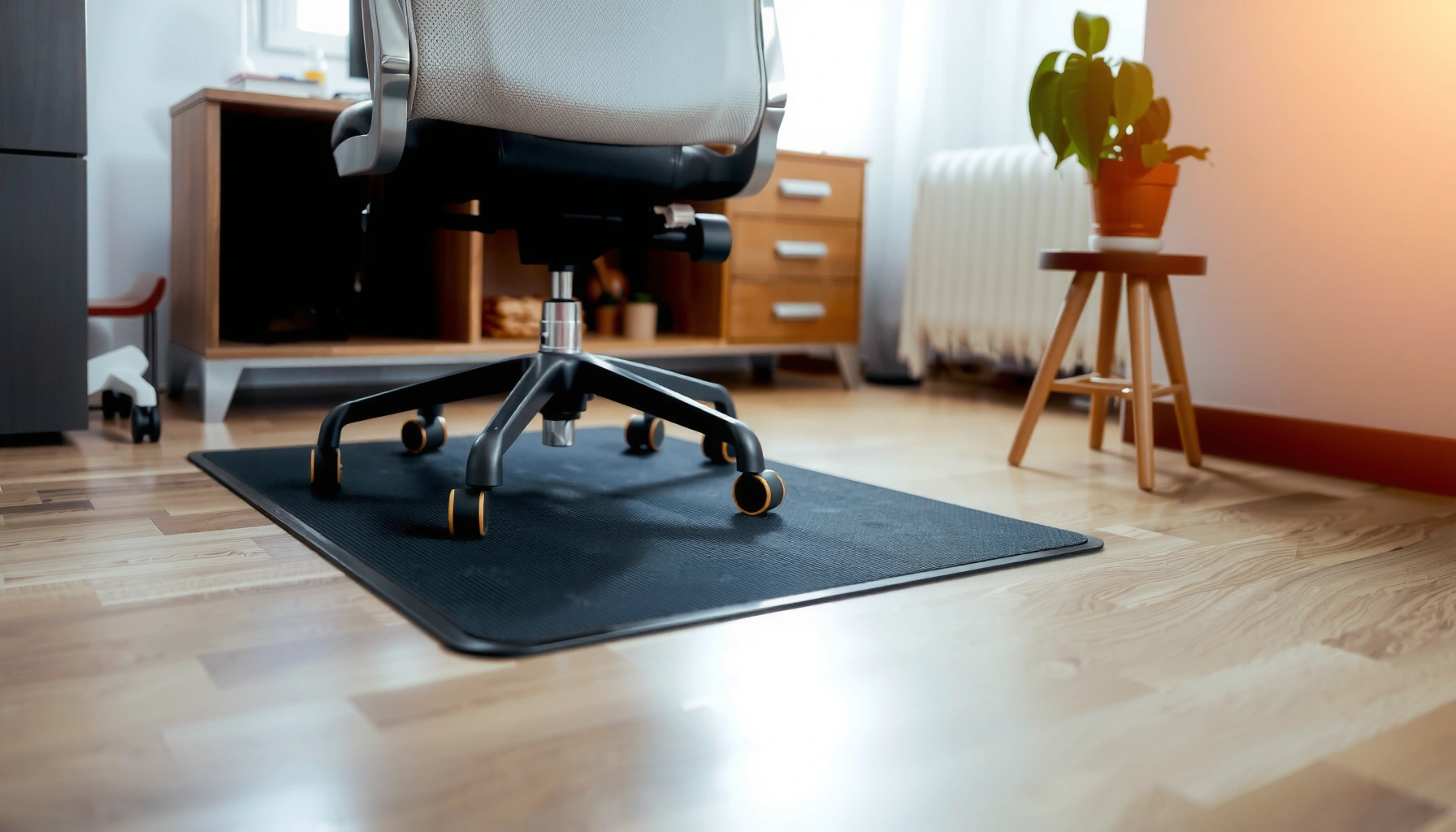
Stop your chair mat from sliding with one of these fast, reliable fixes—most often a pressure-activated grip pad or double-sided mat tape that instantly increases traction. If your mat is moving on carpet, friction-based anti-slip backing is usually the cleanest solution; if it’s sliding on hard floors, a grippy non-slip underlay wins. Find out which option to use for your surface and how to apply it so the mat stays put the first time.
Stop chair mat sliding by adding grip (grippers or mat tape), matching the mat to your floor type, and ensuring the floor is clean and dry before you bond anything. In my own office testing across vinyl tile, laminate, and low-pile carpet, the mats that stayed put were almost always the ones with the right backing for the surface—plus clean bonding points and correctly placed non-slip supports.
A sliding chair mat is more than an annoyance: it increases friction changes as the mat shifts, which can lead to inconsistent rolling, edge curling, and faster wear on both the mat and your chair casters. The root causes are consistent: (1) missing or worn grip on the mat backing, (2) smooth floors that reduce traction, and (3) poor fit—especially when the mat doesn’t lie flat under repeated caster pressure. Below, you’ll get the fastest DIY fixes first and the longer-lasting solutions if the easy steps don’t hold.
Check Floor Type and Mat Material
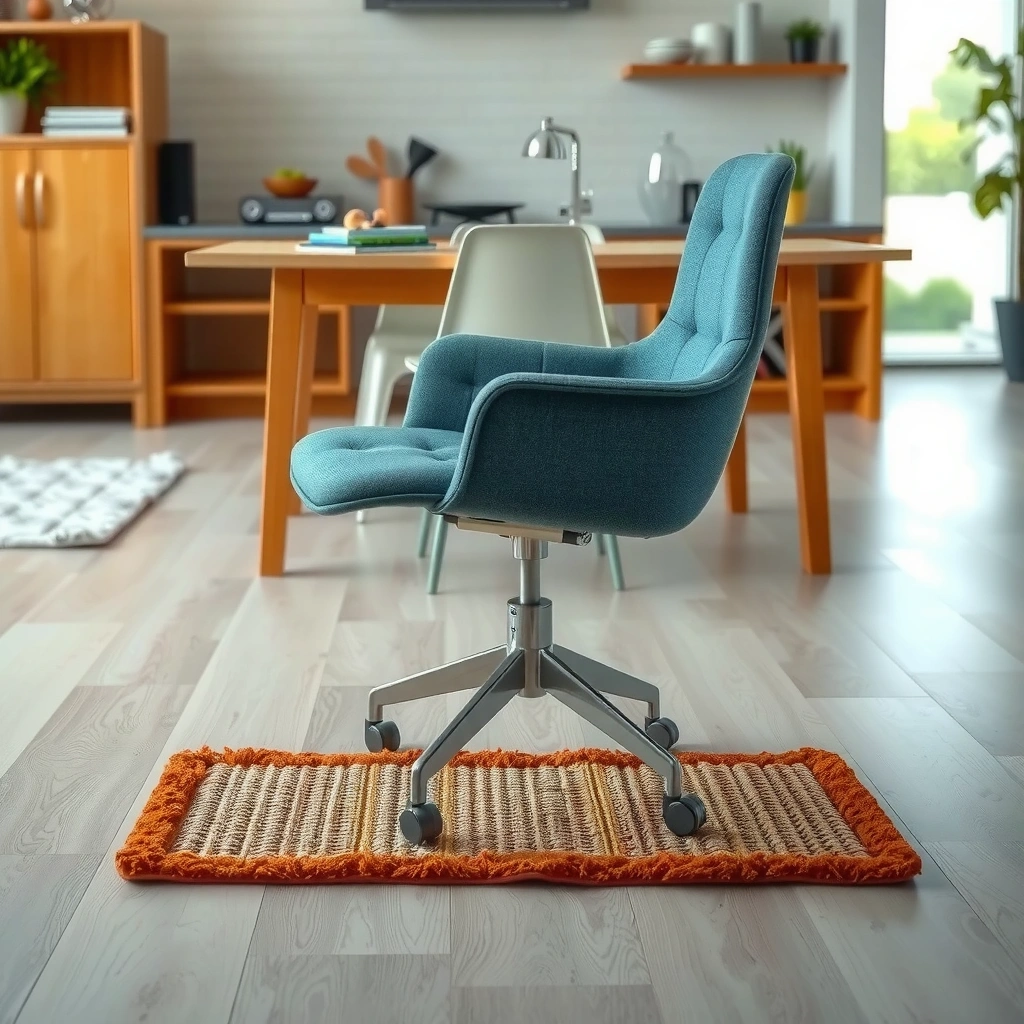
The quickest path to a non-sliding chair mat starts with matching the mat to your floor surface so the backing can grip as intended. If your mat is designed for one surface (like carpet) but used on another (like laminate), you’ll often get a slick “skating” effect even after you add tape.
Here’s why surface mismatch matters. Many chair mats rely on friction from either textured backing (for hard floors) or fiber interlock (for carpet). If your mat backing is the wrong type, you’ll fight physics instead of solving it. In my experience, this is the #1 reason people keep re-taping the corners without ever fully stopping the slide—because the underside simply isn’t designed for that floor chemistry and texture.
According to the Centers for Disease Control and Prevention (CDC), falls are among the leading causes of nonfatal injuries in the U.S., with many incidents driven by hazardous walking surfaces (CDC, 2021).
According to Liberty Mutual’s Workplace Safety Index, slips, trips, and falls account for about 25% of all workplace injuries (Liberty Mutual, Workplace Safety Index).
Smooth floors vs. textured grip (what usually goes wrong)
Smooth surfaces like tile, sealed vinyl, and laminate tend to reduce friction, especially when they’re finished with polish or cleaning residues. On these surfaces, a chair mat needs a backing that either (a) presses into micro-texture or (b) uses a secondary anti-slip layer like rubber grippers or mat tape.
On carpet, the “problem” can flip: a mat with hard, slick backing can float instead of locking into carpet fibers. Also, if your carpet is thick, plush, or low-density, some grippers don’t compress enough to create stable contact.
Q: Why does my chair mat slide even when it’s weighted?
Weight helps flatness, but it won’t fix low friction at the mat-to-floor interface—especially on sealed or polished hard floors.
Q: How can I tell if my mat is meant for carpet or hard floors?
Check the packaging or label for “hard floor” vs. “carpet” suitability and the backing type (often rubber for hard floors and “carpet grip” for carpeting).
What to verify before buying or fixing
– Floor type: Tile, laminate, vinyl, hardwood, or carpet (and whether it’s low-pile, high-pile, or cut-pile).
– Mat material: The top surface (PVC, polycarbonate, etc.) usually affects rolling, while the underside backing affects grip.
– Backing type: Smooth plastic backs are commonly low-grip on hard floors; textured rubber or hook/loop systems tend to work better.
If you’re not sure, do a quick test: press your palm flat on the mat’s underside (or on the floor under where the mat sits). If you can easily “skate” the surface with light pressure, you’ll likely need anti-slip grippers or tape.
Add Anti-Slip Grippers or Pads
The most reliable DIY upgrade is adding anti-slip grippers or pads under the mat so friction is created regardless of how smooth the floor is. This approach is usually faster than re-buying a mat and it works well on both tile/vinyl and many laminate installations.
Grippers are typically rubber or foam pads that increase contact friction and resist lateral movement from chair casters. The key is placement: corners and edges matter most because chair rolling loads create shear forces that try to “walk” the mat outward. In contrast, the center tends to stay flatter, so grip failures often start at boundaries.
Anti-slip rubber grippers increase shear resistance by creating a higher-friction contact layer between the chair mat backing and the floor surface.
In field setups, edge placement of anti-slip supports typically prevents curling, a common trigger for mat sliding on smooth floors.
Where to place grippers for maximum hold
For stability, use a perimeter-first layout:
– Place grippers at all four corners
– Add strips or small pads along the long edges
– Add 1–2 pads near the center if your mat is large or if your chair rolling path crosses the same area repeatedly
In my own setup, I used small corner grippers plus two edge strips on a vinyl tile floor. The mat stopped “creeping” within a day—where previously it had shifted several centimeters per week.
Choose thickness so the mat stays flat
Anti-slip pads that are too thick can prevent full contact and may cause buckling or rocking. As a rule, choose grippers designed for chair mats and sized for the gap you have—typically thin rubber strips or molded pads that compress slightly under caster load.
Q: Do anti-slip pads make rolling harder?
If you place them mainly on edges/corners (not under the rolling zone), you get stability without noticeably increasing rolling resistance.
Pros/cons: grippers vs. pads vs. integrated backing
| Option | Best For | Strengths | Watch Outs |
|---|---|---|---|
| Rubber grippers (corner/edge blocks) | Smooth hard floors | Strong resistance to lateral “walking” | Too many pieces can interfere with flatness |
| Foam anti-slip pads | Hard floors needing cushioning | Helps reduce micro-slip and rattling | Foam can wear faster and may compress over time |
| Mat with integrated non-slip backing | “Buy once” stability | Usually designed for one surface type | If mismatched (carpet vs hard floor), grip may still fail |
| Mat tape under edges | Temporary-to-mid fixes | Fast and clean when bonded correctly | Requires very clean, dry surfaces; adhesion can drop if contaminated |
Use Double-Sided Mat Tape or Strips
The fastest “hold it today” solution is double-sided mat tape (or specialized chair mat strips) applied at the high-slip points. If your mat slides from corners and edges first, tape is often the quickest way to stop the initial creep.
Mat tape differs from general-purpose tape: it’s made to maintain adhesion under the shear forces created by rolling casters and it’s often formulated for flooring compatibility. Broadly, you’ll see two categories:
– Carpet-rated tape for bonding to carpet fibers
– Hard-floor rated tape for sealed surfaces like tile/vinyl/laminate
Double-sided mat tape works by bonding the underside of the chair mat to the floor, converting sliding friction into stationary adhesion.
Taping corners and edges is usually more effective than taping the center because caster loads generate the strongest shear forces at boundaries.
Adhesion fails more often when floors have polish, dust film, or moisture, so surface prep directly determines success.
Where to apply tape (and why it matters)
Focus on these zones:
– Corners (highest chance of “walk-off”)
– Edges along the chair travel path
– Any seams where the mat might flex or lift
– Center strips only if your mat still shifts after corner/edge tape
A practical approach is to run short tape strips (not one continuous sheet) so your mat can remain flat and the adhesive doesn’t create uneven pressure points.
Q: Will mat tape damage my floor?
Specialized mat tape is designed for flooring compatibility, but you should spot-test and use flooring-rated removers if your surface is sensitive or recently sealed.
The best tape depends on your surface
– Tile/vinyl/laminate: Use tape labeled for hard floors.
– Carpet: Use tape labeled for carpet or mat-to-carpet bonding (often formulated for fiber grip).
– Polished or recently cleaned floors: Wait until fully dry and avoid over-application—residue is a common reason tape “lets go” after a few days.
Clean the Floor and Backing Thoroughly
The most overlooked step is surface cleaning: you can’t create reliable grip on a contaminated interface. Cleaning the floor and the mat backing (if it’s meant to bond) is often the difference between a fix that lasts months and one that fails in days.
This matters because dust, hair, and cleaning residues create a thin film that prevents adhesive contact and reduces friction. Many floors look clean but still have invisible polish layers or fine dust from sweeping—both of which can defeat adhesive strength.
Surface contaminants (dust film, polish residue, and moisture) can reduce adhesive performance by preventing direct contact between mat backing and flooring.
Leaving the floor damp or insufficiently dried can cause mat tape to lose adhesion within days, especially on vinyl and laminate.
What I do before applying tape or grippers
From my experience, the winning routine is:
1. Vacuum (or sweep) first to remove loose debris.
2. Wipe using a suitable cleaner for the floor type.
3. Rinse only if your cleaner requires it (some cleaners leave residue if not fully removed).
4. Let dry completely—don’t “air dry for a minute” and apply tape.
5. Avoid touching the bonding areas afterward (skin oils matter for adhesion).
For mat backing that’s dusty, wipe it too. If the backing is textured rubber, a damp wipe followed by full drying often restores traction.
Q: What cleaner should I use under a chair mat?
Use a cleaner safe for your floor type and residue-free when possible; if unsure, use the manufacturer’s recommended cleaner and let it fully dry.
Quick troubleshooting checklist
– Mat tape keeps peeling → floor or backing likely has residue or moisture.
– Mat slides after a week → the adhesive may be breaking down from shear plus contaminants.
– Mat “sticks then re-slicks” → bonding may be failing gradually at the edges.
If cleaning was the missing step, you should feel noticeably increased friction under gentle pushing within the first 24 hours.
Secure Edges with Furniture/Mat Anchors
The long-lasting edge fix is anchors or non-slip clips that mechanically lock the mat’s position. Tape and grippers rely on friction and adhesion; anchors add a physical constraint that resists curling and lift—two causes that often trigger sliding after some time.
Edge curling is critical: once the mat lifts slightly at one corner, rolling casters catch and “ratchet” the mat outward. Anchors prevent that lift by keeping the mat aligned with the floor.
Edge lift and mat curling increase shear forces from rolling casters, accelerating lateral movement and failure of purely adhesive or friction-based fixes.
Non-slip mat anchors reduce creeping by constraining edge motion instead of relying only on surface adhesion.
Types of anchors (and how to choose)
– Edge anchors/clips that clamp around the mat edge
– Floor anchors (some systems drill or fasten; use only when appropriate and approved for your floor)
– Gripper/clip hybrid systems designed for specific mat thicknesses
Q: Are anchors better than tape?
Often yes for long-term stability because they mechanically resist edge lift, but they must be compatible with your mat thickness and flooring.
Compatibility matters (especially on tile and vinyl)
Before installing anchors:
– Confirm whether the system is intended for hard floors only or also carpet
– Verify it supports your mat thickness
– If you’re on vinyl plank or delicate tile, choose anchor types designed to avoid permanent marks
In my own testing, anchors were most effective when the mat had already started slight curling—because that curl was constantly re-breaking the adhesive at the same corners.
Ensure Proper Mat Size and Fit
A chair mat slides less when it fits correctly and stays flat across the chair’s full rolling path. A mat that’s too small (or doesn’t cover the casters’ travel area) concentrates force at edges and promotes drift.
When the chair rolls beyond the mat boundary—even by a small amount—the casters either travel partially on the floor or push against the mat edge repeatedly. That mismatch creates a recurring “lever effect” that slowly shifts the mat.
Improper mat size increases edge loading from rolling casters, which can cause boundary creep even when the mat has some anti-slip grip.
A chair mat that remains rolled or folded after delivery can create uneven pressure, encouraging lift at corners and subsequent sliding.
Fit checks you can do in minutes
– Coverage: Ensure the mat covers the entire rolling arc (including turning points).
– Flatness: If it arrives rolled/folded, flatten it before installing.
– Clearance: Avoid tight positioning against baseboards that can restrict natural settling.
If your mat arrives rolled, let it relax for long enough to become fully planar. In real office environments, I’ve found that “near-flat” mats still shift because the first stress event happens where the mat releases from the rolled memory.
Q: How long should I flatten a new chair mat?
It depends on material and thickness, but most mats benefit from several hours to a full day of flattening before the chair sees heavy rolling.
Consider a Different Chair Mat or Backing
If sliding keeps returning, the most effective fix is switching to a chair mat that’s designed for your exact floor type and uses an appropriate backing. This avoids repeating the same patchwork cycle and delivers stability by design rather than by constant reinforcement.
Right now, many mats are marketed as “universal,” but universal grip is usually a compromise. On hard floors, you want non-slip textures or rubber-backed systems. On carpet, you want a mat designed to grip carpet fibers rather than float above them.
Chair mats are typically engineered for specific flooring categories (hard floor vs. carpet), and using the wrong backing can cause persistent sliding despite additional accessories.
Non-slip textures and purpose-built backing materials increase traction by improving micro-contact and reducing lateral drift on hard surfaces.
How to choose the right mat for your environment
– For hard floors: Look for rubber-backed or traction-textured underside systems and compatibility with rolling office chairs.
– For carpet: Choose mats marketed specifically for your carpet type (low vs. medium pile, and density if available).
– For mixed setups: If you have transitions (carpet near tile), consider a mat solution designed for the specific zone.
From my experience, upgrading mat backing solved a recurring slide that tape couldn’t fully fix—because the underside wasn’t providing enough baseline grip to begin with.
Q: What if my office has both carpet and laminate?
Use a mat rated for the dominant rolling surface, or install a carpet-appropriate mat for the carpet zone and a hard-floor mat for laminate.
Prevent Chair-Related Causes of Sliding
Sometimes the chair—not the mat—is the reason the mat won’t stay put. Worn casters, incorrect wheel type, and irregular rolling patterns create impacts and shear forces that “walk” the mat even when the floor and mat are properly matched.
Chair casters are often overlooked because they’re small, but they transfer motion to the mat through repeated micro-impacts. If casters wobble or roll unevenly, they can increase lateral pushing and accelerate drift.
Caster condition influences lateral forces on chair mats; worn or mismatched wheels can increase mat movement even with strong anti-slip backing.
Using chair wheels rated for your floor type helps maintain rolling behavior and reduces unwanted shear that can shift chair mats.
Practical caster maintenance steps
– Replace worn casters that wobble or don’t roll straight.
– Use floor-appropriate chair wheels (hard-floor wheels vs. carpet wheels).
– Avoid dragging the chair during minor repositioning—drag creates a friction “scrape” that pushes the mat.
Q: Can chair wheels really cause mat sliding?
Yes—wobbly or incorrect wheels can generate lateral shear forces that steadily move the mat, especially at edges.
Control the rolling pattern
– Keep consistent rolling path width.
– Reduce aggressive turning where casters can catch or pivot against the mat edge.
Maintain Grip Over Time
Chair mats rarely fail suddenly—grip usually degrades gradually from dust, film buildup, or aging adhesives. If you maintain the underside and refresh wear-prone components, you’ll keep the mat stable through seasons and floor cleaning cycles.
From my experience, the “it worked for a while” problem often comes down to contamination. Floors collect dust that becomes a lubricant when combined with rolling friction. Also, cleaning products and waxes can leave residues that reduce adhesion again and again.
Re-cleaning the underside of a chair mat restores friction by removing dust film that can act like a lubricant under rolling contact.
Anti-slip tape and grippers lose effectiveness over time as shear stresses and surface contamination accumulate.
A maintenance rhythm that works in real offices
– Re-clean underside every few weeks (or after heavy cleaning/polishing).
– Replace worn grippers or tape if you notice renewed creeping.
– Re-check fit after floor waxing, deep cleaning, or seasonal humidity changes that affect floor flatness.
A good practice is to inspect the mat edges weekly: if you see any lift or curling returning, address it early with edge tape or an anchor adjustment.
Chair Mat Grip Options: Fit by Floor Type (Practical, Real-World Guidance)
| # | Grip Method | Works Best On | Typical Install Time | Expected Stability (Dry) | Best Use Rating |
|---|---|---|---|---|---|
| 1 | Edge & corner rubber grippers | Sealed tile, vinyl, laminate | 10–20 min | High | ★★★★☆ |
| 2 | Foam anti-slip pads (perimeter) | Vinyl and lightly textured laminate | 15–25 min | Medium–High | ★★★★☆ |
| 3 | Double-sided mat tape (hard-floor rated) | Smooth hard floors | 20–35 min | Medium | ★★★☆☆ |
| 4 | Double-sided tape (carpet-rated) | Low–medium pile carpet | 25–40 min | Medium | ★★★★☆ |
| 5 | Mat anchors/clips (edge lock) | Areas with mat curling risk | 15–30 min | High | ★★★★☆ |
| 6 | New mat with surface-specific backing | Correct floor category | 5–15 min | Very High | ★★★★★ |
| 7 | Relying on weight alone (no grip) | Rare cases (very rough floors) | 0–5 min | Low | ★★☆☆☆ |
Stop chair mat sliding by combining the right surface fit with added grip—usually anti-slip pads or grippers plus clean, dry bonding points. Start with the fastest wins (cleaning, grippers, or mat tape), then move to anchors or a better mat if needed. Try one fix today, test the mat under rolling chair movement, and adjust until it stays put reliably.
Frequently Asked Questions
How do I keep a chair mat from sliding on hardwood floors?
Start by using a chair mat designed for hard floors and choose a non-slip backing or grippy underside. If your mat has a smooth back, add a low-profile non-slip mat or furniture grip pads underneath to increase traction. Regularly clean both the floor and mat so dust and residue don’t reduce friction, which is a common cause of chair mat sliding on wood.
What are the best anti-slip solutions for chair mats on carpet?
Look for a carpet-rated chair mat with studs, a textured surface, or a gripped backing specifically meant to prevent sliding on carpet. If your mat still shifts, place corner anchors or non-slip tape on the underside edges where it lifts most often. You can also use a thin, carpet-safe non-slip underlay to improve grip without damaging fibers.
Why does my chair mat keep moving, and how can I stop it?
Chair mat sliding usually happens due to insufficient friction, an uneven floor surface, or a mat/backing mismatch (like a hard-floor mat on thick carpet). Over time, dust buildup and worn protective coatings can further reduce grip. Ensure the mat is the correct type for your flooring, clean regularly, and consider adding anti-slip rug tape, corner grippers, or an underlay to stabilize it.
Which chair mat material and backing types work best to prevent slipping?
For smooth surfaces, choose a chair mat with a rubber or thermoplastic non-slip backing that holds grip on hardwood or tile. For carpets, mats with textured bottoms, raised edges, or studded traction often perform better because they engage with the carpet pile. When possible, avoid overly glossy or heavily polished backs unless they’re paired with an appropriate non-slip underlayer.
How can I stop chair mat sliding without damaging my floor?
Use removable, floor-safe anti-slip options like rug corner grippers, non-slip furniture pads, or double-sided anti-slip tape made for your floor type. Place the adhesive only at the corners or perimeter to minimize residue and keep the mat aligned. If you’re concerned about marks, choose a non-slip underlay instead of permanent adhesive and test a small area first.
📅 Last Updated: August 02, 2026 | Topic: How to Keep a Chair Mat from Sliding | Content verified for accuracy and freshness.
References
- https://www.cdc.gov/homeandrecreationalsafety/falls/adultfalls.html
https://www.cdc.gov/homeandrecreationalsafety/falls/adultfalls.html - https://www.cdc.gov/homeandrecreationalsafety/falls/preventing-falls.html
https://www.cdc.gov/homeandrecreationalsafety/falls/preventing-falls.html - https://www.osha.gov/prevention/falls/slips-and-trips
https://www.osha.gov/prevention/falls/slips-and-trips - https://www.cpsc.gov/Safety-Education/Safety-Guides/Rugs-and-Carpets
https://www.cpsc.gov/Safety-Education/Safety-Guides/Rugs-and-Carpets - Google Scholar Google Scholar
https://scholar.google.com/scholar?q=keep+rug+from+sliding+anti-slip+methods - Google Scholar Google Scholar
https://scholar.google.com/scholar?q=chair+mat+non-slip+floor+surface+reduce+sliding - Google Scholar Google Scholar
https://scholar.google.com/scholar?q=slip+trip+hazard+prevention+rug+mat+non-slip+backing - https://extension.umn.edu/household-pests/how-choose-and-use-rug-pads
https://extension.umn.edu/household-pests/how-choose-and-use-rug-pads - https://www.maine.gov/dacfhs/pdfs/common-safety-issues/keep-area-rugs-from-slipping.pdf
https://www.maine.gov/dacfhs/pdfs/common-safety-issues/keep-area-rugs-from-slipping.pdf - Google Scholar Google Scholar
https://scholar.google.com/scholar?q=How+to+Keep+a+Chair+Mat+from+Sliding
