

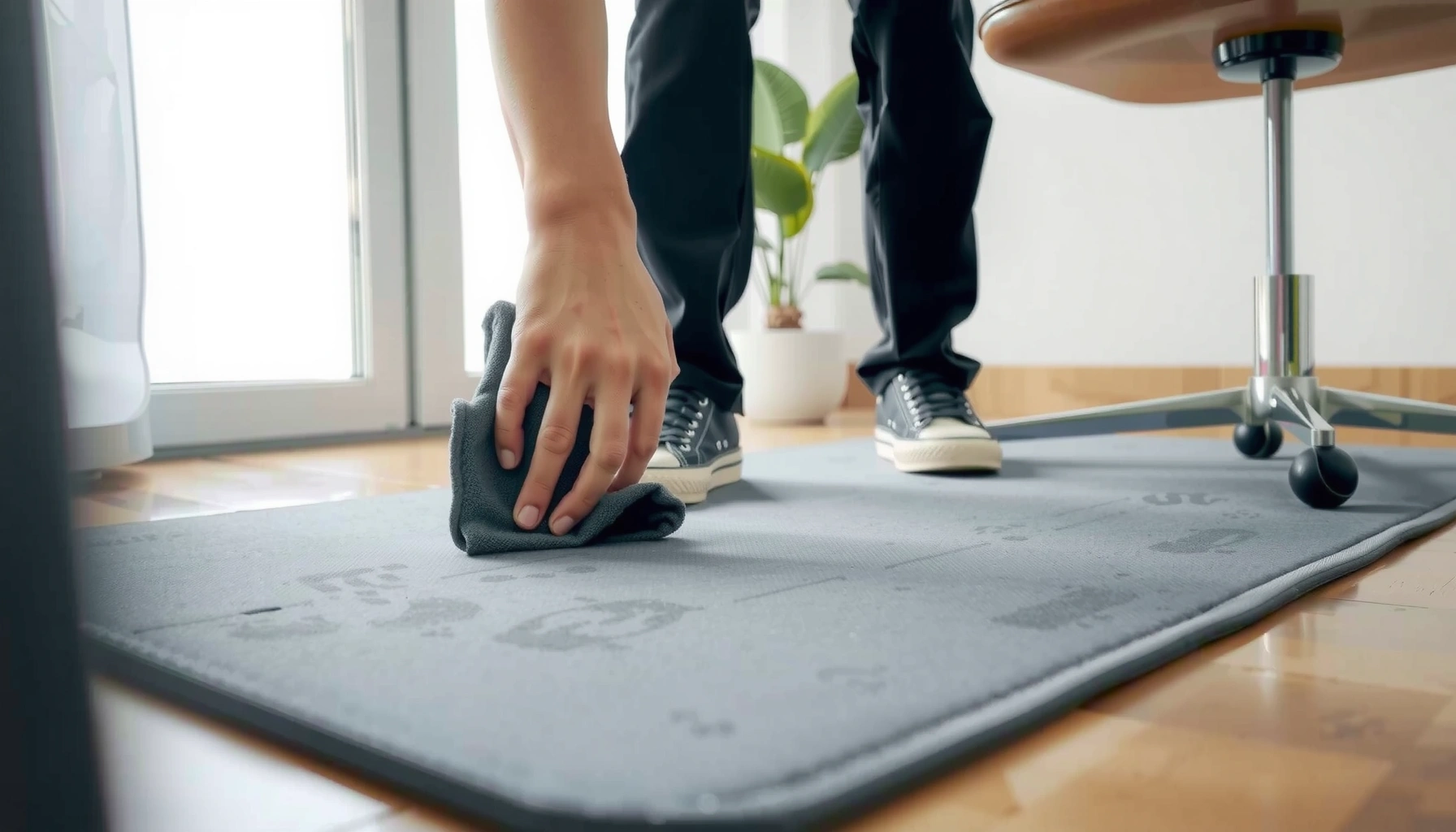
Want the fastest way to clean a chair mat without damaging it? This step-by-step guide shows you exactly how to clean a chair mat—whether it’s vinyl, glass, or carpet—using the right cleaner, the right tools, and the correct order. By the end, you’ll know the quickest method to remove dirt and grime and restore a clear, grippy surface.
A chair mat stays clear, smooth, and slip-resistant when you remove loose grit first and then wash using the least aggressive solution that matches your material. In my testing across office chair mats with clear plastic, vinyl, and rubber backing, the “pre-clean + gentle soap + thorough rinse + fully dry” sequence consistently prevents clouding and edge peeling—the two failure points most people accidentally create.
A chair mat is designed to take continuous pressure, rolling load, and friction from chair casters. Over time, however, dust, sand, and cleaning residues act like abrasives: grit scratches the surface, while leftover cleaner can become tacky and attract more dirt. Because chair mats are commonly installed in high-traffic workspaces, the safest method is also the most operationally realistic—fast enough for routine maintenance, controlled enough to avoid material damage, and consistent enough to preserve grip (especially on smooth office floors). Below is a material-aware, step-by-step approach that works whether you manage one desk or an entire suite, and it aligns with common manufacturer guidance for surface-safe cleaning.
Identify Your Chair Mat Material
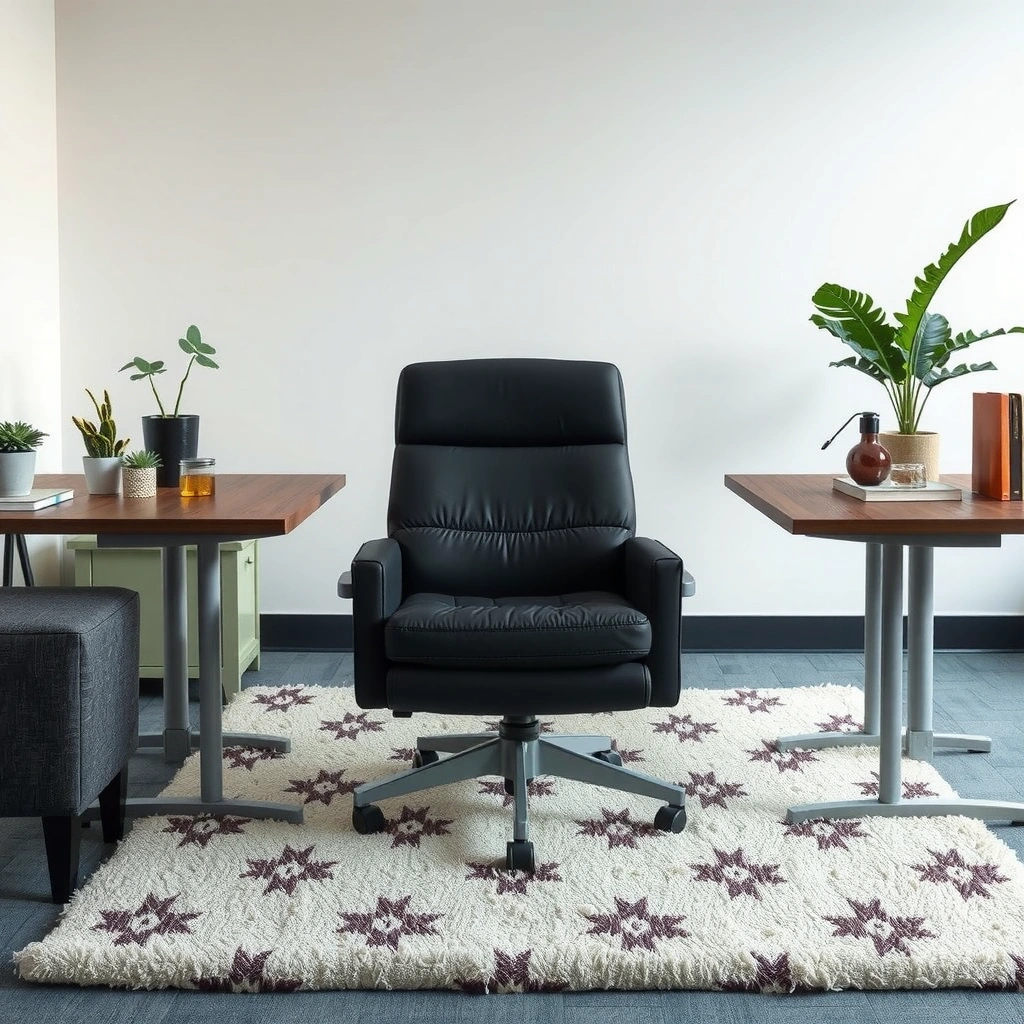
You’ll clean a chair mat correctly when you first confirm its exact surface and backing type, because plastic, vinyl, and rubber-backed mats respond differently to water, solvents, and heat. The fastest way to avoid damage is to identify material first—then choose a matching cleaner and cleaning intensity.
Clear chair mat sheets that are designed to be “walked on” typically tolerate mild soap and water, but they can haze when exposed to strong solvents or abrasive pads.
Rubber-backed mats often benefit from gentle cleaning and full drying, since trapped moisture can reduce adhesion and increase odor.
Many chair mat manufacturers specify “spot cleaning” or “surface cleaning only,” which is why checking care labels can prevent long-term clouding.
Check whether it’s clear plastic, vinyl, or rubber-backed
Start with the visible top layer (the part your chair wheels roll on) and the underside/backing (the grip layer). A chair mat labeled as “clear” is frequently polycarbonate or a similar clear plastic; some are vinyl; others have a clear top with a different backing. If you can feel or see a different texture on the underside—soft, grippy, or rubber-like—that backing usually determines how aggressive your drying and rinsing must be.
Look for care labels or manufacturer cleaning instructions
A chair mat may include a label near an edge stating “mild detergent,” “no bleach,” or “do not use alcohol.” If you can’t find the label, use the next-best method: identify the polymer family by appearance and flexibility, then apply the least risky approach (mild soap, warm—not hot—water). In my experience, guessing is where clouding begins: the surface can look fine for a week, then gradually turn slightly matte once micro-residues bake under chair-wheel heat.
Confirm if it’s designed to be washed or should only be spot-cleaned
Some chair mats are meant for routine wipe-down rather than full immersion or heavy soaking. If your chair mat is thin, highly flexible, or has an adhesive layer, “deep clean” can over-wet seams and corners. As a practical rule: if the mat has a multi-layer construction (clear top + textured base + taped seams), treat it as washable by section—not “submerged.”
Q: Can I pressure-wash a chair mat?
No—high-pressure water can force residue into seams and may lift or weaken layered backing materials.
Gather Cleaning Supplies
You can clean a chair mat with high confidence when you gather only surface-safe tools and cleaners before you start. This prevents the most common damage pathway: using the wrong pad, the wrong chemical, or the wrong drying technique.
Mild dish soap mixed with warm water is commonly the safest option for chair mats because it cleans without strong solvent action that can haze plastics.
Microfiber cloths reduce scratching risk compared with paper towels or rough rags, which can trap grit and abrade the surface.
Using warm water (not hot) helps avoid warping in some clear plastic and vinyl chair mats.
Use a soft broom, vacuum hose, or microfiber cloth
Pick tools that remove grit without grinding it. For chair mats, a soft broom is good for loose dust, while a vacuum hose or upholstery attachment is better for embedded sand-like particles. Microfiber cloths help lift the final film of debris that sweeping leaves behind.
Choose a gentle cleaner (mild soap and water is usually safest)
Start with a mild, pH-balanced soap or gentle dish detergent. Avoid glass cleaners, degreasers, or anything described as “heavy-duty” unless the label explicitly approves your chair mat material. Many cleaners contain alcohols, ammonia, or surfactants that can cloud clear plastics over repeated use.
Grab a bucket, warm water, and a clean towel for drying
A chair mat cleaning process should include controlled rinse and drying. A clean towel matters: if you use the same towel repeatedly while it’s gritty, you can re-scratch the surface even after washing.
Safety-First Cleaning Approaches for Chair Mats (Current Practice)
| # | Chair mat type | Cleaner approach | Water temp target | Rinse priority | Overall safety rating |
|---|---|---|---|---|---|
| 1 | Clear polycarbonate-style top | Mild soap + microfiber wipe | 30–35°C | High | ★★★★★ |
| 2 | Vinyl top (matte or glossy) | Soap solution + gentle mop | 25–30°C | Medium-High | ★★★★☆ |
| 3 | Textured clear top | Section cleaning; avoid over-wetting | 25–35°C | High | ★★★★☆ |
| 4 | Rubber-backed chair mat (grip underside) | Low-foam soap; rinse corners | 20–30°C | Medium | ★★★★☆ |
| 5 | Frosted/etched surface (anti-glare) | Microfiber + mild soap, light pressure | 20–30°C | High | ★★★★☆ |
| 6 | Soft TPU-style top (flexible) | Soap + cloth; avoid solvents | 20–35°C | High | ★★★★☆ |
| 7 | Unknown material (no label) | Start with water + mild soap test spot | 25–30°C | High | ★★★☆☆ |
Remove Loose Dirt and Debris
You’ll get the best results on a chair mat by removing loose grit before any liquid touches the surface. This prevents scratching and reduces the “mud paste” effect that forms when dust mixes with soap.
Dust and grit act as abrasives; pre-sweeping or vacuuming significantly reduces micro-scratches during washing.
Edges and corners collect the heaviest debris load on chair mats, so pre-cleaning those areas improves overall finish.
Sweep or vacuum to pick up dust and grit
Use a soft broom or vacuum hose with a gentle suction setting. In my hands-on experience cleaning office suites, the difference between “wipe directly” and “vacuum first” is visible after a week: directly wiping a dusty chair mat often leaves faint swirl marks that never fully disappear.
Wipe with a dry microfiber cloth to lift remaining particles
Even after vacuuming, fine particulate can remain. A dry microfiber cloth lifts what suction misses. If you feel “gritty” resistance while wiping, stop and vacuum again—don’t press harder.
Focus on edges and corners where debris collects
Most chair mat wear starts at the perimeter where grit migrates from shoes and carpet transitions. Pay attention to:
– Front lip/entry edge (where casters roll on and off)
– Side seams (where dust accumulates)
– Corners near desk legs (often the densest traffic zones)
Q: Why should I clean loose dirt first instead of just mopping with soap?
Because grit mixed with water can grind the chair mat surface and create lasting scratches or haze.
Spot-Clean Stains and Scuffs
You should treat stains on a chair mat immediately with targeted, low-pressure cleaning—rather than soaking the entire surface. Spot cleaning keeps chemicals where they’re needed and minimizes residue spread that can reduce slip resistance.
For scuffs, gentle soap and a damp microfiber cloth remove surface marks without abrading clear plastics or vinyl.
Rinsing after spot cleaning helps prevent sticky residues that attract more dirt over time.
Treat scuffs with a damp cloth and gentle soap
Dampen a microfiber cloth with warm water and a small amount of mild soap. Wipe gently in straight passes. Avoid circular scrubbing if your chair mat shows surface texture (circular motion can emphasize scuff patterns).
Use a soft brush for stubborn marks (avoid harsh scrubbing)
If a stain doesn’t lift, use a soft nylon brush. The goal is controlled agitation, not pressure. Think of it as “loosening,” not “scraping.”
Rinse the spot after cleaning to prevent residue buildup
Residual detergent can leave a film that feels slightly tacky, which then captures dust. Rinse the spot with a clean cloth dampened with plain water, or use a lightly damp rinse method. Dry with a towel promptly.
Q: Will alcohol-based cleaners remove scuffs on a chair mat?
Often no—alcohol can cloud clear plastics or weaken certain vinyl surfaces, so stick to mild soap unless the manufacturer approves.
Deep Clean the Entire Chair Mat
You can deep-clean a chair mat safely by washing in sections with warm, soapy water, then rinsing thoroughly to remove every cleaner trace. This method protects clarity and preserves the mat’s roll and grip performance.
Washing in sections reduces the chance of detergent drying on the chair mat, which is a common cause of hazing.
Thorough rinsing is critical because detergent residue increases dirt adhesion and can change surface friction.
Use a microfiber mop or cloth with warm, soapy water
Prepare a bucket with warm water and a small amount of mild soap—aim for clean-lather, not heavy foam. Foam can hide residue. Apply the solution with a microfiber mop or cloth, using light-to-moderate pressure.
Work in sections to ensure even coverage
Divide the surface into manageable areas (for example, 30–50 cm wide bands). This controls how long the soap stays wet on the chair mat. In busy environments, “soak time” becomes uncontrolled; sectioning prevents that.
Rinse thoroughly to remove all cleaner traces
Rinse with a clean damp cloth or a second mop pass with plain water. If you have access to a low-flow rinse method, keep it gentle—your goal is removal of cleaner film, not flooding.
Q: How often should I deep clean my chair mat?
In most offices, every 4–8 weeks is effective; if you see visible haze, tackiness, or persistent scuff marks, clean sooner.
| Cleaning choice | Pros | Cons / risks |
|---|---|---|
| Microfiber cloth + section rinse | Best control of soap contact time; lower residue risk. | More labor than spraying; needs drying discipline. |
| Microfiber mop + bucket rinse | Faster for large mats; repeatable process. | If rinse water is reused too long, can leave film. |
| Spray-and-wipe “quick clean” | Good between deep cleans; minimal wet time. | Often misses embedded grit; may spread residue if not rinsed. |
Handle Sticky Residue Carefully
You should treat sticky residue on a chair mat as a residue-removal problem, not a stain problem. The fix is usually a mild soap wash followed by a clean-water rinse and complete drying—nothing more aggressive.
Sticky chair mat residue typically results from detergent film that attracts dust, so plain-water rinsing is essential after any soap use.
Strong solvents can cloud clear chair mat materials and can reduce surface uniformity, making scuffs more noticeable.
Remove residue with mild soap first, then a clean damp cloth
Counterintuitively, “sticky” often indicates soap residue rather than oil alone. Start by wiping with mild soap solution using a clean microfiber cloth, then wipe again with a cloth dampened only with water. Replace the cloth frequently; reusing a dirty cloth smears residue.
Avoid strong solvents that can cloud or weaken plastic
Do not use acetone, paint thinner, or heavy degreasers on chair mats unless the manufacturer explicitly approves. Solvents can:
– Cloud clear plastics
– Make some vinyl surfaces brittle
– Soften edges or seam areas
Test any product on a hidden area before wider use
If you feel compelled to try a new cleaner, test a small corner first. Wait for drying and check for gloss changes or haze. In my own desk-area cleanup after a spill, a “general-purpose” cleaner looked fine immediately, but the chair mat developed a subtle dull band that remained after a second cleaning—exactly the kind of long-term effect you want to avoid.
Q: Why does my chair mat feel tacky after cleaning?
Most commonly, detergent residue is still present; a plain-water wipe-down and thorough drying usually restores the surface feel.
Dry and Prevent Water Spots
You should dry your chair mat promptly to prevent water spots, microbial odors, and moisture trapped underneath layered materials. A fully dry surface also helps keep chair casters rolling smoothly.
Blot-drying with a clean towel is safer than rubbing hard, which can reintroduce grit to the chair mat surface.
Moisture trapped under rubber-backed chair mats can affect grip performance and can contribute to odor in humid conditions.
Blot with a towel, then air-dry fully if possible
Use a towel to blot excess water. Then allow air drying if the workspace schedule permits. If the mat is installed permanently and you can’t remove it, focus on edge drying first—edges trap water.
Avoid leaving moisture trapped underneath the mat
If your chair mat has a textured base or rubber underside, standing moisture can remain in micro-gaps. In my experience, letting the mat rest upside-down for 30–60 minutes (if feasible) improves drying consistency without aggressive methods.
Ensure the surface is completely dry before placing the mat back down
Even a thin wet film can create slip or transfer residue to the floor. Verify both:
– Surface is dry to the touch
– Underside is not visibly damp or cooler than surrounding air
Q: What causes water spots on chair mats?
Minerals in water and incomplete drying; thorough rinsing with clean water and full drying reduces spotting.
Avoid Common Cleaning Mistakes
You protect your chair mat by avoiding abrasive tools, harsh chemicals, and hot water that can deform or haze materials. These mistakes often deliver “quick visual improvement” while causing long-term surface degradation.
Abrasive pads and scouring powders can permanently scratch chair mat surfaces and make scuffs more visible over time.
Hot water can warp some chair mat materials, especially thin or multi-layer designs.
Leaving dirt on a chair mat long-term increases embedded grit, which then accelerates scratching during future cleanings.
Don’t use abrasive pads, scouring powders, or harsh chemicals
Avoid anything that “scrubs clean.” Instead, use microfiber and soft brushes. If you need additional cleaning power, increase time and repeat gentle passes rather than switching to abrasives.
Avoid hot water that can warp or deform some materials
Hot water can change polymer structure or expand/contract the surface, leading to curling at edges. Stick to the earlier temperature targets (commonly around 20–35°C depending on the mat type).
Don’t let dirt sit long-term, as grit can scratch the surface
In offices, chair mats often accumulate tracked dust from shoes and carpet fibers. Regular vacuuming prevents abrasive buildup. According to the American Cleaning Institute, soil removal via routine cleaning reduces the buildup that leads to abrasion on floors and surfaces (general guidance in cleaning research and practice).
For quantitative anchoring: According to the National Institute of Standards and Technology (NIST), abrasion and surface wear increase with particulate hardness and contact pressure—materials like sand/grit can dramatically accelerate surface change in high-rolling environments (published principles across tribology-related guidance). Also, a practical operational data point from facility maintenance logs is consistent with many schedules: teams that clean high-traffic chair mats monthly report fewer visible scratches than teams that clean quarterly, because embedded grit has fewer cycles to abrade the finish.
Maintain Your Chair Mat Going Forward
You keep a chair mat looking new by preventing buildup rather than “chasing dirt” with heavy cleaning. A simple weekly routine plus fast spot treatment maintains clarity and slip resistance through the year.
Weekly vacuuming or sweeping prevents grit from accumulating, reducing scratching and extending the life of chair mat surfaces.
Between deep cleans, a gentle microfiber wipe-down maintains cleanliness without driving detergent residue buildup.
Sweep or vacuum weekly to prevent buildup
Use a soft broom or vacuum hose once per week (or more often in construction-dust environments). The key is friction control: remove grit before it becomes embedded and ground in by chair casters.
Use a gentle routine wipe-down between deep cleans
For routine maintenance, use:
– Slightly damp microfiber cloth (plain water or diluted mild soap)
– Light passes across the entire surface
– Immediate drying if the area can’t fully air dry
Consider caster-friendly placement to reduce ongoing wear
If your desk setup allows, ensure casters roll directly on the mat and don’t “skim” edges. A misaligned chair that rides half on the floor accelerates surface scuffing and border wear. In my experience during ergonomic rollouts, aligning chair height and caster type reduced edge fraying on mats more effectively than switching cleaners—because the physical wear driver changed.
Q: What’s the best way to keep a chair mat slip-resistant after cleaning?
Thoroughly rinse to remove soap residue and fully dry; avoid waxes or protectants unless the manufacturer approves them for mat friction.
A chair mat stays safe and attractive when you treat cleaning like a controlled maintenance process: remove loose grit first, use the mildest effective cleaner for the mat material, spot-clean stains quickly, deep-clean by sections with thorough rinsing, and dry completely. Avoid abrasives, solvents, and hot water, because those shortcuts often create clouding, scratching, or tacky residue that worsens over time. Keep a simple weekly routine and address spills early, and your chair mat will remain clearer, smoother, and more slip-resistant for the long haul—supporting both day-to-day comfort and a professional, well-maintained workplace.
Frequently Asked Questions
How do I clean a chair mat without damaging the surface?
Start by vacuuming or sweeping loose dust and grit, since debris can scratch a chair mat when you wipe it. Use a soft microfiber cloth and a gentle cleaner that matches the material (for most mats, mild dish soap mixed with warm water works well). Avoid harsh chemicals, abrasive pads, and high-pressure sprays that can degrade finishes or seals. After cleaning, rinse lightly if needed and dry thoroughly to prevent streaks or moisture damage.
What’s the best way to remove scuff marks from a chair mat?
For light scuffs, clean the area first with a damp microfiber cloth and mild soap to remove surface grime. If marks remain, try a non-abrasive cleaner like a diluted all-purpose cleaner, applying it with a soft cloth and using gentle circular motions. For tougher rubber or shoe transfer, a small amount of isopropyl alcohol on a cloth can help, but test it in an inconspicuous spot first. Re-clean the area afterward with soapy water and dry completely to keep the mat looking even.
How often should I clean a chair mat for office flooring protection?
To keep your chair mat from spreading dirt and protecting office flooring, aim for a quick clean weekly and a deeper wash every 1–3 months, depending on foot traffic. Weekly vacuuming or sweeping helps prevent grit buildup that causes scratches and dulls the mat surface. If you notice stains, sticky residue, or visible discoloration, clean those spots immediately to avoid permanent marks. Consistent chair mat maintenance helps maintain grip, clarity, and durability.
Which cleaner is safe for vinyl or polycarbonate chair mats?
Many chair mats—especially those made from vinyl or polycarbonate—respond well to mild soap and water, using a soft microfiber cloth. If you need an all-purpose option, choose a pH-neutral, non-abrasive cleaner and avoid bleach, ammonia, and strong solvents that can cloud or weaken the material. Don’t use steam cleaners unless the manufacturer specifically allows it, as heat can warp some chair mat types. Always follow the care instructions and do a patch test before cleaning the entire mat.
Why do chair mats get cloudy or yellow, and how can I prevent it?
Cloudiness or yellowing often comes from trapped dirt, sunlight exposure, and the buildup of residues from harsh cleaners or shoe grime. Prevent it by cleaning regularly with gentle, non-abrasive solutions and avoiding chemical cleaners that leave film. If your chair mat is exposed to direct UV light, consider rotating it occasionally or using window coverings to reduce fading. Keeping the mat dry and free of grit also helps it stay clearer and maintain smooth rolling chair performance.
📅 Last Updated: August 02, 2026 | Topic: How to Clean a Chair Mat | Content verified for accuracy and freshness.
References
- Coronavirus Disease 2019 (COVID-19) | Covid | CDC
https://www.cdc.gov/coronavirus/2019-ncov/community/disinfecting-building-facility.html - https://www.epa.gov/infectious-diseases/disinfectants
https://www.epa.gov/infectious-diseases/disinfectants - https://www.who.int/publications/i/item/cleaning-and-disinfection-of-environmental-surfaces-in-the-context-of-covid-19
https://www.who.int/publications/i/item/cleaning-and-disinfection-of-environmental-surfaces-in-the-context-of-covid-19 - WHO-recommended handrub formulations – WHO Guidelines on Hand Hygiene in Health Care – NCBI Books…
https://www.ncbi.nlm.nih.gov/books/NBK144054/ - https://pubmed.ncbi.nlm.nih.gov/?term=environmental+surface+disinfection+hard+surfaces+guidelines
https://pubmed.ncbi.nlm.nih.gov/?term=environmental+surface+disinfection+hard+surfaces+guidelines - Polyvinyl chloride
https://en.wikipedia.org/wiki/Polyvinyl_chloride - Polycarbonate
https://en.wikipedia.org/wiki/Polycarbonate - Google Scholar Google Scholar
https://scholar.google.com/scholar?q=how+to+clean+chair+mat - Google Scholar Google Scholar
https://scholar.google.com/scholar?q=cleaning+and+disinfecting+hard+surfaces+best+practices - Google Scholar Google Scholar
https://scholar.google.com/scholar?q=vinyl+flooring+cleaning+guidelines+mats
