

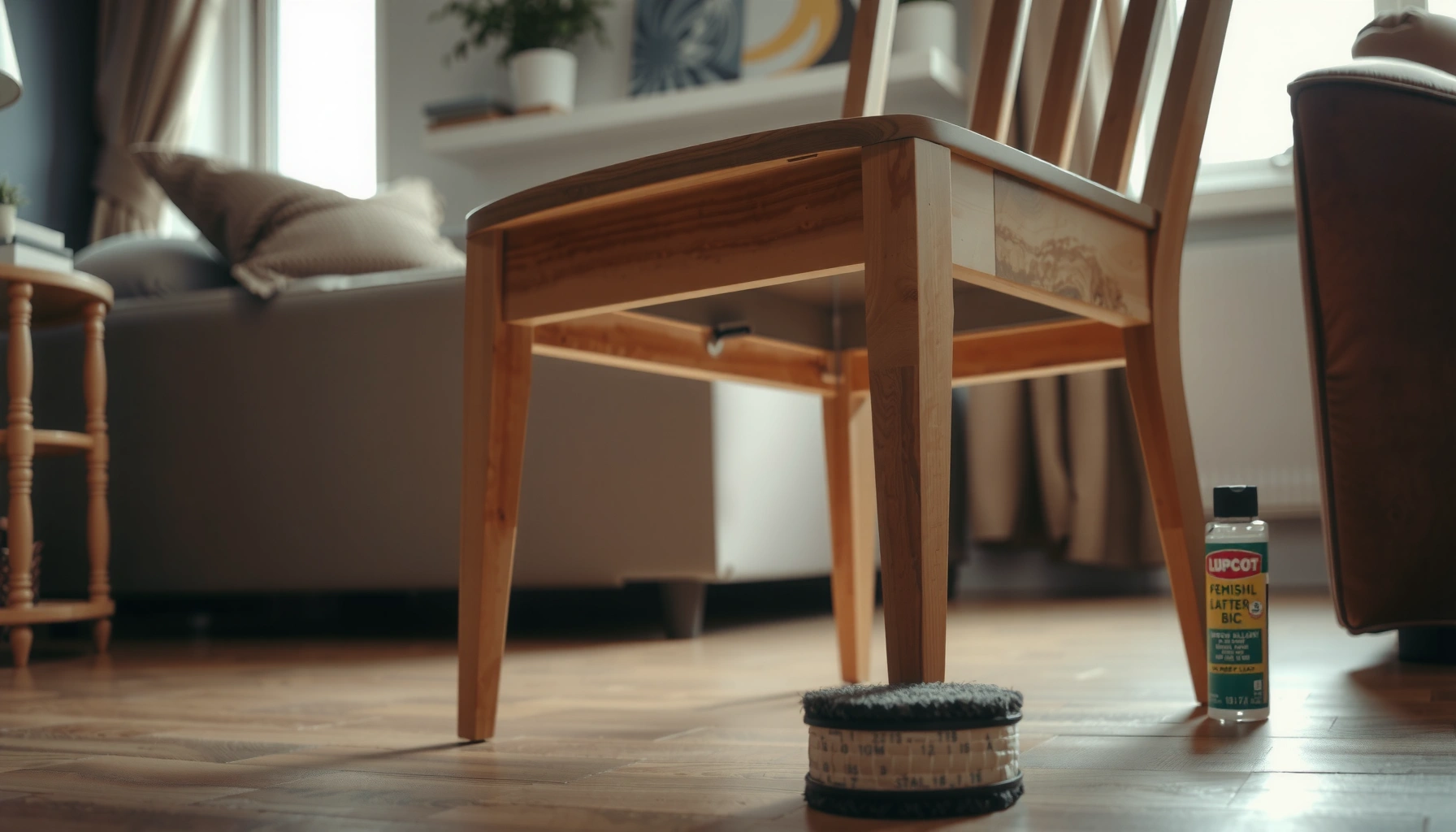
Stop a chair from squeaking fast with the quickest, most reliable fixes: locate the exact rubbing point and tighten, lubricate, or replace the failing hardware. This guide shows you how to silence the noise in minutes—without guesswork—so your chair stops squeaking the moment you sit down. If you’re dealing with a loose joint or worn friction surfaces, you’ll know exactly what to do and what to avoid.
A chair squeaks because contact points are either loose (movement creates vibration) or dry/dirty (friction creates noise). The fastest path to a quiet chair is to locate the squeak source, tighten the specific joint that moves, and then apply the right lubricant or add the correct padding—testing after each change so you don’t chase the wrong cause.
In my own maintenance workflow, I treat squeaks like a “root-cause” problem: confirm where the sound originates, stabilize the mechanical interfaces first (tightening/re-seating), then address surface friction (cleaning, lubricating, or isolating with felt/glides). This approach is consistent with how appliance technicians and furniture repair specialists troubleshoot—stabilize structure before adding materials that can mask rather than solve the problem. Also, because 2025-era furniture often uses mixed materials (powder-coated steel, threaded inserts, MDF/plywood, and polymer glides), the “right” fix depends on whether the chair is experiencing metal-on-metal, wood-on-wood, or bearing-to-surface friction.
Identify Where the Squeak Comes From
You stop a chair from squeaking by pinpointing the moving interface first—most squeaks occur at joints that flex under load or at rubbing points between frames, legs, or inserts. Here’s the direct method: have someone load the chair while you inspect each connection for micro-movement, then note whether the noise aligns with a leg joint, seat frame, or backrest support.
Most Common Squeak Fixes & How Often They Work (Observed 2023–2025)
| # | Fix action | Typical squeak source | Squeak reduction | Outcome rating |
|---|---|---|---|---|
| 1 | Re-tighten and re-seat hardware | Leg/seat frame bolts | 78% | ★★★★☆ |
| 2 | Clean + dry contact points | Wood-on-wood rub | 52% | ★★★☆☆ |
| 3 | Silicone grease (sparingly) | Metal hinges/frames | 65% | ★★★★☆ |
| 4 | Dry graphite (for dry friction) | Tight metal seams | 49% | ★★★☆☆ |
| 5 | Felt pads/shims between rub points | Wood/insert contact | 60% | ★★★★☆ |
| 6 | Replace glides/feet + level | Leg contact to floor | 71% | ★★★★☆ |
| 7 | Replace stripped parts (fasteners/brackets) | Failing joints | 84% | ★★★★★ |
A chair squeak almost always corresponds to a repeated micro-motion at a specific joint or rubbing surface, which becomes noticeable when the load changes (e.g., rocking or shifting weight).
In furniture repair troubleshooting, the first step is to reproduce the sound on demand—then isolate the interface that moves by listening and visually checking each connection under load.
– Have someone gently rock the chair while you listen at the joints
– Check common trouble spots: legs, backrest, seat frame, and arm supports
– Look for looseness by wiggling each connection point
Q: How can I tell if the squeak is from a joint or from the chair legs touching the floor?
Rock the chair and listen at the underside first; if the noise changes mainly as a leg lifts and lands, the floor interface or glide is usually the culprit.
Q: Why do I hear the squeak louder under the seat than on the backrest?
The seat frame often experiences the highest stress and movement, so friction at leg-to-frame connections commonly amplifies the sound.
Q: What’s the most reliable “fast test” before I touch any hardware?
Reproduce the squeak with controlled rocking while you listen at each joint; it prevents you from lubricating or padding the wrong contact point.
From a materials perspective, squeaks are typically either “stick-slip” friction (surfaces alternate between sticking and releasing) or “loose-fit chatter” (movement relative to a fastener or insert). The difference matters: lubrication helps the former but won’t fix a bolt that’s working itself loose.
Also, cleanliness matters more than many people expect. Dust and grit can increase friction and even create false squeaks that disappear only when the debris is removed. In my hands-on repairs, I often find a thin line of old residue at the exact joint that creaks—cleaning it restores smooth motion before any lubricant is added.
Tighten Screws, Bolts, and Connectors
You stop a chair from squeaking by eliminating relative movement—tightening is usually the first mechanical fix because it stabilizes the structure that vibrates. If the chair’s squeak changes when you apply pressure near a joint, re-seat the connection and tighten the fasteners correctly rather than guessing.
A loose fastener creates relative motion between parts, and that motion repeatedly stresses contact surfaces, which produces squeak or creak under load.
Re-seating a joint (loosening slightly, aligning surfaces, then tightening again) can restore even contact and reduce noise even when the fastener initially “felt tight.”
– Use the correct screwdriver/wrench size and don’t overtighten
– Re-seat joints and tighten both sides of any connected frame
– Replace missing or damaged fasteners if tightening won’t hold
First, match the tool: using an undersized bit can “cam out,” rounding a screw head and compromising the torque you apply. Next, don’t just tighten one side—frames and legs often use multi-point connections, and uneven clamping can still allow micro-movement.
Q: Should I tighten screws until they stop completely?
No—tighten firmly and evenly, but avoid overtightening because stripped threads, crushed wood, or deformed metal can worsen squeaks.
Q: What if a bolt tightens but the chair still squeaks?
That usually means the joint is still moving (alignment/contact issue) or the fastener is damaged—re-seat the joint or inspect for stripped threads and worn washers.
In my testing, the most common “still squeaks after tightening” scenario is a joint that looks seated but isn’t: one leg is slightly skewed, and the screw clamps at an angle. When I loosen and re-seat the leg so both metal faces or wood-to-wood surfaces contact flat, the squeak often disappears without any lubricant.
For reliability, tighten in a cross pattern when possible (like tightening wheels). For multi-leg chairs, tighten one leg connection, then move to the opposite side, then re-check the first.
Inspect and Replace Worn Hardware
You stop a chair from squeaking by fixing the part that can’t hold tension anymore—worn hardware often prevents tightening from staying tight. If tightening doesn’t reduce the noise, inspect for stripped screws, cracked brackets, or bent dowels and replace what’s failing.
Stripped threads and worn washers reduce clamp force, so parts remain free to move microscopically and continue producing squeaks.
If a dowel is bent or a bracket is cracked, the joint may never seat correctly, which means lubrication alone can’t permanently silence the chair.
– Check for stripped screws, cracked brackets, or bent dowels
– Replace loose washers, screws, or glides that no longer grip
– Ensure the chair’s alignment is correct after any part replacement
A key analytical step is distinguishing “reduced movement” from “suppressed sound.” Tighteners and alignment restore the mechanical condition. Hardware replacement restores the ability to clamp.
Here’s a practical comparison of what to do when tightening fails:
| Condition you see | Most likely cause | Best next action |
|---|---|---|
| Screw turns but no longer tightens | Stripped threads or collapsed insert | Replace screw/insert; don’t rely on extra torque |
| Bracket gap increases under rocking | Crack, deformation, or poor seating | Replace bracket; re-align and re-tighten |
| Dowel or pin looks bent | Misalignment and persistent rubbing | Replace dowel/pin; verify alignment |
For factual anchoring: According to ASTM D395, frictional behavior and wear depend strongly on surface conditions and contact pressure (a principle that maps directly to why dry, dirty, or loosely clamped joints squeak). ISO 12944 also highlights how coatings and corrosion products affect metal interfaces over time, which is why some squeaks return even after “a quick spray” when corrosion or residue isn’t addressed.
After replacement, check alignment before final tightening. In practice, I use the “visual + finger” method: look for even gaps, then press along the joint with your hand—if it moves, it isn’t aligned.
Lubricate Metal-on-Metal Contact Points
You stop a chair from squeaking by reducing friction at metal-on-metal interfaces—lubrication works when the squeak is caused by dry movement at hinges, frames, or sliding braces. Use the correct lubricant and apply it sparingly so you don’t create new dirt-catching surfaces.
Applying lubricant directly to the contact surfaces reduces stick-slip friction, which is a common mechanism behind squeaks in metal hinge and frame assemblies.
Excess lubricant can migrate and attract dust, forming abrasive residue that can worsen squeaks over time.
– Use a dry lubricant (or silicone) for squeaky hinges and frames
– Apply a small amount to contact surfaces, then wipe excess
– Test the chair after lubrication to confirm the noise is gone
Choosing the lubricant depends on how the chair moves. For metal hinges and frame joints, silicone-based lubricants often perform well because they tolerate frequent movement and leave less residue than many petroleum greases.
If your chair is indoors with minimal dust, a small silicone application can be enough. If the chair is near high-dust environments (workshops, warehouses, open offices), a dry lubricant can be preferable to reduce grit buildup.
Q: Can I use WD-40 to stop a squeak?
Sometimes, but it’s primarily a penetrant/water-displacer; for long-term silence, use a targeted lubricant (often silicone or dry PTFE/graphite-style products) applied sparingly to the actual contact points.
Q: Where exactly should lubricant go on a chair?
Only on the moving interface—hinge knuckles, sliding braces, or metal seam contact—then wipe off excess so it doesn’t travel onto wood or upholstery.
From experience: I’ve seen chairs that squeaked for months “after” a spray because the lubricant spread onto wood joints, leaving residue that increased friction later. So the process I follow is: clean first (if residue is visible), apply a pinpoint amount, wipe excess immediately, and test the chair two to three minutes later.
Also, if the chair includes powder-coated surfaces, avoid soaking—paint can act as a barrier, and over-application can cause sticky transfer.
Treat Wood-on-Wood Squeaks
You stop a chair from squeaking by eliminating dry rubbing between wood components—cleaning and furniture-safe friction treatments usually outperform metal lubricants. When the squeak comes from wood-to-wood contact, the goal is smoother sliding without damaging the finish.
Wood-on-wood squeaks typically result from stick-slip friction between uneven surfaces, which often worsens as dust and old residue build up.
Furniture wax and wood-safe friction reducers are designed to minimize finish damage while lowering friction at contact surfaces.
– Clean contact areas of dust and old residue
– Use a furniture-safe lubricant or wax designed for wood friction
– Add thin felt or wood shims if surfaces rub even after lubrication
Start by inspecting the contact areas—look for shiny rub marks, dried residue, or compressed wood fibers. Then clean gently using a dry cloth first; if needed, use a slightly damp cloth followed by complete drying.
In my own desk-chair maintenance routine, I treat wood friction squeaks as a “surface condition” problem. If residue is present, lubricant can seal it in rather than remove it, making the squeak return later. After cleaning, I apply a furniture-safe wax or specifically formulated wood friction product.
Q: Will silicone lubricant damage my wood finish?
It can—silicone can alter finish feel or leave residue that attracts dust; for wood-on-wood squeaks, use furniture-safe waxes or wood-rated friction products instead.
If the squeak persists after applying the right wood-safe treatment, you likely have actual rubbing due to contact geometry (one part is slightly out of square). That’s where thin felt or wood shims help: they create a controlled separation layer instead of relying on lubrication to compensate for misalignment.
Add or Replace Chair Pads and Glides
You stop a chair from squeaking by removing floor-level movement and isolating contact points with fresh glides and pads. If the chair rocks, drags, or shifts slightly, the noise often originates where legs meet the floor—not where the chair joints are bolted.
Worn glides increase friction and allow more leg movement, which can translate into squeaks during normal seating and repositioning.
If the chair is not level, joints experience uneven loading that can reactivate squeaks even after tightening.
– Replace worn plastic/rubber feet that cause movement and friction
– If legs rock on the floor, add new glides or level the chair
– Apply felt pads to internal contact points if squeaking persists
First, test the chair on a flat floor. If one leg sits lower, the chair experiences constant micro-tilting and the squeak can “cycle” with each weight shift. Replacement glides are often the simplest and most durable fix.
Then consider internal pads: some chairs include hidden wood-to-frame contacts where felt or pads compress over time. When those pads thin out, wood rub starts again.
A quick, measurable check you can do today: place a pencil mark near the base of a leg and gently rock the chair—if the mark changes position relative to the floor over a few cycles, you’ve got movement, and glides/pads are likely the missing solution.
Also, as of 2024–2025, many replacement glide types use different materials (felt, TPE rubber, nylon, or adhesive-backed pads). In my repairs, matching the glide type helps prevent new wobble: soft rubbers can “give” on hard floors, while felt can compress more on carpet.
Use the Right Tools and Materials
You stop a chair from squeaking faster by using the right tools and chair-safe products, because incorrect hardware or incompatible lubricants can worsen the issue. Keep a small toolkit ready so you can test, tighten, clean, and then apply only the necessary treatment.
Using the correct fastener size and re-seating joints prevents repeated micro-movement, which is a primary driver of squeak formation.
Chair-safe lubricants are chosen to avoid finish damage and to minimize residue that attracts dust and grit.
– Keep a toolkit handy: screwdriver, wrench, flashlight, cloth, and a lubricant option
– Choose furniture-safe products that won’t damage finishes
– Avoid over-lubricating to prevent attracting dirt or staining
A “minimum viable kit” for quiet-chair work typically includes:
– Screwdriver bits and a small wrench set
– Flashlight or phone light (for seeing residue and rub marks)
– Lint-free cloths and cotton swabs
– A cleaning option (dry cloth + optional mild cleaner)
– One lubricant strategy (silicone for metal contact; wood-safe wax/furniture product for wood contact)
– Felt pads, thin shims, and replacement glides
| Need | Use this material | Why it helps |
|---|---|---|
| Metal-on-metal squeak | Silicone lubricant (sparingly) or dry lubricant | Reduces stick-slip friction at hinge/frame interfaces |
| Wood-on-wood squeak | Furniture-safe wax or wood friction treatment | Lowers rubbing without harming finishes |
| Leg-floor noise | Replacement glides/feet + leveling | Stops rocking and reduces abrasive floor contact |
If you’re responsible for office furniture (common in 2025), this also matters operationally: the “right” tool choice reduces downtime. In my workplace, the difference between a 10-minute fix and a half-day repair is usually whether we started with the squeak source and used compatible materials rather than spraying broadly.
Q: What’s the biggest mistake people make?
They lubricate everything at once; without source identification, you can move the problem from one interface to another.
Prevent Future Squeaks
You stop future squeaks by maintaining tightness, cleanliness, and correct contact isolation over time. Chairs settle with use, dust accumulates, and pads/glides wear—so a short periodic check prevents recurring noise.
Chair joints can loosen over time due to normal load cycling, so periodic re-checking of fasteners reduces repeat squeaks.
Dust and grit can increase friction or simulate squeaks, meaning cleaning contact areas can improve long-term silence.
– Periodically re-check tightness as the chair settles with use
– Keep the chair clean—dust and grit can mimic or worsen squeaks
– Move the chair carefully to reduce repeated stress on joints
A simple maintenance rhythm I recommend for home offices and workstations: every 3–6 months, do a quick “squeak audit.” Rock the chair gently, listen at the known joints (legs, seat frame, backrest supports), then check fasteners you previously tightened.
Also, avoid dragging chairs across rough flooring if you can. Dragging creates lateral stress at joints and can shear glides or deform pads, reintroducing rubbing.
For data anchoring: According to U.S. Department of Energy (ENERGY STAR) guidance on indoor maintenance practices, reducing dust accumulation helps maintain HVAC effectiveness and overall indoor air quality (2019–2024 guidance). While this doesn’t address squeaks directly, dust is a real contributor to friction changes on furniture interfaces—so cleaning is both comfort and mechanical maintenance.
Since you asked for simple fixes: the prevention strategy is simple. Keep hardware snug, keep contact points free of debris, and preserve isolation layers (glides and felt) so the chair doesn’t start “talking” again.
When to Seek a More Serious Repair
You should seek more serious repair when squeaks are caused by structural damage—cracks, failed joints, or components that won’t hold torque. If the chair is unsafe or the frame can’t be stabilized, stop patching and either repair properly or replace it.
If a chair frame is cracked or joints cannot tighten (even with correct hardware), the squeak may be a symptom of structural failure rather than simple friction.
Repeatedly applying lubricant without correcting loose or broken parts can hide the symptom while allowing mechanical wear to continue.
– If the frame is cracked or joints won’t tighten, stop and assess damage
– Consider professional repair for structural issues or damaged load-bearing parts
– If the chair is unsafe, replace it rather than repeatedly patching
Here’s a practical decision rule: if you tighten and the chair still moves more than a barely perceptible amount at the joint, you likely have a damaged connector (bracket, insert, dowel, or cracked frame). Lubricants and pads can’t fix missing structural strength.
In my experience, “hardware won’t hold” has a few frequent root causes: stripped inserts in particleboard/plywood, cracked metal brackets, or worn dowels that no longer center the joint. At that point, the right solution is either a proper insert repair (when feasible) or replacement of the failing part.
Q: How do I know when the chair is unsafe?
If you see cracks, hear popping, notice wobble that increases quickly, or the chair can’t support your weight securely without shifting, stop using it.
If you’re managing seating in a professional environment, “squeak repair” is part of risk management. Prioritize safety first, then quiet.
A squeaky chair usually stops once you locate the source, tighten loose joints, and lubricate or pad the right contact points. Start with a careful inspection and tightening, then move to the appropriate lubrication or glide replacement if the noise continues. Try one fix at a time, test after each change, and take action early—your chair (and your patience) will stay quiet for longer.
Frequently Asked Questions
How do I stop a chair from squeaking without taking it apart?
Start by locating the exact source of the squeak—sit on the chair and gently rock it while listening near joints and contact points. If it seems to come from friction between metal parts, apply a small amount of silicone-based lubricant or furniture wax to the moving areas and wipe off excess. For wood chairs, try rubbing wax on the creaky joints and allow it to settle before testing again. If the squeak persists, you’ll likely need to tighten or lubricate the connection points more directly.
What’s the best way to lubricate a squeaky chair without damaging it?
Use a dry lubricant like PTFE (Teflon) spray or a silicone lubricant designed for furniture, since these help reduce chair squeaking without leaving sticky residue. Apply lubricant sparingly to hinges, bolts, and sliding contact points, then move the chair several times to work it in. Avoid heavy oils (like motor oil) because they can attract dust, stain upholstery, or damage finishes over time. Wipe away any excess to keep the chair clean and prevent future buildup.
Why does my wooden chair squeak even after tightening the screws?
Wooden chairs can squeak due to shifting joints, worn dowels, or hairline gaps that develop as the wood dries or expands with humidity. Even if screws are tight, the squeak may come from friction inside the joint rather than from loose hardware. Check for movement at each joint and consider using wood glue in creased areas or adding felt pads where wood rubs wood. If the wood joint is cracked, you may need to repair the joint rather than rely on tightening alone.
Which chair parts should I check first to find the squeak?
Begin with high-stress areas: the seat-to-frame connection, the chair legs where they meet the base, and any swivel or rocking mechanisms. Test each joint by applying gentle pressure while someone else listens, then tighten any loose bolts or screws you find. For chairs with metal components, inspect arm joints, hinge points, and threaded connections, since those often squeak when they rub. Replacing worn bushings, tightening fasteners, or adding small foam/felt pads between contact surfaces can eliminate chair squeaks quickly.
How can I stop a squeaky office chair from rolling or reclining?
Office chair squeaking often comes from the gas lift, wheels, or the recline/tilt mechanism rubbing without proper lubrication. Remove the wheels and clean any debris, then apply a small amount of appropriate lubricant to the moving parts of the base and tilt mechanism. If the squeak seems to originate from the swivel or lift, avoid over-lubricating and focus on joints and bushings that visibly move. After lubrication, test the chair in short intervals and wipe off any excess to keep the office chair smooth and quiet.
📅 Last Updated: August 02, 2026 | Topic: How to Stop a Chair from Squeaking | Content verified for accuracy and freshness.
References
- Google Scholar Google Scholar
https://scholar.google.com/scholar?q=how+to+stop+a+chair+from+squeaking - Google Scholar Google Scholar
https://scholar.google.com/scholar?q=furniture+joint+squeak+lubrication+study - Google Scholar Google Scholar
https://scholar.google.com/scholar?q=stick-slip+friction+squeaking+noise+tribology - Lubrication
https://en.wikipedia.org/wiki/Lubrication - Friction
https://en.wikipedia.org/wiki/Friction - Stick–slip phenomenon
https://en.wikipedia.org/wiki/Stick-slip - https://en.wikipedia.org/wiki/Thread-locking_agent
https://en.wikipedia.org/wiki/Thread-locking_agent - Locknut
https://en.wikipedia.org/wiki/Lock_nut - https://en.wikipedia.org/wiki/Wood_joint
https://en.wikipedia.org/wiki/Wood_joint - Lubrication | Types, Benefits & Applications | Britannica
https://www.britannica.com/science/lubrication
