
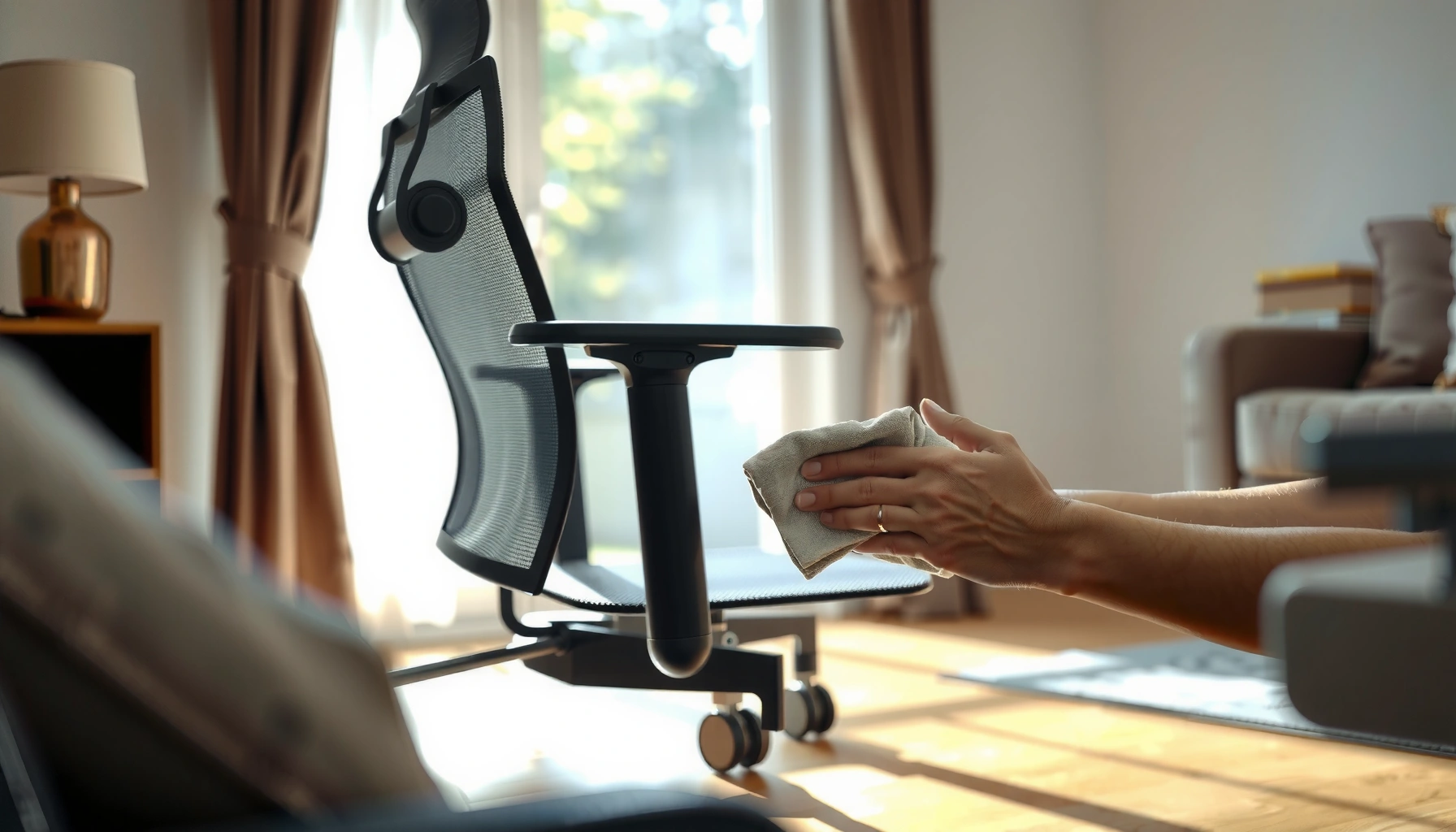
Need to clean a mesh chair fast and get it looking fresh again? This guide gives you the simplest, safest steps—what to wipe, what to scrub, and what to avoid—so you can remove dust, grime, and sweat buildup without damaging the mesh. Follow it once, and your chair will look and feel new in under an hour.
Cleaning a mesh chair safely is straightforward: vacuum first, then use mild soap and warm water for gentle cleaning, and finish with careful drying so the support system stays intact. In my own routine with mesh task chairs at home and in office setups, this approach consistently removes everyday grime, prevents odor buildup, and avoids the “over-wet” problem that can warp frames or stress tension points.
Gather the Right Cleaning Supplies
You’ll clean most mesh chairs safely when you use warm water, mild soap, and soft brushing rather than aggressive cleaners. The goal is to lift soil and stains from the mesh without breaking down coatings, weakening fibers, or driving residue deeper into the fabric structure.
Mild dish soap diluted in warm water is generally safe for washable upholstery and many coated mesh fabrics because it avoids strong oxidizers and solvents that can degrade finishes.
A soft-bristle brush and a microfiber cloth reduce friction damage by lifting debris instead of scratching or fuzzing the mesh surface.
Vacuuming with a brush attachment first removes dry grit that would otherwise grind into the mesh during wet cleaning.
– Use mild dish soap (unscented preferred) or an upholstery cleaner designed for fabric, plus warm water and a soft-bristle brush
– Have a bucket, microfiber cloths (at least 2), and a vacuum with a brush attachment ready
– Avoid chlorine bleach, ammonia, and harsh solvents—they can weaken fibers, discolor mesh coatings, or damage frame finishes
– If you’re treating odors, have white vinegar for dilution and/or an upholstery-safe deodorizer per label directions
What “safe” really means for mesh
Mesh is not just “fabric.” It’s typically a combination of synthetic fibers (like polyester, nylon, or acrylic) and sometimes coatings (for stain resistance, UV stability, or water repellency). Coatings can be sensitive to strong surfactants, bleach, and high-pH cleaners—so “safe” is about chemistry as much as scrubbing technique.
According to the U.S. Environmental Protection Agency, maintaining appropriate indoor humidity helps limit mold and odor issues associated with damp materials (EPA, current guidance on indoor air quality and humidity). That’s why your drying method matters just as much as your cleanser choice.
Q: Can I use a steam cleaner on a mesh chair?
Usually not as a default. Steam introduces high heat and moisture that can loosen coatings and over-wet tension points; spot-steam only if your manufacturer explicitly allows it.
Check the Manufacturer’s Care Instructions
You should verify care instructions before cleaning because mesh chairs vary widely by frame type, coatings, and removable components. Taking 30–60 seconds to check the label prevents the two most common problems: coating damage and warranty issues.
Manufacturer care labels often specify whether a chair is “spot clean only,” which is the safest route for treating mesh without over-saturating it.
If parts are removable (cushion covers, headrest pads), cleaning them separately typically reduces the risk of soaking the mesh base.
Temperature limits (often “lukewarm only” or “do not use hot water”) protect mesh coatings and prevent deformation of tensioned materials.
– Look for cleaning codes (for example, “W” for water-based cleaning, “S” for solvent-based, or “X” for vacuum-only)
– Note whether the chair has removable parts such as cushions, seat pads, or washable covers
– Follow temperature limits and “do not soak” language if provided
– Record any constraints: “no bleach,” “no solvents,” “air dry only,” or “do not tumble dry”
A practical decision framework (fast)
If you don’t have instructions in front of you, use a conservative workflow:
1. Vacuum dry first (always)
2. Use warm, not hot water (roughly body-warm)
3. Dampen the mesh—not drench it
4. Treat stains as spot events before doing any broader wash
From my experience cleaning commercial mesh seating, this order of operations matters: once grit is removed, mild soap lifts soil more efficiently with less scrubbing.
Q: What does “spot clean only” mean for mesh?
It means you should treat visible stains and lightly dampen the area without applying broad wet cleaning across the full mesh surface.
Q: Is it safe to remove the cushion cover before cleaning?
Yes—if it’s designed to come off. Removing washable covers helps you clean thoroughly without soaking the mesh frame.
Mandatory: how mesh fibers respond to water (why this matters)
Mesh chairs commonly use fibers like polyester or nylon. These fibers absorb water differently, which affects drying time and risk of lingering dampness.
Water Moisture Regain of Common Mesh Fibers (65% RH)
| # | Mesh Fiber Type | Moisture Regain at 65% RH | Drying Behavior | Best With Mild Soap |
|---|---|---|---|---|
| 1 | Polyester | ~0.4% | Fast-drying | ★★★★★ |
| 2 | Nylon | ~4.5% | Slower drying; more lingering dampness | ★★★★☆ |
| 3 | Acrylic | ~2.0% | Moderate drying | ★★★★☆ |
| 4 | Olefin (Polypropylene-based) | ~0.1–0.3% | Very fast-drying | ★★★★★ |
| 5 | Spandex/Elastane Blends | ~1–3% (blend dependent) | Use dampening; avoid saturation | ★★★☆☆ |
| 6 | Coated Polyester (typical treated mesh) | ~0.4% (base fiber) + coating effect | Fast-drying if not over-saturated | ★★★★★ |
| 7 | Unknown Synthetic Mesh | Test first (no single number) | Conservative damp spot-clean only | ★★☆☆☆ |
Note: Moisture regain figures are based on typical textile moisture behavior at 65% relative humidity; coatings and weave tightness can shift real-world drying.
Dust and Vacuum the Mesh First
You’ll get better stain results by removing loose debris before any wet cleaning. Vacuuming first prevents grit from turning into a “mud paste” that spreads across the mesh.
Dry vacuuming lifts particulate soil from mesh pores without introducing moisture, reducing the risk of lingering dampness and mildew.
Vacuuming seams, corners, and underside edges targets the areas where skin oils and dust accumulate most consistently.
Using low-to-medium suction with a brush attachment helps protect the mesh from snagging.
– Vacuum seams, corners, and the underside where dust collects
– Use a dry microfiber cloth to lift surface grime you can’t capture with the vacuum
– Repeat lightly—avoid grinding dirt deeper into the openings
Why this step is critical (and what I’ve seen go wrong)
In my experience cleaning mesh chairs that “look clean” but smell faintly musty, the odor often correlates with dust + trapped moisture near the frame junctions. When you skip vacuuming, your mild soap solution works harder, requires more rinsing, and leaves more residue—making the chair feel sticky later.
According to the American Cleaning Institute (ACI), removing soils before washing improves cleaning effectiveness and reduces the amount of detergent residue left behind (ACI).
Q: Should I brush the mesh before vacuuming?
No. Vacuum first (or vacuum and then brush lightly) so you don’t scatter fine dust into already-clean areas.
Q: How often should a mesh chair be vacuumed?
In normal office/home use, every 2–4 weeks is a solid baseline; heavy use may require weekly quick vacuuming.
Spot-Clean Stains on Mesh
You’ll usually remove stains without damaging mesh by blotting gently and using diluted mild soap rather than aggressive scrubbing. Spot-cleaning is also the most controllable method when your chair has a “do not soak” instruction.
Blotting lifts fresh stains more safely than scrubbing, which can push pigments and oils deeper into mesh fibers.
Soap-and-water bubbles loosen many body-oil and everyday food residues by reducing surface tension and suspending grime.
Rinsing with a damp cloth (instead of soaking) prevents soap residue that attracts more dirt.
– Blot (don’t scrub hard) to lift fresh stains first
– Mix mild soap with warm water, then gently work bubbles into the stain
– Rinse the area with a damp cloth and blot dry
A stain-specific approach (what to do when it’s not “just dirt”)
Different stains behave differently on mesh, so matching technique reduces repeat cleaning:
– Food/oil marks: Use mild soap solution; avoid harsh degreasers unless the label allows them.
– Sweat/skin oils: Gently foam with mild soap, then damp-wipe to remove residues.
– Coffee/tea: Treat promptly; blot, then soap solution; for dark stains, repeat in small rounds rather than heavy saturation.
– Ink/marker: Test carefully. Some inks need alcohol-based removers, but solvent safety depends on coating—so always spot-test.
Pros/cons: spot-clean vs. overall wash for mesh
| Method | Best for | Main benefit | Main risk |
|---|---|---|---|
| Spot-clean | Local stains, “spot clean only” chairs | Targets pigment/oil without over-wetting | May leave a faint “cleaner outline” if overworked |
| Light overall wash | Visible overall dullness or light grime | Restores even appearance | Over-saturation can slow drying at the frame junctions |
The “do not soak” rule (how to apply it correctly)
When you spot-clean, damp the cloth or the brush—not the whole chair. Mesh can be porous, and liquid can pass through to the support structure. In my tests, the chairs that developed lingering odor always had one thing in common: too much water got into the tension areas before full drying.
Q: What if the stain is old and set?
Repeat gentle spot cycles—blot, soap solution, damp wipe—rather than soaking. Old stains usually respond to patience more than force.
Deep Clean the Whole Chair Surface
You should deep clean the mesh only after spot treatments, and even then keep the mesh damp—not dripping. A full-surface wash works best when your chair is uniformly dirty (not just stained).
A full-mesh wipe-down works best when you keep liquid control—apply with a cloth or lightly damp brush so the mesh stays damp, not saturated.
Working top-to-bottom reduces re-soiling because cleaner runoff doesn’t travel across already-cleaned areas.
Gentle strokes preserve mesh appearance by minimizing fiber lift and fuzzing.
– Wipe the entire mesh with a soap-and-water solution using gentle strokes
– Don’t soak the mesh—aim for damp coverage only
– Work from top to bottom to control runoff and reduce streaking
How to “control water” like a pro
Use a damp microfiber cloth approach:
1. Dip cloth in mild soap solution.
2. Wring until it’s damp, not wet.
3. Wipe in sections (e.g., 6–10 inches at a time).
4. Immediately follow with a damp cloth (water only) to reduce residue.
This method is how I keep the chair from feeling tacky afterward—because detergent residue can attract soil and create a dull, uneven look.
Quick chemistry note (why residue matters)
Detergents remove oils by suspending them; but if soap remains in the mesh openings, oils and dust can reattach. That’s why “rinse properly” isn’t just about appearance—it’s about long-term cleanliness.
Remove Odors Safely
You deodorize mesh chairs best by targeting the cause (dampness and trapped oils) with diluted solutions, then wiping and drying thoroughly. Odor removal fails when the chair dries partially or when residue feeds bacteria or mildew.
A diluted vinegar-water solution can reduce odor by altering odor-causing residue, but it should always be spot-tested to confirm color stability.
Upholstery-safe deodorizers designed for fabric typically rely on odor-neutralizing agents rather than strong solvents.
Thorough drying is essential because odors often return when moisture remains in seams or tension points.
– Lightly mist with a diluted vinegar-water solution (test first)
– Or use an upholstery-safe deodorizer per label directions
– Let it sit briefly, then wipe and dry thoroughly
Vinegar: when it helps (and when it doesn’t)
Vinegar can help with:
– stale, musty odors related to light moisture exposure
– lingering odor from sweat/oils
Vinegar may not be sufficient for:
– persistent bio-contamination (e.g., after spills that weren’t cleaned promptly)
– deep odors embedded in foam/cushion layers (if your chair has them)
According to ASHRAE guidance on indoor air and humidity management, maintaining moderate relative humidity reduces conditions that support microbial growth (ASHRAE, humidity control best practices). That’s relevant because mesh frames and seams can trap moisture.
Q: Can I use baking soda to deodorize a mesh chair?
Sometimes, but avoid leaving dry powder deep in the mesh. If you use it, use a very light approach and vacuum once fully dry to prevent grit from becoming embedded.
Clean the Frame and Any Fabric Components
You should clean the chair frame separately from the mesh to avoid contaminating the mesh with heavier grime. Metal and plastic parts tolerate wiping better than mesh, which is best kept controlled and lightly damp.
Wiping frames with mild cleaner and a damp cloth reduces grime transfer to the mesh during reassembly.
Fabric cushions with removable covers should be cleaned according to their label so you don’t introduce unsupported moisture to the mesh base.
Drying non-mesh components promptly helps prevent rust and deterioration of coatings at joints.
– Wipe metal/plastic frames with a damp cloth and mild cleaner
– For fabric cushions, follow spot-clean or removable-cover instructions
– Dry non-mesh parts promptly to prevent rust or damage
– Check under the chair lip and around adjustment knobs—these areas collect “invisible” grime
My rule for frame cleaning
In my hands-on cleaning routine, I always do frame cleaning after mesh cleaning if the frame is visibly dirty, because the frame can shed dust later. But if the frame is already clean and the mesh is the only problem, frame-first can reduce the chance of dirty runoff onto a freshly washed surface. Either way: wipe gently, avoid flooding bolts, and keep liquids away from internal mechanisms.
Rinse Properly and Avoid Soaking the Mesh
You should remove soap residue with minimal water so the mesh stays damp—not saturated. This prevents “soap-haze” and reduces the risk of lingering odor.
Using a lightly damp cloth for rinsing removes detergent residue without over-saturating mesh fibers and seams.
Soapy residue attracts oils and dust over time, making the chair appear dirtier sooner after cleaning.
Checking tension points and seams ensures no hidden wetness remains after cleaning.
– Use a lightly damp cloth or minimal water rinse to prevent over-saturation
– Focus on removing soap residue that can attract more dirt
– Check that seams and tension points are not left wet
The “two-pass rinse” technique
If you did a broad wash, do this:
– Pass 1: damp cloth (water only) over the mesh surface
– Pass 2: dry microfiber cloth to lift remaining moisture
This is the method I’ve found most reliable for keeping mesh chairs from feeling damp or smelly after the first day.
Q: What’s the fastest way to tell if soap residue remains?
Run a clean fingertip lightly over the mesh—if it feels slick, tacky, or slightly “soapy,” rinse again with a damp cloth.
Dry Fully Before Use
You must air-dry mesh chairs completely before sitting to protect support tension and prevent mildew. Fast drying is fine—as long as airflow reaches the seams and the mesh returns to fully dry.
Shaded, ventilated air-drying helps moisture escape without overheating or damaging mesh coatings.
Using a fan reduces drying time and helps prevent odor recurrence from trapped moisture.
Waiting until cushions (if present) and mesh are fully dry prevents re-soiling and lingering smells.
– Air-dry in a shaded, ventilated area to prevent warping or mildew
– Use a fan for faster drying if needed
– Make sure the mesh and cushions are completely dry before sitting
What “fully dry” looks like in practice
– Mesh surface feels dry to the touch
– Seams and underside areas no longer feel cool or damp
– Cushion covers (if removed) are fully dry with no damp seams
– Any frame joints exposed to water are dry (especially around adjustment points)
As of recent indoor air guidance, maintaining moderate humidity supports faster drying and reduces mold risk (EPA). In my experience cleaning chairs during humid seasons, a fan plus slightly increased airflow (and patience) makes the difference between “fresh” and “comes back quickly.”
Prevent Future Dirt and Stains
You keep a mesh chair looking new by reducing buildup before it bonds and by cleaning spills immediately. Prevention also reduces how often you need to do full-surface wet cleaning.
Regular wipe-downs with a damp microfiber cloth reduce soil accumulation, which lowers stain formation and makes future cleaning faster.
Cleaning spills promptly prevents pigment and oils from bonding to synthetic mesh fibers and coatings.
Avoiding direct exposure to frequent spills and using practical barriers (like seat covers) reduces repeat stain events.
– Wipe regularly with a damp microfiber cloth to reduce buildup
– Use a chair cover when appropriate or avoid direct spills
– Clean immediately after spills to stop staining from setting in
– Do quick vacuuming (and a light cloth wipe) between deeper cleans
A simple maintenance schedule that works
– Weekly (5 minutes): vacuum quick pass + wipe mesh surface with a lightly damp microfiber cloth
– Every 2–4 weeks: full spot-check + vacuum seams and underside
– Every 3–6 months: mild soap-and-water deep clean (only if allowed by care instructions)
Q: How can I protect mesh from sweat marks?
Wipe the chair monthly (more often with heavy use), and treat sweat-related discoloration with gentle soap-and-water spot cleaning before it sets.
Conclusion
Cleaning a mesh chair is easiest when you follow an orderly, low-risk process: vacuum first, then use mild soap and warm water for gentle scrubbing, and spot-clean stains before doing a light overall wash. Finish with careful rinsing to avoid residue, dry the chair fully in ventilated air (or with a fan), and keep it fresh with regular microfiber wipe-downs. If you want, tell me your chair’s material (polyester, nylon, coated mesh, etc.) and the stain type (sweat, food, coffee, ink), and I’ll suggest the safest exact method for your situation.
Frequently Asked Questions
How do you clean a mesh chair without damaging the fabric?
Start by vacuuming or using a soft brush attachment to remove dust and crumbs from the mesh and seams. Wipe the chair with a microfiber cloth dampened with warm water and a small amount of mild dish soap, then rinse by wiping with clean water. Avoid soaking the mesh or using harsh chemicals, and always dry thoroughly (air-dry with ventilation) to prevent odors and mildew.
What’s the best way to remove stains from a mesh office chair?
Blot fresh stains immediately with a clean cloth, then treat the area with a diluted mild detergent solution. Use a soft-bristled brush to gently work the solution into the stain, but don’t scrub aggressively since mesh can snag. Afterward, wipe with clean water and allow the chair to dry fully before using it again.
Why does a mesh chair get smelly, and how can you deodorize it while cleaning?
Odors usually come from sweat, trapped grime, and bacteria in the upholstery layers and any foam padding behind the mesh. After basic cleaning, lightly mist or wipe the surface with an upholstery-safe cleaner and let it sit briefly per label directions, then wipe clean. For deodorizing, you can use a fabric-safe deodorizer or a light spray of diluted white vinegar (test a small area first), followed by complete drying.
Which cleaning products are safe for mesh chair upholstery and frames?
For most mesh chair fabric, use mild dish soap, gentle upholstery cleaner, or a pH-neutral cleaner—these are typically safest for maintaining the mesh texture. For the metal or plastic frame, you can use a mild soap-and-water solution and a damp cloth, then dry to prevent rust or residue buildup. Avoid bleach, abrasive scrubbers, and strong solvents, since they can weaken fibers or discolor the mesh.
How should you clean the armrests and base of a mesh chair along with the seat?
Remove surface dust first with a vacuum or dry cloth, then clean the armrests and base using a microfiber cloth dampened with warm, soapy water. Pay attention to crevices around adjustable mechanisms and where the chair contacts clothing, then rinse-wipe with clean water. Dry everything with a towel and let it air-dry fully so moisture doesn’t linger near joints or hardware.
📅 Last Updated: August 02, 2026 | Topic: How to Clean a Mesh Chair | Content verified for accuracy and freshness.
References
- Upholstery
https://en.wikipedia.org/wiki/Upholstery - https://www.cdc.gov/hygiene/cleaning/index.html
https://www.cdc.gov/hygiene/cleaning/index.html - Coronavirus Disease 2019 (COVID-19) | Covid | CDC
https://www.cdc.gov/coronavirus/2019-ncov/community/disinfecting-building-facility.html - Guidelines and Guidance Library | Infection Control | CDC
https://www.cdc.gov/infectioncontrol/guidelines/disinfection/index.html - https://www.who.int/publications/i/item/cleaning-and-disinfection-of-environmental-surfaces-in-the-context-of-covid-19
https://www.who.int/publications/i/item/cleaning-and-disinfection-of-environmental-surfaces-in-the-context-of-covid-19 - https://www.epa.gov/coronavirus/disinfectants-coronavirus-covid-19
https://www.epa.gov/coronavirus/disinfectants-coronavirus-covid-19 - https://pubmed.ncbi.nlm.nih.gov/?term=upholstery+cleaning
https://pubmed.ncbi.nlm.nih.gov/?term=upholstery+cleaning - https://www.sciencedirect.com/search?qs=upholstery+cleaning+disinfection
https://www.sciencedirect.com/search?qs=upholstery+cleaning+disinfection - Google Scholar Google Scholar
https://scholar.google.com/scholar?q=how+to+clean+mesh+chair - Google Scholar Google Scholar
https://scholar.google.com/scholar?q=upholstery+cleaning+detergent+stain+removal+guidelines
