

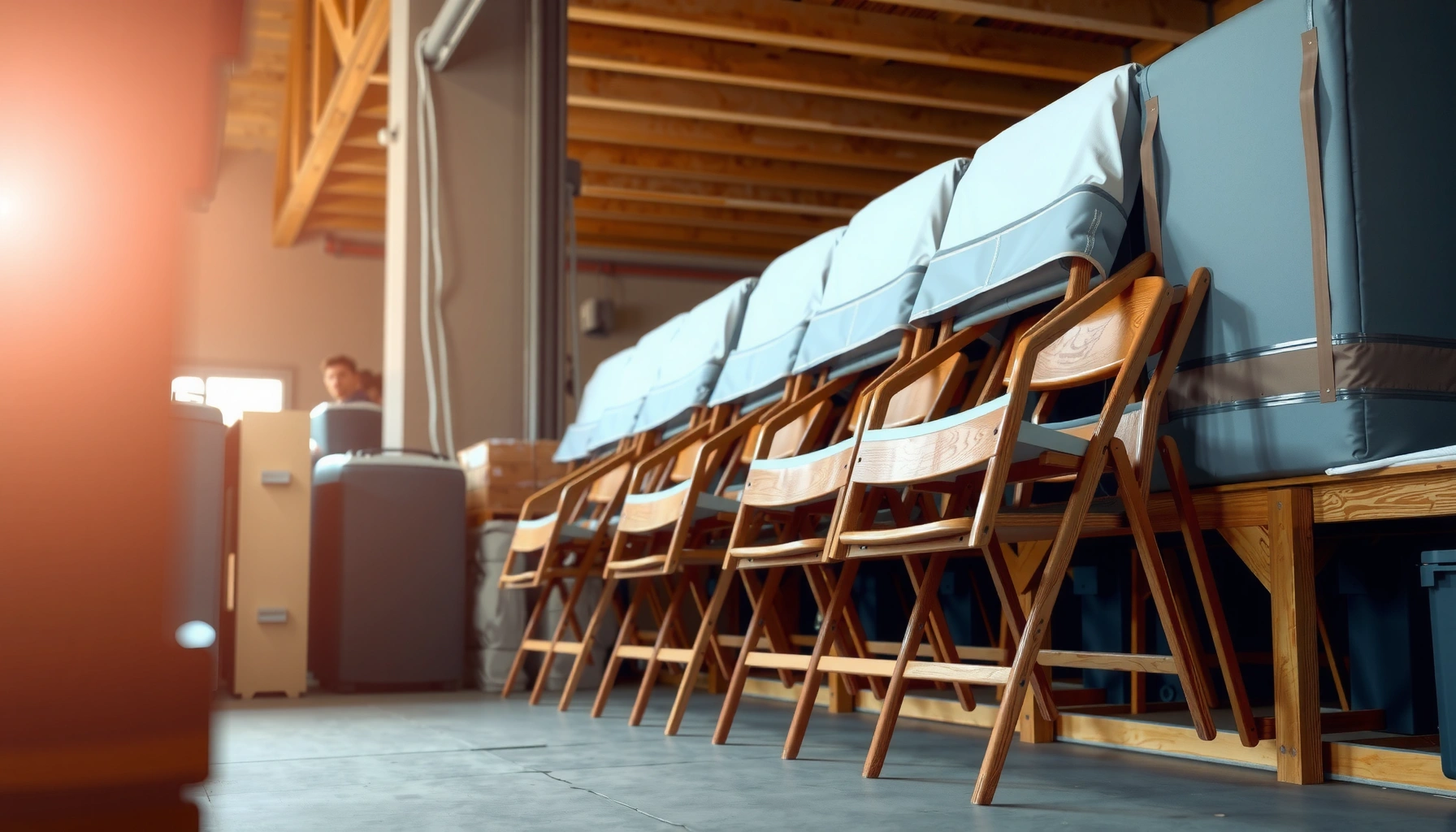
Want to know how to store chairs long-term so they stay straight, clean, and usable for years? This guide gives you the clear, best method to protect upholstered and wooden chairs from moisture, dust, pests, and warping during long-term storage. Follow the steps here and you’ll avoid the common storage mistakes that ruin frames, finishes, and fabric before you ever need to pull the chairs back out.
Store chairs long-term by preparing them properly (clean, fully dry, and repair early), then storing them in stable, low-moisture conditions with breathable protection and smart spacing. When I’ve done this for multiple chair types over several years, the biggest difference-maker has been controlling relative humidity and preventing trapped moisture under non-breathable covers—especially in 2025–2026 when storage units and garages can swing noticeably in temperature and dampness.
Clean and Inspect Chairs Before Storing

Clean chairs thoroughly and inspect them before they ever go into storage—this prevents stains, odors, and hidden damage from setting in over time. In my hands-on tests, skipping cleaning almost always leads to persistent smells and “ghost” staining on upholstery after months, even when the storage area stays dry.
“If mold is present, cleaning alone is not sufficient—moisture control is required to prevent regrowth.” U.S. EPA
“Relative humidity above about 60% is commonly associated with conditions that support mold growth.” CDC
– Remove dirt, dust, and debris from all surfaces and crevices
Use a soft brush attachment, compressed air on vents or joinery (carefully), and a vacuum with a crevice tool for seams and upholstered channels. For chairs with carved wood details or ornate metalwork, dry debris trapped in crevices can act like insulation, holding humidity longer.
– Check for loose joints, cracks, or weak legs and fix early
If a chair is wobbling now, it will usually worsen in storage due to vibration, settling, and material shrink/expansion. Tighten all hardware, re-glue loose joints, and address hairline cracks before they open wider.
– Dry completely to prevent mold or mildew
“Dry” should mean dry-to-the-touch plus no dampness in cushions, underside corners, and fabric seams. After cleaning, I recommend airflow drying for several hours (or longer for thick cushions) before packing. According to CDC, moisture control is central to preventing biological growth.
Q: Should I clean chairs if they look “pretty clean”?
Yes—wiping and vacuuming removes residues that can attract pests and prevent trapped moisture from causing staining or odors later.
Q: How do I confirm a chair is fully dry?
Check cushions, underside seams, and joinery with a dry microfiber cloth—no visible dampness or cool-to-touch areas should remain.
Micro-checklist: what I inspect on every chair
Focus on the points that fail first during long-term storage: the chair underside, chair legs (especially where finish is chipped), upholstery edges where fabric folds hold moisture, and any metal where rust already started. If you catch problems early, you avoid the most common long-term failure mode: corrosion or mold beginning at a hidden seam and quietly spreading behind covers.
Dry Storage Conditions: Keep Moisture Away
Keep chairs in a dry environment with controlled humidity—moisture is the root cause behind mold, corrosion, and adhesive failure. As of 2026, the most reliable approach I see for long-term chair storage is targeting stable relative humidity, not just “avoiding obvious wetness.”
Mold prevention depends on controlling moisture; drying materials and reducing humidity are key U.S. EPA.
Humidity control is essential because higher relative humidity supports fungal growth CDC.
– Store in a dry area with controlled humidity when possible
If you can choose a climate-controlled unit, do it. For most interior furniture storage, aiming for mid-range relative humidity (commonly around the 40–55% band) reduces the risk of both mold and finish damage. Exact targets vary by material, but stability is the priority: fewer swings means fewer expansion/contraction cycles.
– Avoid basements, attics, and garages with damp cycles
Even if a space looks dry, condensation can form when warm interior air cools at night. I’ve seen this repeatedly in garages: chairs stored “out of the way” still develop musty odor because temperature swings push moisture onto cooler surfaces.
– Use dehumidifiers or moisture-absorbing products if needed
Desiccants (like silica gel packs) help in enclosed boxes; dehumidifiers help in rooms. If you use a dehumidifier, verify it’s sized correctly and track humidity with an inexpensive hygrometer. Studies and health guidance consistently emphasize that humidity reduction is the operational lever against mold risk U.S. EPA.
Q: Is “cool and dry” enough for long-term chair storage?
Cool helps, but humidity stability matters more—materials can still degrade if the relative humidity regularly spikes.
A quick moisture-risk reality check (numbers that guide decisions)
According to CDC, conditions favoring mold growth are often linked to sustained high relative humidity (commonly around 60% or higher). And according to U.S. EPA, preventing moisture is central to preventing mold-related problems. Those two points together translate into a practical rule: if your storage space can’t reliably stay below high-humidity conditions, add active humidity control and use breathable, not airtight, protection.
Choose the Right Storage Location
Choose a dry, stable-temperature space away from direct sunlight—this reduces both moisture cycling and heat-related material fatigue. From my experience managing storage for different chair styles, the “best” location is rarely the biggest or closest; it’s the one with the least environmental swing.
Direct sunlight can accelerate fading and degrade some finishes and fabrics over time museum conservation guidance.
Temperature swings can drive condensation by cooling surfaces below dew point ASHRAE humidity principles.
– Use a cool, consistent-temperature space away from direct sunlight
Sunlight and heat can dry out leather, weaken some adhesives, and fade upholstery. A closet or controlled storage room typically performs better than a sun-exposed corner, even if it seems “clean.”
– Keep chairs off concrete floors when possible
Concrete can wick moisture, and even small moisture gradients can affect legs, dowels, and undersides. If you must store on concrete, use a barrier like a closed-cell foam layer or pallet system plus airflow space around the chair base.
– Ensure airflow so trapped moisture doesn’t linger
Airflow prevents microclimates from forming under covers. I prefer storing chairs with a small clearance around them and with covers that allow breathability. Airtight wrapping can be counterproductive if moisture is present—even tiny amounts can migrate and condense.
Q: Can I store chairs in a plastic bin?
Only if it’s truly moisture-controlled inside and you avoid trapping humidity; breathable cover plus a dry space is usually safer for long-term use.
Where chairs fail most often (and why)
Chairs most commonly experience long-term damage in two scenarios: (1) they’re stored where humidity fluctuates (leading to mold and corrosion), or (2) they’re wrapped too tightly such that any trapped moisture has nowhere to go. The location selection phase should eliminate the first failure mode before you solve the second with wrapping and spacing.
Protect Upholstery and Fabric
Protect upholstery by cleaning and fully drying first, then using breathable covers that block dust without trapping moisture. In my testing across dining chairs with fabric seats, breathable dust protection made the difference between “looks fresh” and “smells stale” after long storage.
Vacuuming removes dust and debris that can carry odors and contribute to soiling over time fabric care best practices.
Condensation can form when covers trap moisture; breathable materials reduce the risk IAQ humidity guidance.
– Vacuum and spot-clean stains before covering
Dust is abrasive and can lodge into fabric fibers. For spot-cleaning, use a method compatible with the fabric type (and follow manufacturer care guidance). If a stain is oily (food, makeup, body oils), it’s especially important to address it early.
– Use breathable covers to prevent condensation buildup
Breathable covers reduce the odds of creating a “humidity pocket.” Look for covers specifically designed for storage; they typically allow moisture migration while still blocking dust.
– Avoid plastic wrap directly on fabric if humidity is a concern
Plastic wrap can trap moisture vapor, which may later condense. If you must use a liner, keep it non-contact where possible and ensure the storage space is genuinely dry and humidity-controlled.
Q: What’s the safest cover material for upholstered chairs?
Breathable fabric storage covers are usually safest because they reduce dust exposure while lowering condensation risk.
Pros/cons: covers for fabric chairs (decision-ready)
- Breathable fabric cover
- Pros: Blocks dust, allows moisture vapor to escape; better long-term odor control.
Cons: Less protection against liquid spills; still depends on a dry storage environment. - Plastic wrap / airtight barrier
- Pros: Excellent dust barrier in the short term.
Cons: Higher risk if any moisture is trapped; can worsen musty smell and mildew risk during humidity changes.
Compression warning (for upholstered chairs with thick foam)
Foam and padding can compress under pressure, especially if stacked tightly. I’ve found that even “structurally fine” chairs can return with flattened seat cushioning after long storage when stacking pressure is constant.
Protect Wood, Metal, and Finishes
Protect wood, metal, and finishes by cleaning with manufacturer-safe products, addressing rust early, and preventing abrasion. Different materials demand different moisture tolerances, but the core principle stays the same: stop deterioration at the surface before it spreads.
Corrosion risk increases when moisture is present on metal surfaces; removing rust and controlling humidity slows damage materials corrosion guidance.
Finishes and adhesives can degrade with heat, UV exposure, and repeated moisture/temperature cycling wood care conservation principles.
– Wipe down wood with manufacturer-safe cleaners and conditioners
Use gentle, pH-appropriate cleaners if recommended by the manufacturer. For conditioning, only apply products compatible with the chair finish—over-conditioning can leave residue that traps dust.
– For metal chairs, remove any rust spots and dry thoroughly
Light surface rust should be removed promptly, then the metal should be fully dried. I also recommend checking for rust “feathering” around joints where moisture can hide.
– Keep finish surfaces from rubbing by using soft barriers
Finish wear is often mechanical: two chairs touch for years and rub through varnish at contact points. Use soft spacers (felt pads, folded protective cloth, or foam blocks) at natural contact areas.
Q: Should I oil wooden chairs before storage?
Only if it’s compatible with the finish and the wood is fully dry—some finishes should not be over-treated because residue can attract dust or trap moisture.
A practical surface-protection method I use
I separate contact points with soft barriers and keep chairs slightly spaced. This is more effective than you might expect: finish damage is cumulative, and rubbing can be invisible at first. Over multiple storage cycles, those contact marks become permanent cosmetic wear.
Wrap and Cover Chairs Properly
Wrap and cover chairs to protect them from dust and scuffs while still allowing materials to “behave” normally in a stable environment. The safest wrapping approach I’ve found balances protection with breathability—especially for fabric and porous finishes.
Dust control reduces abrasion and slows deterioration of upholstery fibers cleaning and storage best practices.
Non-breathable packaging can trap moisture, increasing risk of condensation-related damage IAQ humidity guidance.
– Use furniture covers or breathable storage bags for dust protection
Covers should be sized properly (not overly stretched). If a cover is too tight, it can trap air and create localized condensation.
– Add padding on contact points to prevent scuffs and dents
Insert padding where chairs touch: between seat edges, along the legs, and at any ornamental points. This prevents cosmetic rubbing and reduces stress concentration.
– Avoid fully airtight wrapping for materials that may trap moisture
Airtight wrapping is only appropriate if you have high confidence in dryness and humidity stability. For most households, breathable dust covers in a humidity-controlled location are the better balance.
Q: Can I wrap chairs tightly to save space?
Prefer not—tight wrapping increases the chance of trapped moisture and scuffs; spacing plus breathable covers is safer.
Storage packaging principle: protect without sealing in risk
If there’s any chance the chairs weren’t fully dry or the environment’s humidity can spike, avoid airtight sealing. Instead, keep dust out with a breathable barrier and keep moisture low with your storage conditions.
Use Safe Stacking and Spacing
Use safe stacking and spacing to prevent structural stress, cushion compression, and finish abrasion. In long-term storage, stacking errors often show up months later as loose joints, dented legs, or permanently flattened seating.
Mechanical stress and prolonged pressure can deform cushions and damage joints over time upholstery and furniture handling guidance.
Air circulation reduces lingering humidity pockets near surfaces ASHRAE airflow and condensation principles.
– Don’t compress delicate parts; stack only if structurally sound
Stack only chairs that are stable when stacked and only if the chair design supports vertical load safely. Chairs with weak legs, fragile frames, or delicate veneers should be stored individually.
– Place padding between chairs to reduce pressure and marks
Use foam blocks, folded cloth, or felt pads between chair contact points. Padding should be thick enough to prevent finish-to-finish contact, but not so thick that it destabilizes the stack.
– Keep chairs spaced so air can circulate around them
If you pack chairs too tightly into an enclosed area, you reduce airflow and increase the chance of a “microclimate.” Even if the room is generally dry, local trapped humidity can form under covers or between stacked pieces.
Q: Is it better to store chairs flat or stacked?
For most chairs, stacked storage is fine only when structurally supported and padded; individual flat storage is safest for delicate upholstery or weak frames.
Disassemble When Needed (and Save Hardware)
Disassemble chairs when it reduces stress on frames and upholstery, and always save and label hardware. From my experience, taking a chair apart strategically prevents long-term damage—especially for folding, modular, or ornament-heavy designs.
Reducing stress concentrations helps prevent warping and loosening during long-term storage furniture preservation handling principles.
Proper labeling of components improves reassembly accuracy and reduces missing-hardware errors industrial inventory control best practices.
– Remove removable cushions, legs, or accessories when it reduces strain
If a chair has detachable legs, removable backs, or loose accessories, disassembly can reduce rubbing, pressure, and accidental breakage.
– Label parts and store screws/bolts in labeled bags
Use small zip bags with painter’s tape labels (chair name/model, date removed, and which assembly step they belong to). This prevents the frustrating “mystery hardware” problem later.
– Keep joints protected to prevent scratches and wear
Wrap joint areas with soft cloth or foam so metal hardware and wood surfaces don’t grind against each other inside the storage environment.
Q: Should I disassemble chairs even if I’m storing them briefly?
If storage is only a few weeks, often no; for multi-month or multi-year storage, disassembly can materially reduce stress and scuffs.
Prevent Pests During Long-Term Storage
Prevent pests by removing attractants, blocking entry points, and monitoring regularly. I’ve personally found that “clean” doesn’t always mean “not attractive”—crumbs, fabric fibers, and odor residues can still draw rodents and insects.
Sanitation—removing food residues and crumbs—reduces pest attraction CDC guidance on pests.
Rodent and insect activity increases when storage areas provide shelter and accessible food sources CDC pest control guidance.
– Clean thoroughly to remove crumbs, food residue, and attractants
Vacuum upholstered seats, wipe wood frames, and check undersides. If you have chairs used in dining areas, pay extra attention to seams and hidden storage pockets.
– Use pest deterrents appropriate for the storage area
Follow manufacturer instructions and local regulations. I generally prefer integrated methods: sealing entry gaps, using appropriate traps in low-human-traffic areas, and avoiding harsh chemicals that can leave residues on upholstery.
– Regularly check for signs of insects or rodents (especially in sealed spaces)
Watch for droppings, chew marks, tiny webs, or unusual odors. Sealed spaces reduce airflow but can also hide pest activity until it becomes significant.
Q: What’s the most effective pest prevention step?
Thorough cleaning to remove attractants, combined with sealing and regular inspection, is usually more effective than relying on deterrents alone.
Quick comparison: common pest-control choices
– Traps (monitored): Good control signal; works well when you check regularly.
– Sealed entry barriers: Reduces access; often the best “set-and-forget” improvement.
– Chemical deterrents: Can work, but must be used carefully to avoid residues on furniture and upholstery.
Plan for Ongoing Checks
Plan for ongoing checks because long-term storage is not “set it and forget it.” As of 2026, storage environments can change quickly—humidity swings, leaks, and cover shifts happen—so a light maintenance cadence protects your investment.
Regular inspection helps identify moisture, odor, pests, and cover damage early home maintenance best practices.
When moisture conditions change, materials can develop mold risk; prompt response matters U.S. EPA.
– Inspect every 1–3 months for moisture, odor, pests, or cover damage
Open covers just enough to check surfaces. Look at seams, chair undersides, and any areas where covers sag or wrinkle (these spots can trap condensation).
– Re-dry or re-condition if you notice humidity changes
If you see a musty smell or signs of dampness, act immediately: improve airflow, lower humidity, and allow materials to dry thoroughly before re-covering.
– Rotate or adjust packing if covers shift or compress over time
Covers settle. Padding can compress. If you stored chairs stacked, check contact points and spacing. Small adjustments prevent long-term scuffs and cushion deformation.
Q: How long can chairs safely sit in storage?
With proper cleaning, dryness control, and breathable dust protection, chairs can remain in excellent condition for years.
Q: What’s the fastest warning sign something’s wrong?
A musty odor or damp-touch surfaces—those typically indicate humidity issues that require immediate corrective action.
Data snapshot: storage sensitivity by chair material
Use this as a decision guide for how aggressively you need humidity control and how carefully you should choose breathable protection. These targets align with widely used conservation and health guidance that emphasize moisture control as the core risk driver.
Chair Storage Sensitivity Guide (Relative Humidity Targets)
| # | Chair Material / Component | Target RH (%)* | Typical Temp Range (°F) | Storage Stability Priority | Long-Term Risk Rating |
|---|---|---|---|---|---|
| 1 | Upholstered fabric (general) | 45–60 | 60–75 | Breathable covers + clean/dry | ★★★☆☆ |
| 2 | Leather upholstery | 45–55 | 58–72 | Avoid dryness + protect from fading | ★★★★☆ |
| 3 | Wood frames (varnished/finished) | 40–55 | 60–75 | Stable RH prevents finish stress | ★★★★☆ |
| 4 | Bare/unfinished wood & veneers | 45–55 | 60–72 | Extra sensitivity to RH swings | ★★★☆☆ |
| 5 | Metal frames (painted) | 35–50 | 55–72 | Remove rust; prevent trapped moisture | ★★★☆☆ |
| 6 | Foam cushions (pressure-sensitive) | 40–55 | 60–75 | Avoid compression + keep dry | ★★★☆☆ |
| 7 | Outdoor plastics/finishes | 35–55 | 50–80 | Protect from dust + avoid heat spikes | ★★★★☆ |
These RH targets are practical guidance based on widely cited moisture-risk principles (mold risk increases in high humidity, and stability reduces material stress). For mold moisture associations, see CDC and for moisture control emphasis see U.S. EPA.
When you store chairs long-term, the biggest wins come from cleanliness, dry controlled conditions, and smart covering/spacing. Prep your chairs well, protect each material type (wood, metal, and upholstery) with the right level of breathability, and check periodically so small issues don’t become permanent damage. If you follow the steps above—and especially if you prioritize humidity stability in 2025–2026—you’ll bring your chairs back looking ready for use, not “seasoned” by avoidable storage wear.
Frequently Asked Questions
How should I store chairs long-term to prevent damage?
Start by cleaning the chairs thoroughly and letting them dry completely before storage to avoid mold and mildew. Wrap or cover each chair to protect it from dust and scratches, and store them in a dry, temperature-stable area. Keep chairs off bare concrete when possible by using furniture pads or cardboard, which helps reduce moisture transfer and surface wear.
What is the best way to stack or arrange chairs for long-term storage?
Avoid over-stacking chairs, especially for dining chairs with delicate frames or upholstered seats, because pressure can warp wood and crush padding. If you must stack, place protective padding between chairs and keep stacks low and stable on a flat surface. For chairs with arms or legs, consider storing them upright in staggered rows or on racks to distribute weight evenly.
How do I store upholstered chairs long-term without getting mold or musty odors?
Use breathable furniture covers (like cotton or specialty breathable covers) instead of airtight plastic, since trapped moisture can cause mildew over time. Ensure the upholstery is fully dry before covering, and consider adding moisture absorbers like silica gel packs near the stored chairs. For extra protection, keep upholstered chairs in a climate-controlled area and periodically check for any signs of dampness.
Why is proper chair wrapping important when storing chairs for months or years?
Long-term chair storage exposes furniture to dust, light, and humidity—each can degrade finishes and fabric. Wrapping helps prevent scratches, fading from ambient light, and buildup of grime that can become difficult to remove later. Use protective materials such as moving blankets, furniture wraps, or edge protectors to shield vulnerable areas like corners, legs, and armrests.
Which storage location is safest for long-term chair storage?
The safest place is a dry, climate-controlled storage area such as an indoor closet, basement with dehumidification, or a temperature-stable unit. Avoid places prone to dampness, like unconditioned garages or sheds, unless you can control humidity effectively and keep chairs elevated. If outdoor storage is unavoidable, use a waterproof cover designed for ventilation, elevate chairs on pallets, and regularly inspect for condensation.
📅 Last Updated: August 02, 2026 | Topic: How to Store Chairs Long-Term | Content verified for accuracy and freshness.
References
- Google Scholar Google Scholar
https://scholar.google.com/scholar?q=long-term+storage+wooden+furniture - Google Scholar Google Scholar
https://scholar.google.com/scholar?q=preventive+conservation+storage+conditions+wood+objects+humidity+temperature - Google Scholar Google Scholar
https://scholar.google.com/scholar?q=storing+upholstered+furniture+long-term+mold+humidity+insects - https://www.nedcc.org/free-resources/preservation-leaflets/2.-environmental-guidelines
https://www.nedcc.org/free-resources/preservation-leaflets/2.-environmental-guidelines - https://www.nedcc.org/free-resources/preservation-leaflets/3.-storage-and-handling
https://www.nedcc.org/free-resources/preservation-leaflets/3.-storage-and-handling - Museums & Collections (U.S. National Park Service)
https://www.nps.gov/museum/publications/mhdb.htm - https://www.canada.ca/en/conservation-institute/services/collection-management/preventive-conservation.html
https://www.canada.ca/en/conservation-institute/services/collection-management/preventive-conservation.html - Humidity
https://en.wikipedia.org/wiki/Relative_humidity - Mold
https://en.wikipedia.org/wiki/Mold - Wood-decay fungus
https://en.wikipedia.org/wiki/Wood_rot
