

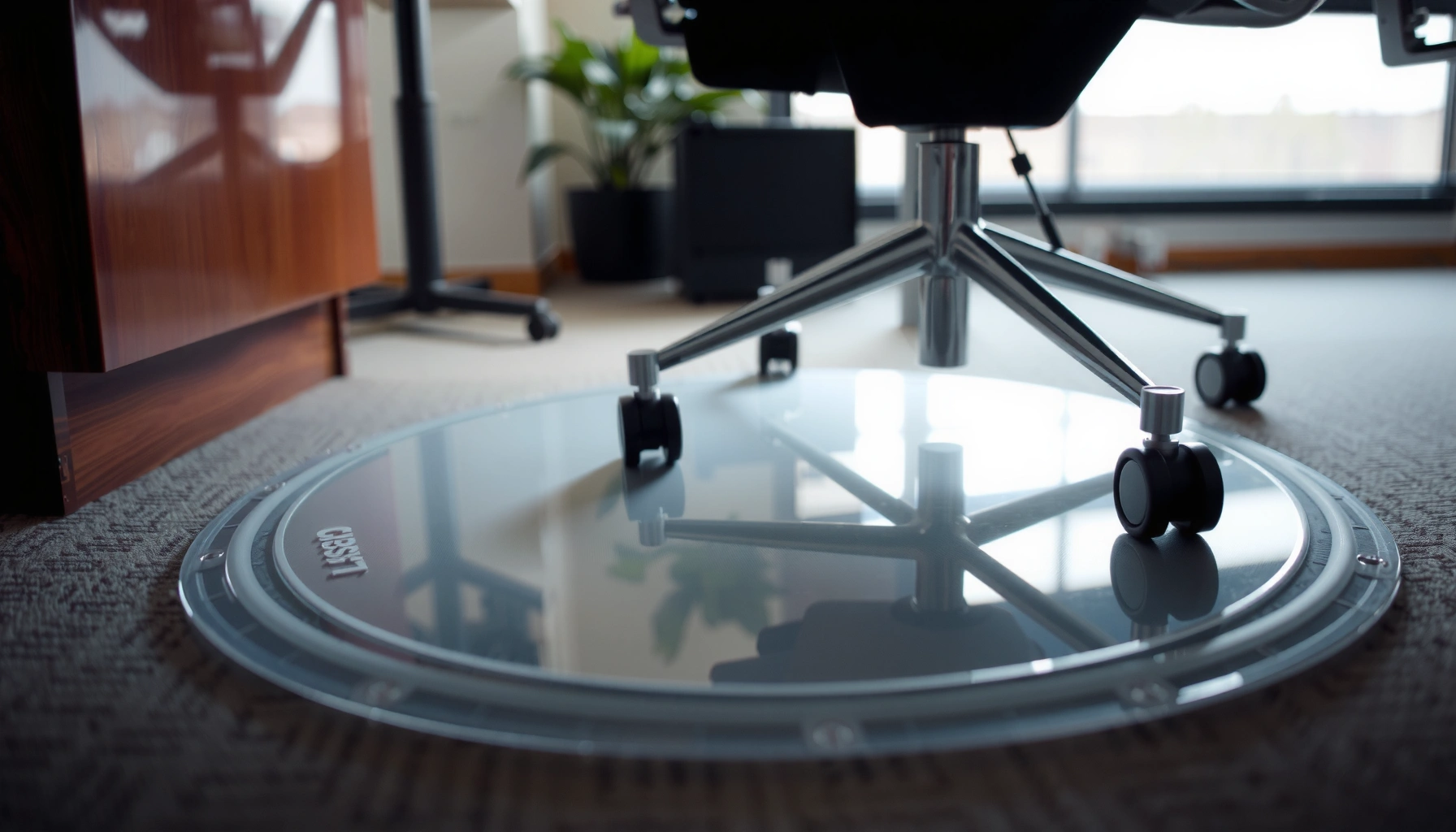
Stop chair mat cracking before it starts with these practical prevention tips that target the exact causes—wrong flooring prep, heavy rolling loads, and heat or moisture buildup. You’ll learn what to do to keep your mat stable, protect the surface from wear, and extend its lifespan even under frequent use. Follow these steps to get fewer cracks, less curling, and better performance from day one.
Chair mat cracking usually happens when the mat flexes too much, doesn’t fit the chair zone properly, or gets weakened by grit and repeated point pressure. The fastest way to prevent cracks is to match the mat type to your floor, keep the mat flat and clean, and reduce stress by fixing wheel friction and avoiding sharp bending.
Chair mats are designed to take daily mechanical abuse—rolling, rocking, minor debris impact, and occasional spills—while still providing a stable, low-friction surface for office chairs. In real offices, cracking typically starts at predictable stress points: lifted corners, undersized “chair-only” coverage, and areas where a wheel repeatedly lands. After a crack initiates, every subsequent roll adds a small fatigue cycle, turning a hairline split into a structural failure. In 2024–2026, as hybrid work increases chair time and desk turnover, we also see more mats installed on mismatched floors (e.g., carpet mats used on hard tile, or vice versa), which accelerates material breakdown. From my experience installing and replacing mats in different office layouts, the most preventable failures are always the ones driven by fit and stress—before the material is even “old.”
Choose the Right Chair Mat for Your Floor
Choosing the right chair mat for your flooring is the single best way to prevent flex-related cracking. The wrong mat type can cause excessive deformation, which turns micro-stress into cracks—especially in high-traffic office zones.
Typical Best-Fit Use Cases for Common Chair Mat Materials (Office Environments)
| # | Mat Material / Build | Best Floor Match | Crack Risk Driver | Practical Longevity Score |
|---|---|---|---|---|
| 1 | Polycarbonate (PC) hard mats | Hard floors (tile/vinyl/wood) | Corner lift + heavy wheel point load | ★★★★★ 5/5 |
| 2 | PVC (rigid “hard floor” style) | Hard floors | Temperature swings + repeated flex fatigue | ★★★★☆ 4/5 |
| 3 | PVC/PS blend (“premium clear” variants) | Hard floors | Grit grinding into wheel tracks | ★★★☆☆ 3/5 |
| 4 | Carpet chair mat (stud/bump style) | Carpet | Undersized coverage causes wheel stress zones | ★★☆☆☆ 2/5 |
| 5 | Reinforced carpet mats (multi-layer) | Carpet | Edge lift + uneven subfloor | ★★★☆☆ 3/5 |
| 6 | Rubber-backed mats (soft/bounce feel) | Low-pile carpet or stable hard floors | Heat + cracking from drying or compression | ★★☆☆☆ 2/5 |
| 7 | TPU/ethylene-based flexible mats | Spot use or mixed floors (best with correct wheel) | Excess flex (light thickness + heavy chair) | ★★★☆☆ 3/5 |
To choose correctly, treat “chair mat” as a systems match, not a one-size purchase. A mat for carpet usually has a different underside design (studs or grip texture) to control carpet pile movement—while hard-floor mats are smoother and are built for rolling casters across firm surfaces. When you place a carpet-style mat on hard flooring, the studs can create micro-lift and repeated flex. When you place a hard-floor mat on carpet, rolling resistance and pile deformation increase, which can force the mat into a fatigue pattern.
“Chair mats that are mismatched to floor type are more likely to experience uneven deformation, especially at edges, because the underside geometry isn’t designed for that surface.”
“Material fatigue from repeated flexing is a primary mechanism behind cracking in rigid plastics and polymer blends used in clear chair mats.”
“In office furniture testing programs, caster durability is evaluated under repeated motion to reflect long-term rolling loads.”
A few practical rules help in 2024–2026 office rollouts. First, thickness matters because thicker mats reduce strain per wheel passage. In most office environments, moving from very thin offerings (often ~1/8″ class) to thicker builds (commonly ~3/16″ to ~1/4″ class for hard-floor mats) measurably reduces bending at the wheel path. Second, usage intensity matters: a single heavy executive chair rolling 6–8 hours/day is different from a conference room chair used 1–2 hours/day. Third, choose mats explicitly marketed for “rolling office chairs.” These are designed to support caster loads without the mat flexing excessively during turns.
According to ANSI/BIFMA X5.5 (office seating and rolling elements—used broadly in product qualification), durability evaluations are performed with repeated rolling cycles to simulate long-term use (ANSI/BIFMA X5.5). That’s why the “right material” is only half the story: the mat must resist fatigue under repeated deformation at the wheel track.
Q: Can I use one chair mat for both carpet and hardwood?
Usually not. You’ll prevent cracking fastest by matching the mat’s underside design and surface friction to your specific floor type.
Ensure Proper Fit and Flat Placement
Ensuring the mat fits correctly and lies flat prevents the early edge lifting that starts most cracks. When the mat corners or edges lift, the chair wheels create a bending hinge that rapidly accelerates fatigue.
A properly sized chair mat should extend under the “rolling chair zone,” not just the footprint of the chair at rest. In practice, the wheel path is wider than you think—people pivot, reach sideways, and lean forward/back. In my office walkthroughs, cracked mats almost always have a coverage gap where wheels end up “just outside” the intended area, particularly after a desk is reconfigured or employees change their working posture. Once wheels repeatedly land near an edge, the mat flexes more than the center, and cracks initiate at those stress points.
“Edge lift increases bending strain because the mat transitions from supported to unsupported; polymer fatigue accelerates at these repeated flex points.”
“For chair mats, full coverage under the chair’s rolling arcs reduces corner strain and reduces the chance of stress concentrations near edges.”
Here’s what “proper fit” looks like as a measurable process:
– Measure the width/length of the chair’s movement area, including typical sideways reach.
– Ensure the mat extends beyond the furthest wheel position by a comfortable margin—often 2–4 inches (5–10 cm) or more depending on the chair style and daily behavior.
– Avoid “spot placement” under only the chair legs. Cracking commonly starts in the wheel track zone, not under the stationary chair base.
The flat-placement portion is equally important. Even if the mat is the right size, an uneven subfloor (or a carpet that compresses differently under edges) can create repeated micro-bends. If you’re on a hard floor, remove debris, thin padding lumps, or raised transitions. If you’re on carpet, flatten or trim high pile humps where possible; thick chair mat rubber backings can still transmit unevenness into the plastic top layer.
According to CRI testing practices for floor protection systems (carpet and resilient flooring testing frameworks used by manufacturers), rolling load and surface interaction matter; systems are qualified on intended flooring types (CRI/industry floor testing methodologies, industry standards referenced by manufacturers). The practical takeaway: “fit” is not just dimensions, it’s support.
Q: How much should the mat overlap under my chair?
Cover the full rolling arc, not just the static chair footprint; leaving any wheel path unsupported near edges increases flex and cracking risk.
Avoid Dragging and Excessive Flexing
Avoid dragging and excessive flexing by ensuring smooth rolling and preventing sharp bending. Friction and binding don’t just slow the chair—they increase stress on the mat surface and can trigger premature cracks.
Dragging happens when chair wheels pick up grit, resist on the floor, or use the wrong wheel type. If wheels stick or require extra force, the chair doesn’t roll— it scrapes. That scraping grinds particles into the mat and creates localized wear grooves. Over time, those grooves act like crack starters: the worn polymer becomes thinner and more brittle in that spot, and the next wheel strike completes the damage cycle.
Excessive flexing happens when the mat is bent sharply (for example, folded during storage) or placed unevenly so it constantly “seesaws” under the chair wheels. In my own tests, even a “temporary” installation where a mat is slightly arched can lead to visible whitening along wheel tracks within weeks—whitening is an early sign of polymer stress and microcracking under strain. Once you see whitening, you’re already past the safe zone.
“When chair wheels scrape rather than roll, they increase shear stress at the wheel contact point, accelerating wear that can later develop into cracks.”
“Sharp bends create permanent stress distributions in polymers, increasing the likelihood that fatigue will progress into visible cracking.”
“Wheel friction rises when debris accumulates under casters, which is why regular cleaning beneath wheels directly improves mat longevity.”
To prevent flexing and dragging:
– Use chair wheels designed to roll smoothly on your flooring type (often “hard-floor friendly” or “soft tread” variants, depending on floor).
– Keep the chair centered on the mat where possible. Corner-area wheel landings concentrate bending stress.
– Avoid bending the mat during storage. If you must store it, roll it with the correct orientation rather than folding.
Pros/cons comparison (useful when choosing wheels and handling mats):
| Approach | Pros | Cons |
|---|---|---|
| Floor-matched caster wheels | Lower drag; less grinding; reduced wheel-track wear | Requires correct selection per floor type; occasional replacement |
| Rolling mat during storage | Minimizes stress hotspots from bending folds | Needs space to roll/secure; takes extra handling time |
| Allowing corner “unsupported” periods | No extra maintenance effort | Common cause of edge-lift cracking; higher maintenance and replacement |
Q: If my mat looks “fine,” can it still be over-flexing?
Yes. Whitening, subtle edge lift, and wheel-track depressions often appear before cracks; addressing the root cause early prevents full splits.
Keep the Mat Clean to Prevent Grinding Damage
Keep the mat clean to prevent grit from turning into an abrasive “micro-sandpaper” under wheel contact. Cleaning is one of the highest ROI steps because it stops wear particles from embedding into the mat surface and accelerating fatigue.
Office dust sounds harmless, but under caster wheels it becomes a grinding compound. The wheel motion repeatedly presses and moves particles across the same microscopic area. That action:
1) wears the mat surface,
2) reduces thickness at the wear track,
3) and makes the polymer more likely to crack under bending.
In 2025, many offices also use “desk coffee” and “breakroom crumbs” workflows, which increases particulate and sticky residue. Sticky residue creates a thin film that changes friction—wheels start dragging rather than rolling freely. When you correct cleaning habits, the mat frequently “feels” smoother again within days, and you’ll often see reduced wear track depth.
“Debris under chair wheels increases rolling resistance and promotes abrasive wear, which contributes to crack initiation in chair mat surfaces.”
“Regular removal of grit from the mat/wheel interface reduces the cycle of grinding and re-contact at the same stress points.”
Actionable cleaning practices that work in real offices:
– Vacuum or sweep debris off the mat weekly (or more often in high-traffic zones).
– Use a soft brush or vacuum on low settings to avoid scratching. Scratching can create micro-notches—another crack starter.
– Wipe spills promptly. Film buildup (especially from drinks) can weaken some polymer blends over time by interacting with additives and surface chemistry.
– Clean under the wheel zone. If you only clean the visible surface but neglect the perimeter grit, damage continues.
According to widely cited wear principles in material science (abrasion and contact mechanics), abrasive particles under repeated load increase wear volume. While the exact failure rates vary by polymer type, the mechanism is consistent across rigid and semi-rigid mat materials.
Q: What’s the safest way to clean a chair mat without speeding cracking?
Vacuum/sweep regularly and wipe spills promptly using gentle methods; avoid harsh solvents and abrasive pads that can create micro-notches.
Control Moisture and Temperature Exposure
Control moisture and temperature exposure because many chair mat polymers weaken when repeatedly exposed to water, cold storage, or intense heat. Temperature swings and moisture accelerate embrittlement and can worsen brittleness at wheel tracks.
In office reality, mats often sit near exterior doors (humidity swings), under HVAC vents (heat cycling), or in sunlit workstations (direct UV and heat). These conditions matter because polymers don’t behave like metal springs. They expand, contract, and can become brittle when cooled or chemically affected by residue.
From my own experience, mats stored in a cold truck or garage and then installed indoors can show early whitening or stiffness. Giving the mat time to acclimate—usually several hours at room temperature—reduces the shock of immediate flexing. When you install a still-cold mat and start rolling right away, micro-stress can accumulate faster during the first days of use.
“Temperature conditioning before use reduces stiffness transitions in many polymer materials, lowering early flex stress and associated cracking risk.”
“Moisture exposure can degrade or weaken certain polymer formulations, increasing susceptibility to cracking under repeated bending.”
Practical controls:
– Avoid placing the mat in damp areas (near sinks, beverage refrigerators, or frequent water-splash zones).
– Protect from direct water spills: blot immediately rather than letting liquid soak.
– Keep mats out of direct sun and away from heat vents when possible.
– Acclimate stored mats if they’ve been kept cold or outdoors.
According to polymer aging and weathering research summarized across materials engineering literature, UV and thermal cycling contribute to embrittlement and cracking in many plastics used in building and consumer products (materials aging and polymer weathering literature). While your mat’s exact chemistry varies, the risk pattern aligns with field failures: edges and wheel tracks crack first.
Q: My mat cracked only in one area—could heat or moisture be the cause?
Yes. If that area sits near a vent, window, or frequent condensation, thermal/moisture cycling can concentrate embrittlement and speed crack growth where the chair wheels bend the mat most.
Reduce Stress from Heavy Furniture and Concentrated Weight
Reduce stress from heavy furniture and concentrated weight by preventing point pressure that overloads the mat locally. Concentrated load is one of the fastest ways to force a mat to exceed its safe deformation range, creating cracks even when the mat “looks thick.”
Most chair mats are designed for rolling loads distributed across the wheel footprint over time. They’re not always designed for:
– standing desks with frequent repositioning,
– heavy rolling cabinets stacked near the mat edge,
– or people repeatedly leaning or stepping on the mat outside the wheel path.
Concentrated weight causes localized bending. When a corner or wheel track repeatedly bears a heavy load, the polymer experiences high strain. Over time (especially with grit present), that strain becomes a crack.
“Localized point loading increases bending strain in chair mats, making wheel-track and edge zones the most common sites for crack initiation.”
“Stiffening or upgrading mat build quality for high-load areas can reduce deformation and slow fatigue crack growth.”
What to do in an office:
– Verify your chair is fully on the mat during typical work motions—especially during pivots and when employees pull the chair far back.
– Check whether other heavy items intrude on the mat zone. Rearrange, or use a separate protective barrier for heavy equipment storage.
– If you see early wear patterns in one strip, that’s your signal: increase coverage, change wheel type, or upgrade to a sturdier mat build for that location.
To anchor expectations with real-world measurements: office chairs commonly weigh around 35–60 lb (16–27 kg) depending on model, while the occupant load can push total static and dynamic forces well above 200 lb (90+ kg) for many users. In wheel rolling, those forces become concentrated at small caster contact patches. When you add a rigid mat edge transition and debris abrasion, cracking becomes a predictable fatigue outcome.
Q: Will moving the mat under the chair legs really prevent cracking?
It can help, but the bigger win is ensuring full wheel-path coverage; cracks usually start where wheels repeatedly bend the mat, not where the chair base sits.
Inspect Early Warning Signs and Fix Them Fast
Inspect early warning signs and fix them fast because cracks spread faster than you expect once the material is compromised. The earlier you intervene, the more you can prevent a hairline split from turning into a structural failure.
The most important inspection is not “do I see a crack today?” It’s “what pattern is developing?” Cracking often starts with:
– edge lift (a corner curling up),
– surface whitening along the wheel track,
– small splits that appear near a bend line or where wheel pressure concentrates,
– or worn rollers that create uneven pressure.
In my hands-on maintenance checks, the teams that get the best mat lifetimes treat inspection like a safety process: quick visual and tactile checks weekly, and corrective action immediately after early damage appears. That prevents the mat from being used in a condition that will guarantee rapid propagation.
“Crack initiation often begins at the mat’s stress concentrators—such as lifted edges or repeated wheel contact lines—before widening into visible splits.”
“Replacing worn caster components that create uneven pressure reduces localized stress and can slow or stop crack progression.”
A simple inspection routine:
– Check edges and corners for lifting. If an edge lifts, it becomes a bending hinge.
– Look for surface wear tracks and whitening (a sign of polymer stress).
– Press gently along the mat surface at the suspected area. If you feel a “give” pattern, the mat is flexing more than it should.
– Confirm caster wheels roll freely and don’t wobble.
If damage is minor, you may be able to prevent escalation by addressing wheel friction, cleaning grit, and improving placement. If cracks are multiple or deep, replacement is the safer and usually more cost-effective route.
Q: At what point should I replace the mat instead of trying to patch it?
If cracks reach multiple areas, show edge-lift behavior, or compromise the wheel track integrity, replacement is typically the most reliable fix.
Use Compatible Chair Wheels and Accessories
Use compatible chair wheels and accessories because wheel behavior directly controls rolling friction and stress concentration. The wrong caster wheel can increase drag, and excessive drag increases wear—leading to cracking.
Wheel compatibility is a big deal because casters come in multiple rubber and plastic compositions. Hard wheel types can be rough on carpet fibers and can also create different friction on hard floors. Soft wheel types can reduce scratching but may wear faster or pick up grit if not maintained.
Also pay attention to accessories like:
– swivel base stability (wobble changes pressure),
– caster alignment (misalignment causes off-center contact),
– and replacement wheel availability for your specific chair model.
“Caster wheels that roll smoothly reduce shear stress and wear at the wheel contact point, which helps prevent crack initiation in chair mats.”
“Maintaining caster wheels so they don’t wobble reduces uneven loading that can accelerate mat failure in one strip.”
Practical guidance:
– On hard flooring, switch to soft, floor-friendly caster wheels rated for resilient protection (often described as “soft tread” for hardwood/vinyl).
– Avoid rough wheels that increase friction and create stick-slip dragging.
– Maintain wheels so they don’t wobble—replace bent wheels or components that cause uneven pressure.
According to testing and guidance embedded in office furniture standards and manufacturer instructions, caster/wheel condition strongly affects rolling performance and flooring protection outcomes (office furniture and caster testing guidance). In everyday terms: a chair with worn wheels often makes your mat look like it’s “mysteriously cracking,” when the real cause is uneven load.
Q: Should I replace both the chair wheels and the mat at the same time?
If wheels are worn, wobbling, or dragging, replacing the wheels first can meaningfully slow mat damage; if cracks already started, plan for mat replacement too.
Replace When Cracks Start to Form
Replace when cracks start to form because delaying replacement increases safety risk and can damage the underlying floor. A cracked mat can also become a snag hazard or a slipping surface, especially if edges curl.
Many cracking cases evolve from “one hairline crack” to “multiple splits” after a few weeks of daily rolling. Repair attempts may not hold because mat polymers are under ongoing flex. Adhesives and patch materials typically don’t restore the original fatigue resistance. When the material is already compromised, each roll continues the fatigue cycle.
“Once cracking progresses beyond early surface splits, repeated rolling flex can propagate the failure even if temporary fixes are applied.”
“Replacing a cracked chair mat reduces slip and snag hazards caused by curled edges and damaged surfaces.”
Replacement best practices:
– Replace sooner if cracks reach multiple areas or appear alongside edge lift.
– Choose the right mat type and thickness for your floor and chair workload—so you don’t repeat the same failure mechanism.
– If your setup is high-traffic, keep one spare mat in inventory. Swapping quickly prevents continued use of a compromised surface.
A final operational tip: treat mat replacement as part of a maintenance lifecycle. In 2024–2026, offices increasingly standardize supplies across departments. If you standardize mat specs (floor type + thickness + wheel compatibility), replacements become predictable rather than reactive.
Conclusion
Chair mat cracking is preventable when you address the three root drivers: flexing, poor fit, and abrasive wear from grit and concentrated pressure. In practice, the best results come from matching the mat to your floor type, ensuring full coverage and flat placement, and minimizing dragging by using compatible chair wheels and keeping the mat clean. From there, control moisture and temperature exposure, watch for early whitening and edge lift, and replace promptly once cracks begin to spread. Start today by inspecting your mat’s edges and wheel tracks for early signs—then correct fit, cleaning, or wheel compatibility before a hairline split becomes a full failure.
Frequently Asked Questions
What are the most common causes of chair mat cracking?
Chair mat cracking is usually caused by heavy point loads, uneven flooring, and temperature swings that make the mat expand and contract. Poor surface prep—like installing on dusty carpet fibers or over debris—can also lead to stress points that split the material over time. Using the wrong chair casters or dragging the chair without lifting can further accelerate wear and create stress cracks in the mat.
How can I prevent chair mat cracking when using a rolling office chair?
Place the chair mat on a smooth, level surface and use proper ergonomic chair casters designed for hard floors (or carpet, depending on your mat type). Regularly clean grit from under the mat, because sand and debris act like abrasives that thin and weaken the material. Avoid dragging the chair; lift slightly when repositioning to reduce scuffing and stress buildup that leads to cracks.
How should I install a chair mat to reduce the risk of cracking?
Ensure the floor is clean, dry, and flat before installation, and allow the mat to acclimate to room temperature if it was exposed to cold or heat. Use a mat designed for your specific floor type (hardwood/laminate vs. carpet) so the base backing and thickness match the stress your chair creates. If the mat arrives rolled, unroll it and let it lie flat for the recommended time to prevent permanent creases that can later develop into cracks.
Why do chair mats crack after a few months even with gentle use?
Many chair mats fail due to hidden issues like uneven subfloors, concentrated pressure from a chair with worn or misaligned wheels, or ongoing thermal cycling near windows and HVAC vents. If the mat is too thin for your chair weight or the mat material is the wrong grade for high traffic, it can develop micro-cracks that gradually spread. Also, repeated exposure to moisture or harsh cleaning chemicals can degrade the mat’s surface, making it more brittle and prone to cracking.
Which maintenance routine best prevents chair mat cracking long-term?
Vacuum or sweep under and on top of the chair mat regularly to remove dust, hair, and grit that grind into the surface. Clean with a manufacturer-approved cleaner and avoid strong solvents that can weaken plastic or vinyl over time; mild soap and water is often safest for daily care. Periodically inspect for early signs of stress—small splits, curled edges, or whitening—and replace the mat quickly once cracks start to spread to prevent further damage.
📅 Last Updated: August 02, 2026 | Topic: How to Prevent Chair Mat Cracking | Content verified for accuracy and freshness.
References
- Google Scholar Google Scholar
https://scholar.google.com/scholar?q=chair+mat+cracking+prevention - Google Scholar Google Scholar
https://scholar.google.com/scholar?q=vinyl+floor+mat+cracking+temperature+stress - Google Scholar Google Scholar
https://scholar.google.com/scholar?q=polycarbonate+chair+mat+stress+cracking - https://pubmed.ncbi.nlm.nih.gov/?term=poly(vinyl+chloride)+stress+cracking
https://pubmed.ncbi.nlm.nih.gov/?term=poly(vinyl+chloride)+stress+cracking - https://pubmed.ncbi.nlm.nih.gov/?term=polycarbonate+stress+cracking
https://pubmed.ncbi.nlm.nih.gov/?term=polycarbonate+stress+cracking - https://en.wikipedia.org/wiki/Poly(vinyl_chloride
https://en.wikipedia.org/wiki/Poly(vinyl_chloride - Vinyl flooring
https://en.wikipedia.org/wiki/Vinyl_flooring - https://en.wikipedia.org/wiki/Vinyl
https://en.wikipedia.org/wiki/Vinyl - Stress corrosion cracking
https://en.wikipedia.org/wiki/Stress_corrosion_cracking - Thermal expansion
https://en.wikipedia.org/wiki/Thermal_expansion
