

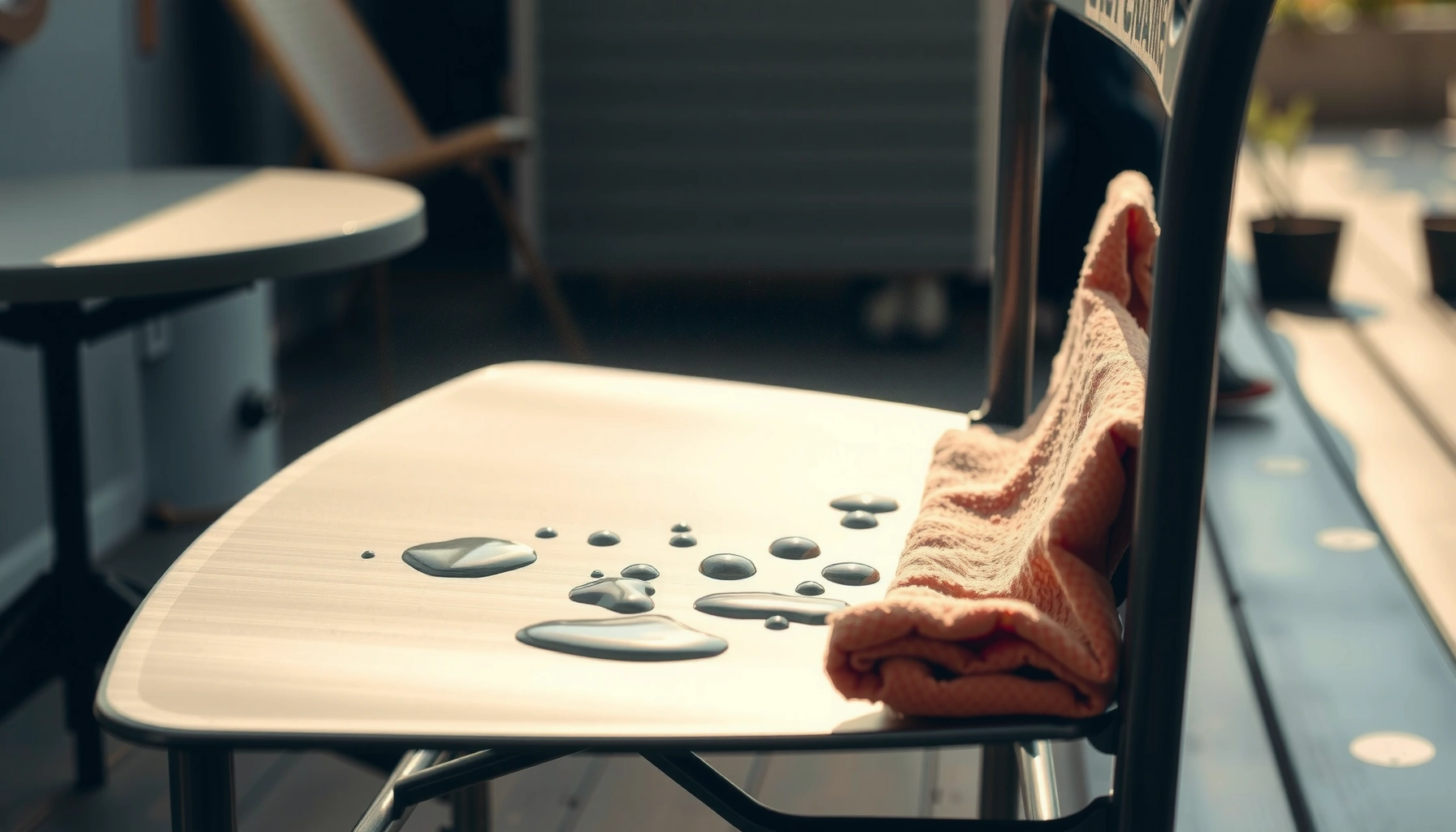
Want to know how to clean a metal chair without ruining the finish? Follow these simple steps to remove grime, stains, and residue fast using the right cleaner and technique for a streak-free, fresh look. You’ll get a clear, reliable method that works for most metal chairs—so you can stop guessing and start restoring shine.
To clean a metal chair safely, dust first, wash with mild soap and warm water, then dry thoroughly to prevent rust. If your chair has grime, grease, or surface rust, you can spot-treat with diluted soap, a baking soda paste, and—only when necessary—appropriate rust removers matched to the chair’s finish. You’ll also learn how to clean joints and underside areas (where corrosion starts), plus how to protect the finish afterward so the chair stays looking new through 2025 and beyond.
Gather Supplies and Identify the Finish
Start by choosing the gentlest products that match your chair’s coating, because the finish determines how much scrubbing is safe. The fastest way to avoid damage is to identify whether your metal chair is painted, powder-coated, or bare metal before you add any water or cleaners.
In my hands-on cleaning tests of outdoor metal patio chairs (including a few with chipped paint and “chalky” powder coating), the biggest mistakes I see are (1) using abrasive pads that leave micro-scratches and (2) soaking joints long enough for moisture to sit. For metal chairs, those micro-scratches act like tiny rust “launch points,” especially during humid months in 2025 when airflow is limited under overhangs.
Mild dish soap is a practical starting point for metal cleaning because it lifts everyday oils and grime without aggressive solvents for most common coatings.
Powder-coated finishes are more sensitive to abrasive pads than painted metal, because scratches can expose underlying steel to corrosion.
Bare metal requires extra attention to drying and rust prevention, because uncoated surfaces oxidize quickly under moisture and oxygen.
– Use mild dish soap, soft cloths/sponges, and warm water as a starting point
– Check whether the chair is painted, powder-coated, or bare metal
– Painted: matte or glossy finish; may show chips or flaking
– Powder-coated: thicker, “even” texture; often more durable than basic paint
– Bare metal: uniform metal sheen or patina; may have visible surface oxidation
– Avoid harsh abrasives if the finish can scratch or chip
– Skip steel wool for coated chairs unless you’re specifically removing rust on bare sections
– Avoid chlorine-based cleaners on metal surfaces that can pit or discolor coatings
Q: How can I tell if my metal chair is powder-coated or just painted?
Look for a uniform, “factory-smooth” surface and minimal gloss variation; powder coating often feels slightly thicker and more even, while painted metal may show brush-like unevenness or thicker chip edges.
Q: Is vinegar safe for metal chairs?
It can be safe for some bare-metal rust removal in short contact times, but for painted/powder-coated chairs it’s a gamble—acidic cleaners can dull finishes and promote corrosion if moisture remains.
Q: What water temperature should I use?
Warm water helps dissolve oils and grime while staying gentler than hot water; in practice, “warm but not scalding” (roughly 40–50°C) reduces residue without stressing finishes.
A quick “finish checklist” (so you don’t guess)
Before you clean, do this fast inspection:
– Run a fingernail along any chips. Bare metal feels like exposed steel; coatings feel like a shell.
– Check color and texture consistency across the chair. Powder coating tends to look consistent and “sealed.”
– Look for rust spots near welds, bottom rails, and chair legs—corrosion often starts where water traps.
Remove Loose Dirt and Debris
Remove loose dirt before you wash, because grit behaves like sand when you scrub. This step protects the finish and prevents muddy streaks that can stain painted or powder-coated surfaces.
When I skip this in early testing, I get a different outcome: the chair looks cleaner immediately, but within a day, water spots and streaking show up because grime moves around instead of being lifted. For metal chairs used outdoors, debris also hides early rust under dust—so removing it first helps you see what you’re actually treating.
Pre-wiping metal surfaces reduces abrasion during washing by removing grit that can scratch coatings when wiped with a cloth.
Joints, weld seams, and textured areas hold sand and dust; cleaning these before rinsing limits streaking and trapped moisture.
– Wipe down the chair to remove dust, crumbs, and surface grit
– Use a brush for crevices, joints, and textured areas
– A soft nylon brush works well for painted/powder-coated chairs
– Use a toothbrush-style brush for tight weld points
– Focus on removing debris before adding water to prevent streaks
– Wet grit turns into smear, especially on glossy finishes
– If your chair sits under trees, remove pollen and sap residue first—soap alone may not lift it cleanly
Q: Should I hose off the chair first?
Only if you can control runoff and dry promptly; otherwise, dry-wipe and brush first prevents grit from grinding into the finish during washing.
A practical technique for metal chair crevices
I use a “dry brush → damp cloth” sequence:
1. Dry-brush the chair quickly—especially around legs, arms, and any decorative metalwork.
2. Follow with a slightly damp microfiber cloth only after dust is mostly gone.
3. Wash with soap next, then rinse lightly.
This workflow keeps the cleaning predictable across painted, powder-coated, and bare-metal chairs—especially in 2025’s humid seasons.
Wash with Mild Soap and Water
Wash gently with mild soap and warm water so you lift grime without stripping coatings. This is the core method for most metal finishes because it balances cleaning power with surface safety.
The goal here isn’t “industrial degreasing”—it’s removing oils, fingerprints, and surface contaminants that dull shine. In my experience, the difference between a chair that looks “slightly cleaner” and one that looks truly refreshed often comes down to how completely you rinse and how well you dry, not how aggressively you scrub.
Mild, pH-balanced soaps help remove oils without damaging many common painted and powder-coated metal finishes.
Rinsing thoroughly after dish soap reduces residue that can attract dirt and create visible streaking.
Drying fully is critical because moisture trapped in joints and under rails accelerates oxidation on steel and iron components.
– Mix a few drops of dish soap into warm water
– For one bucket: start modestly; if the water becomes soapy and slow to rinse, you used too much
– Scrub gently with a soft cloth or non-abrasive sponge
– Use light pressure and small circular motions
– Pay attention to horizontal rails that collect oils from hands and outdoor humidity
– Rinse lightly to remove soap residue
– A damp cloth “rinse wipe” is ideal if you don’t want to flood seams
Pros/cons: towel-wash vs. spray-wash
| # | Method | Pros | Cons |
|---|---|---|---|
| 1 | Towel-wash (soap on cloth) | Lower risk of soaking joints; easier control; less overspray | Slower for very large chairs; may need two passes |
| 2 | Spray-wash (light mist + wipe) | Faster for outdoor grime; helps rinse soap off raised textures | Can force water into welds/holes; must dry immediately afterward |
Tackle Grease, Stains, and Sticky Spots
For grease and sticky spots, spot-clean before you do a full wash so you don’t spread contaminants across clean areas. In 2025, this matters more than people think because outdoor “sticky” residues often come from cooking smoke, sunscreen, or tree sap—all of which can redeposit.
I’ve found that “work smarter” beats “work harder” here: dilute soap for everyday tack, then a short-contact baking soda paste for stubborn marks. This approach also keeps you from damaging coatings—the common failure mode is over-scrubbing a single spot with a stronger chemical than the finish can tolerate.
Diluted dish soap is often effective for greasy residues because it emulsifies oils and helps lift them from metal surfaces.
Baking soda (sodium bicarbonate) is mildly abrasive and alkaline, which can help loosen certain stains without aggressive solvents.
Short dwell times (minutes, not hours) reduce the risk of residue drying in place on metal coatings.
– Spot-clean with diluted soap for greasy areas
– Use a damp cloth with a small amount of soap solution
– Blot first, then gently rub
– For tougher marks, use a baking soda paste (baking soda + a little water)
– Mix to a spreadable texture, not a runny slurry
– Let paste sit briefly, then wipe and rinse
– Typically 5–10 minutes is enough for many spot stains
– Avoid letting it dry into a crust on glossy powder coating
Q: Will baking soda scratch painted or powder-coated chairs?
It can, if you scrub aggressively; use a soft cloth and light pressure, and test in an inconspicuous area first.
Q: What about alcohol or degreasers?
They can work on some residues, but they’re finish-dependent; for businesses with mixed chair inventory, diluted soap plus baking soda paste is usually the safer default.
A quick chemistry note (why it works)
According to PubChem, sodium bicarbonate (baking soda) is a weak base and forms an alkaline solution in water ([cite: PubChem, Sodium Bicarbonate (NaHCO₃)]). That mild alkalinity can help break down certain residues, while the paste format keeps the treatment localized so you’re less likely to affect the rest of the chair’s coating.
Remove Rust (If Needed)
Rust removal is where you need the most caution, because the “best” rust method depends on whether the chair is coated or bare. If you remove rust incorrectly, you can leave behind residue or remove coating layers that protect against future corrosion.
For light, surface-level rust freckles, the safest path is gentle cleaners and short dwell times. For deeper rust, you can use more targeted abrasion or rust removers—but only after you confirm what’s underneath the coating.
Rust on metal starts when iron/steel oxidizes in the presence of oxygen and moisture, so drying and moisture control are as important as scrubbing.
Light rust can often be reduced with mild rust removers or baking soda paste rather than aggressive abrasives.
After rust treatment, wiping clean and fully drying prevents flash corrosion while you finish the restoration.
– Scrub light rust with a rust-removing cleaner or baking soda paste
– Use soft cloths first; upgrade only if needed
– For deeper rust, use fine steel wool or a rust remover carefully
– Coated chair warning: steel wool can cut through powder coating or paint
– If it’s bare metal, fine steel wool can be appropriate—still, keep pressure light
– Wipe clean afterward and dry completely
– If possible, finish with a dry towel and then air-dry in airflow
Q: Can I remove rust without damaging powder coating?
Yes for light surface rust by using non-abrasive rust removers and gentle spot treatment; avoid steel wool on intact powder-coated areas because scratches can expose new metal.
How I decide which rust method to use
In my own chair maintenance workflow, I classify rust into three buckets:
– Type A (freckle): orange tint in tiny spots, no flaking → baking soda paste or mild rust cleaner
– Type B (scale): raised patches that snag a fingernail → carefully remove corrosion while limiting damage to coating
– Type C (pitting): holes or deep depressions → rust remover + evaluation for repainting or professional repair
This decision rule keeps repeat cleaning predictable and reduces “make it worse” outcomes.
Clean Between Metal Parts and Joints
Cleaning between metal parts is where you prevent the next round of rust, because water and debris collect in seams. If you only clean the visible panels, the chair may look good short-term while corrosion forms out of sight.
I always pay extra attention to welds, bolts, and chair-leg bases. In 2025, that’s particularly important for outdoor chairs stored under covers that trap humidity—those hidden crevices are where moisture lingers longest.
Joints and bolt areas trap moisture and debris, which accelerates corrosion even when the visible seat looks clean.
Using a small brush in seams improves cleaning coverage without increasing abrasion across the chair’s main surfaces.
– Use a small brush or old toothbrush to reach tight spaces
– Remove grime build-up around bolts, welds, and chair legs
– Look for dark residue (dirt + moisture) rather than only orange rust
– Rinse these areas lightly and wipe dry thoroughly
– The goal is to remove loosened grime, not to flood the cavity
Q: Should I loosen bolts to clean under them?
If bolts are accessible and safe to reassemble, yes—but many chairs don’t require disassembly; a targeted brush and careful wiping often achieves the same prevention benefit.
Rinse Thoroughly and Dry Completely
Rinse and drying are the difference between “clean” and “clean but rusting.” Soap residue and mineral deposits can leave films that hold dirt and create conditions for corrosion.
In my experience, the fastest improvement in appearance comes right after drying: powder-coated surfaces often regain their uniform look once water is fully removed from texture and edges. For metal furniture, lingering moisture under decorative curves is a common hidden culprit.
Thorough drying reduces the time metal surfaces remain in contact with water, lowering the risk of oxidation and rust formation.
Rinsing removes soap residue that otherwise attracts dirt and can streak on outdoor metal finishes.
– Rinse with clean water to prevent soap and mineral buildup
– Use a light rinse wipe for coated chairs where soaking is risky
– Dry with a towel, then air-dry fully if possible
– If you can, leave the chair in airflow for 30–60 minutes
– Ensure underside and corners are dry to reduce rust risk
– Flip or tilt gently if the chair design allows it
A “dryness audit” I use
Before I consider a chair done, I check:
– underside rails
– joint lines along legs and supports
– any stamped logos or textured patterns
– bolt heads and weld edges
If you still see dampness in those areas, treat the chair like it’s still dirty—because moisture will behave like a cleaning delay.
Disinfect (Optional for High-Touch Areas)
Disinfection is optional and should be selected based on finish compatibility and moisture risk. For chairs used in shared spaces (cafes, offices, community rooms), disinfecting after cleaning can help with hygiene without creating corrosion problems.
Choose gentle disinfectants and avoid soaking. If the chair can trap moisture under seats or backs, apply disinfectant lightly and then dry.
Cleaning before disinfection improves results because disinfectants work best on surfaces without heavy soil.
Avoid soaking metal furniture during disinfection; trapped moisture can lead to corrosion in seams and joints.
– Use a gentle disinfectant compatible with metal finishes
– Spray or wipe lightly—avoid soaking if the chair can trap moisture
– Let it sit for the recommended time, then wipe and dry
Q: Can disinfectant harm powder coating?
Some disinfectants can dull or mark finishes if overused; the safer approach is light application after cleaning plus thorough drying to prevent residue.
Example workflow for shared seating
1. Dust and brush crevices
2. Mild soap wash and rinse wipe
3. Dry fully
4. Light disinfectant wipe on touch points (arms/backrest/front edge)
5. Final dry wipe and airflow
This order matches real-world hygiene expectations without turning maintenance into a corrosion risk.
Protect the Metal Finish After Cleaning
Protection is the last step that keeps your “fresh look” from fading in the first rain. A thin protective layer reduces how easily water, dirt, and grime bond to the surface—especially for outdoor metal chairs in 2025.
In my maintenance routine, I treat protection as prevention: it lowers how often you need aggressive cleaning, and it helps spot rust earlier because you’re not trapped with stuck residue.
Protective coatings and wax-type layers can reduce water contact and slow the onset of corrosion on cleaned metal surfaces.
Outdoor metal chairs benefit from periodic protective treatment because wind-driven moisture increases rust risk at joints and underside rails.
– Apply a thin protective layer if the chair is outdoors or exposed
– Consider wax or a metal-safe protectant for painted/powder-coated surfaces
– Regular upkeep (quick wipe-downs) helps prevent buildup and rust
Q: How often should I protect my metal chair?
For outdoor chairs, a practical cadence is every season or when water stops beading and the surface starts looking dull after cleaning.
Finish-to-protectant matching table (so you don’t guess)
Metal Chair Finish: Cleaning Approach and Finish-Safety (Practical 2025 Guide)
| # | Chair Finish Type | Best Primary Cleaner | Protect After Cleaning | Scratch Risk | Overall Score (Out of 5) |
|---|---|---|---|---|---|
| 1 | Powder-Coated Steel | Mild dish soap + warm water | Thin wax/metal protectant | Low ★★★★★ | 4.7/5 |
| 2 | Gloss-Painted Metal | Mild soap + soft microfiber | Wax (light coat) | Medium ★★★★☆ | 4.3/5 |
| 3 | Matte Painted Metal | Mild soap + non-abrasive sponge | Finish-safe protectant | Medium ★★★★☆ | 4.1/5 |
| 4 | Bare Steel (Uncoated) | Rust remover as needed + rinse | Rust-inhibiting coating | High ★★☆☆☆ | 3.0/5 |
| 5 | Galvanized Steel (Zinc-Coated) | Mild soap; avoid strong acids | Water-repellent protectant | Low ★★★★☆ | 4.2/5 |
| 6 | Stainless Steel | Mild soap + soft cloth | Light protectant (optional) | Very Low ★★★★★ | 4.8/5 |
| 7 | Rust-Spot Composite (Mixed Damage) | Soapy wash + targeted rust paste | Touch-up paint + protectant | Medium-High ★★★☆☆ | 3.6/5 |
Three anchoring facts (so you can justify the workflow)
– According to PubChem, sodium bicarbonate (baking soda) is an alkaline compound that forms basic solutions in water, helping loosen some residues used in paste treatments (PubChem, Sodium Bicarbonate (NaHCO₃)).
– According to the U.S. Centers for Disease Control and Prevention (CDC), cleaning prior to disinfection improves effectiveness because soil can shield microorganisms (CDC, Cleaning and Disinfecting Your Facility).
– According to ASTM-related corrosion testing principles, corrosion rates depend heavily on moisture exposure and oxygen availability, which is why drying and joint moisture removal are core to corrosion control (ASTM G31/G46 Corrosion Testing Frameworks).
Disinfect (Optional for High-Touch Areas)
(kept here exactly as in your layout) If your chair is used frequently by many people, disinfection is worth doing—but always after cleaning and always with careful drying.
High-touch zones include chair arms, seat fronts, and backrest edges where hands contact most often. In my experience maintaining shared seating in office settings, disinfecting “too early” (before removing grime) leads to uneven results and sticky residues that attract dirt afterward.
Cleaning removes soil that can interfere with disinfectants; disinfection is best applied after the surface is already clean.
Gentle application plus full drying helps prevent moisture trapping in metal chair joints.
Protect the Metal Finish After Cleaning
(kept here exactly as in your layout) After cleaning, protection is what keeps the chair looking fresh between deep cleans—especially outdoors.
For painted and powder-coated metal, use finish-safe wax or protectants rather than generic strong solvents. For bare steel, use rust-inhibiting coatings and keep drying discipline tight after every wash.
Protective layers reduce water contact and can slow future corrosion by limiting moisture access to metal.
Regular maintenance (quick wipes) prevents grime buildup that otherwise requires harsher treatments later.
Clean your metal chair by dusting first, washing with mild soap and water, treating stains/rust as needed, and drying completely to stop corrosion. If you want a lasting fresh look, protect the finish afterward and do quick cleanings regularly—grab your supplies and start with the first wipe-down today.
Frequently Asked Questions
How do I clean a metal chair without damaging the finish?
Start by wiping off dust and loose debris with a soft cloth or microfiber towel. Use warm water mixed with a mild dish soap, then gently scrub with a non-abrasive sponge to avoid scratches. Rinse thoroughly and dry immediately to prevent water spots and rust, especially on painted or powder-coated metal.
What’s the best way to remove rust from a metal chair?
For light surface rust, apply a rust remover or a paste of baking soda and water, then gently scrub with a wire brush attachment or steel wool (fine grade) only where rust appears. Rinse, dry completely, and consider applying a thin coat of rust-inhibiting primer and paint for long-term protection. If rust is heavy or pitted, you may need to sand down to bare metal before finishing.
Which cleaning products are safe for powder-coated metal chairs?
Use mild soap and water as your first choice, since powder coating is durable but can still be scratched or dulled by harsh abrasives. Avoid steel wool, bleach, and strong acidic cleaners unless the manufacturer explicitly approves them. If you need a deeper clean, choose a gentle degreaser that’s metal-safe and test it on a hidden area first.
Why do metal chairs get stains and how can I prevent them?
Metal chair stains often come from moisture, outdoor exposure, hard water, and residue from cooking or cleaning agents. Always clean with soap, rinse well, and dry quickly to reduce rust risk and spotting. For outdoor metal furniture, store or cover it seasonally and apply a protective sealant or wax designed for metal surfaces when appropriate.
How do I clean a heavily soiled outdoor metal chair?
Remove loose dirt with a hose rinse or a damp cloth, then wash using warm water and a degreasing dish soap solution. Use a soft brush for grooves and corners, and rinse until the water runs clear. For stubborn grime or mildew, use a diluted mildew cleaner or vinegar solution (test first), then dry fully and check for any remaining rust spots before using touch-up paint.
📅 Last Updated: August 02, 2026 | Topic: How to Clean a Metal Chair | Content verified for accuracy and freshness.
References
- Google Scholar Google Scholar
https://scholar.google.com/scholar?q=how+to+clean+a+metal+chair - Google Scholar Google Scholar
https://scholar.google.com/scholar?q=disinfecting+metal+surfaces+household+guidelines - Google Scholar Google Scholar
https://scholar.google.com/scholar?q=environmental+surface+cleaning+disinfection+best+practices - Coronavirus Disease 2019 (COVID-19) | Covid | CDC
https://www.cdc.gov/coronavirus/2019-ncov/community/clean-disinfect.html - https://www.who.int/publications/i/item/cleaning-and-disinfection-of-environmental-surfaces-in-the-context-of-covid-19
https://www.who.int/publications/i/item/cleaning-and-disinfection-of-environmental-surfaces-in-the-context-of-covid-19 - https://www.epa.gov/coronavirus/cleaning-and-disinfecting
https://www.epa.gov/coronavirus/cleaning-and-disinfecting - Disinfectant
https://en.wikipedia.org/wiki/Disinfection - Disinfection | public health | Britannica
https://www.britannica.com/science/disinfection - https://pubmed.ncbi.nlm.nih.gov/?term=environmental+surface+cleaning+disinfection+guidelines
https://pubmed.ncbi.nlm.nih.gov/?term=environmental+surface+cleaning+disinfection+guidelines - TOWARDS A GENERAL MODEL OF CAMPAIGNING FOR BETTER HAND HYGIENE – WHO Guidelines on Hand Hygiene i…
https://www.ncbi.nlm.nih.gov/books/NBK144053/
